Axel Einar Hjorth.
Ignored in life and forgotten in death, Axel Einar Hjorth is now one of the most highly prized names of Swedish design.
A London designer taught me to spot vintage Swedish furniture years before I ever set foot in Sweden. Not the mass-produced stuff from the sixties, but one-off pieces from the twenties, thirties and forties — art deco with Nordic twists, gentler and less architectural than the work of their Danish neighbours. A few years later, my fascination with Swedish design was reignited on the pages of The Girl with the Dragon Tattoo, Stieg Larsson’s descriptions of elegant manor houses and Stockholm apartments sowing the seed of Suecophile leanings to come.
Reading up on Swedish design, I discovered three highlights in the Nordic nation’s output: the late 18th-century Gustavian period; Swedish Grace in the 1920s; and Funkis from around 1930 onwards. Gustavian took its name from the late 18th-century monarch Gustav III and was Sweden’s take on the Neoclassicism of Louis XVI. Swedish Grace bridged the gap between Neoclassicism and Art Deco, with Greek key motifs, sphinxes and other nostalgic nods to Gustav. It was brief but influential and established Sweden on the international design stage before giving way to Funkis — Functionalism — and the advent of Swedish modern.
With images of Swedishness swirling in my mind — Gustav’s legendary 18th-century pavilion at Haga Park, Greta Garbo, Volvo and ABBA — I arrived in Stockholm in June 2018, to interview the city’s antique dealers for a story. My first stop was Modernity, where I sat on Ilse Crawford’s grey mohair-velvet sofa with director Andrew Duncanson, discussing the nuances of Scandinavian design. From there, we visited Modernity’s warehouse: a c.1805 stable complex, home to the bulk of Duncanson’s stellar collection. It was there I had my first sight of the 1930s ‘cabin’ furniture of Axel Einar Hjorth.
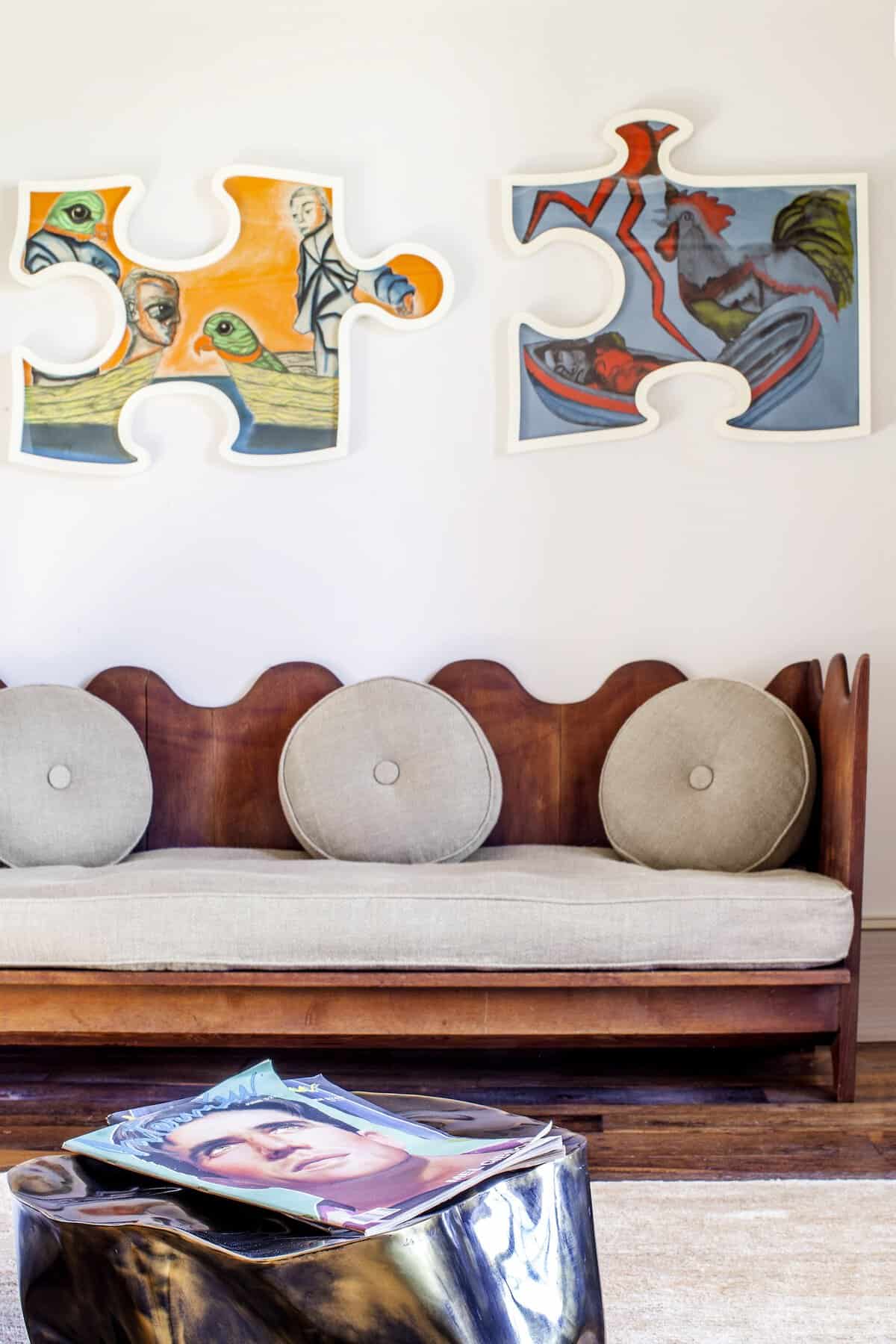
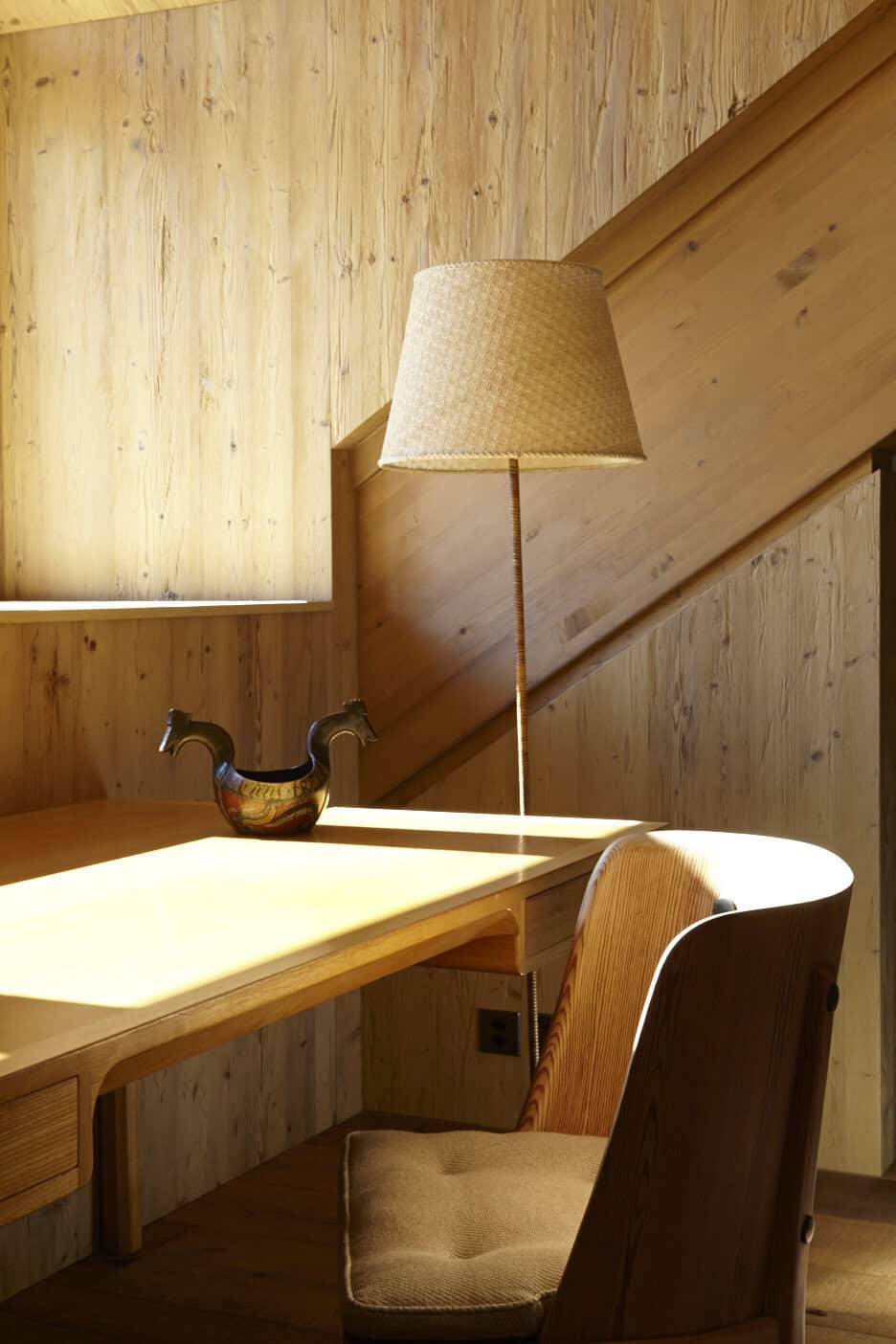
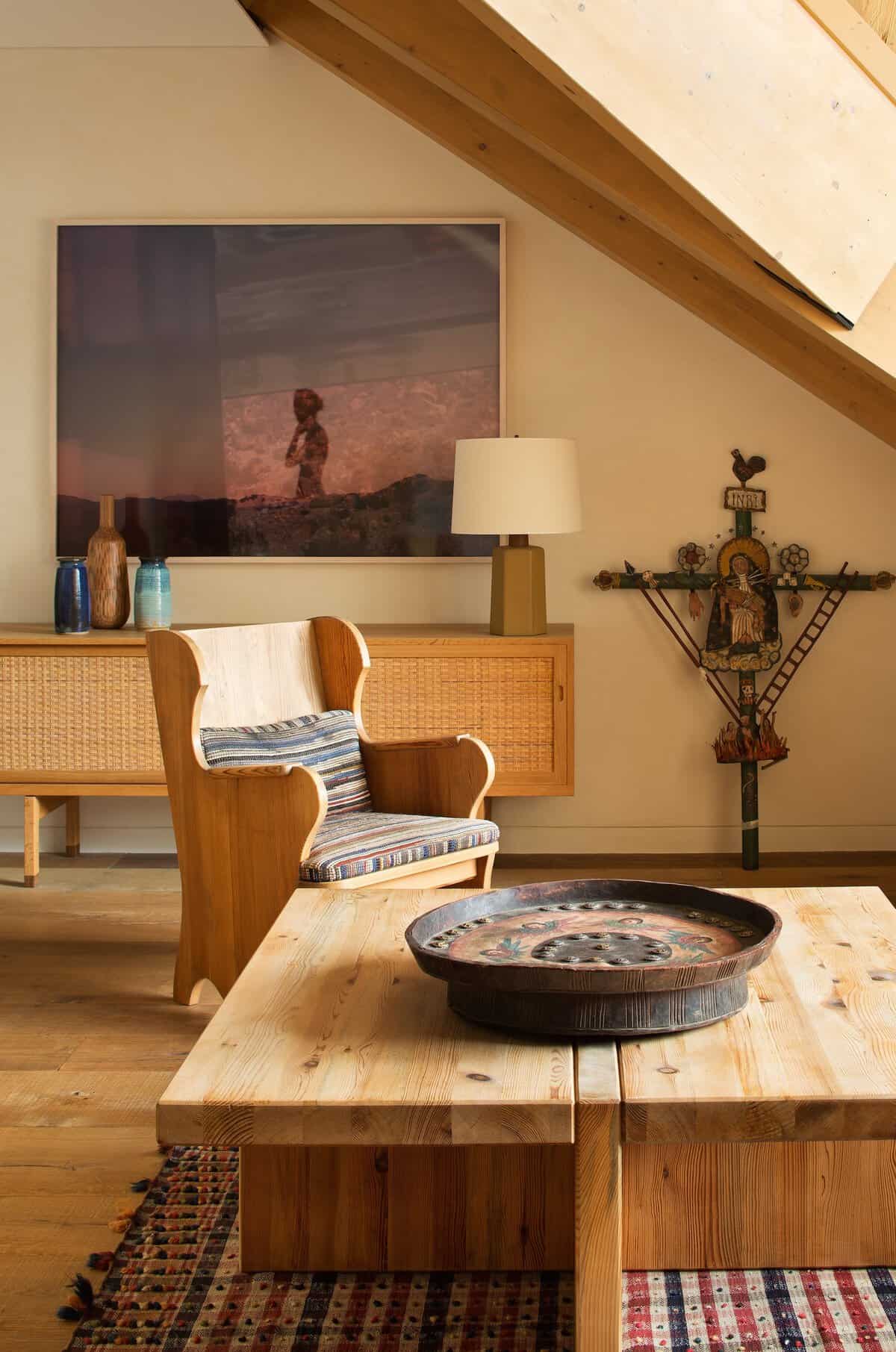
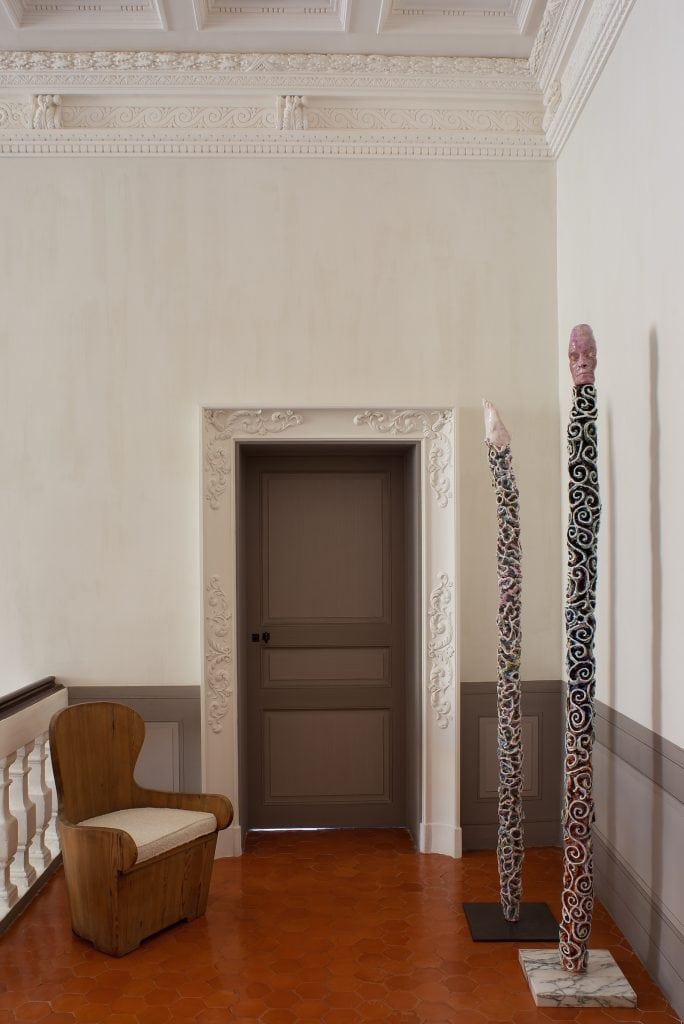
If you were familiar with Hjorth at the time, it was probably via the work of French interior architect Pierre Yovanovitch, whose warm and textured rooms played backdrop to the Swedish designer’s primitive shapes and often made the cover of AD. Here at Modernity, Hjorth’s furniture was arranged in casual but striking vignettes in the stable’s former hayloft, together with pieces by Danish designer Peder Moos and Austrian-Swedish designer Josef Frank.
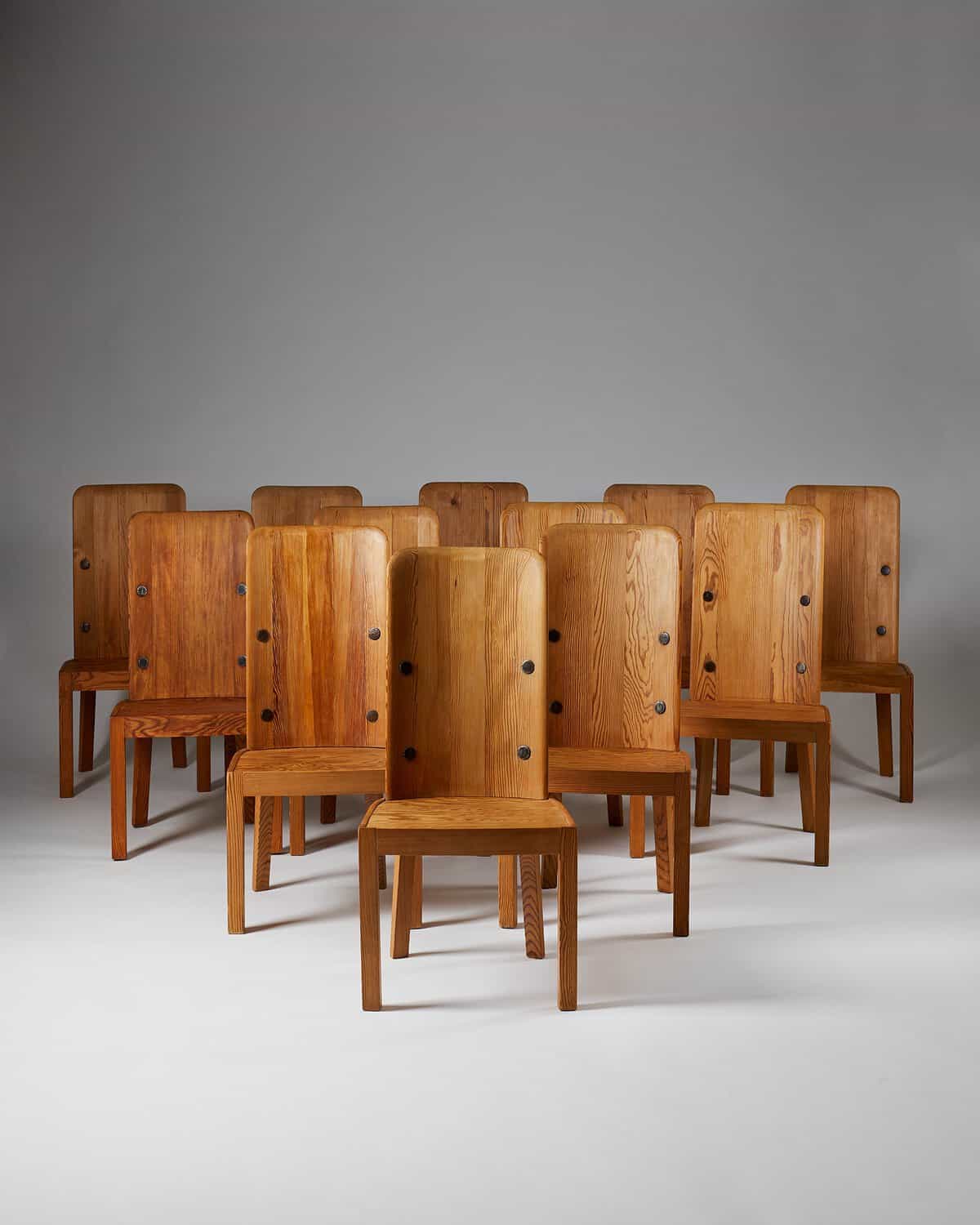
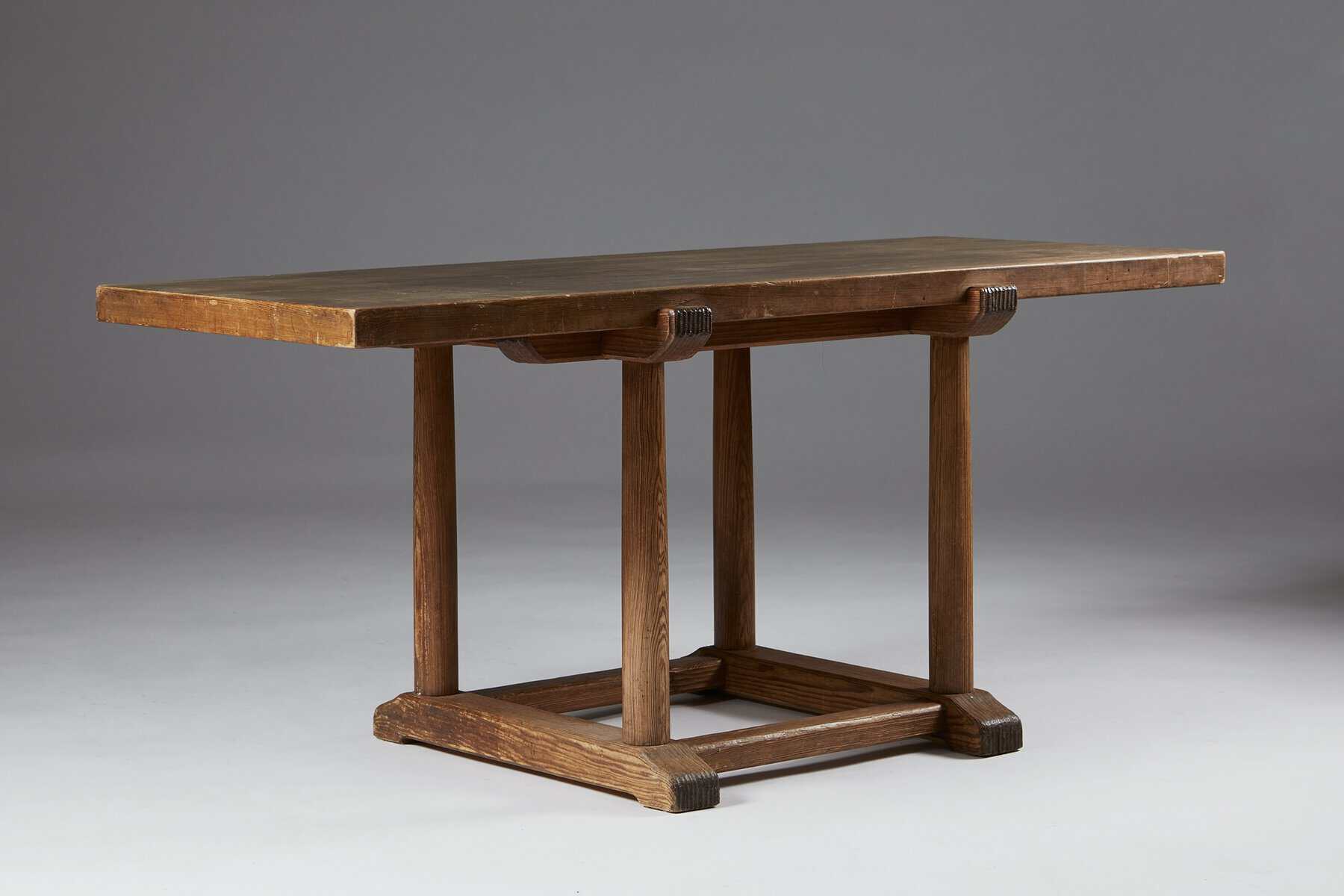
These Hjorth pieces belonged to his Sportstugemöbler, or Sports Cabin Furniture series, produced from 1929 onwards. According to Duncanson, they embodied the pure and nature-loving psyche of the Swedes.
Details on Hjorth are scarce: much of his work was unsigned; and unlike many of his contemporaries, he kept no archive and didn’t publish journals. Worse still, when the great Swedish tastemaker of the day, Svenska Slöjdföreningen — The Swedish Society of Crafts and Design — published its influential magazine, Hjorth’s work was ignored.
His career was a series of successes punctuated by misfortune and failings, as evidenced in the addresses he shared with his wife Gunelia Wessberg. Feast or famine over the years, from grand apartments in aristocratic Östermalm to a cheap tower block in working-class Sundbyberg.
Born in 1888 in Krokek, Sweden, Hjorth attended the prestigious Högre Konstindustriella Skolan (HKS) in Stockholm to study architecture and design. However, two years in, he had to abandon the course following the death of his wealthy foster father, Gustav Teodor Nordin, who had financed his education. (Hjorth was born out of wedlock, his biological father unknown and his mother unable to look after him from the time he was 12.) As a result he was largely self taught, learning through experience and fending for himself. He married Gunelia in 1914, a union that once again placed him amongst the bourgeoisie.
The 1920s were good years. Hjorth designed furniture for H. Joop & Co, Jonssons and Myrstedt & Stern, as well as the upmarket department store Nordiska Kompaniet, under legendary architect Carl Bergsten. He also began to work with the Stockholm Stads Hantverksförening (City Craft Association), a collaboration that continued until 1929. He participated in various international exhibitions that defined 20th-century design, including the Barcelona Exhibition in 1929, Stockholm in 1930 and New York in 1939.
At the Gothenberg Jubilee Exhibition in 1923, British art critic Philip Morton Shand coined the term ‘Swedish Grace’, so impressed with the graceful lines of contemporary Swedish design. Hjorth was responsible for the mounting and display of the overall exhibition. He was conspicuously absent from the 1925 Paris Exhibition that gave us the term ‘Art Deco’, although Duncanson explained he was responsible for a major exhibition at the Liljevalchs Gallery in Stockholm at the same time.
He did, however, contribute to the Contemporary Swedish Decorative Arts exhibition at the Metropolitan Museum in New York in 1927, alongside Carl Hörvik and Carl Malmsten — the first time the Metropolitan showcased the design of one particular country.
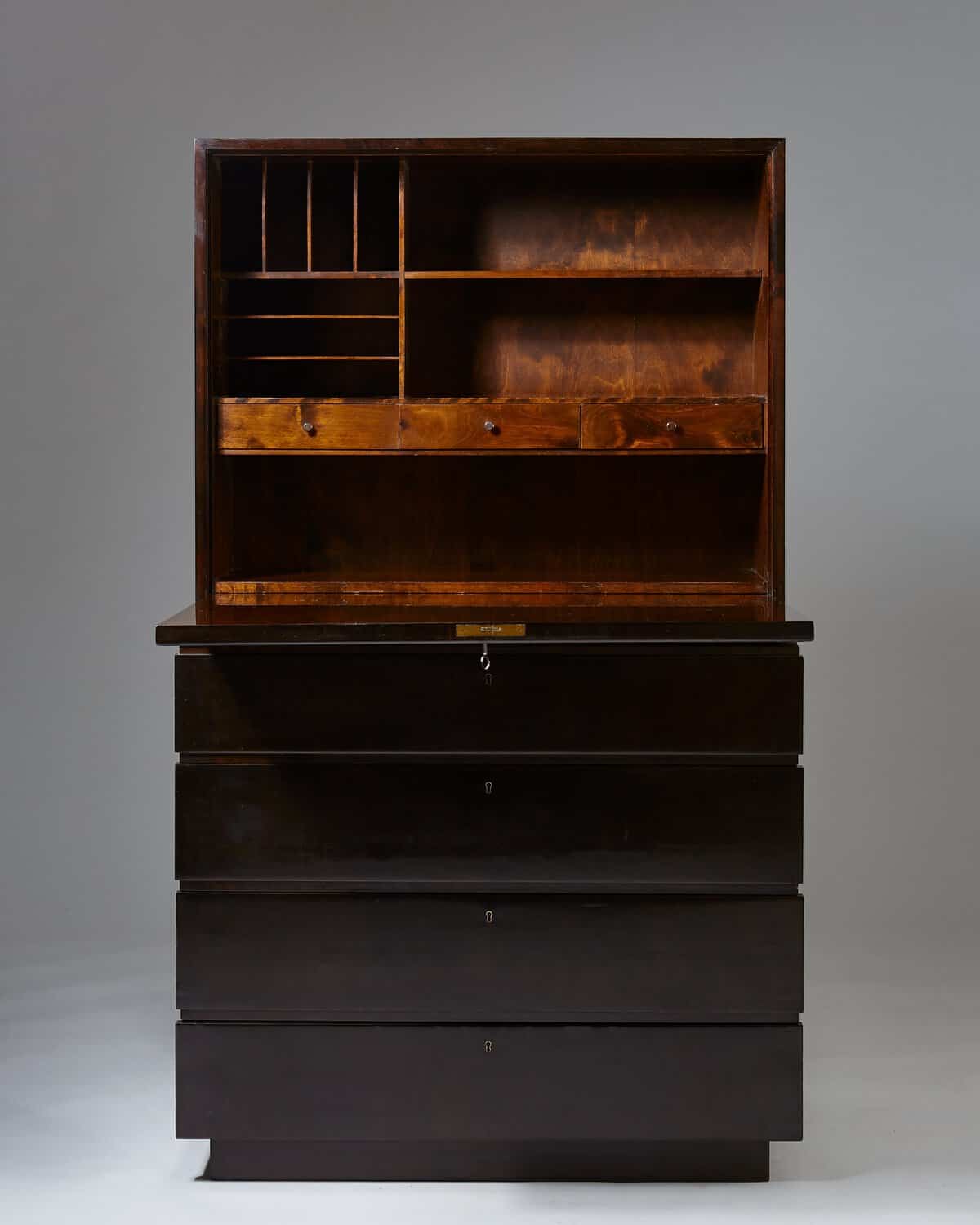
Swedish Grace was a romantic style drawing upon the nation’s Gustavian heritage — from Swedish King Gustav III, who remodelled Stockholm along French neoclassical lines after a formative visit to Versailles. It ran parallel to Art Deco and stands as one of the most ephemeral, most delightful periods in all of 20th-century design. It was during this period, in 1927, that Hjorth replaced Bergsten as Chief Architect and Head of Furniture Design for Nordiska Kompaniet, Sweden’s most important producer of luxury furniture, a post he held until 1938.
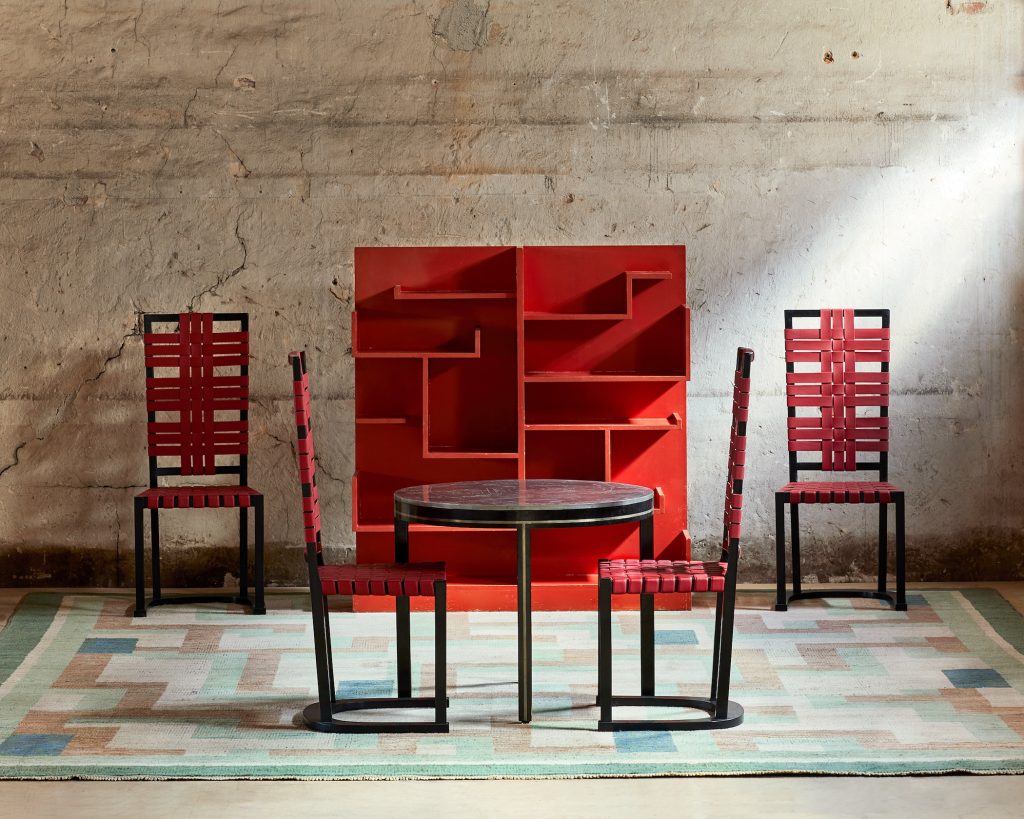
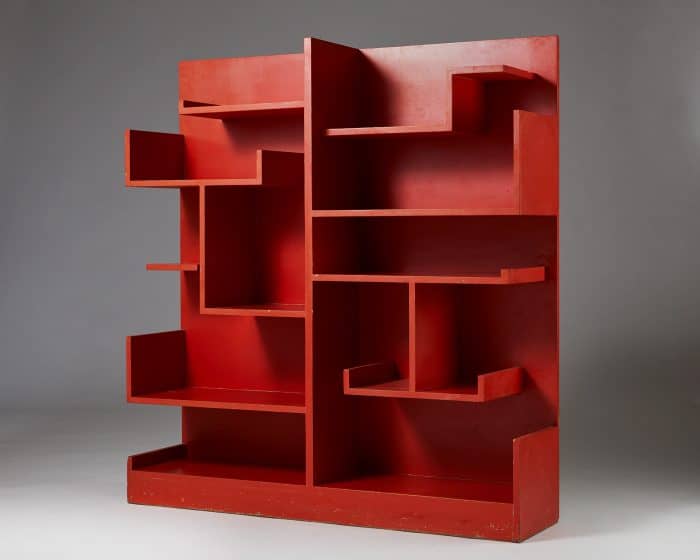
“When it comes to furniture design, I would almost dare to say that Hjorth was Swedish Grace,” Eva Seeman of Bukowskis auction house explains. “Of course there were other very talented architects but Hjorth, as the head of the Nordiska Kompaniet, was more inventive and daring when it came to the luxurious designs he made during the first couple of years.” (Modernity recently sold the superb ‘Futurum’ shelf — red, asymmetrical and Chinoiserie-esque, first shown at the Nordiska Kompaniet Spring Exhibition in 1929 — to an American museum for US$145,000.)
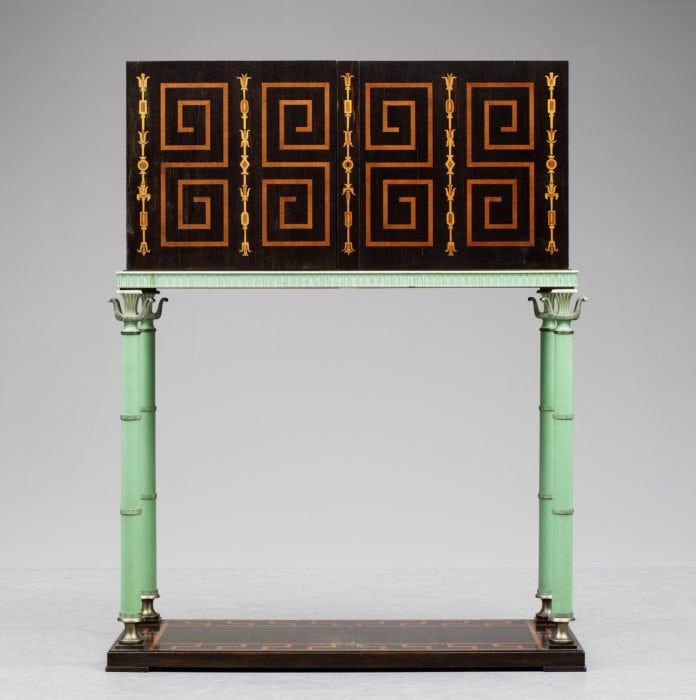
Seeman cites the designer’s ‘Louis’ and ‘Caesar’ pieces that were exhibited at the 1929 Barcelona Exhibition as sublime examples of Swedish Grace. “When we, Bukowskis, sold the Louis cabinet in 1998, it was the first time a piece of 20th-century Swedish furniture broke the wall of SEK 1,000,000 at auction.” The cabinet, in macassar ebony, pear wood and jaspis on legs of silver-plated and green patinated metal, was commissioned for wealthy financier Torsten Kreuger in the late 1920s. “This is typical of what became the predicament for Hjorth: there were very few people in Sweden at the time who could afford such exclusive pieces.”
Hjorth represented NK with his elegant designs at the Barcelona and Stockholm exhibitions, but by 1930, the winds of change had swept across the European design scene, especially in left-leaning Sweden, where functionalist ‘design for the masses’ replaced the singularity of Swedish Grace. “He was heavily criticised for his work at the Stockholm Fair in 1930 because it was so exclusive and expensive,” says Duncanson. “He took the criticism to heart and focussed on his cabin furniture.”
That he was rediscovered in France is unsurprising: it’s almost impossible to look at the work of Charlotte Perriand and Jean Royère, produced years later, and not think of Hjorth.
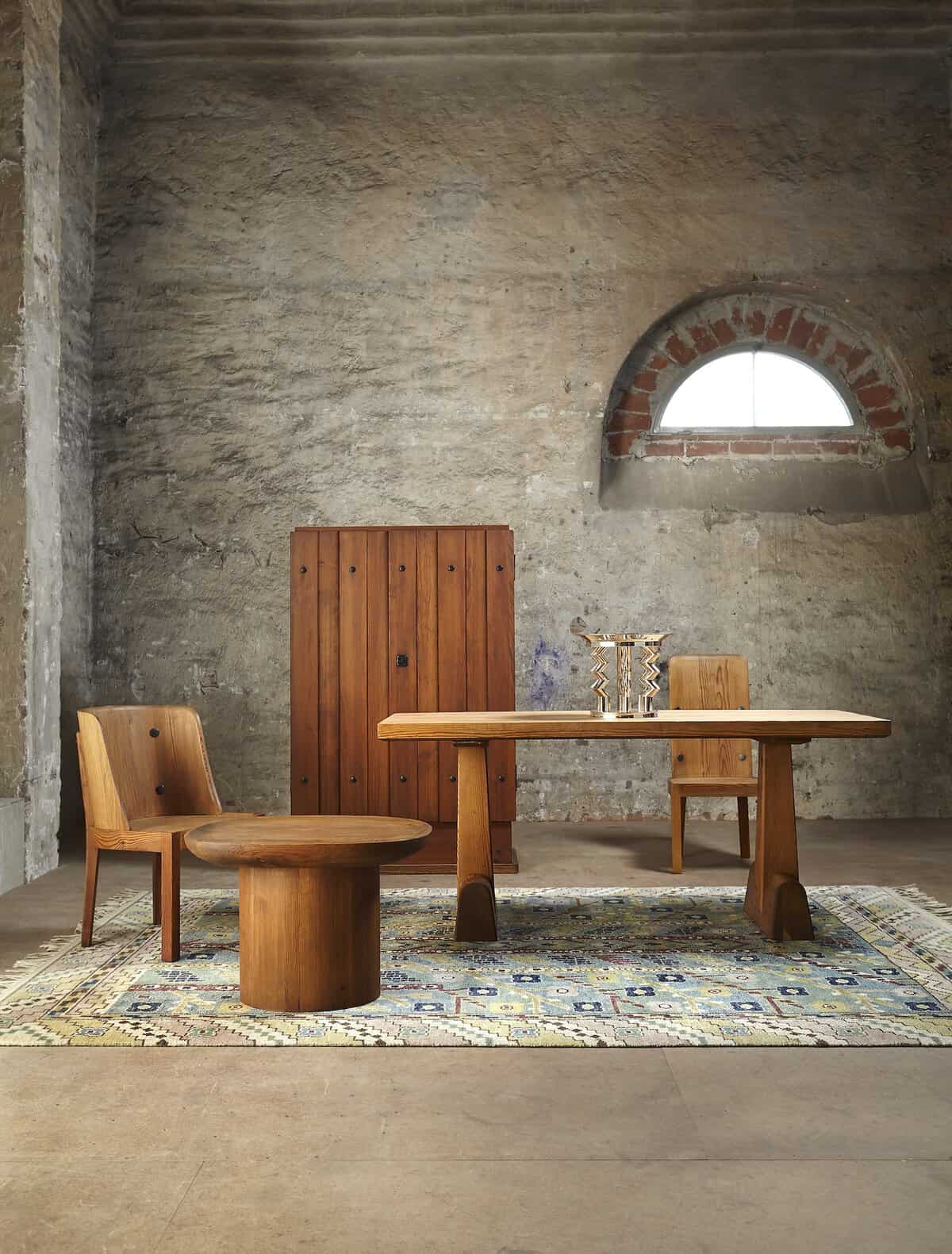
Swedish cities were bursting at the seams by 1930. Workers lived in cramped, airless quarters, cut off from light, space and nature — a public health crisis according to the Statens Institut för Folkhälsa (National Institute of Hygiene). The Social Democratic Party (SAP), who dominated the political scene until 1976, took bold steps, granting two weeks annual paid vacation to all employees and subsidising the construction of modest holiday homes, often by lakes and forests.
From this vision for a healthier, more connected Sweden, the sportstuga, or weekend-house movement, took hold — and Hjorth designed the Sportstugemöbler range to meet the growing demand for simple cabin furniture.
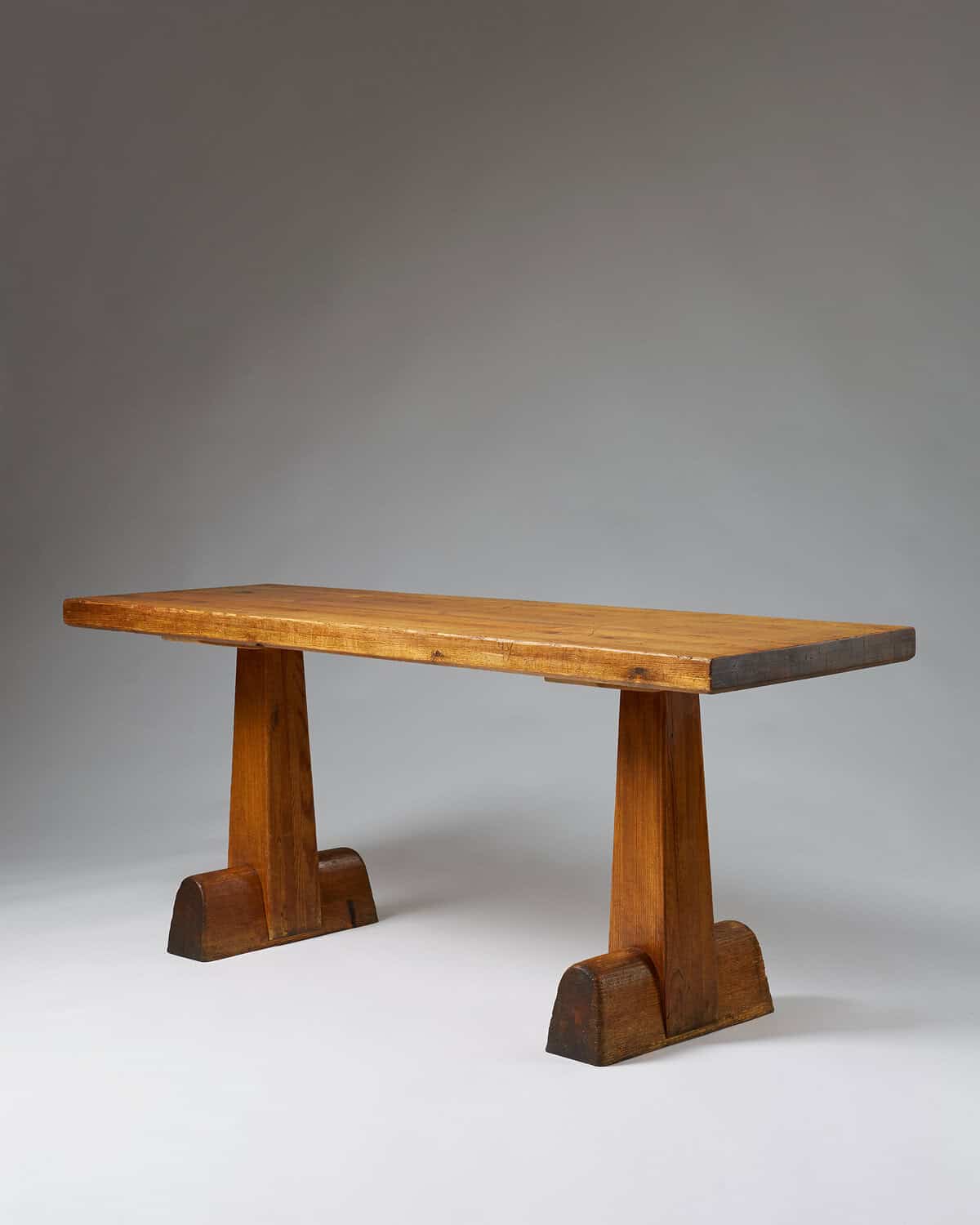
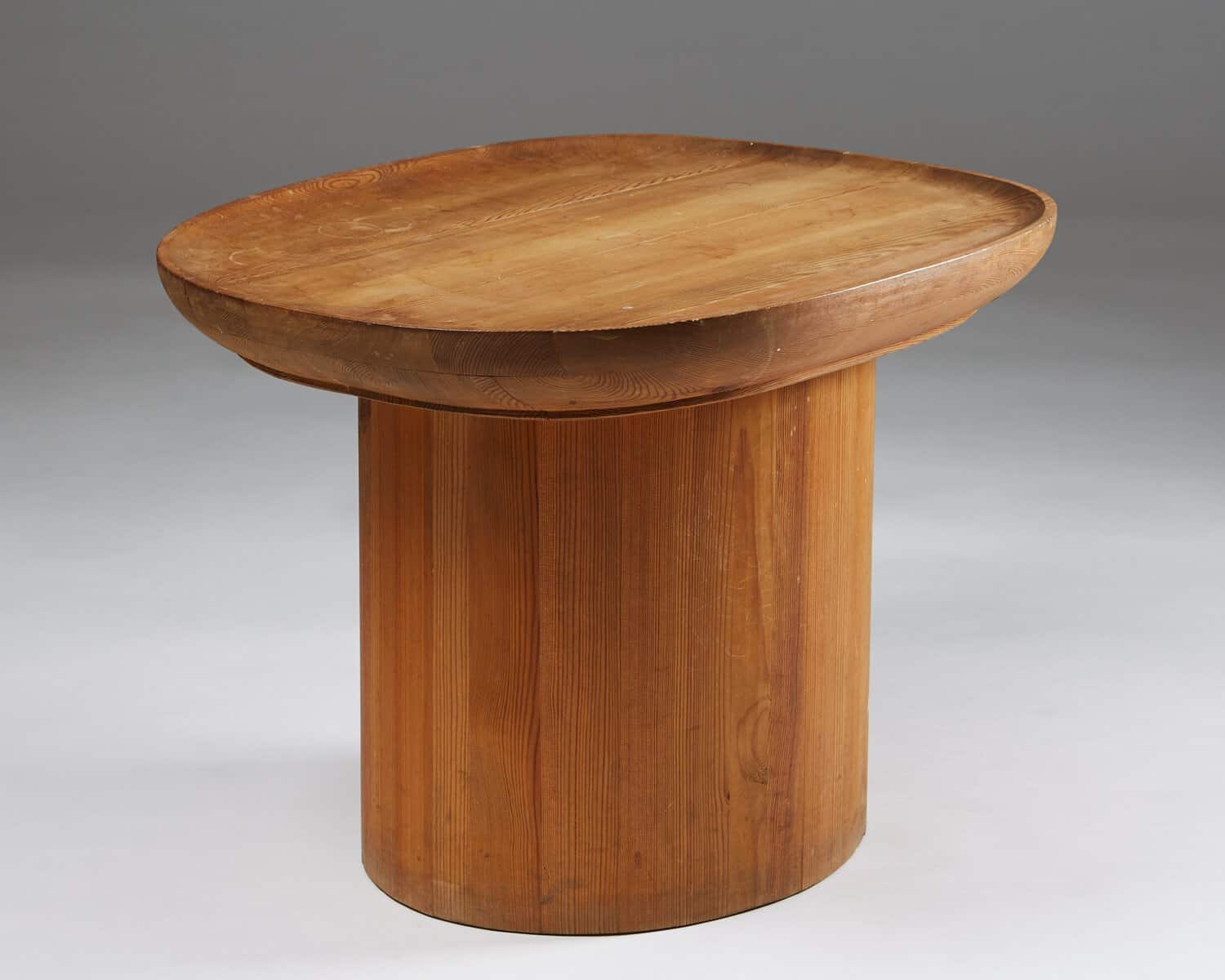
Executed in basic pinewood and sometimes oak, his rustic designs united the burgeoning lines of international modernism with the utopian idea of leisure and the aesthetics of Swedish provincial life. “The first was the ‘Sandhamn’ table in 1929, the only model that seems to have been produced by the Nordiska Kompaniet workshops that were known for their high quality carpentry,” Seeman explains. “With later models that were named after different islands in the Stockholm archipelago, such as ‘Värmdo’, ‘Lovö’ and ‘Utö’, you went to the Nordiska Kompaniet and bought the drawings you liked for your new cabin, and then had them made by your local carpenter.”
Hjorth’s output during these years also included streamlined metal furniture for a café, the ‘Mora’ collection which appears, according to Seeman, as if it could have been designed in the 1950s by Fornasetti, and the interiors of a train for the Shah of Persia. He finished with Nordiska Kompaniet to begin his own business in 1938, an architect’s office and also a shop at Kungsgatan 30 in Stockholm.
But career tragedy struck at the New York Exhibition the following year, when, prior to its opening, his furniture was left outdoors and destroyed by heavy rain. Together with restrictions imposed on the import of exotic woods during the war, Hjorth’s business floundered, forcing him to close in the late 1940s. Forced to seek employment, he took a job designing for Aski, a company that produced simple office furniture. He died in 1959.
“The Sportstugemöbler pieces were out of fashion and completely forgotten. Much was included in cabins when they were sold or stored in barns and attics. I’ve even heard several stories,” Seeman laments, “of quite a few pieces that were put on the fire.” Then, after decades in the dark, his work re-emerged in Paris, the ‘Utö’ dining table appearing in the chic, right-bank gallery of 20th-century dealer, Eric Philippe in 1994. That the Swedish designer’s work was rediscovered and given a platform in France is unsurprising: it’s almost impossible to look at the work of French designers such as Charlotte Perriand and Jean Royère, produced years later, and not think of Hjorth. “As we all know,” Seeman says, “it’s difficult to become a prophet in your own country, or in your own time.”
From a story originally published in Reflektor Magazine.
Photography: Modernity, Bukowskis and Pierre Yovanovitch.