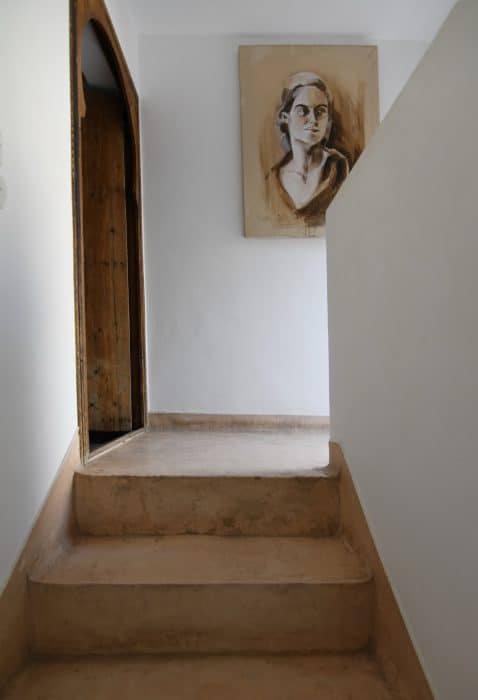
Riad UP.
Riad UP turns twenty this year, unchanged in a city that rarely sits still.
There are more luxurious riads. There are more colourful riads. There are riads with all the bells and whistles — hammams, rooftop bars, restaurants and fashionable boutiques. There are riads with bigger rooms, better views, butler service, blue-chip art, provenance and celebrity. But for me, after 26 years travelling to Marrakech, there is nowhere quite like Riad UP.
I discovered Riad UP — then called Riad W — in 2006, after it was featured in Wallpaper’s Marrakech guide. Flicking through the pages, I settled on the most cost-effective option; I’d already stayed at the best places and this time needed style without breaking the bank. UP delivered in spades.
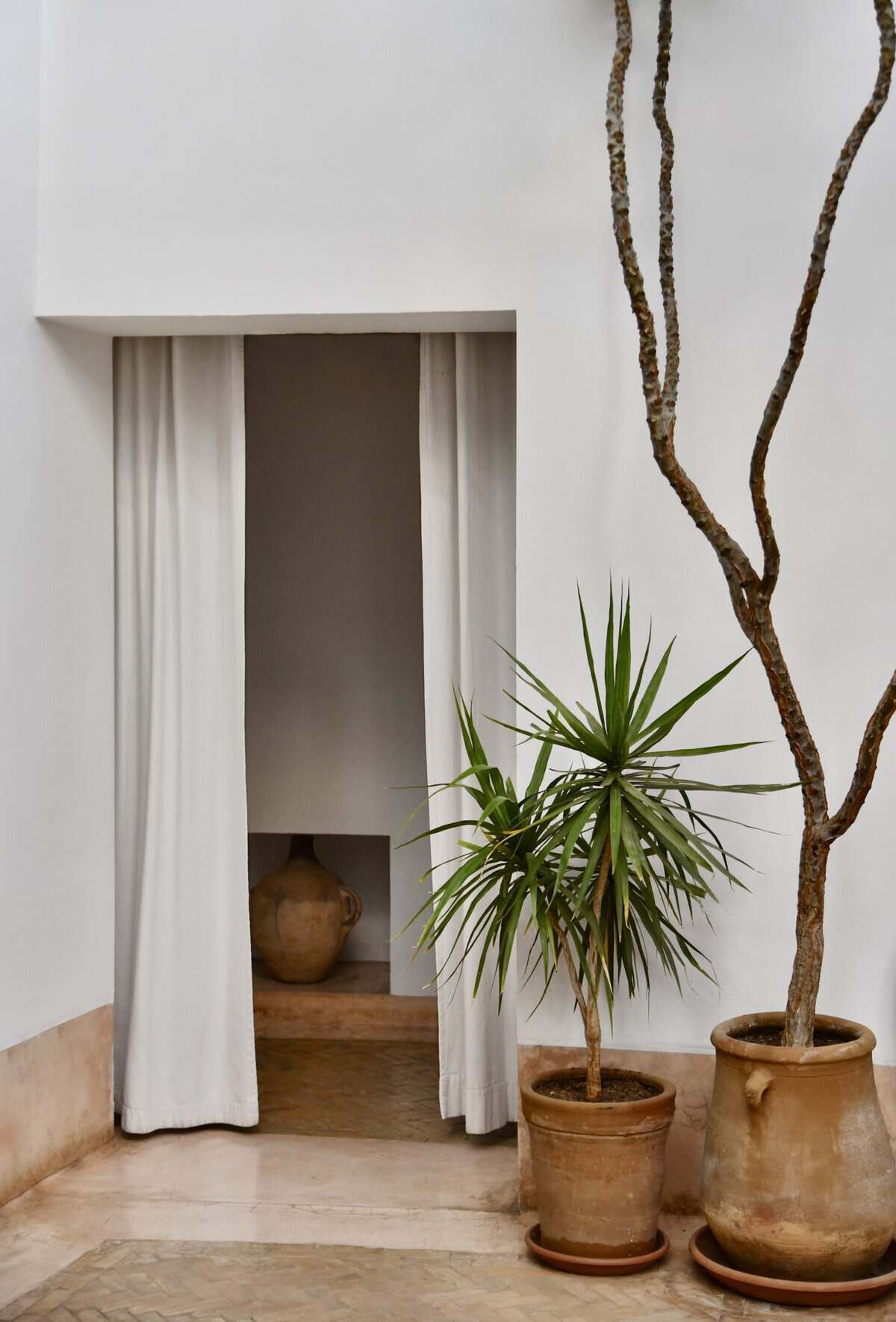
You can see why it made the cut. In maximalist Marrakech, the riad’s minimalist lines were very much Wallpaper’s scene. Also, when it opened in 2006, there were around 200 riads doing accommodation in the Marrakech Medina. There are now more than 1,500. Standing out in that crowd is no small feat.
I stay at other riads from time to time and love them, but always return to UP — for its simple beauty, its price point, its familiar location in the Kennaria quarter and the warm and gentle service. Twenty years ago, the riad’s kitchen was the best in Marrakech and it remains exceptional. From breakfast on the roof terrace to suppers in the courtyard, healthy and homey three-course affairs, UP continues to hold its own against the city’s dazzling array of new restaurants.
Owner and creator Elsa Bauza is now a dear friend. Has our friendship coloured my view? Perhaps. Although you can take it from The Telegraph, The Guardian, The Independent, Conde Nast Traveller, Elle and Le Monde, who rank Riad UP despite the explosion of competition.
UP stands for Urban Paradise. A cool, white cloister offering respite from the frenzy of Marrakech. The highly coloured, highly Instagrammable options hook you, but after a few days in the medina, whether you know it or not, you’ll be craving UP’s palette of pared-back cachet.

Into the medina
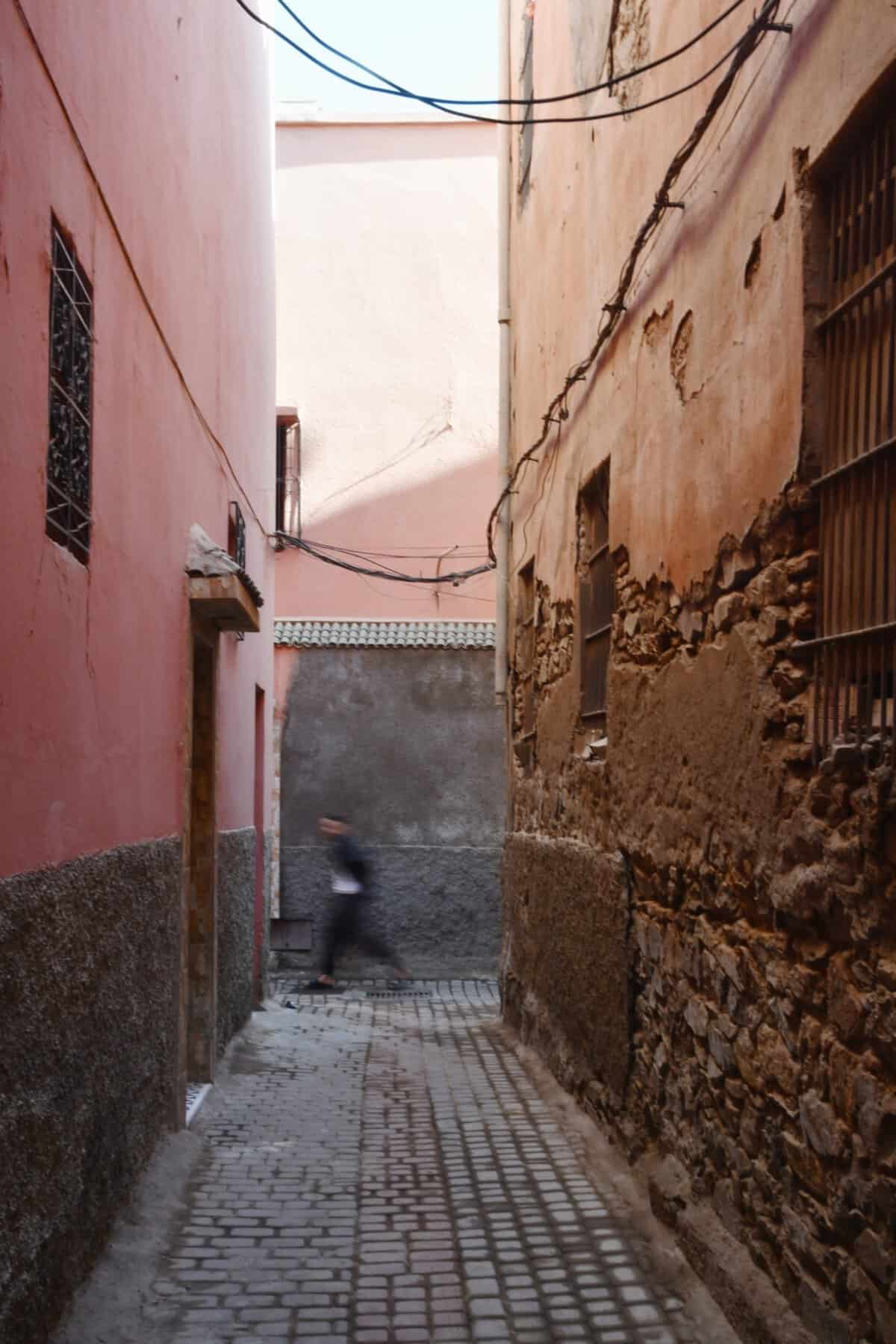
Finding Riad UP for the first time is like solving a puzzle. From the airport or Marrakech train station, a taxi only gets you so close. You walk the last hundred metres through the winding medieval laneways of the Kennaria quarter — a scooter here, a donkey there, buildings all around the colour of dried clay. A wooden sign lets you know you’ve arrived. Inside, the contrast is immediate: white walls, filtered light and silence.
Back out the door, it’s a seven-minute walk in one direction to the legendary Jemaa el-Fnaa, where snake charmers, storytellers and dozens of food stalls collide. The Souk de Tapis is a few minutes further — a paradise for anyone hunting Berber rugs and textiles — alongside Café des Épices. Ten minutes from UP in the other direction and you’re on the doorstep of Bahia Palace, El Badi Palace and the Saadian Tombs. It’s all very easy. Before you know it, you’ll be walking the medina like the back of your hand.
A modernist in Marrakech
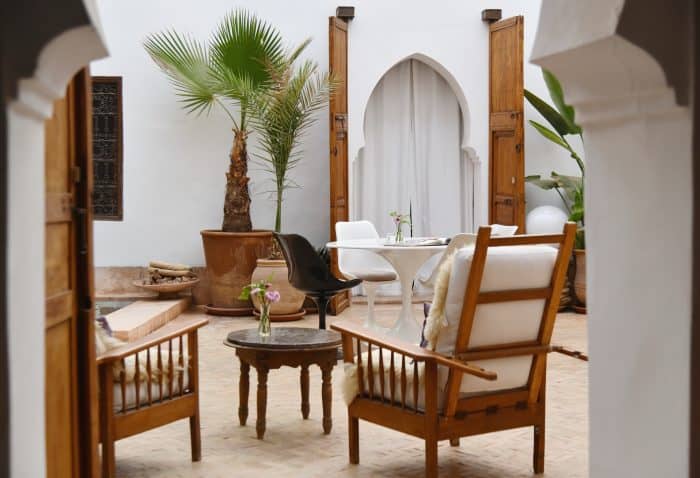
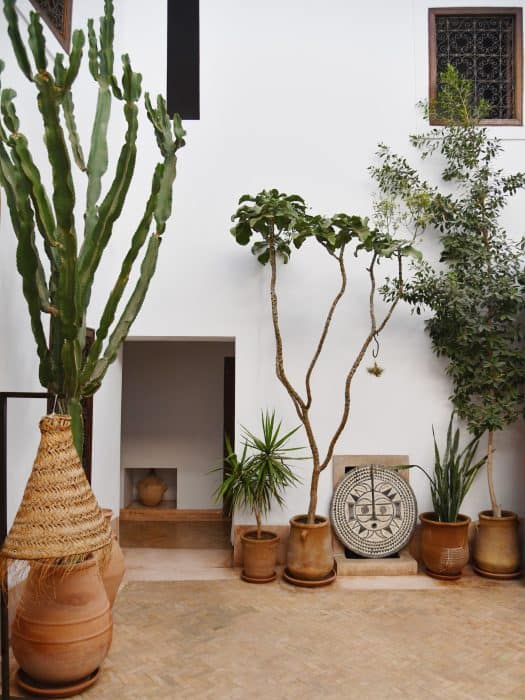
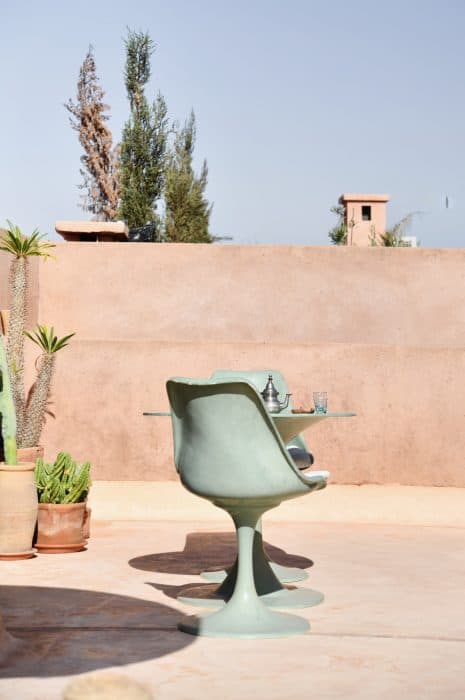
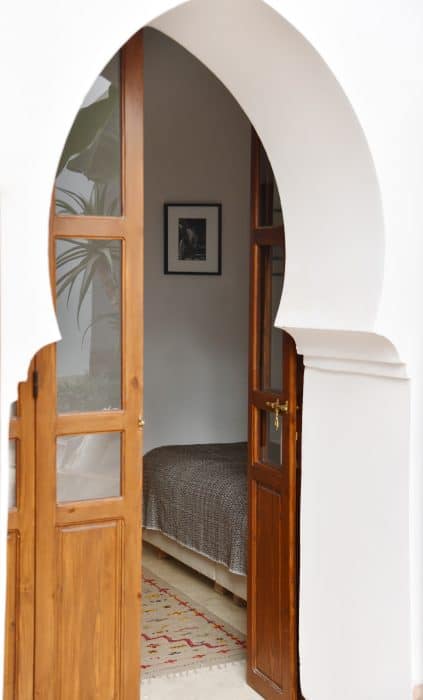
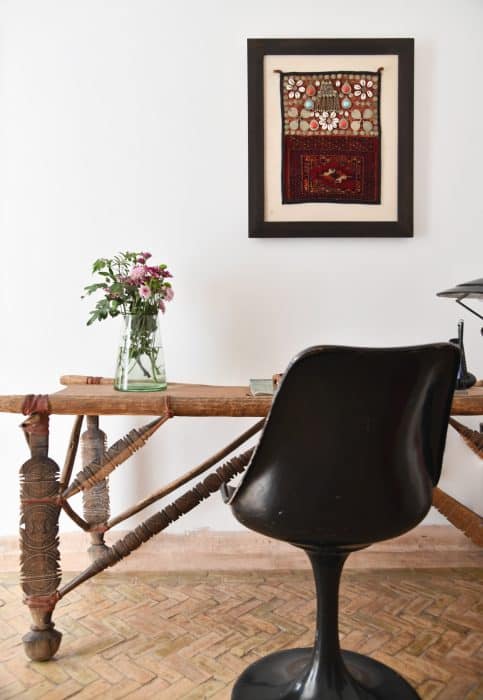
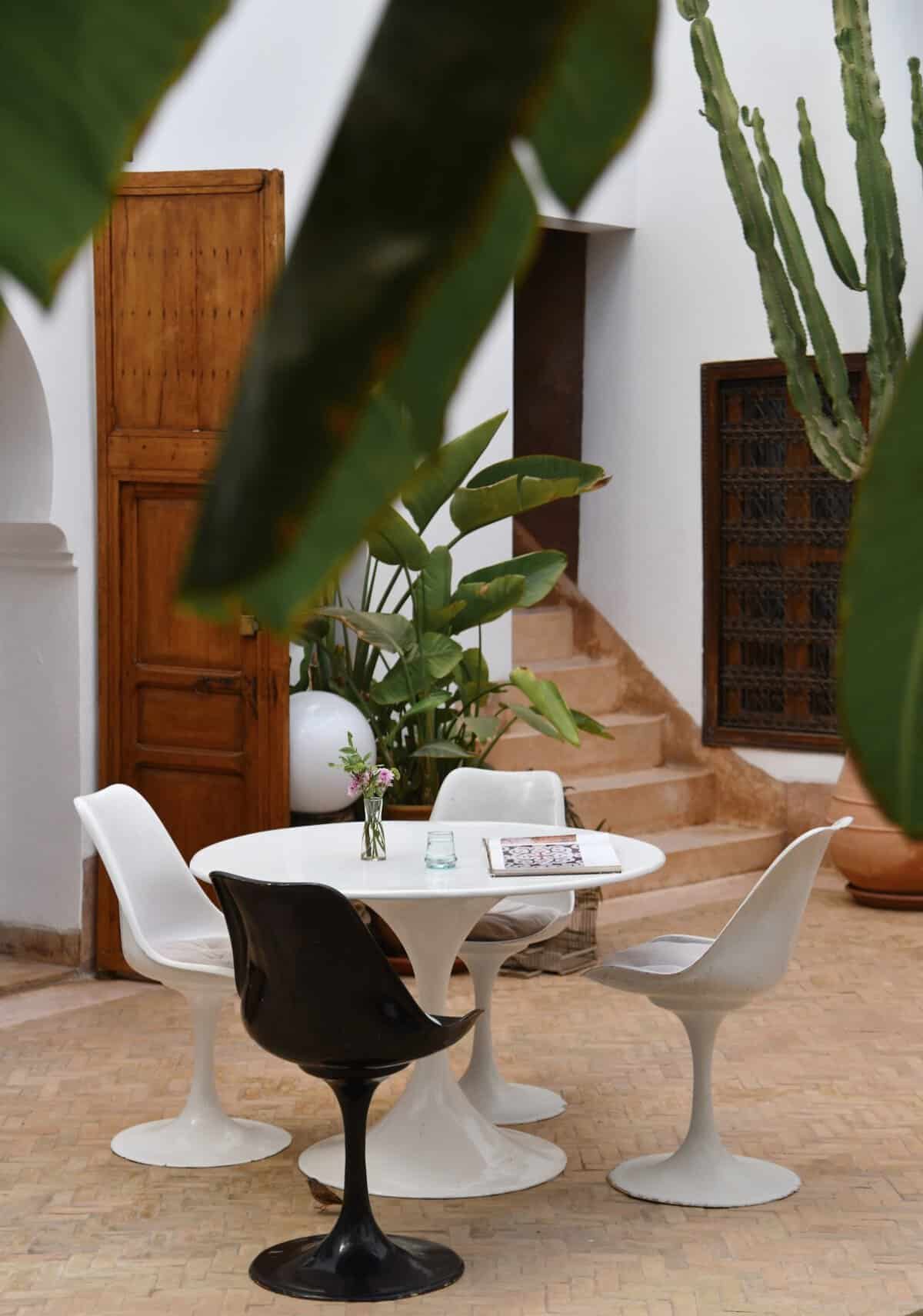
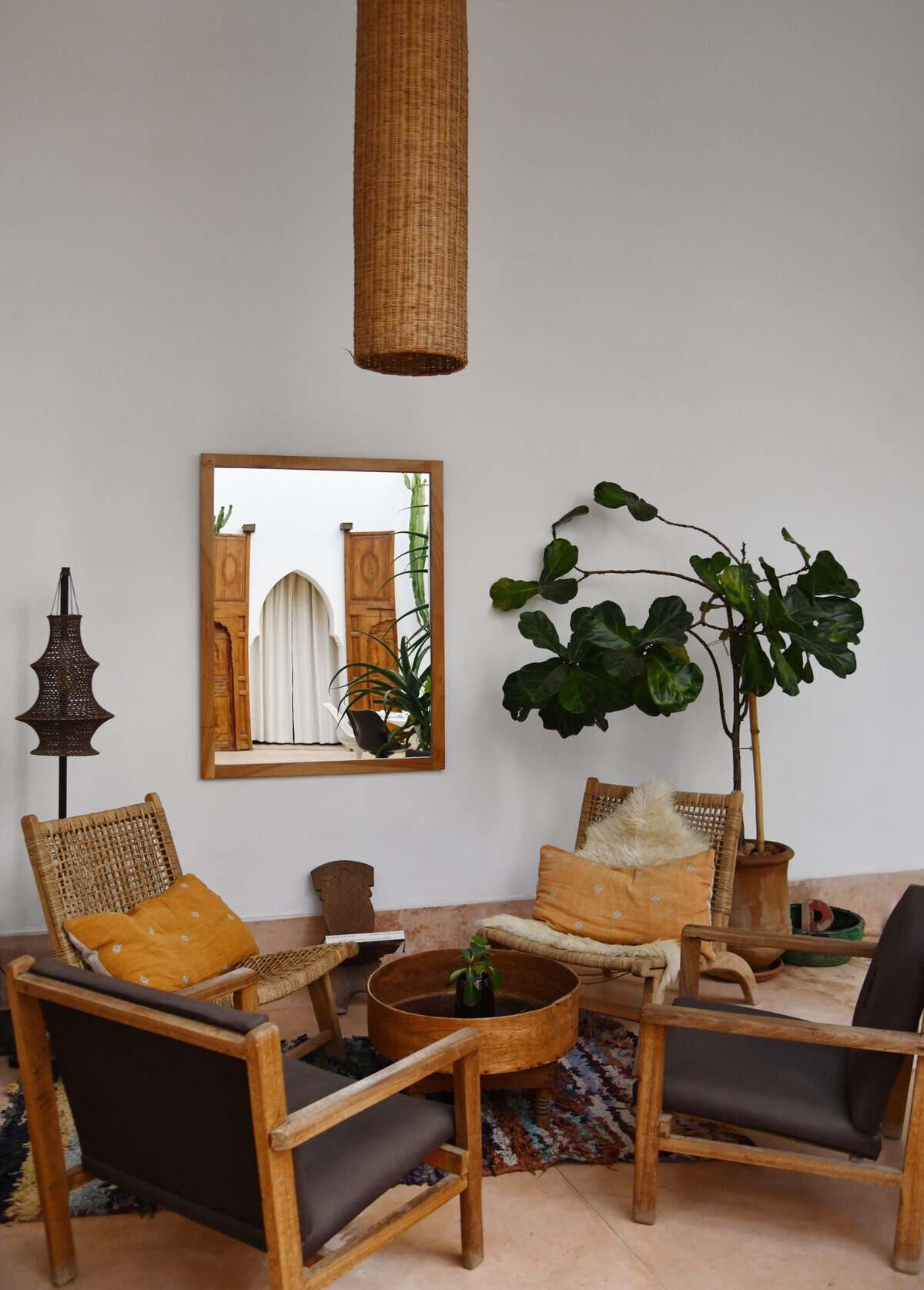
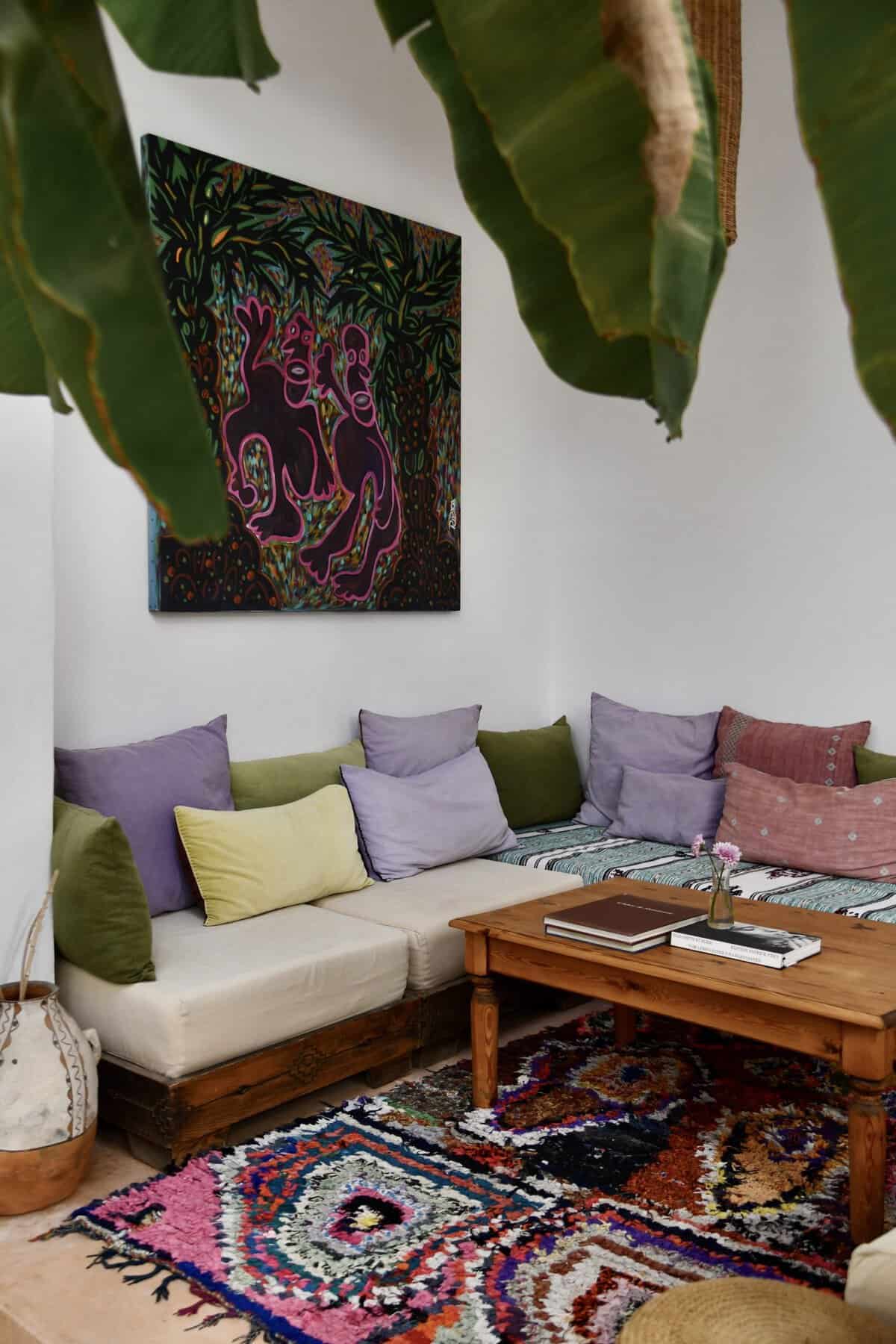
One of Eero Saarinen’s tulip chairs sits at a table made of carved-wood Tuareg tent pegs in the entrance. There’s more Saarinen in the courtyard beyond. Soaring white walls are broken by a trio of keyhole-arch doorways and a window veiled in moucharabieh — carved wooden latticework — a hallmark of Islamic architecture. A cluster of banana palms, pots of cacti and succulents and a pair of vintage timber armchairs punctuate the space. Banquette seating tucked into the corner is dressed in olive, lilac and dusty desert-tone cushions. A painting by Indonesian artist Ribka Chanson-Hendriks speaks to the boucherouite rag rug, its riot of knotted colour reminiscent of Philip Guston.
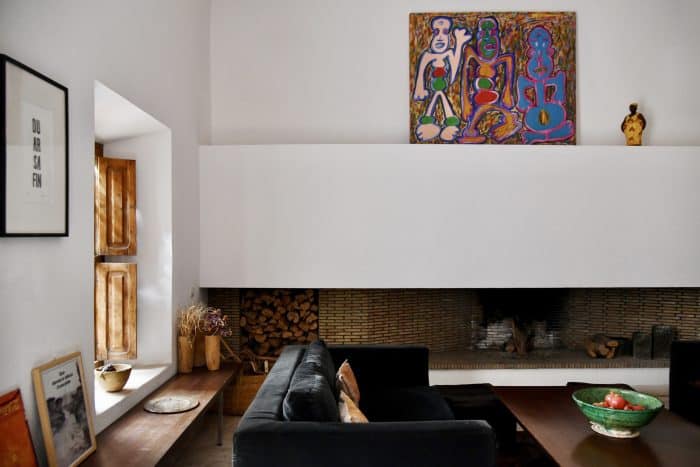
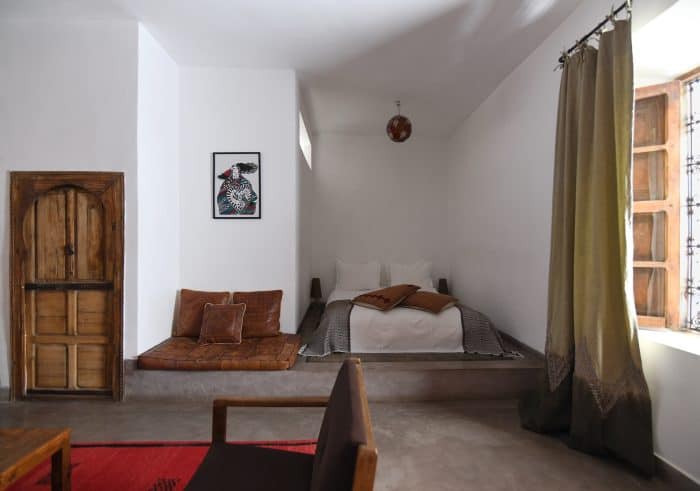
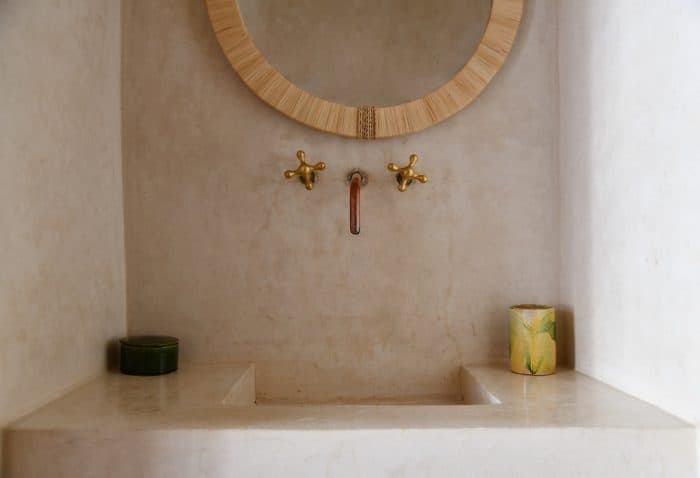
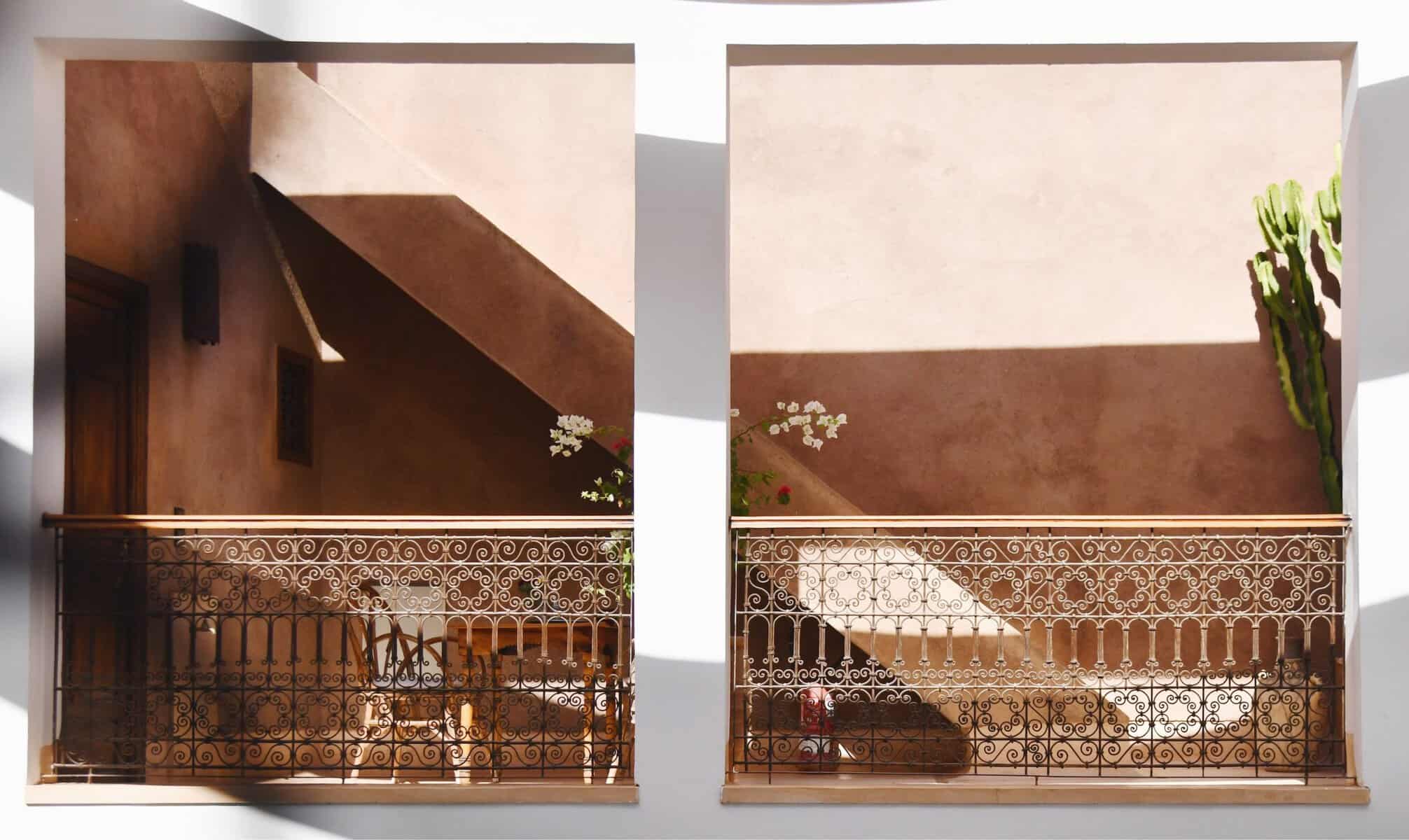
Throughout, the mood is relaxed, never taking itself too seriously. The salon revolves around a sleek architectural fireplace, with modern sofas, a chunky dining table and sparse contemporary art. Upstairs, guest rooms are furnished in Elsa’s bohemian style, with low beds, Berber carpets and blush-coloured tadelakt bathrooms.
From Mallorca to Marrakech
According to one local legend, the unique architectural style of Kennaria stems from a friendship between a medieval king and his physician, who longed for his hometown of Seville. Writing a melancholic poem, the physician described the narrow cobbled streets and architecture of Andalucia. Moved by his words, the king commissioned architects to redesign Kennaria in the Andalucian style so his physician would feel more at home in Marrakech.
Fiction no doubt, although the cultural exchange between Morocco and Spain has long been significant. At their height, the Moors controlled 75% of the Iberian peninsula (8th–10th century), with Berber rulers lending a hand to protect Muslim rule in Al-Andalus. More recently under the Spanish protectorate (1912-56), the traditions of the two lands continued to intermingle.
Centuries later, a 19-year-old Elsa Bauza left her hometown of Andratx on Mallorca — also Moorish territory back in the day — to holiday in Paris, where she fell in love. Over subsequent years, the couple established a pattern of travel: they would drive from France to North Africa, cross the Sahara and then sell the car in West Africa, making magnificent discoveries and adventures along the way. Elsa fell pregnant with daughter Roxanne in 1991, and as the Gulf War unfolded, travel became more precarious. The couple decided to settle down in Paris, where they managed a hotel in the 2nd Arrondissement.
When Roxanne turned seven, the young family travelled by car to Morocco for a month-long holiday, a pattern repeated four or five times a year until they moved permanently to Marrakech in 2001. According to Elsa, the riad in Kennaria “found her” two years later— with its potential, its spirit and its magnificent proportions. A three-year restoration followed and in 2006, Riad W opened its secret wooden door.
When corporate giant W Hotels challenged the name in 2013, Elsa’s lovely abode was renamed Riad WO. Then, after the company pushed back a second time, it relaunched as Riad UP — Urban Paradise — in 2016.
Simple pleasures
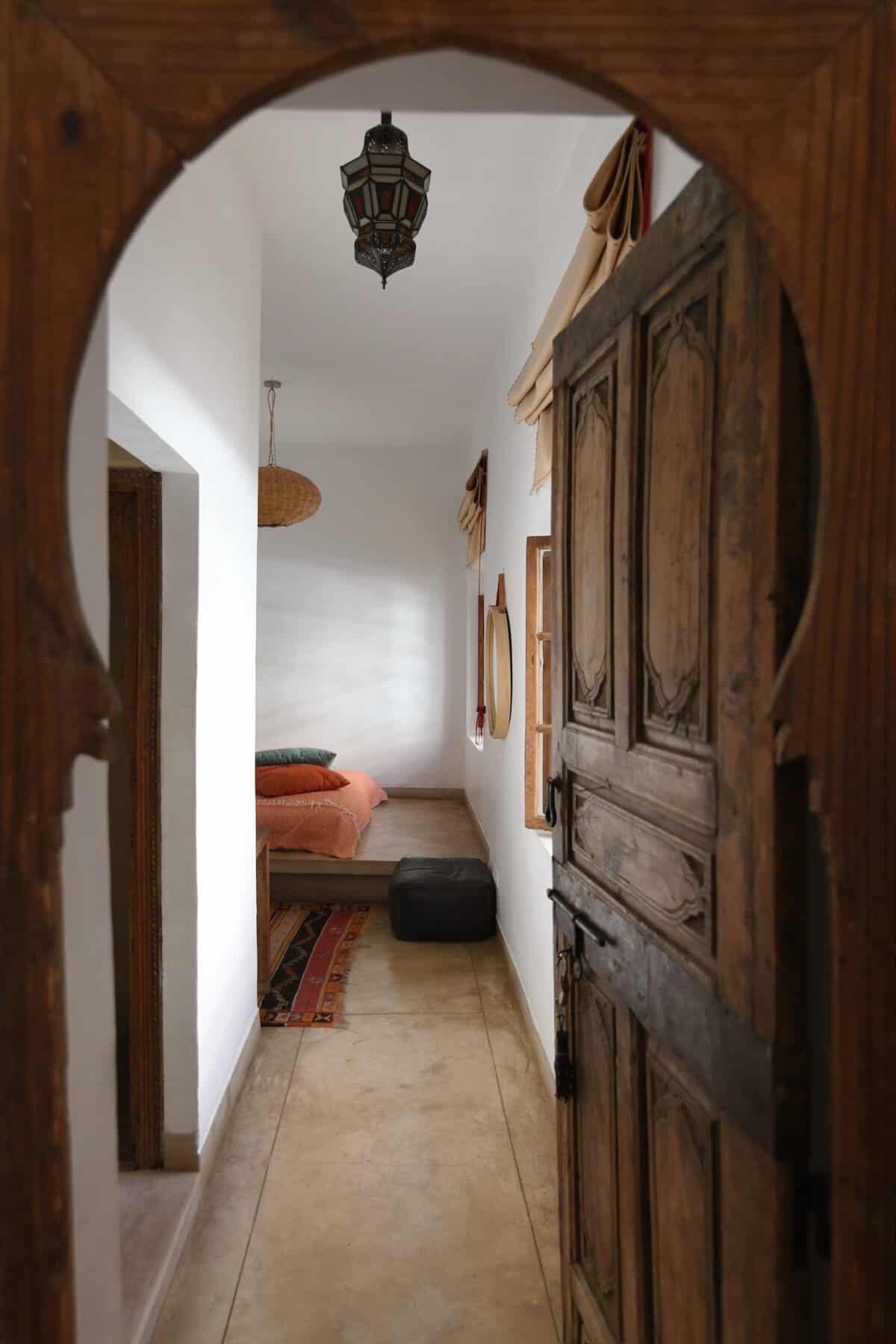
Double Rooms are compact spaces with low, platform beds, perfect for solo travellers or couples in Marrakech for the weekend. The sprawling Berber Suite features a fireplace, king-size bed, separate daybed and full tadelakt bathroom. In between are two Junior Suites, one with the moucharabieh window overlooking the courtyard, the other with a charming sitting area. UP might be light on accoutrements, but thought has gone into the essentials, such as bathroom products dripping in orange blossom and excellent mattresses for a great night’s sleep. All rooms feature A/C and WI-FI.

The best seat in the medina
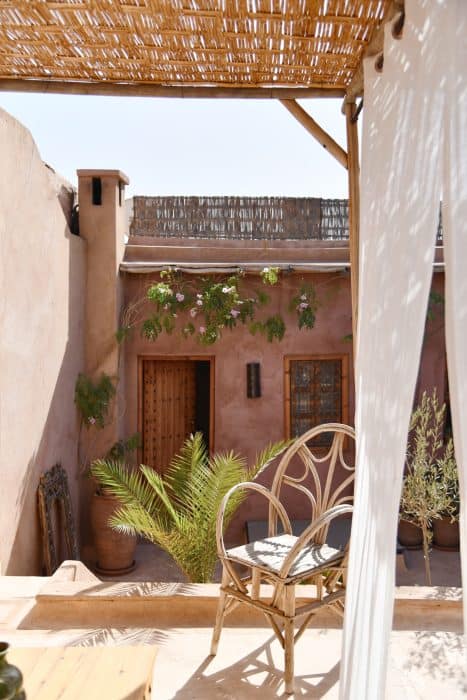
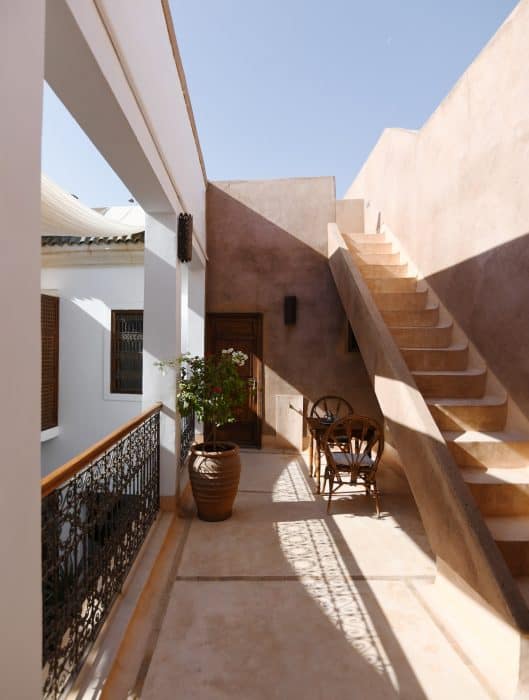
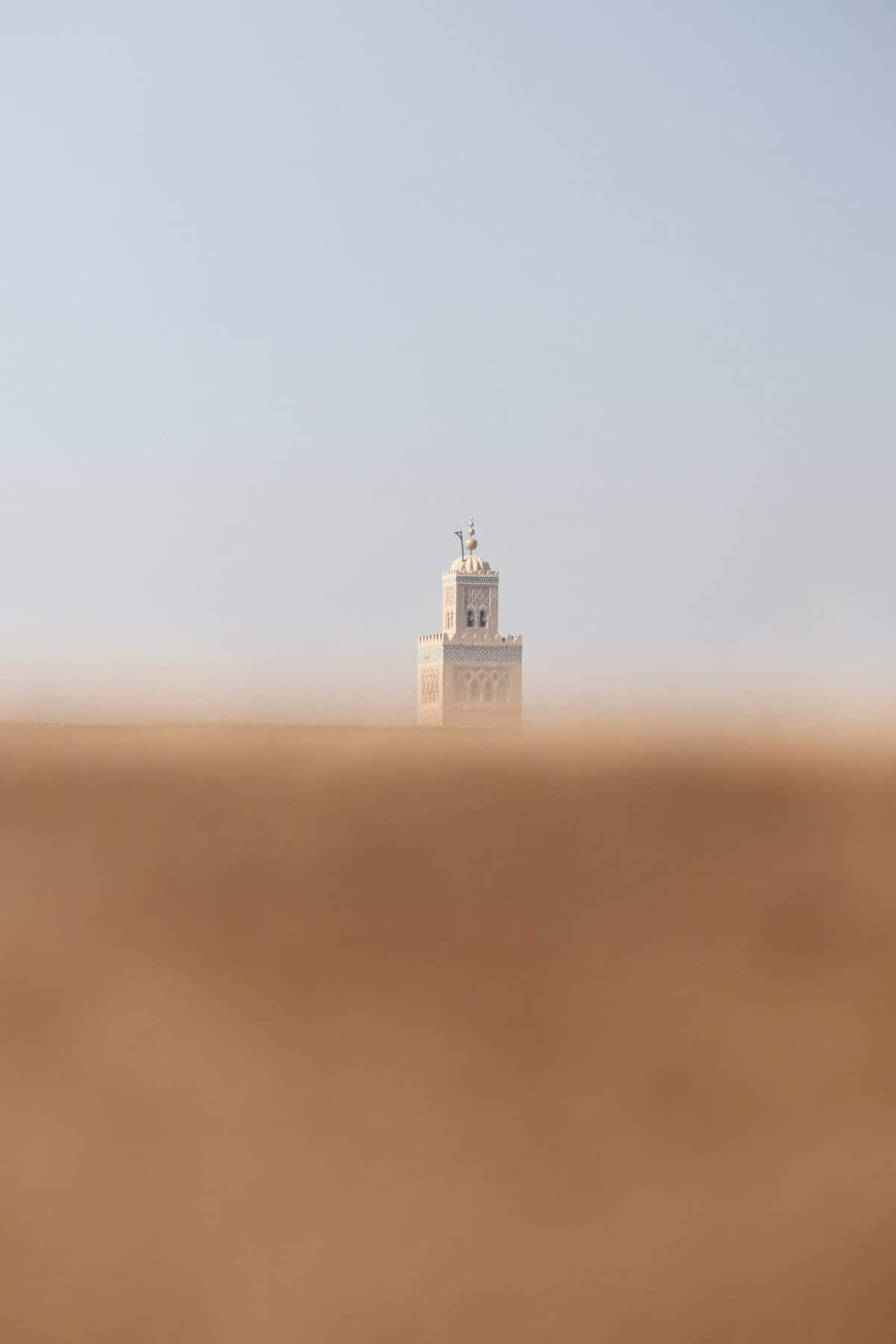
You don’t know heaven until you’ve spent a day bartering in the souk and returned to UP for a dip in the pool and a crisp glass of gris, the palest of pale Moroccan rosé. Across the courtyard, the salon features a sleek architectural fireplace with modern sofas, a chunky dining table and the odd piece of contemporary art. The Junior Suites share a small first-floor terrace. Above, two roof terraces have dining tables, sun loungers and outdoor showers. The larger terrace also comes with a sitting area under a thatched canopy — rustic and lovely as the sun goes down, with its views to the Koutoubia minaret.

Local is best
Drinking water comes in glass bottles. Shampoo and shower gel are supplied in refillable dispensers, alongside handmade soap. Rarely, if ever, do you see plastic anywhere in the property. Food supply is hyper local and largely organic. Homemade bread, crepes and cakes are made fresh in the kitchen each day. Free-range organic eggs come direct from a farm outside Marrakech.
Winter sun, summer heat
With its abundance of winter sun, there’s never really a bad time to visit Marrakech. The heat in July and August is fierce — even September can hit 40°C — although it’s a dry heat, more bearable than humidity. Each season brings its own joy to Riad UP: open fires in winter, the pool in summer, the roof terrace in autumn and spring.
Gentle service
Elsa has a gift for attracting wonderful staff. For years the crew was all women, although a couple of guys have recently joined the team. Khalid, who speaks excellent English, assists Elsa in the running of the riad. Khadija, Souad and Rabia make sure, according to Elsa, that “everything is perfect”. Another Khadija prepares the delicious breakfast, baking fresh bread as well as msemen (traditional flat bread) and baghrir (thin, spongy crumpets), served alongside yoghurt, seasonal fruit and eggs the way you like them. Fati, the cook, arrives later in the day. For me, she’s the best cook in Marrakech. At night, there’s the super-charming Hicham — UP’s guardian angel.
Double rooms from EUR115/night, including breakfast.
To book a room, go to: Riad UP.
Photography: Sarah Jessica Marie Burns.