On Houses Weligama.
A trio of Swahili-inspired villas on Sri Lanka’s south coast capture the spirit of the trade winds.
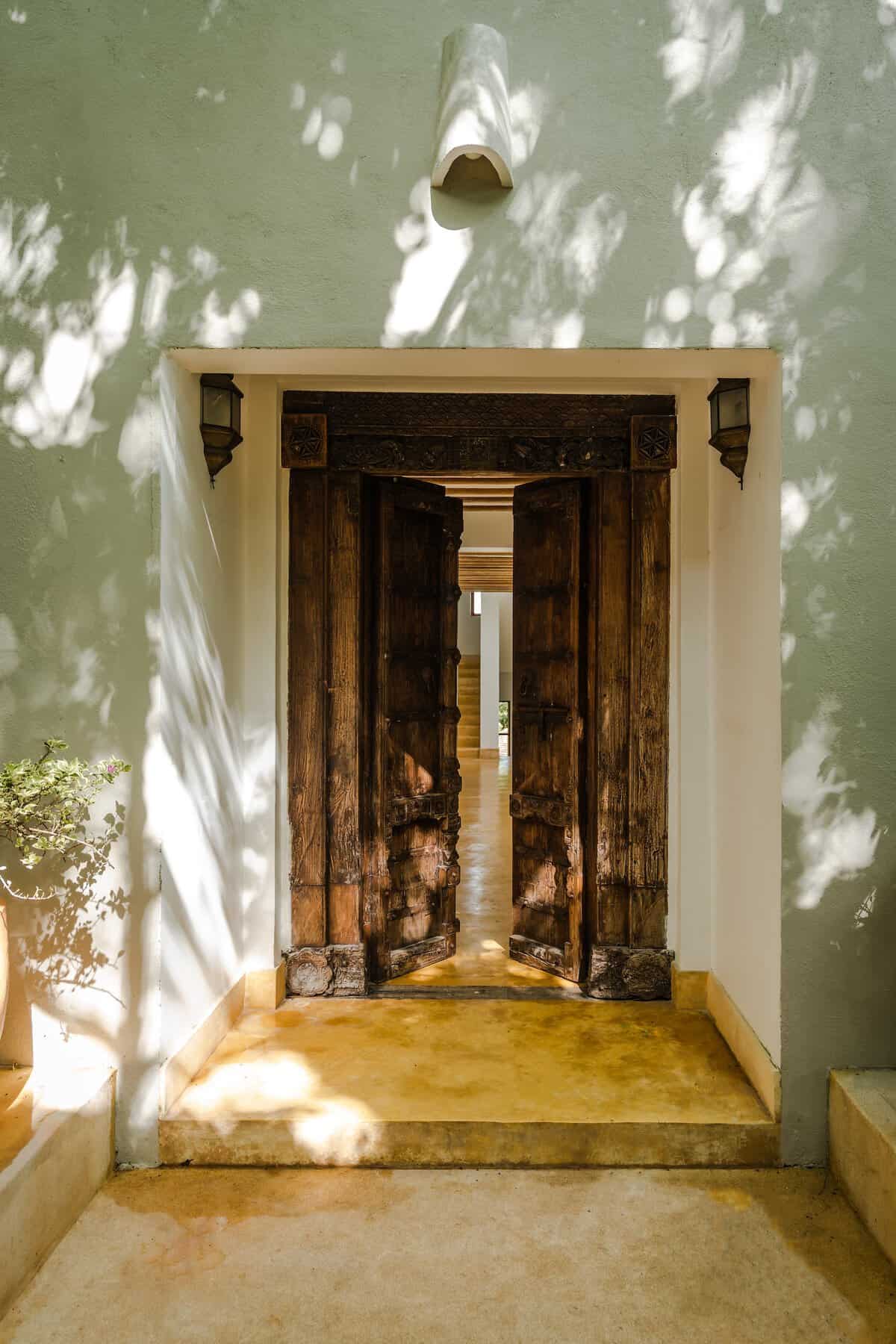
When I checked into On Houses Weligama, the island of Lamu came to mind. Staggered up a hill overlooking Jungle Beach on the South Coast of Sri Lanka, On Houses’ three villas recall the Swahili houses off the coast of Kenya — at least the ones I remembered from a yoga trip to Shela, a laid-back village on Lamu’s southern shore, back in 2003. For the most part, Lamu facades are whitewashed and fortress-like, with detail concentrated at the entrance. Elaborately carved wooden doors are the primary decorative statement. Restraint outside, richness within.
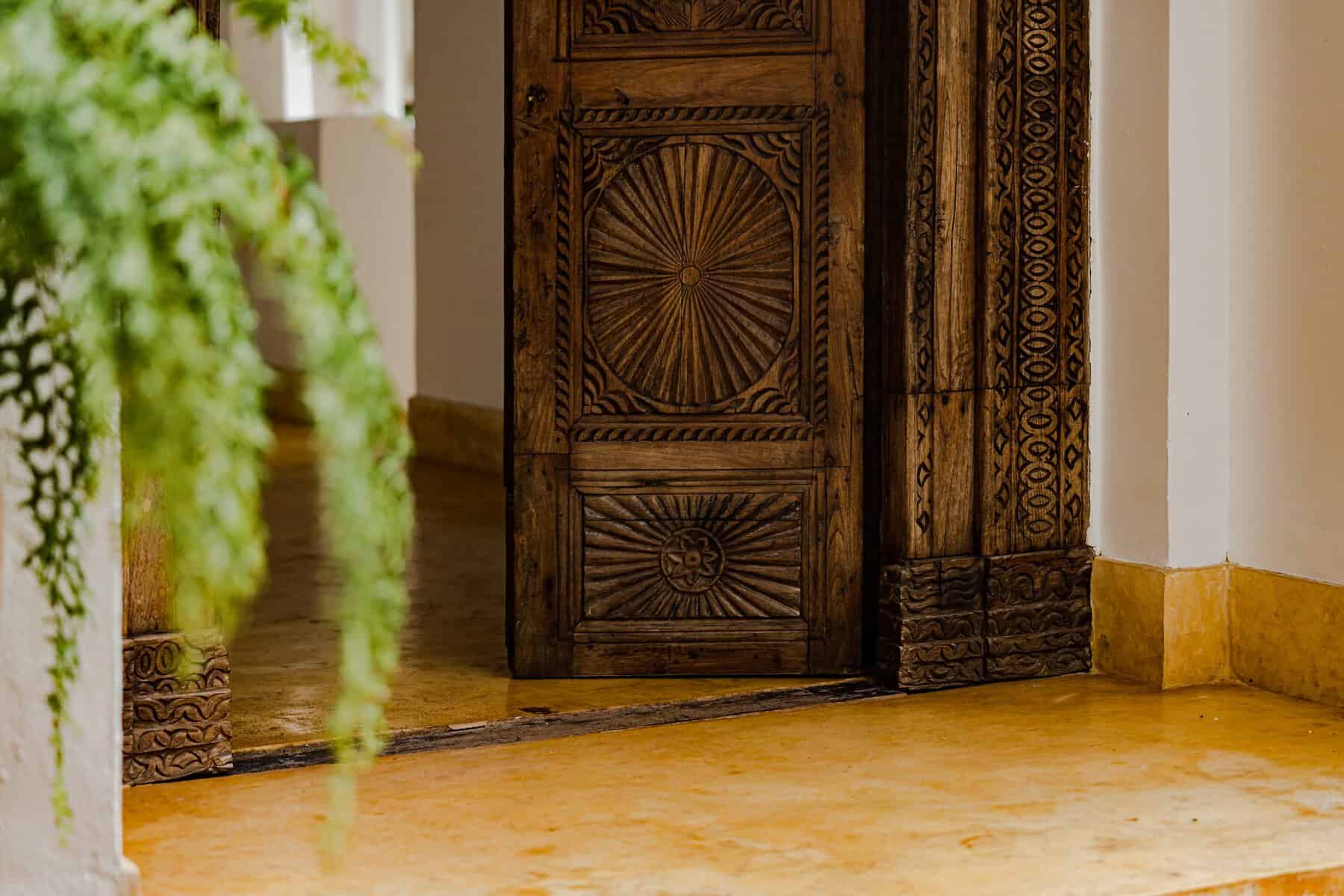
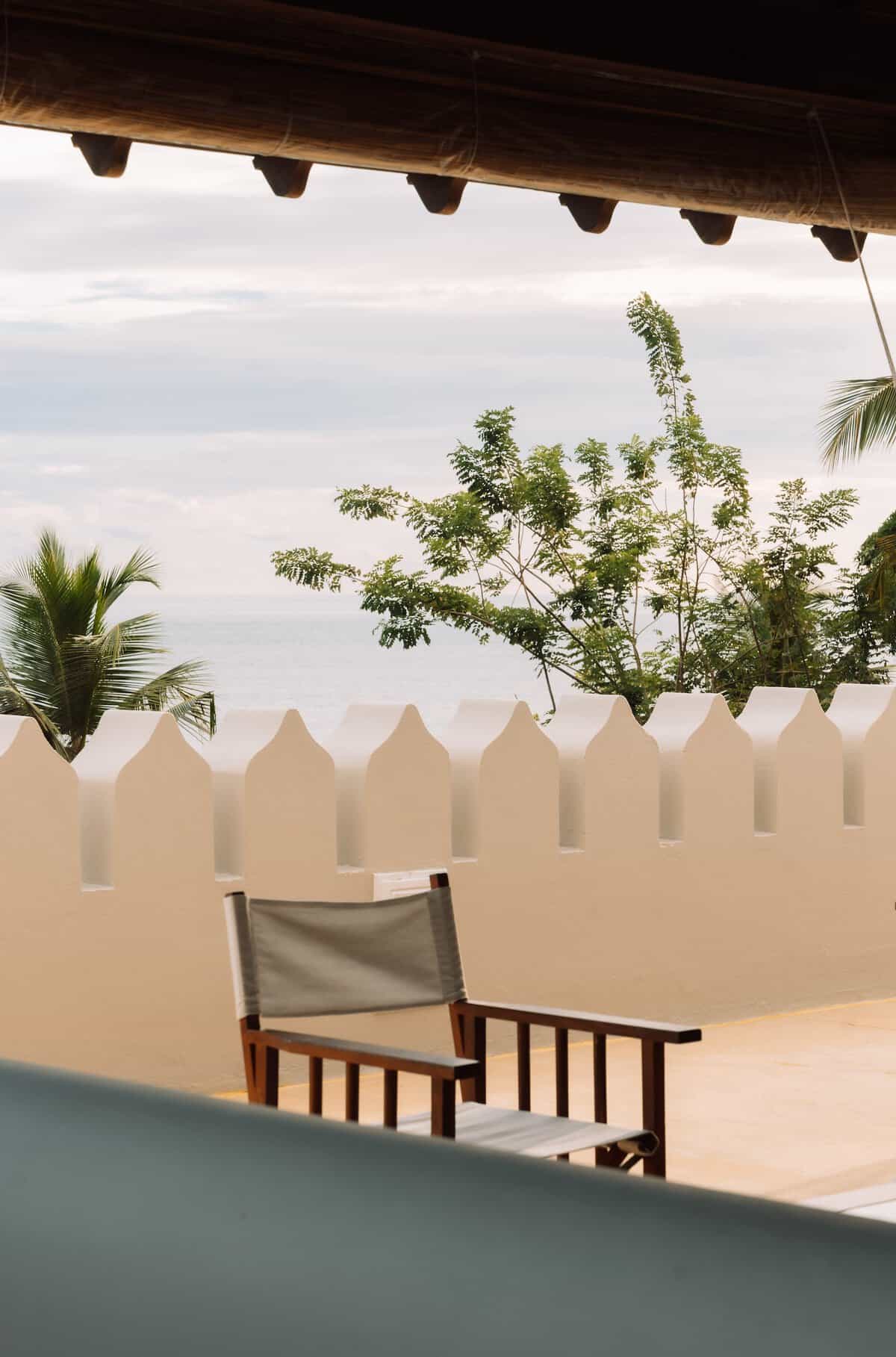
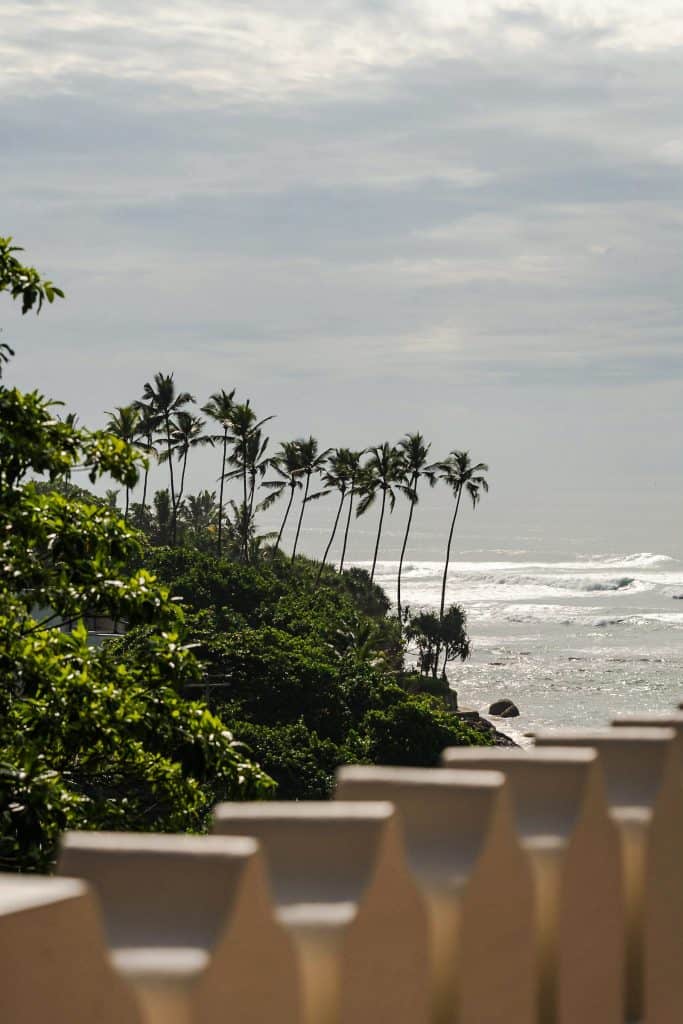
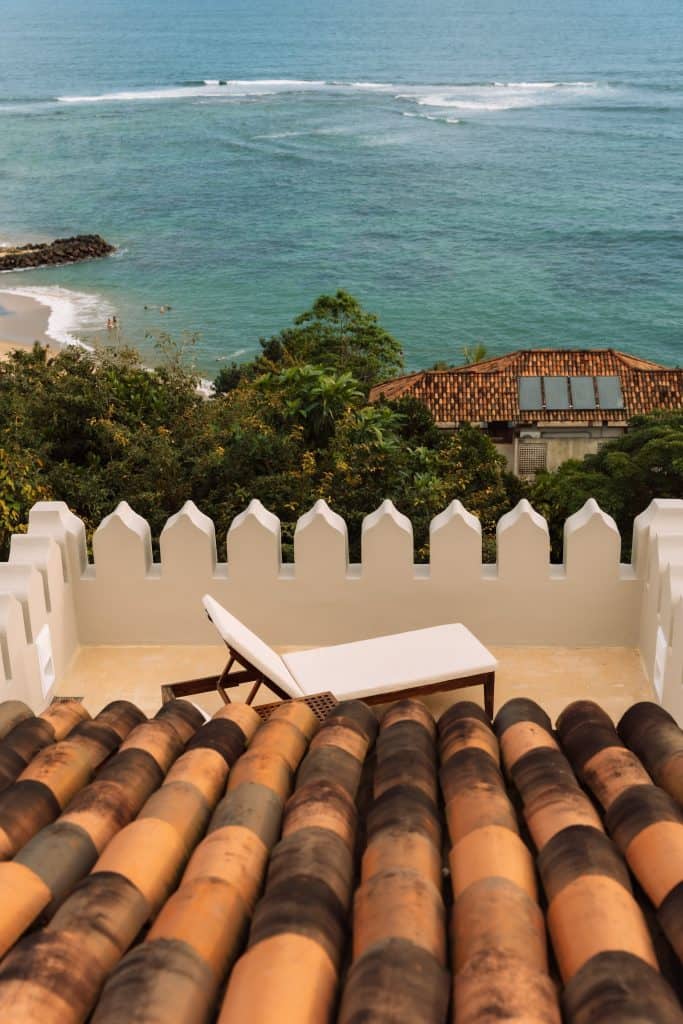
Strip away the hyper-lush tropical foliage surrounding On Houses and you could be in Lamu. Beyond the monumental carved-timber doors, a long entrance hall and central staircase give way to hidden, luminous spaces. Madaka and zidaka niches, fixtures of Swahili decoration, transform walls into dynamic architectural features. Pointed Swahili battlements crown the parapets, cutting striking profiles against the palm trees and Indian Ocean beyond.
As a style it may not seem rooted in place, although it is adjacent. Lamu and Sri Lanka share more than aesthetic sensibility: both were ports on the Maritime Silk and Spice Route, shaped by centuries of exchange between Arab, Persian and Indian merchants. Style followed the trade winds, the slender palms, white sand beaches and shared ocean waters making the architecture feel less borrowed, more at home.
A love letter to Lamu
On Houses Weligama was created by Karyn and Adam Robarts, founders of Robart Spaces, an architecture and design firm with offices in Beijing, Shanghai and Shenzhen. By chance I got to meet their son, Tallis Robarts, who lives in Bali but was staying at one of the other villas. He confirmed what the architecture suggested: the property is a love letter to Lamu. His parents had fallen for the island’s geometric houses on one of their trips there; Adam Robarts, who studied architecture at Cambridge, also grew up in Kenya.
Three houses, one horizon
Three villas — Ceylon, Celadon and Saffron — take their names from commodities that once travelled the same trade routes: tea, ceramic glaze and spice. Each has five en-suite bedrooms, vast indoor-outdoor living spaces and an infinity pool. At 2.95 metres, it’s deep enough to jump into the water from the balcony above.
The palette differs between the houses but the outlook is the same: down the hill through palms and frangipani to the crystalline waters of Jungle Beach, with its swimmable shoreline and intermediate surf break. Weligama’s centre is three kilometres away.
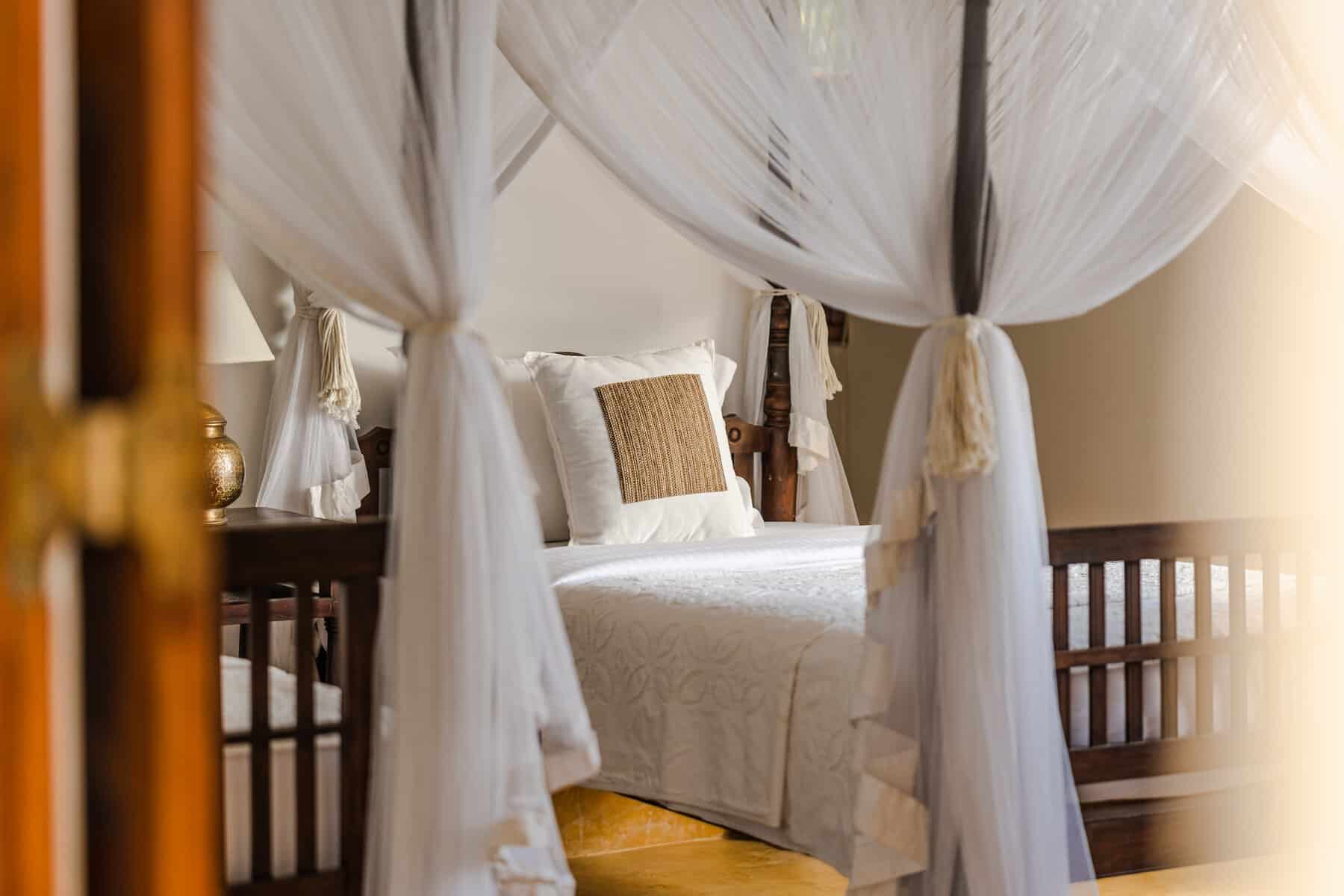
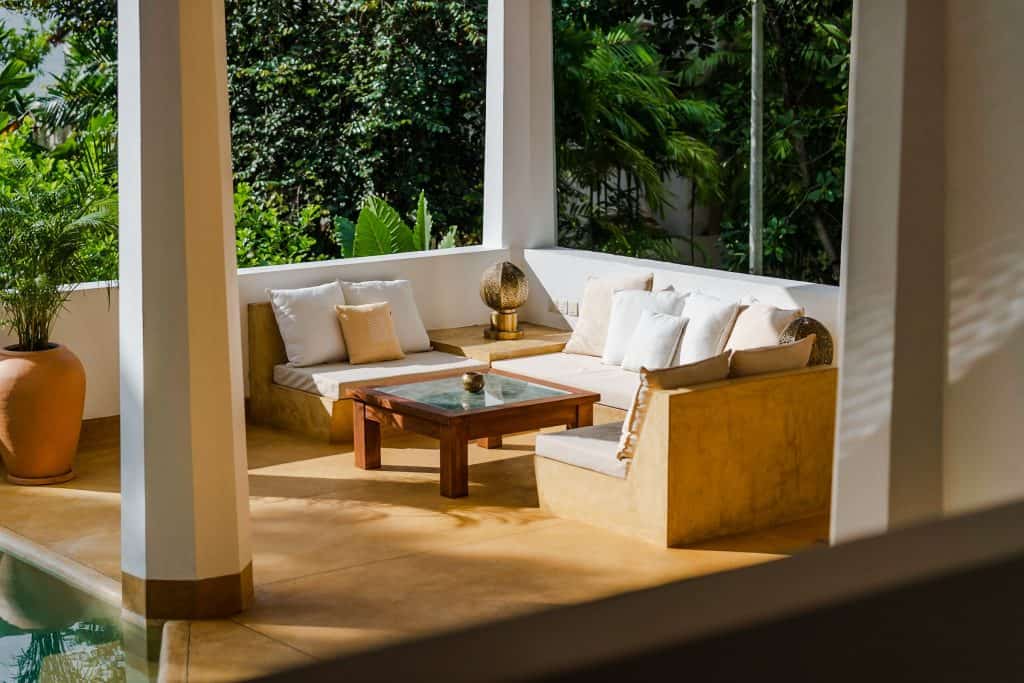
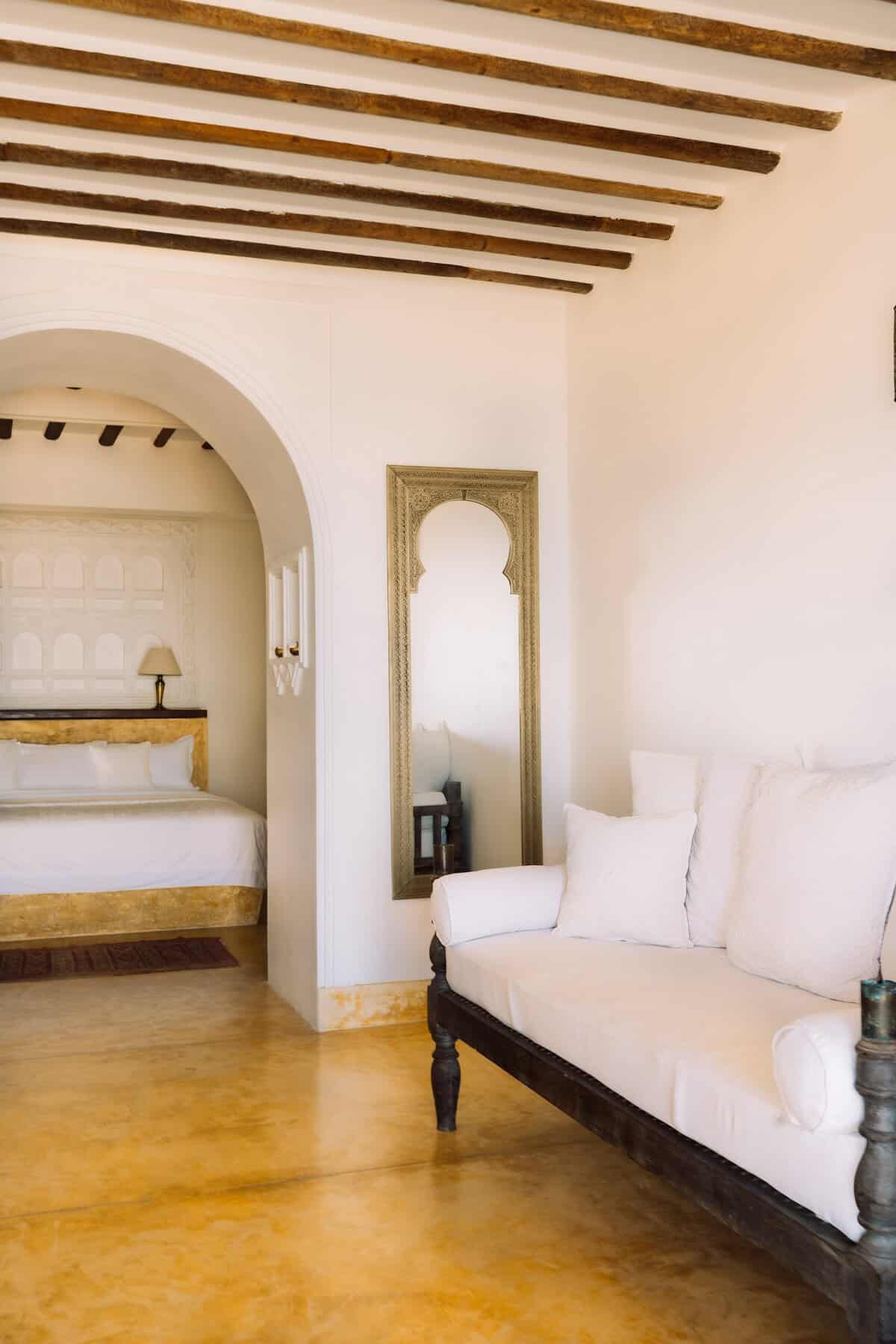
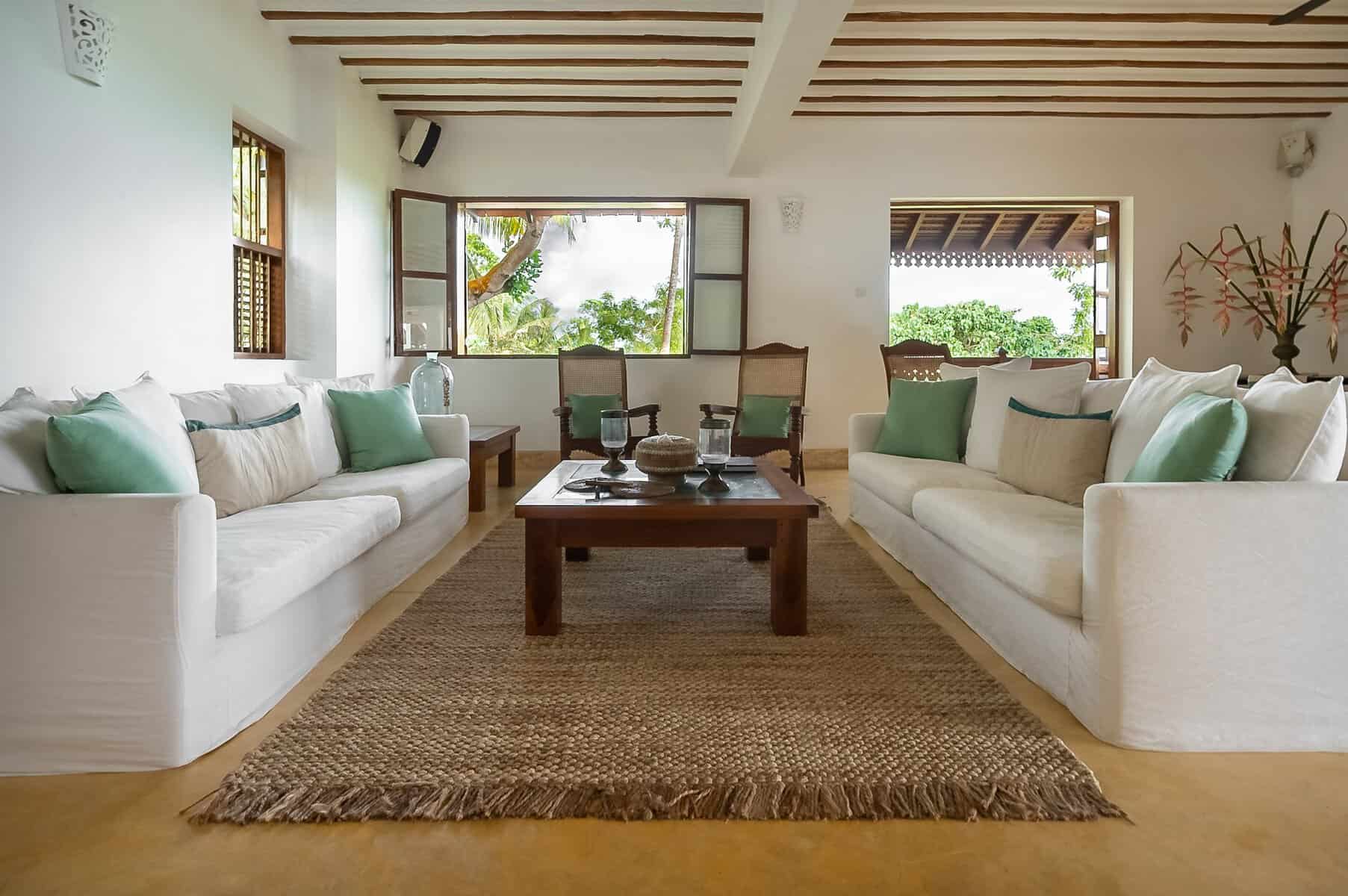
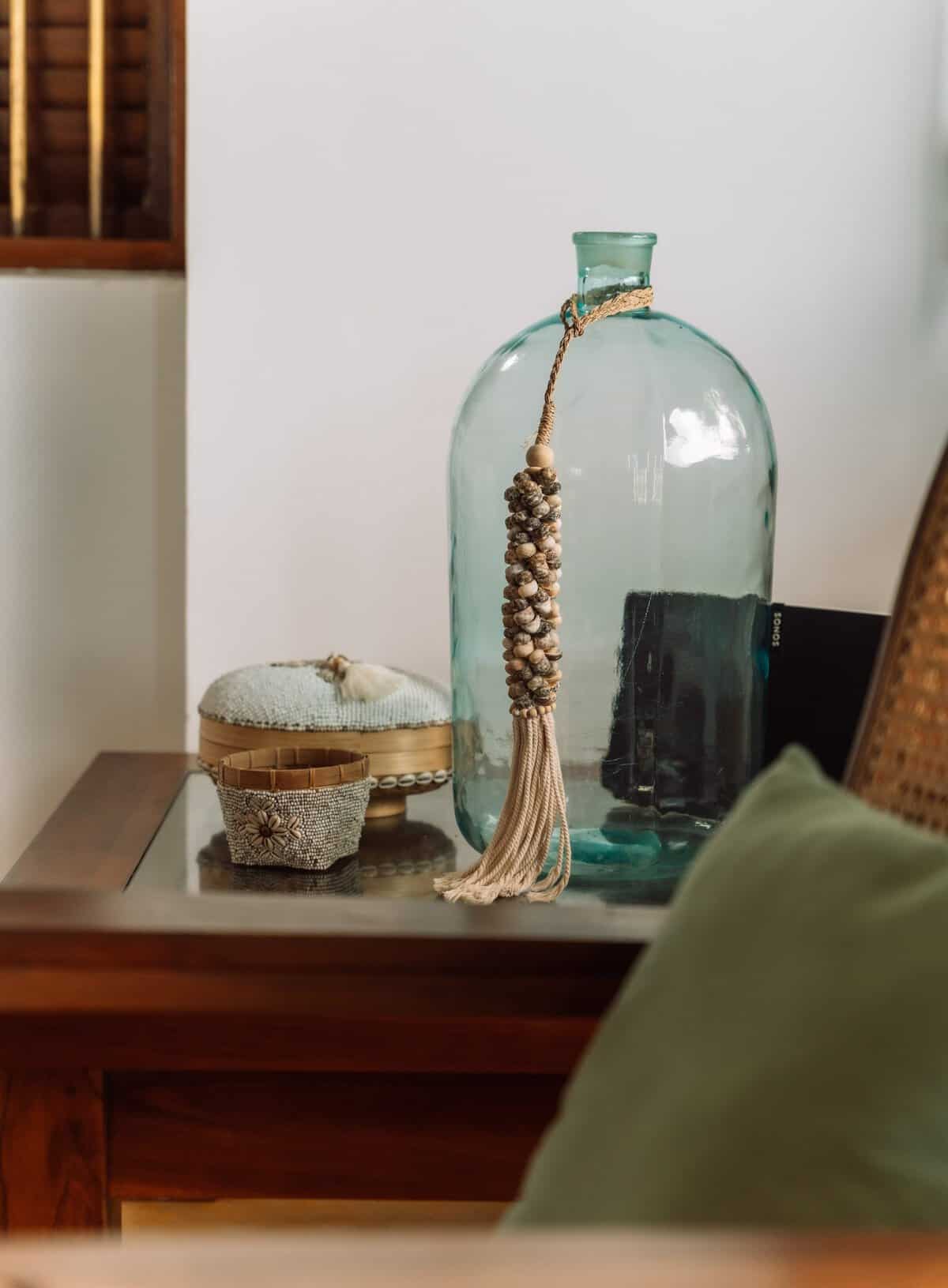
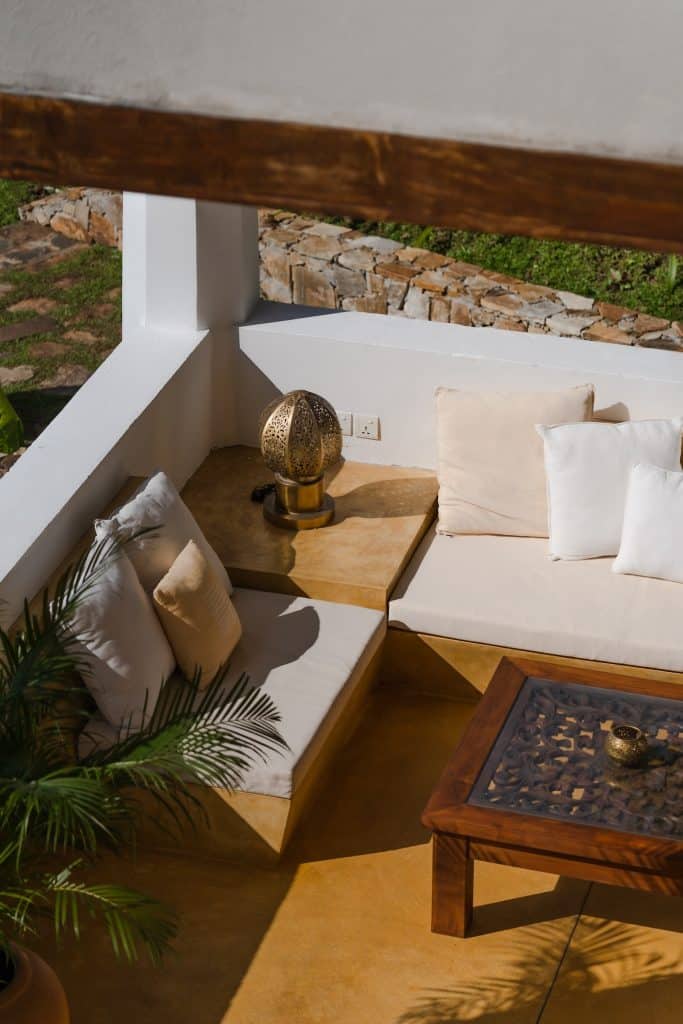
White walls, contemporary white sofas and Sri Lankan colonial furniture float across turmeric-coloured floors — yellow iron oxide mixed into wet cement, cut and polished to resemble terrazzo, super glossy and without the chunks of stone. The visual contrast is dazzling, a golden counterbalance to the greens and blues outside, cool and glassy underfoot. The flow between inside and out is seamless, living and sleeping spaces spilling onto terraces framed by intricately styled Swahili balconies. It’s the perfect beach hideaway: deck chairs, hammocks and deep banquettes on terraces; bedrooms — all have ocean views — with Dutch colonial four posters, mosquito nets and not much else.
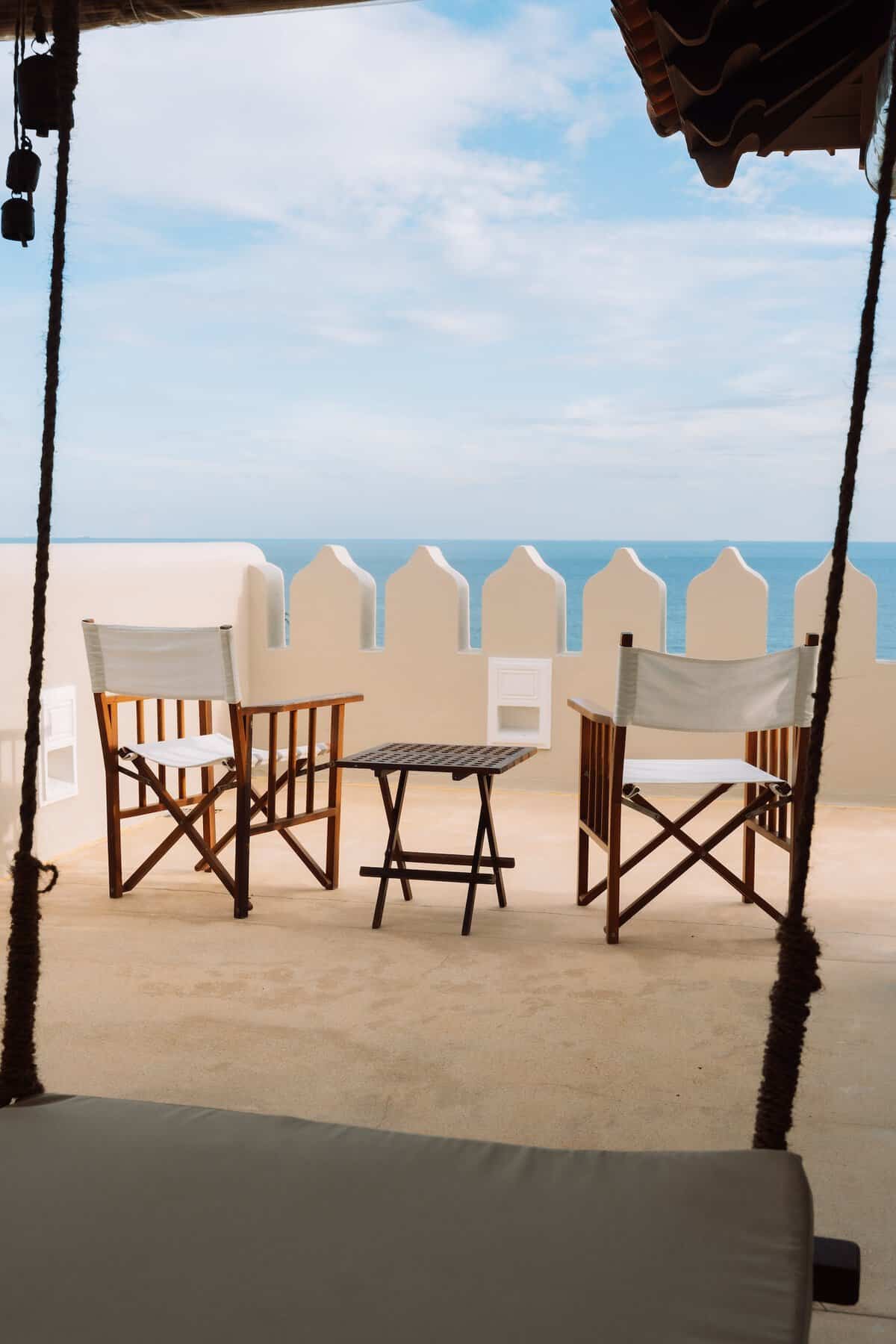
Barefoot luxury at Celadon House
Travelling solo in Sri Lanka I had Celadon House to myself, although at 950 square metres, it would still feel generous at full capacity. Ceylon and Saffron House have similar footprints. Once inside, u-shaped steps descend to the swimming pool, flanked by loggias with sun loungers and cosy banquette seating. There’s a bathroom and massage room on the same floor. Few pools come with better views: turquoise-green water to the infinity edge, then jungle canopy and the odd terracotta roof to the surf break below.
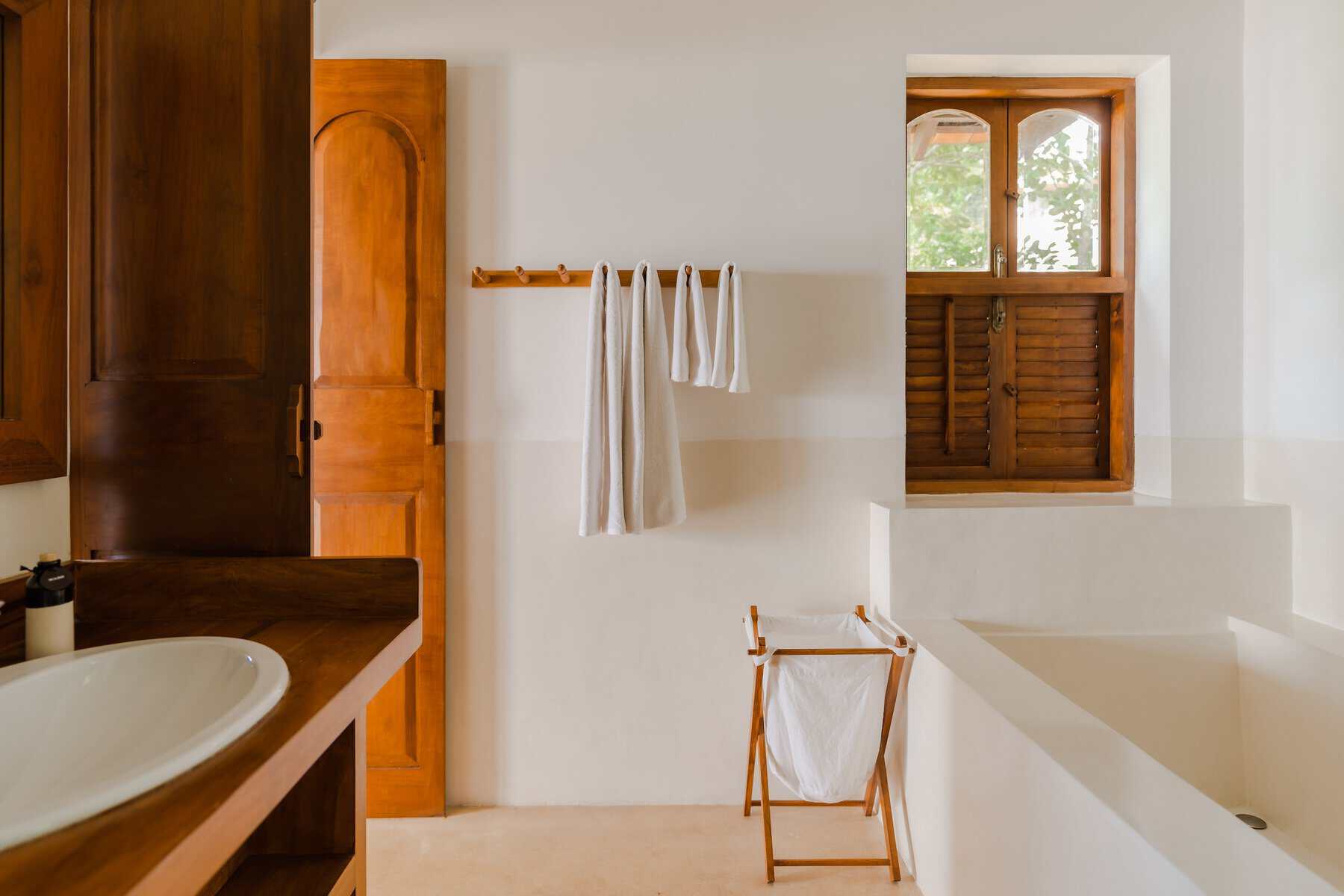
A central staircase leads up to a shady living room and dining terrace beyond, alongside two mirror-image guest bedrooms, with king-size beds, secluded terraces and knockout views of Jungle Beach. There’s a twin bedroom and two king bedrooms another floor up. The largest comes with a separate sitting room and bathroom in dark wood and polished plaster, its bathtub accessed through a pointed Mughal arch.
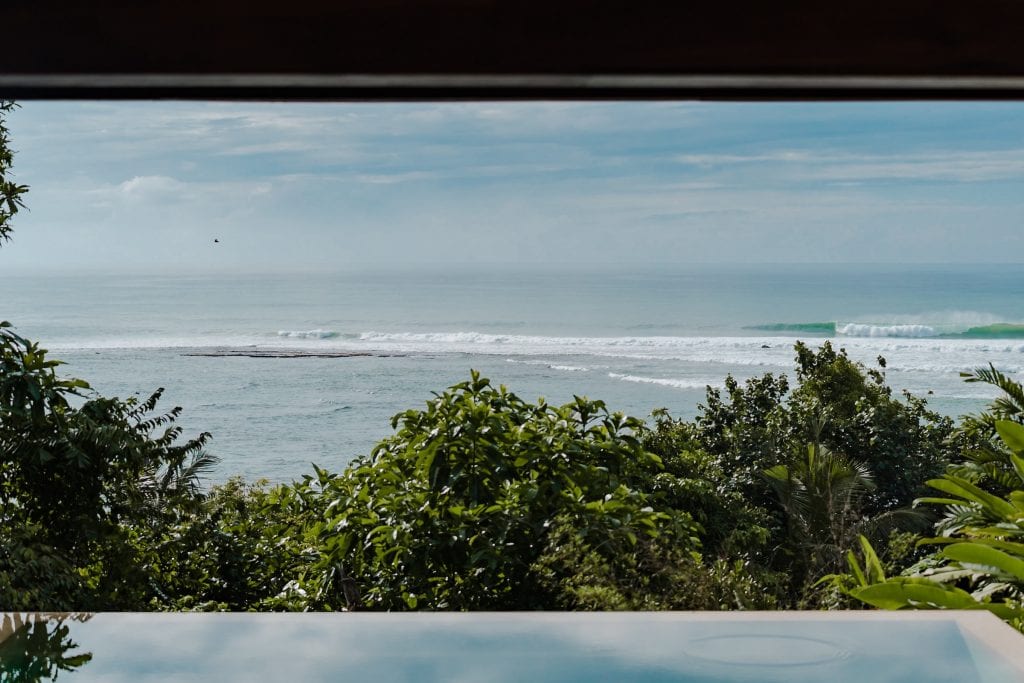
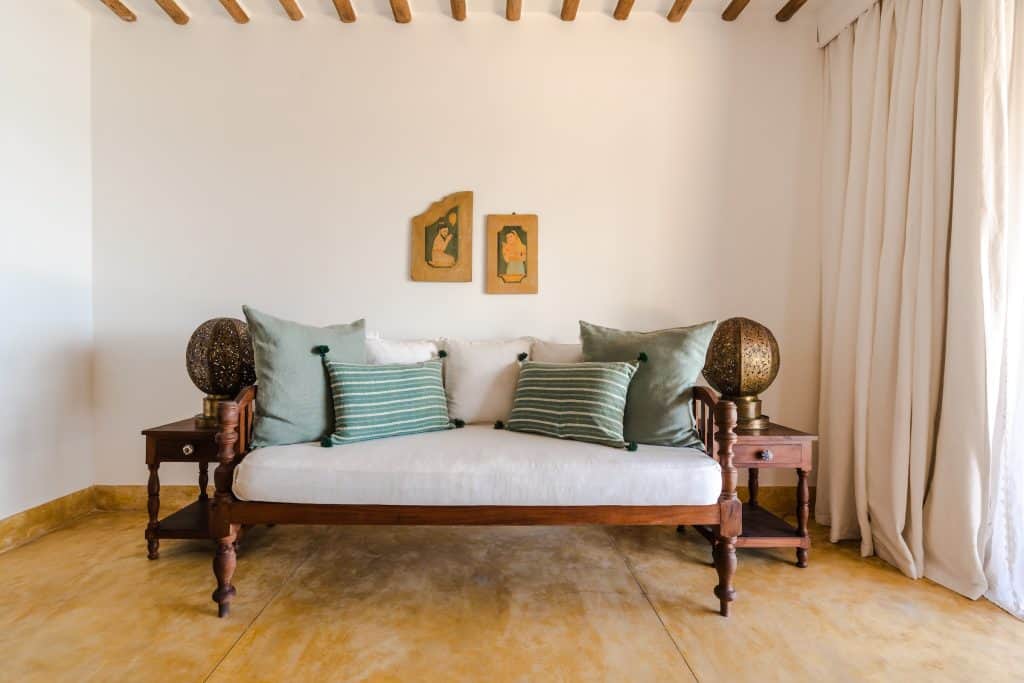
Discreet service and local delicacies
Each house comes with a host and cook, as well as housekeeping and security staff. Service is unobtrusive. The menu changes daily and can be confirmed with the cook, who uses fresh local produce for every meal, served in the outdoor dining pavilion or on the first-floor dining deck. Plates shift between comfort food and local delicacies: quesadillas; grilled chicken with roasted aubergine and watermelon salad; slow-roasted king coconut with prawns; banana leaf fish. Full board is charged at US$50 per adult per day, or $12 for breakfast, $15 for lunch and $23 for dinner.
Tearing yourself away from On Houses Weligama can be a chore — and for anyone who doesn’t want to leave, Celadon House is currently for sale. Chef Akila’s Kitchen is not only worth the effort, though, it’s one of the best dining experiences you’ll have anywhere in Sri Lanka. The chatty and charming Akila had the number one restaurant in all of Weligama, which burnt down after a gas explosion in 2021. Akila’s son was injured in the fire. Together they returned to their family home in a nearby village, set up a kitchen in the carport and a few tables in the garden, and began cooking again.
This was where I met Akila. His curry was a standout — homemade coconut milk, lemongrass, cardamom and the sweetest Weligama prawns — washed down with an ice-cold Lion Lager. I was delighted to discover that a few weeks before writing this story (following a five-year GoFundMe campaign), Akila and his son have opened a new restaurant by the water’s edge, The Cliff: Chef Akila Kitchen.
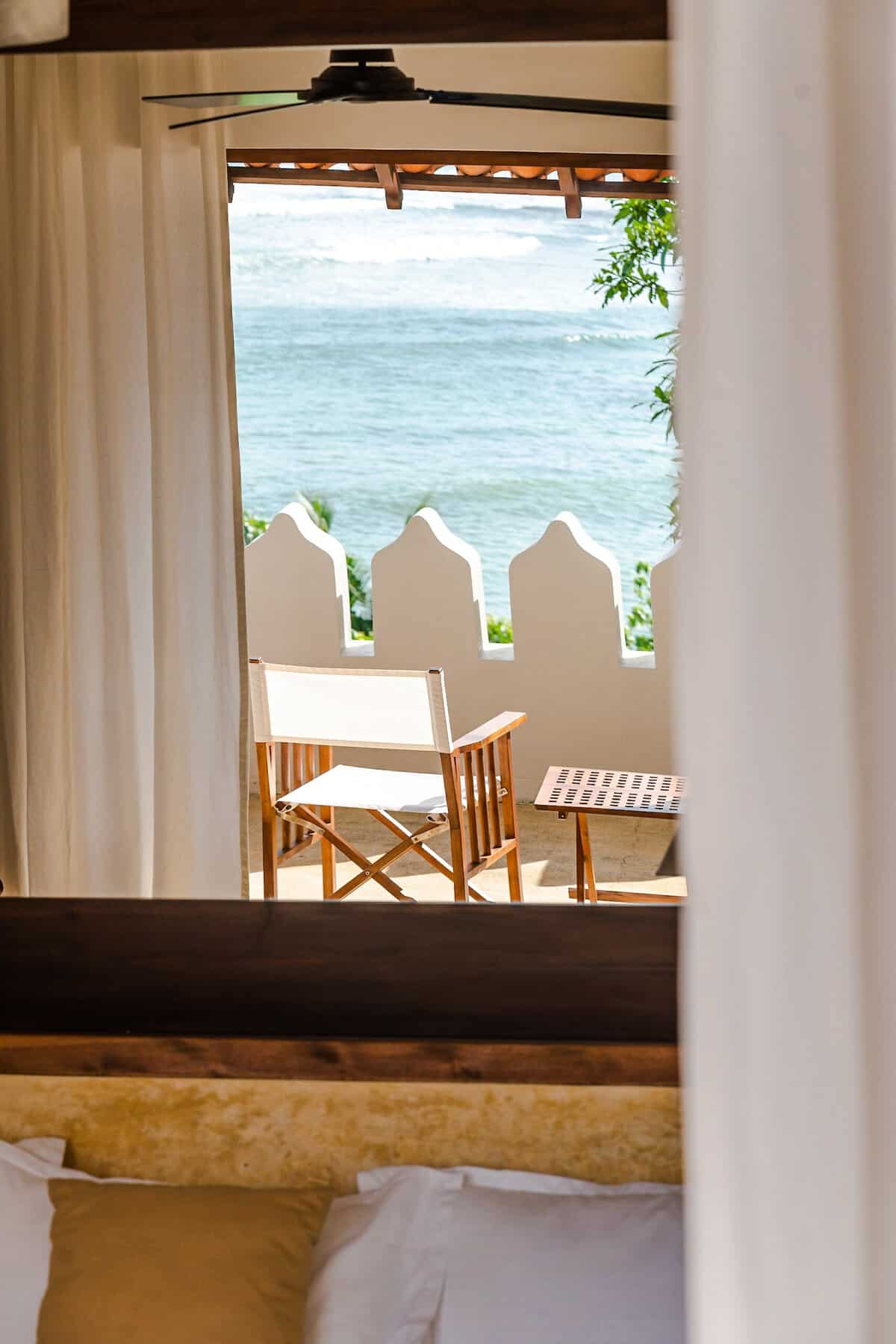
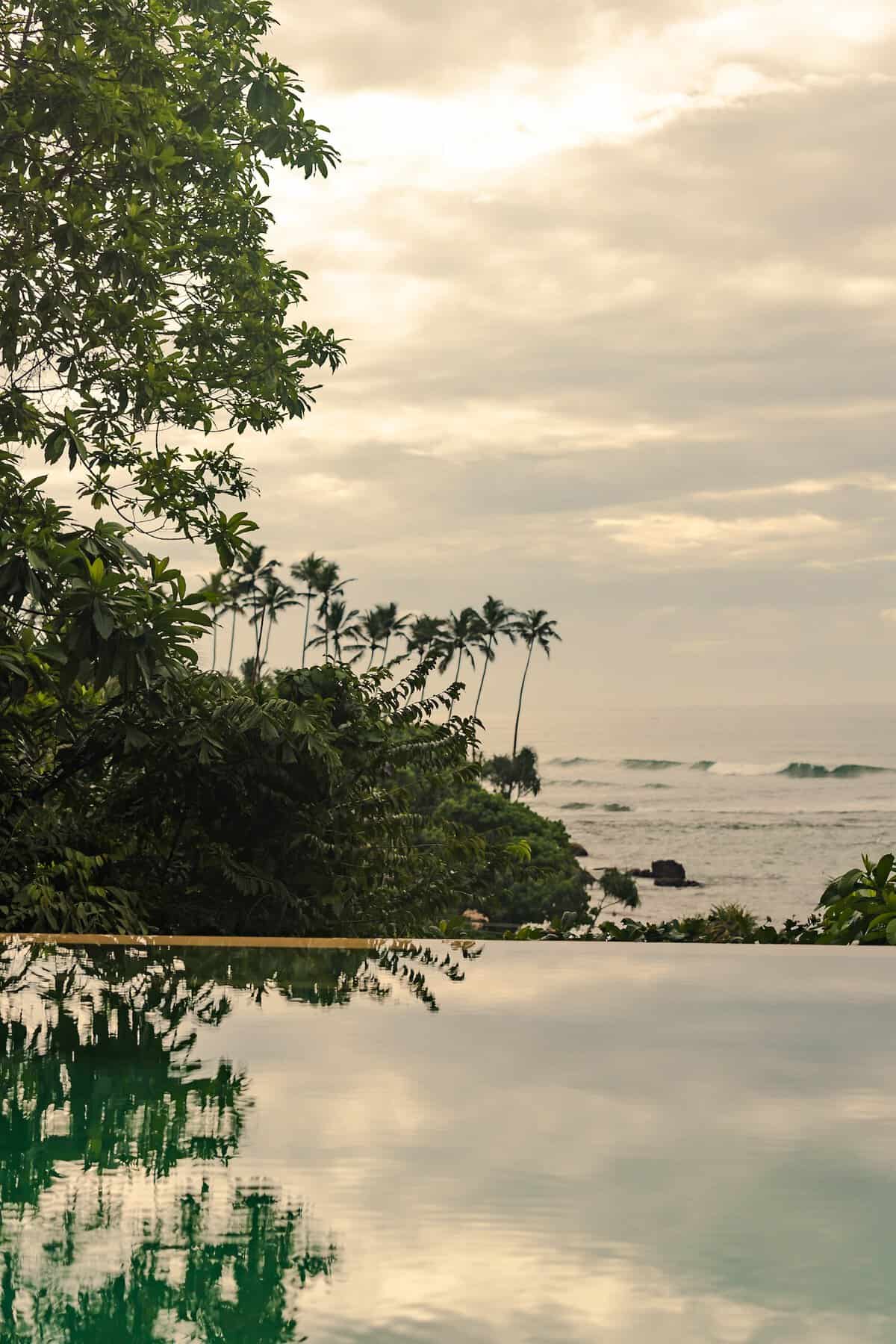
At sunset, you’ll want to be perched on the roof terrace, a part-covered, part-open platform with deep sofas and rustic hammocks that wouldn’t have looked out of place in ancient Egypt. Settle in with a drink, a book or some music. In front, palm trees cast romantic silhouettes on a rocky knoll as waves crash on Jungle Beach, the whole scene framed by the stepped Swahili parapets. And somewhere across the Indian Ocean, the sky burning pink, sits Lamu, the island that inspired it all.
Five-bedroom houses from US$1,000/night.
To book your house house, go to: On Houses Weligama.
Photography: Tropical Studio, courtesy of On Houses Weligama.