Where to Sleep in Galle.
In this Sri Lankan port city, every hotel has a past. Here are five worth checking into.
Galle has a habit of keeping people who only meant to pass through. A Scottish spice merchant fell for the town — and a local seamstress — in the 1860s and built a house on the hill. More than a century later, an American decorator who’d made his name in Provence took it on. In 2000, a Singapore-based banker on holiday wandered down Pedlar Street, found an old printing house and bought it. Then, on a whim, he turned it into a hotel. Adrian Zecha, the founder of Aman, kept checking into a faded colonial hotel on Church Street until, in 2002, he bought that too.
The fort works the same way. The Portuguese built the first defences in the 16th century, out of earth, mud and palm trunks. The Dutch East India Company took over in 1640, wrapping the peninsula in coral and granite, creating three kilometres of ramparts and the 14 bastions we see today. When the British arrived in 1796, they brought a lighthouse and tonic for their gin. And long before any of them, Galle was a port of call on the maritime Silk Road, with Moorish traders setting down roots, marrying into Sinhalese and Tamil families.
Galle Fort’s layers are listed by UNESCO, though the town is no museum. The descendants of those Moorish traders still live within its walls.

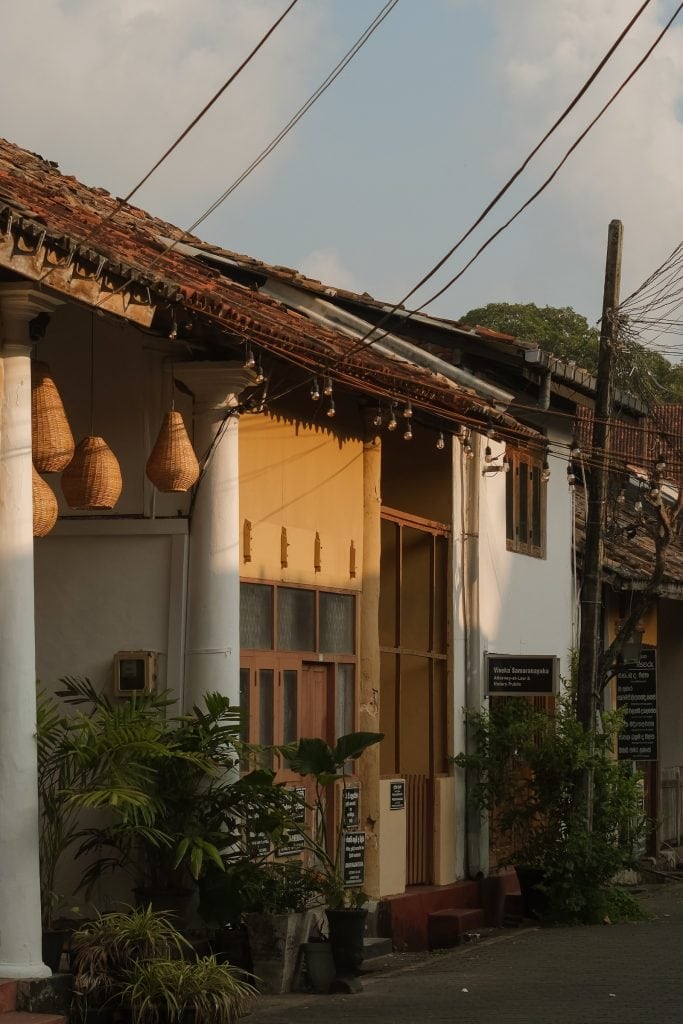
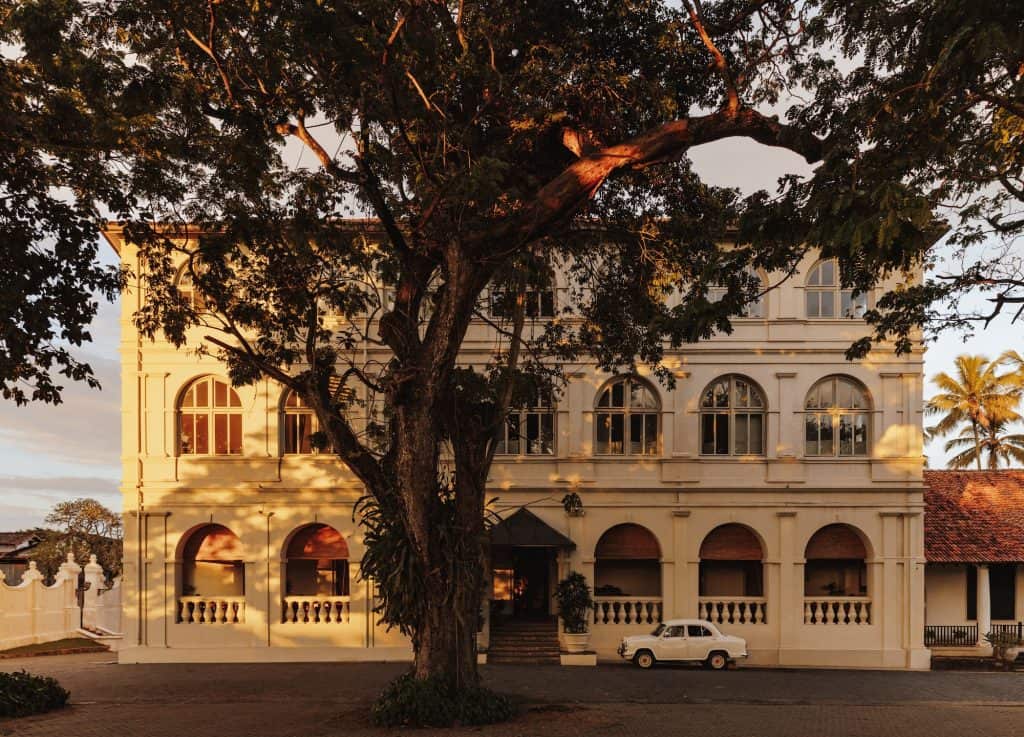
Few of the fort’s buildings have a single story. Amangalla began in 1684 as the headquarters of the Dutch commanders. It later spent some 140 years as the New Oriental Hotel, where steamship passengers stopped over between Europe and the East. A few doors down Church Street, Fort Bazaar housed Sri Lanka’s first Survey Department before sliding towards collapse. On Pedlar Street, The Fort Printers has been a school, a bank and a Buddhist printing house.
Sri Lankan architect Geoffrey Bawa is never far away. His chief protégé, Channa Daswatte, restored The Fort Printers. Geoffrey Dobbs, a former owner of The Sun House, helped open Lunuganga as a hotel after the architect’s death. More recently, Teardrop Hotels, the group behind Fort Bazaar, relaunched it. Even Writer’s Lodge, a two-bedroom villa down a quiet lane, wears the whitewash, timber and terracotta that later shaped Bawa’s work.
Four of these stays sit inside the walls. The other looks down on them from the hill above. Read on to find your own way in — or join me in August 2027 for The Pursuit Of Sri Lanka, a small group tour exploring the world of Geoffrey Bawa.
The Fort Printers
This 10-room beauty on Pedlar Street, named after centuries of itinerant traders hawking silk, spice and gems, is one of Galle Fort’s most stylish stays. It was constructed for a wealthy Dutch merchant in the 18th century, became a school under the British and later housed the Bank of Ceylon, but takes its name from one of its more recent lives, as a printing house renowned for gold-embossing and Buddhist manuscripts.
Singapore-based banker Shahzad Malik bought the building after holidaying in Sri Lanka in 2000 and, on a whim, decided to create a boutique hotel. Following a four-year restoration by Bawa protégé Channa Daswatte, The Fort Printers opened its doors in 2006. A gentle touch allowed the building to breathe: Daswatte preserved ceiling beams, jackwood floorboards, doors, windows and balustrades, and where original timber elements could not be saved, reclaimed wood was used in its place.
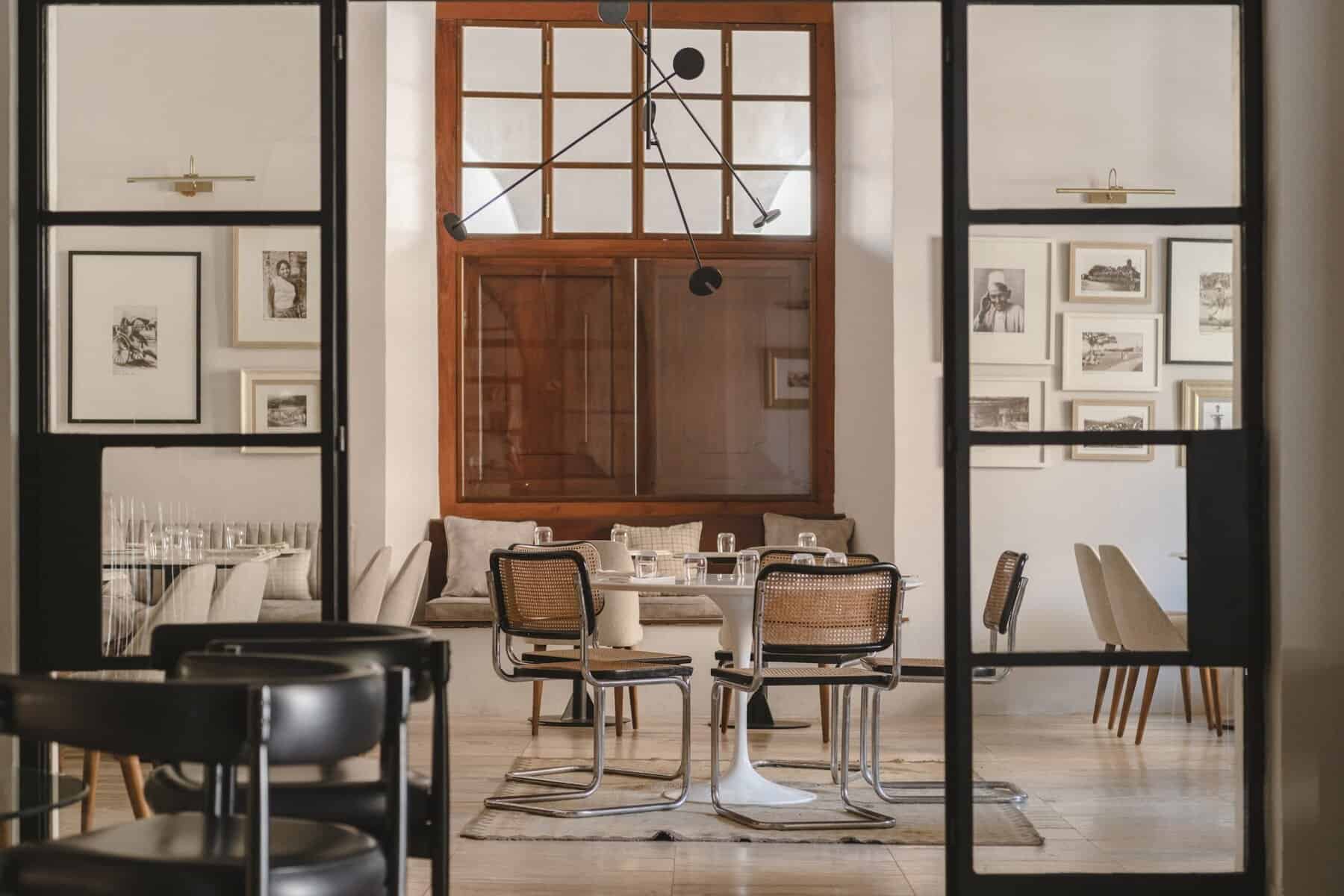
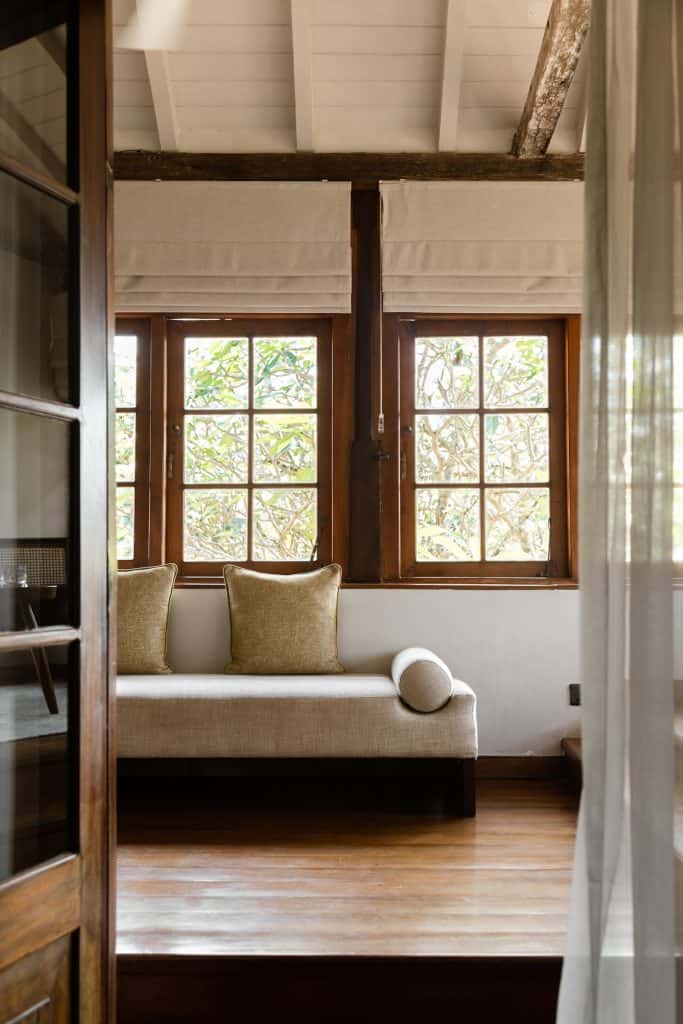
Today, the hotel’s elegant palette shifts between sand, ivory and grey. Marcel Breuer’s cantilever chairs surround a Saarinen tulip table at the centre of 39 Bistro & Wine Bar. Vintage photos in streamlined box frames hang salon style on the walls. Punchy contemporary photography presides over sofas in windowpane-check wool, with a low Finn Juhl-ish armchair in the corner. Upstairs, an enclosed veranda follows the curve of the building — timber shutters on one side, Indo-European daybeds and Danish safari chairs on the other. It’s eclectic without trying, melding old and new with flair.
39 Bistro’s menu traverses Mediterranean, North African and South Asian traditions. Order the beetroot carpaccio with labneh, then tuna in chermoula, and take a Ceylon Cinnamon Sour on the veranda as Pedlar Street wakes up from its noontime slumber. Out back, the Frangipani Terrace takes its name from the giant trees in the courtyard, home to a lap pool surrounded by crumbling sienna walls and the steel and fishtail-palm chairs and daybeds favoured by Bawa.
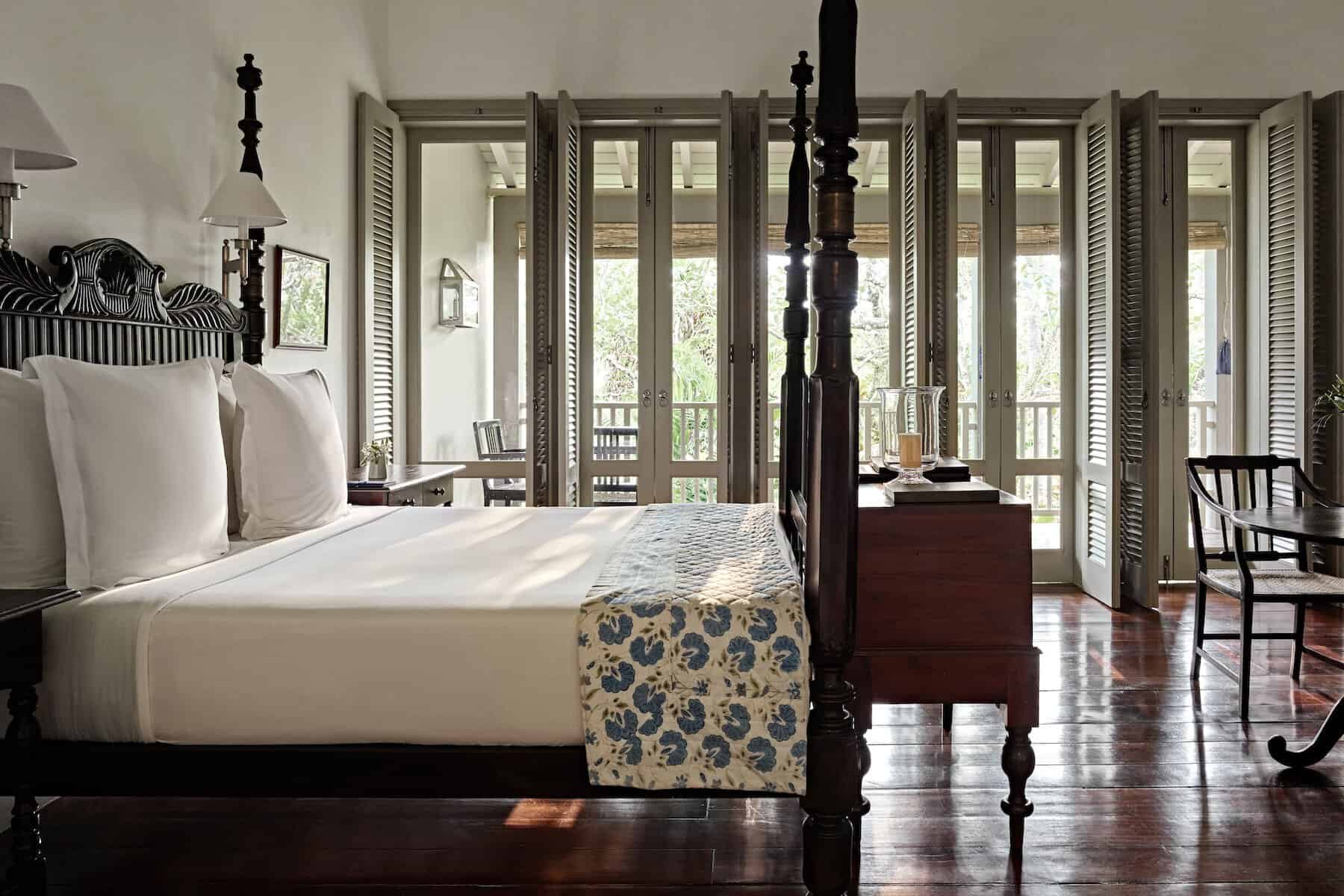
A monumental British printing press by the front door recalls one former life. Upstairs, Heritage Wing bedrooms (37–59 square metres) lean into another with names like History, Geography and The Headmaster’s. Four-poster beds, Chinese lacquer cabinets and desks with Jeanneret’s Chandigarh chairs complete the picture. Church Street Suites (28–37 square metres) are set around a second zen courtyard; they follow more minimal lines, with concrete floors and contemporary furniture in tropical hardwood.
Double rooms from US$150/night, including breakfast and taxes. To book, go to: The Fort Printers.
The Sun House
While the fort hums below, The Sun House takes the high ground. It sits on Galle’s tallest hill, shaded by mango trees and giant frangipani; langurs peep through the foliage, with glimpses of the town and the ocean beyond. A world away, yet the fort is just minutes in a tuk-tuk — close enough for an evening stroll along the ramparts.
The story begins with a Scottish spice merchant who fell in love with a local seamstress and built the house in the 1860s. Close your eyes and you’ll catch the scent of the cinnamon once stacked in the courtyard storerooms. His office is now the Merchant Room, while the Tapestry Room was inspired by her fine beeralu lace.
Each owner since has added a chapter. American decorator Dick Dumas, known for his Provençal interiors, opened the manor house up to light and added a wing of bedrooms to accommodate house guests. Geoffrey Dobbs made it a hotel, hosting early Galle Literary Festival gatherings in the courtyard. The torch then passed to zoologist Tim Edwards, whose father Jim, founder of Tiger Mountain Lodge in Nepal, was an old friend of Dobbs. Tim and his wife Milli, together with Colombo couple Niyo and Samir, took over in 2022 and restored the property without a contractor. They came with experience: Tim and Milli have Gal Oya Lodge, while Niyo and Samir created Aathma Colombo House.
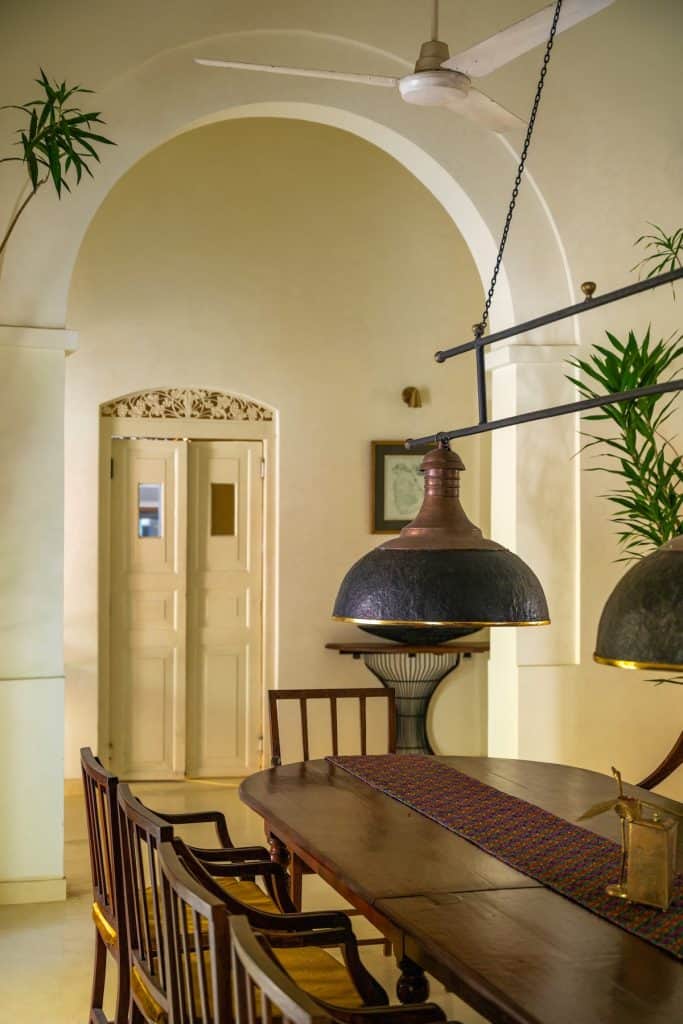
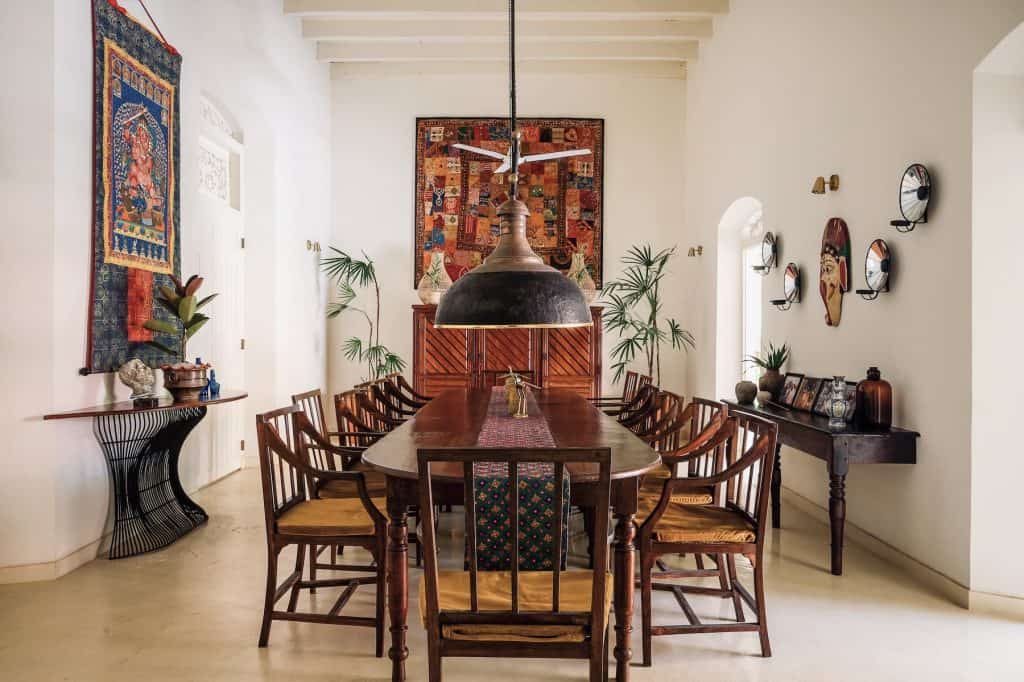
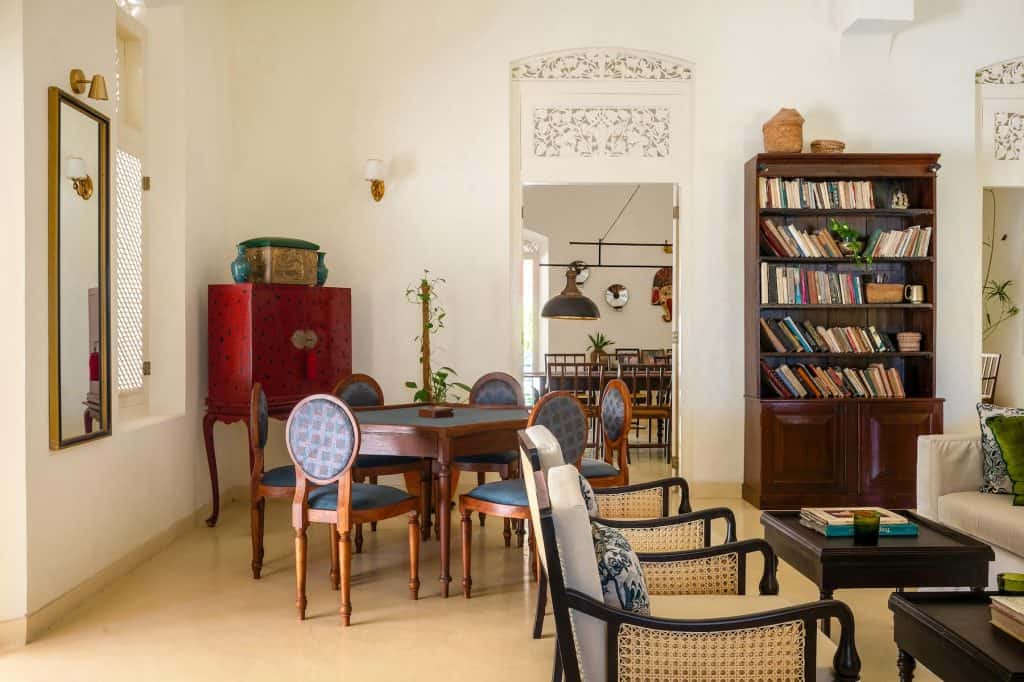
Today, The Sun House lives up to its name. Verandas lead to lawns with frangipani and lipstick palms terracing down to the swimming pool; interiors are what you might expect to find in the home of a chic friend. The sitting room sports antiques and modern, including slipcovered sofas from Dumas’s home in the South of France. The same sofas graced his most famous project, the Château de Castille, with its loggia lined in murals by Picasso. Another Dumas design hangs in the dining room: a striking pendant light emulating metal but fashioned from papier-mâché when the real thing could not be sourced locally.
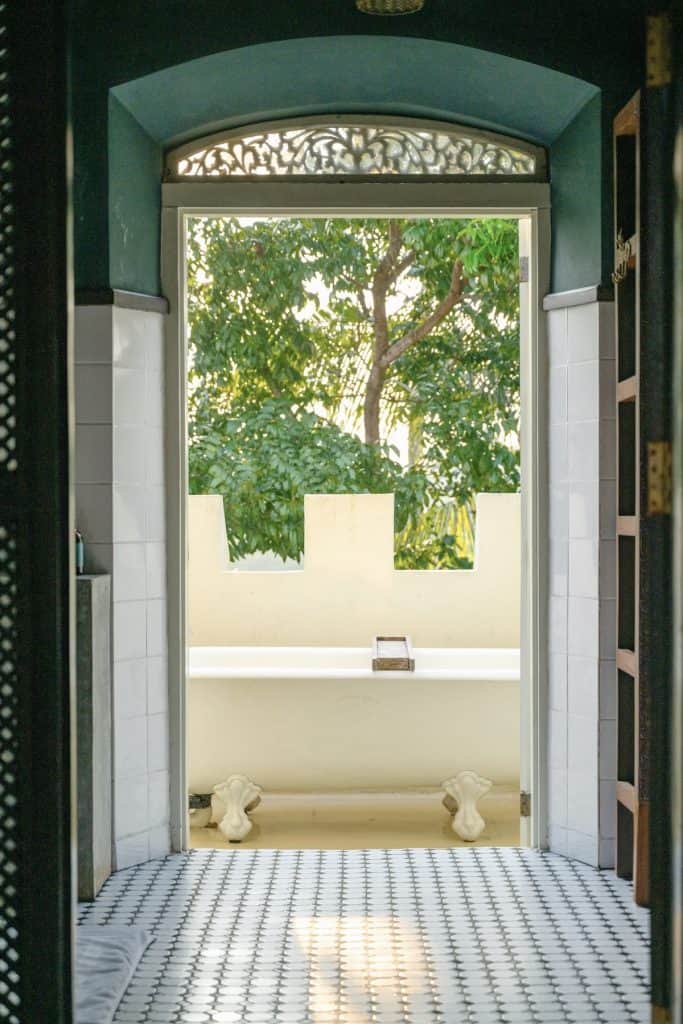
Eight guest rooms range from cosy doubles to the expansive Gallean Suite, its sitting room lined with Dobbs’s library and a balcony with a claw-foot bathtub. The old spice store is now the Gallean Restaurant — think Hot Butter Cuttlefish, prawn and pomelo salad, and a Jaffna seafood stew — spilling onto a courtyard punctuated by elegant garden furniture designed by Dumas. Dick’s Bar hangs with photos and heirlooms from the current owners. The house special blends arrack, Campari, vermouth and cinnamon — a fine sundowner indeed.
Double rooms from US$175/night including breakfast and taxes. To book, go to: The Sun House.
Fort Bazaar
Church Street takes its name from its cluster of churches, led by the Dutch Reformed Church of 1755. Between the bustle of Pedlar Street and the sleepy charm of Galle Library (1832) lies a row of 18th-century merchant houses. Arches at the front came courtesy of the Dutch; the caravanserai-like courtyard beyond, built for living and commerce, takes its cues from the Moorish traders who’d settled in Galle centuries before. One housed Sri Lanka’s first Survey Department before decades of neglect left it close to collapse.
It was saved by Teardrop Hotels, the work of four friends — Henry Fitch, Mike Davies, Charlie Austin and Viraj Premasinghe — united by a love of cricket and Sri Lanka, and a knack for finding old buildings and abandoned estates. Their first hotel, Wallawwa, opened near Negombo in 2008. Fort Bazaar joined the portfolio in 2016, after a decade of planning permissions and detailed restoration. More recently, Teardrop partnered with the Geoffrey Bawa Trust to relaunch the legendary Lunuganga, cementing their place as custodians of some of the island’s finest houses.
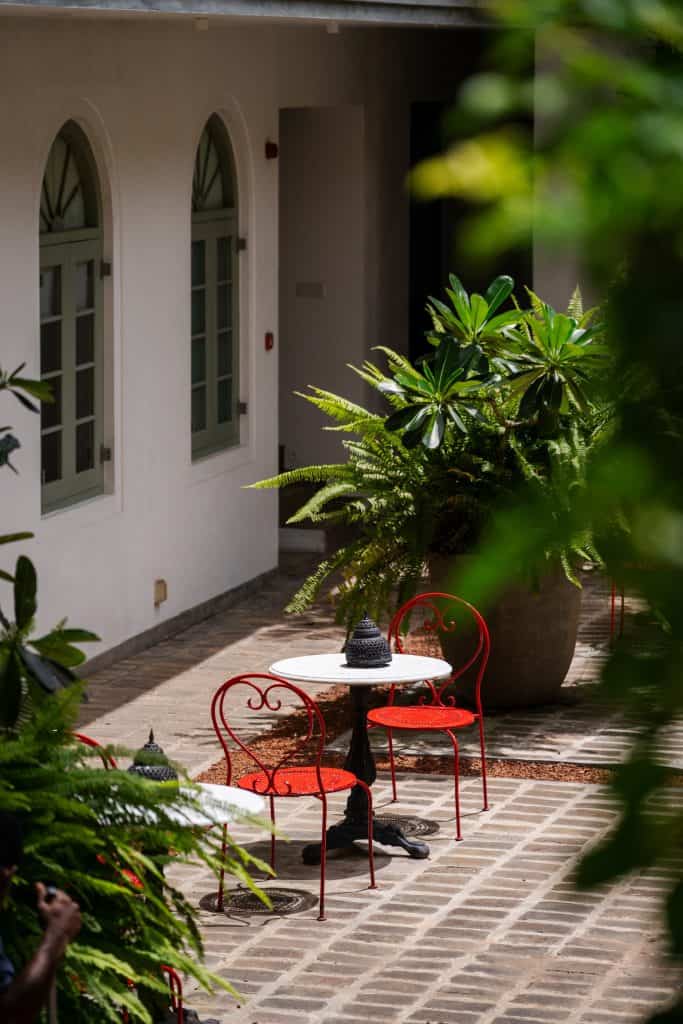
Fort Bazaar wears its layers with flair: patterned encaustic tiles hark back to the British era and the Moorish courtyard is lined in cobblestones and planted with palms and frangipani. A palette of stone, off-white and sage keeps it in the present, with red metal chairs and giant potted ferns for punctuation. Cushions recall Fez embroidery and brass lanterns nod to Marrakech. In the late afternoon, gold light stretches through the arches.
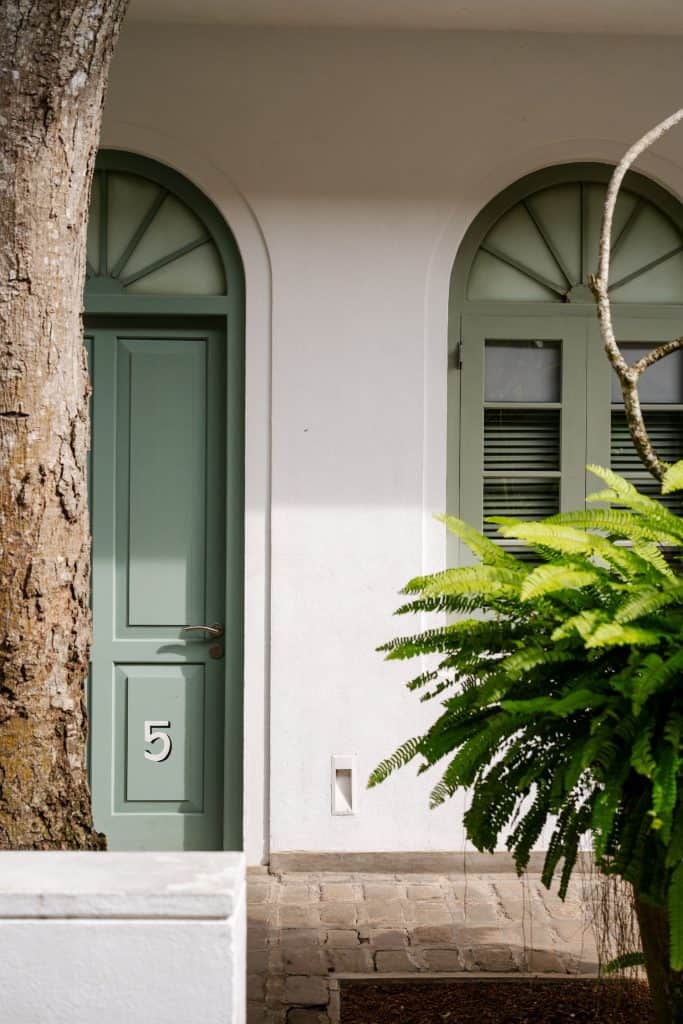
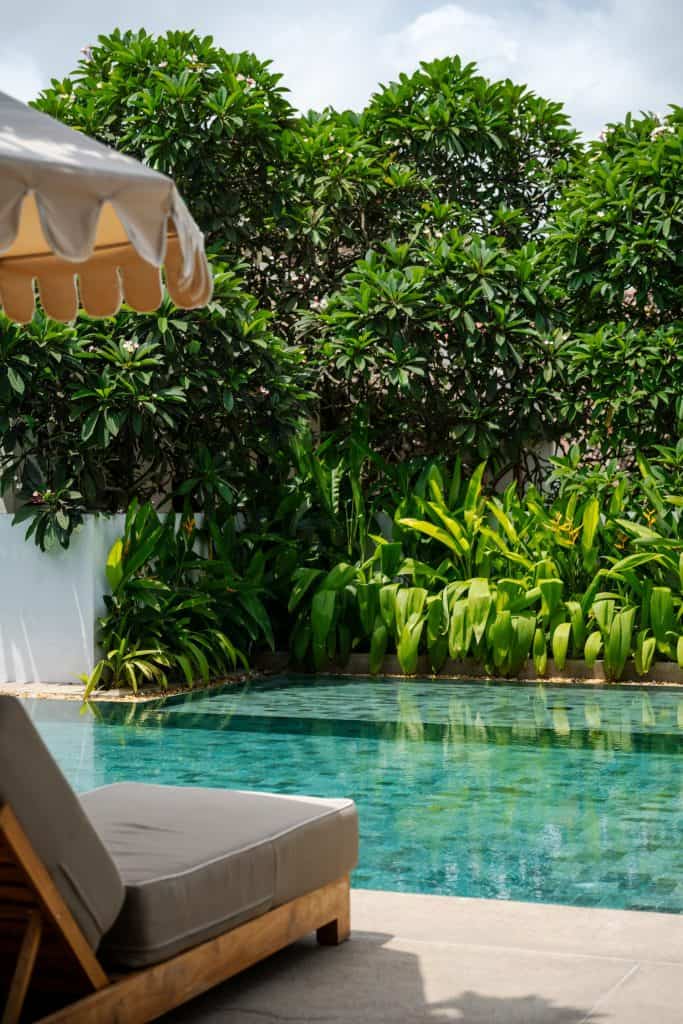
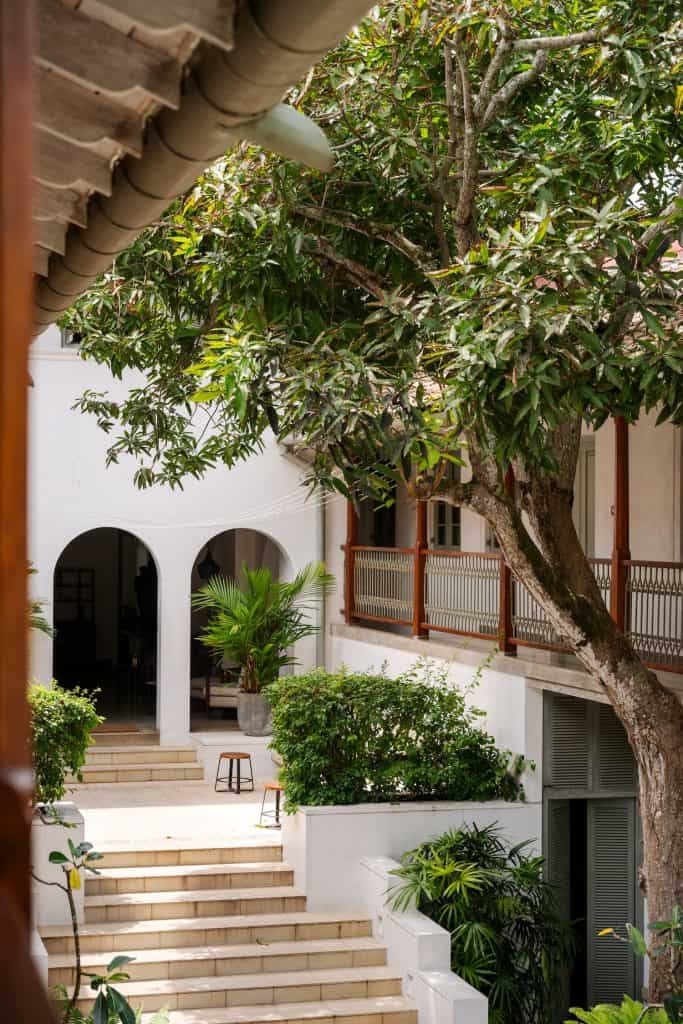
Eighteen rooms include Bazaar Bedrooms (35 square metres), opening off galleries around the courtyard, with limed-timber four-posters, sage louvred wardrobes and skylit bathrooms. Banyan Bedrooms (32 square metres) add private balconies, while upstairs suites (75–100 square metres) feature freestanding tubs and terraces overlooking Church Street. Afternoon tea, sundowners and a guided fort walk are included in the price of a room.
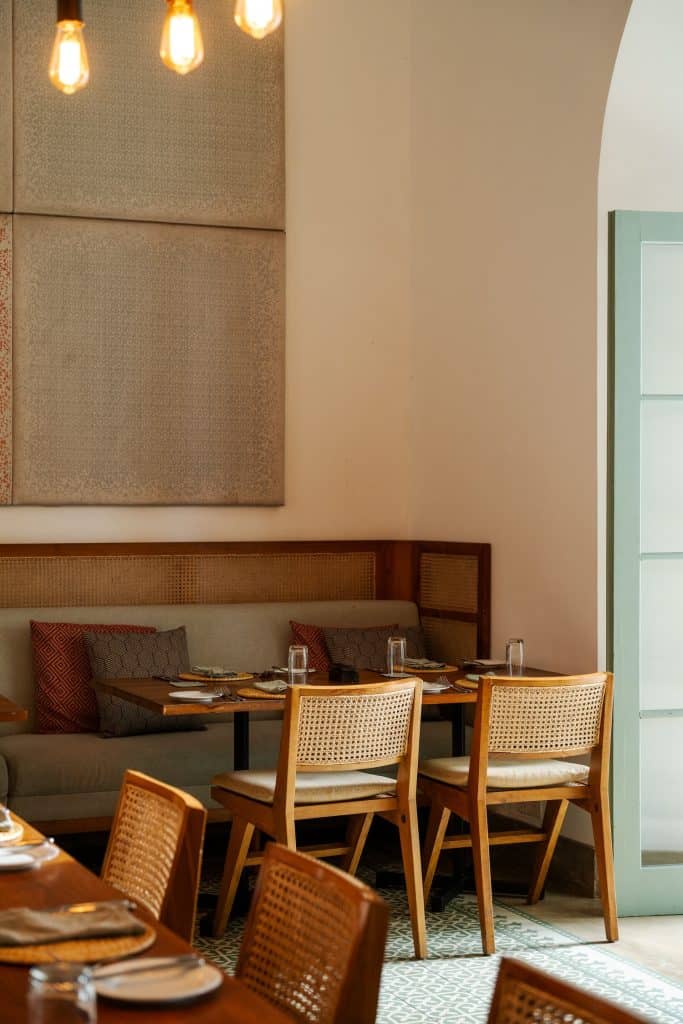
Out back, an emerald-tiled pool sits half in sun and half beneath a giant breadfruit tree. (At 14 x 6 metres, it’s the fort’s second-largest.) Upstairs, the library is all shutters, deep English armchairs and views across the rooftops. Meals happen at Church Street Social. Breakfast is à la carte, and the Egg Hoppers Florentine is the one to order. Dinner might be Koggala mud crab cakes, with a wine list that runs deeper than many in the fort. Finish with an Arrack Sour on the terrace as Galle strolls past. With 55 staff for 18 rooms, service never misses a beat.
Double rooms from US$237/night, including breakfast and taxes. To book, go to: Fort Bazaar.
Writer’s Lodge by Ishq
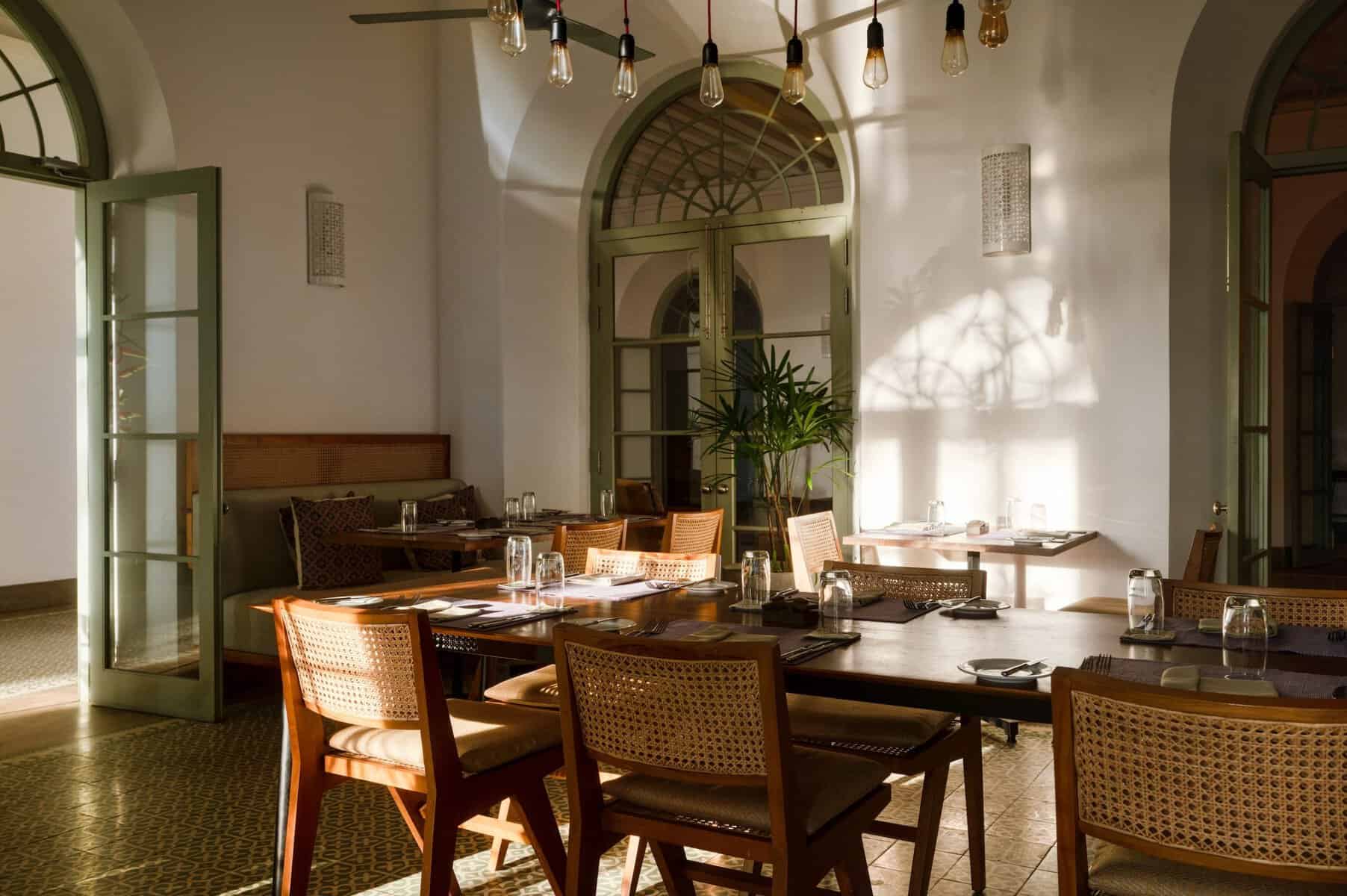
Down a quiet lane, Writer’s Lodge is Galle Fort as locals live it. Neighbours are families and the morning school run passes the door. The fort’s boutiques and cafes are a few minutes’ walk away, as are the ramparts and the Indian Ocean beyond. One of Ishq’s tight-knit team meets you on arrival, handing over the keys to the house — and with them, the fort.
This compact but charming single-storey villa likely dates from the late 18th or early 19th century, around the time the Dutch lost control of Galle Fort, built in the low, white-washed style of the fort’s older homes. The Yusoof family bought it in 2021 and, after extensive restoration, opened in January 2025. They’re behind Ishq Villas, which also has properties in Colombo, Talpe and the hill country. The family runs the villa as an extension of its own hospitality, ishq being the Sufi word for divine love.
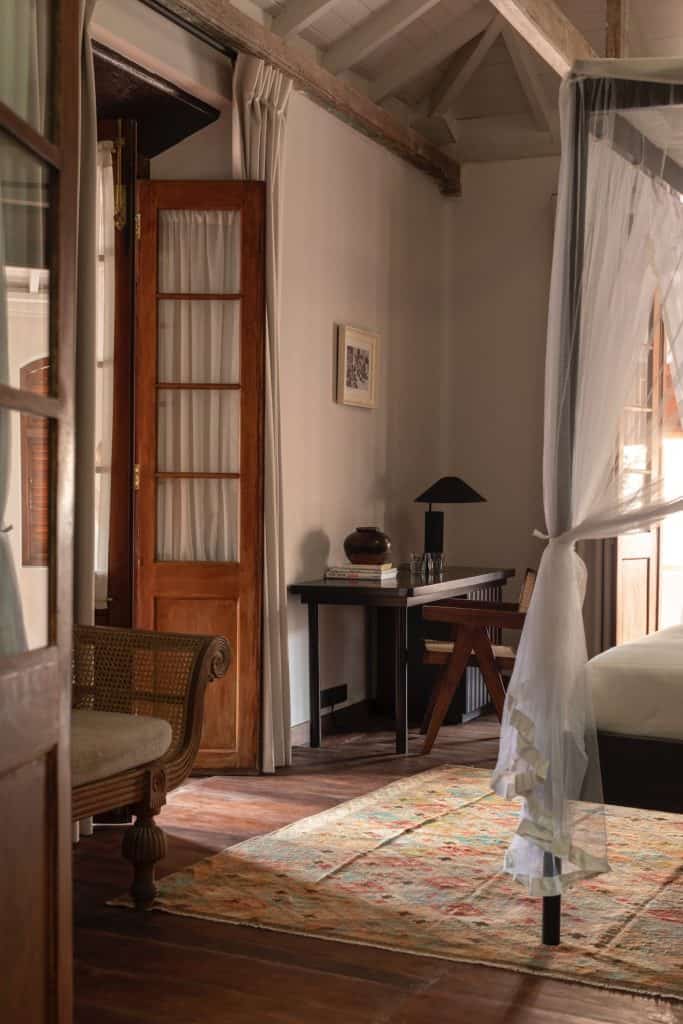
Whitewashed walls, timber ceilings and antique terracotta tiles set the tone, the same palette that later shaped the work of Geoffrey Bawa. A skylight floods the centre of the house, while darker corners give relief from the heat. Colonial furniture is softened by indoor palms, paisley cushions and vintage photographs in gilded frames.
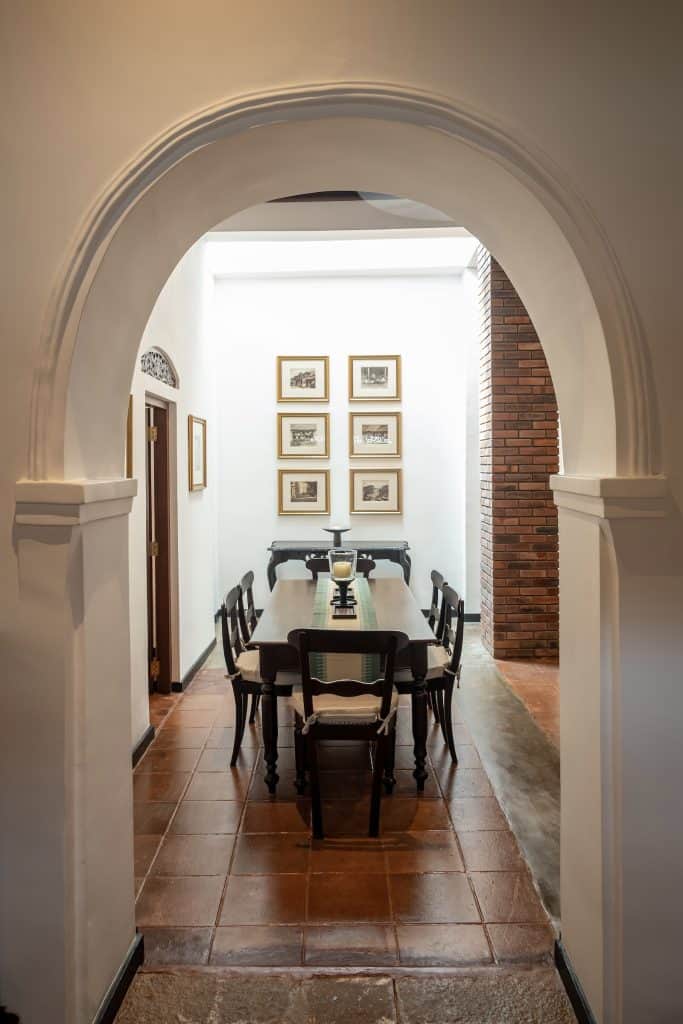


There are two bedrooms, each with a carved four-poster bed, a Dutch colonial armoire and plantation armchairs. The front room (17 square metres) is ensuite, while the back room (15 square metres) uses the main bathroom nearby. True to the name, the living room has a rolltop desk and a wall of books. The kitchen is fully equipped, and there’s a laundry — the ultimate gift to anyone who’s been on the road for a while.
Writer’s Lodge comes with a narrow front veranda, but no garden or courtyard — not that you miss them with the ramparts at the end of the lane and Galle Fort as your backyard. Ramble down Lighthouse Street for coffee and the bookshop at Barefoot Gallery, lunch under the trees at 1710 The Merchant, and finish at Flag Rock Bastion for sunset, followed by cocktails on Malu’s tiny balcony.
US$450/night for up to four guests, villa only, including taxes. To book, go to: Writer’s Lodge by Ishq.
Amangalla
Just inside the Main Gate on Church Street, a long colonnaded veranda fronts the fort’s most elegant edifice, built for the commanders of the Dutch East India Company in 1684. Two centuries later, it became the Oriental Hotel, a stopover for steamship passengers sailing between Europe and the East. Renamed the New Oriental in 1899, it was run for most of the 20th century by Nesta Brohier, who was born in one of its bedrooms and greeted guests on the front steps with her Dalmatians. Geoffrey Bawa, when working in Galle, liked to drink on its veranda.
Aman founder Adrian Zecha, who became acquainted with Brohier while travelling in the region in the 1970s, acquired the property in 2002. Following a meticulous two-year restoration, overseen by Australian architect and Bawa devotee Kerry Hill, the grand dame of Galle opened its doors as Amangalla.
To my mind, Amangalla is the most beautiful hotel in Sri Lanka, and one of the loveliest anywhere. Not because it’s the most lavish — old bones don’t always bend to modern needs. There is no lift, and entry-level Bedrooms are a relatively modest 40 square metres, without the cavernous bathrooms and private plunge pools the ultra-luxury sector has taught us to expect.
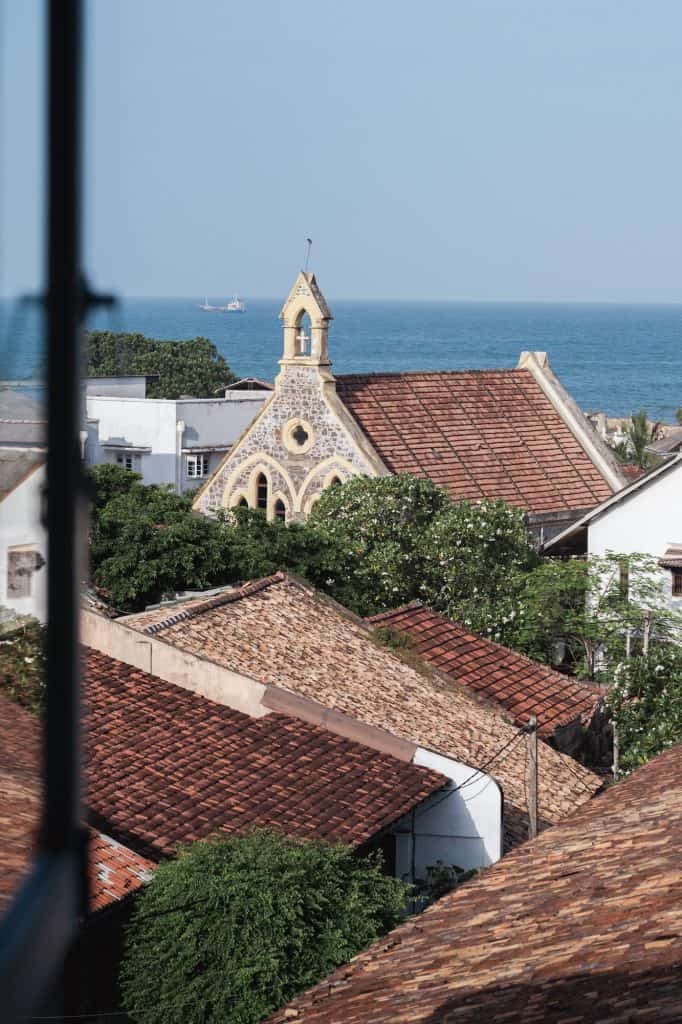
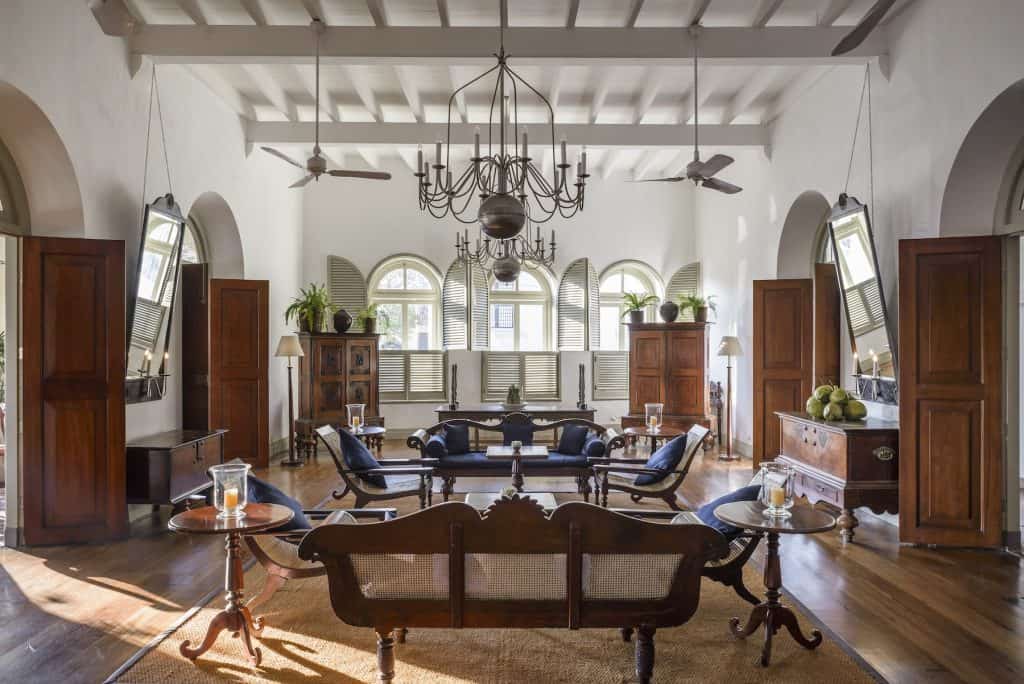
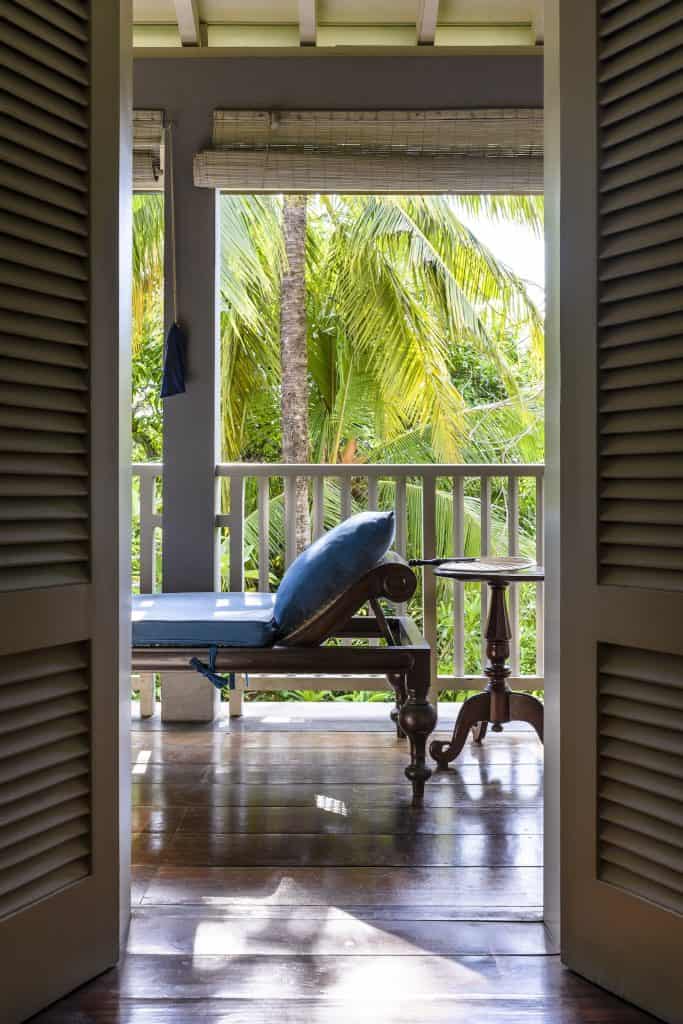
But even ultra-luxury increasingly feels generic. What Amangalla offers is rarer: a 17th-century building with real presence, spaces of quiet beauty and a deep sense of place. Nothing is overdone. Everything aligns: the location, the building itself and its palimpsest of lives, from the Dutch commanders to Nesta Brohier and her Dalmatians, then Zecha, who had the good sense to hand the project to Kerry Hill.
Crossing the threshold, you enter through the zaal (great hall), hung with slow-turning ceiling fans and monumental Dutch brass chandeliers. Much of the furniture — plantation chairs, club-footed wardrobes, pettagama chests — came with the building. Twenty-nine rooms and suites look over Church Street, the ramparts or the gardens, many with teak floorboards centuries old. Chambers (60 square metres) have four-poster beds set so high there’s a step to climb in.
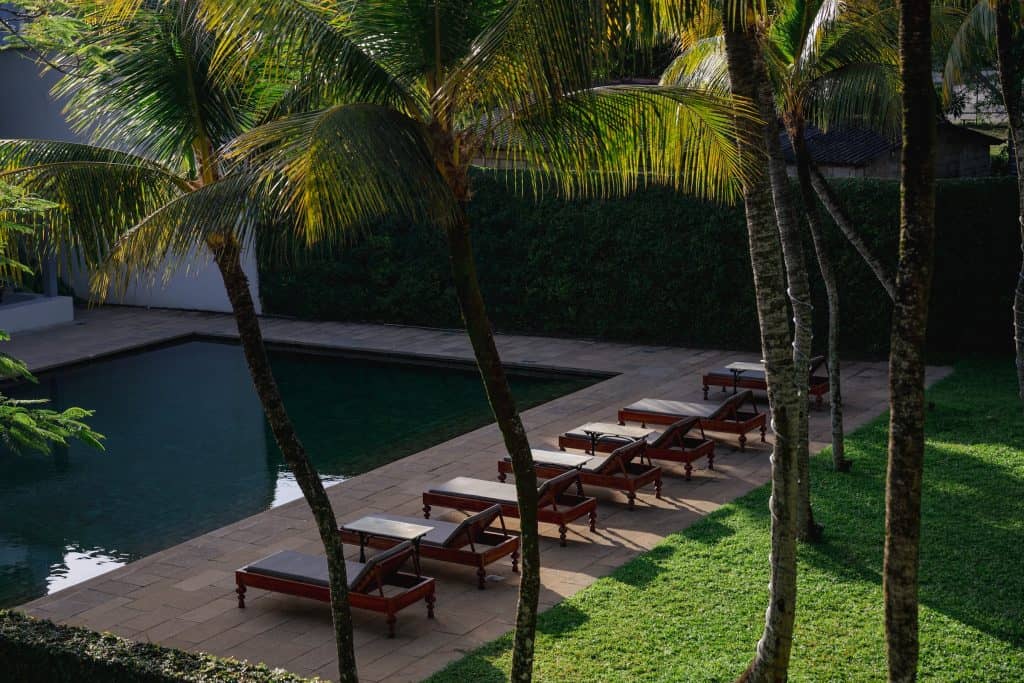
Beyond the zaal and the library, the hotel opens onto a 200-year-old garden, where Amangalla’s most expansive suite, the two-storey Garden House, sits among frangipani and mango trees. Nearby, lined in cabanas, the hotel’s green-tiled swimming pool is the largest in the fort. For sundowners head to the first-floor terrace, then take supper overlooking Church Street. The house rice and curry has been served in the same spot for 150 years and is not to be missed. Finish with kiri pani — buffalo curd drenched in palm treacle — to cap the perfect night in Galle Fort.
Double rooms from US$900/night, including breakfast and taxes.To book, go to: Amangalla.
Photography: c/o The Fort Printers, The Sun House, Fort Bazaar, Writer’s Lodge and Amangalla.