Spiritual Awakening.
Eight weeks in the Kathmandu Valley, tracing ancient capitals, living temples, mountain lodges and a culture where tolerance has always been the default.
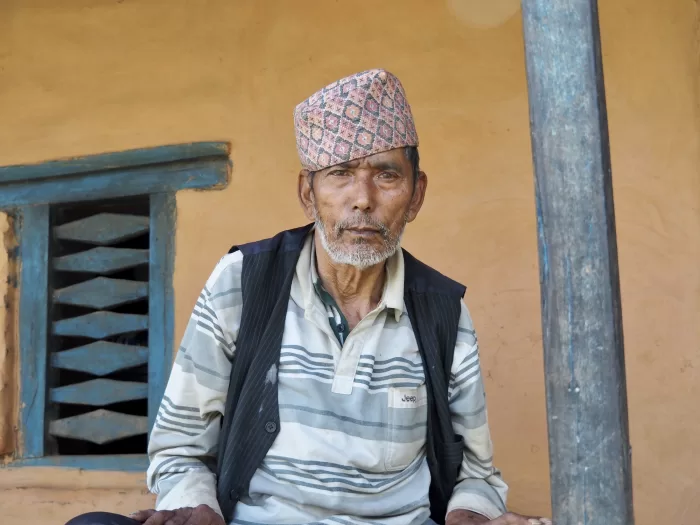
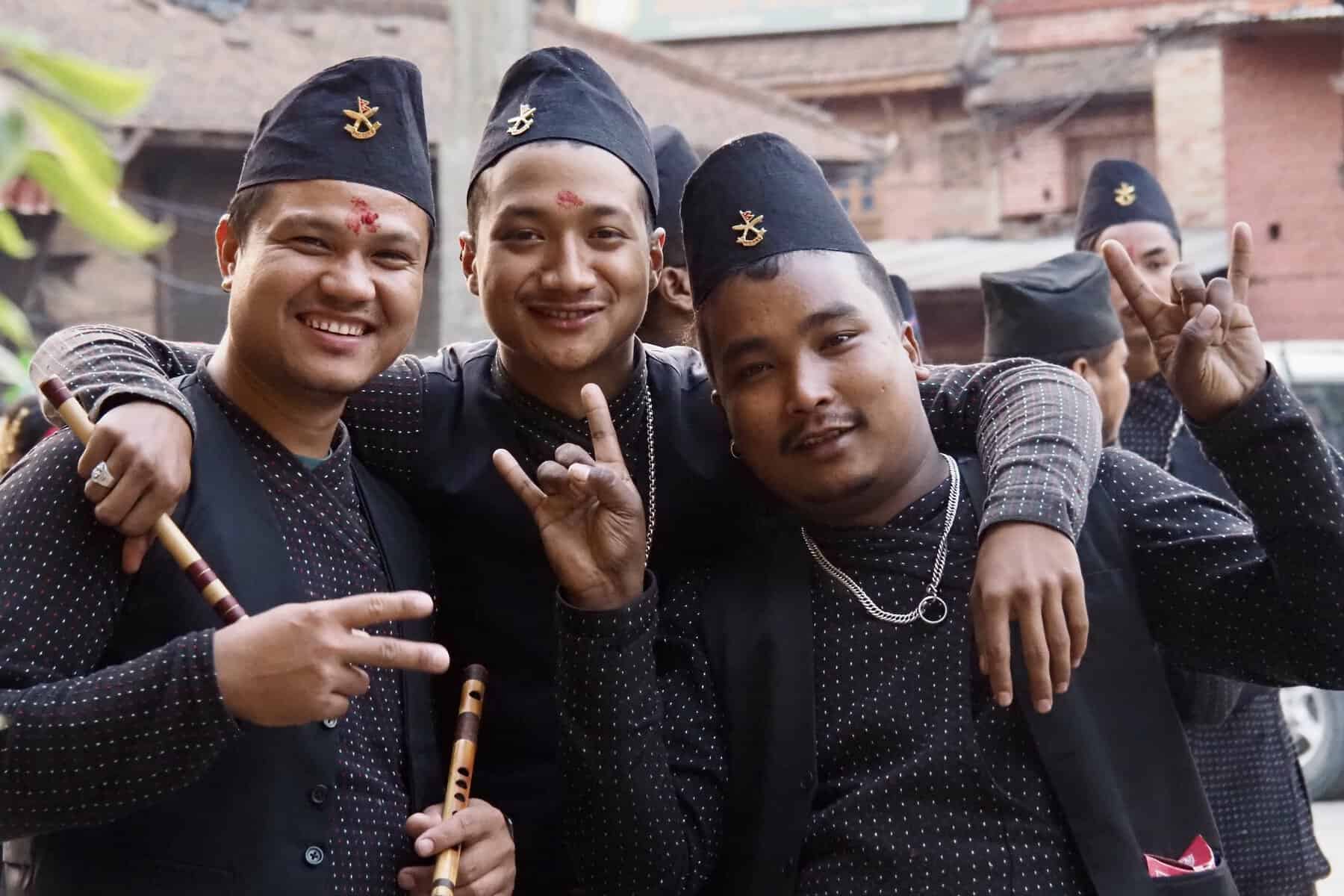
Dawn is magic hour in Nepal, when both Hindus and Buddhists perform puja, or worship. This dawn, though, is special. It is my second day in Patan and I’m on a mission to see the annual chariot festival of the rain god, Rato Machindranath. I follow women in a rainbow of saris and men wearing the Dhaka topi, the pointed national cap, alongside denim-clad teenagers and throngs of children, one marking my forehead with the first of many tikas as the top of the chariot comes into view.
Capped with a 20-metre spire dressed in tree branches, garlands and flags, the chariot has four enormous wooden wheels painted with eye motifs. Someone in the crowd tells me it is built from scratch every year by a sect of the Newar community, the historical inhabitants of the Kathmandu Valley, to please the rain god and ensure good harvests before the monsoon. “What’s amazing,” he says, “is that it’s constructed without the use of a single nail.” I don’t doubt him. It looks like a half-cut tree about to fall.

Most people think it’s crazy, taking eight weeks to explore the culture of Nepal. Why would anyone travel to Nepal for anything but trekking, and how could I possibly need eight weeks? And why wasn’t I going to Bhutan instead, with its national happiness index and Aman resorts?
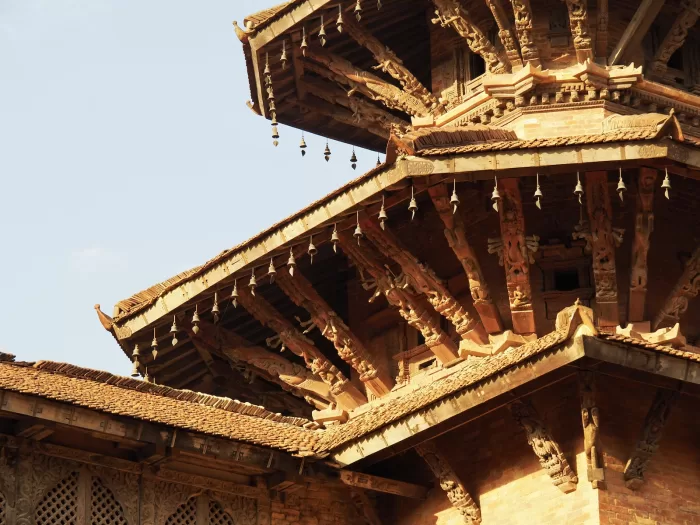
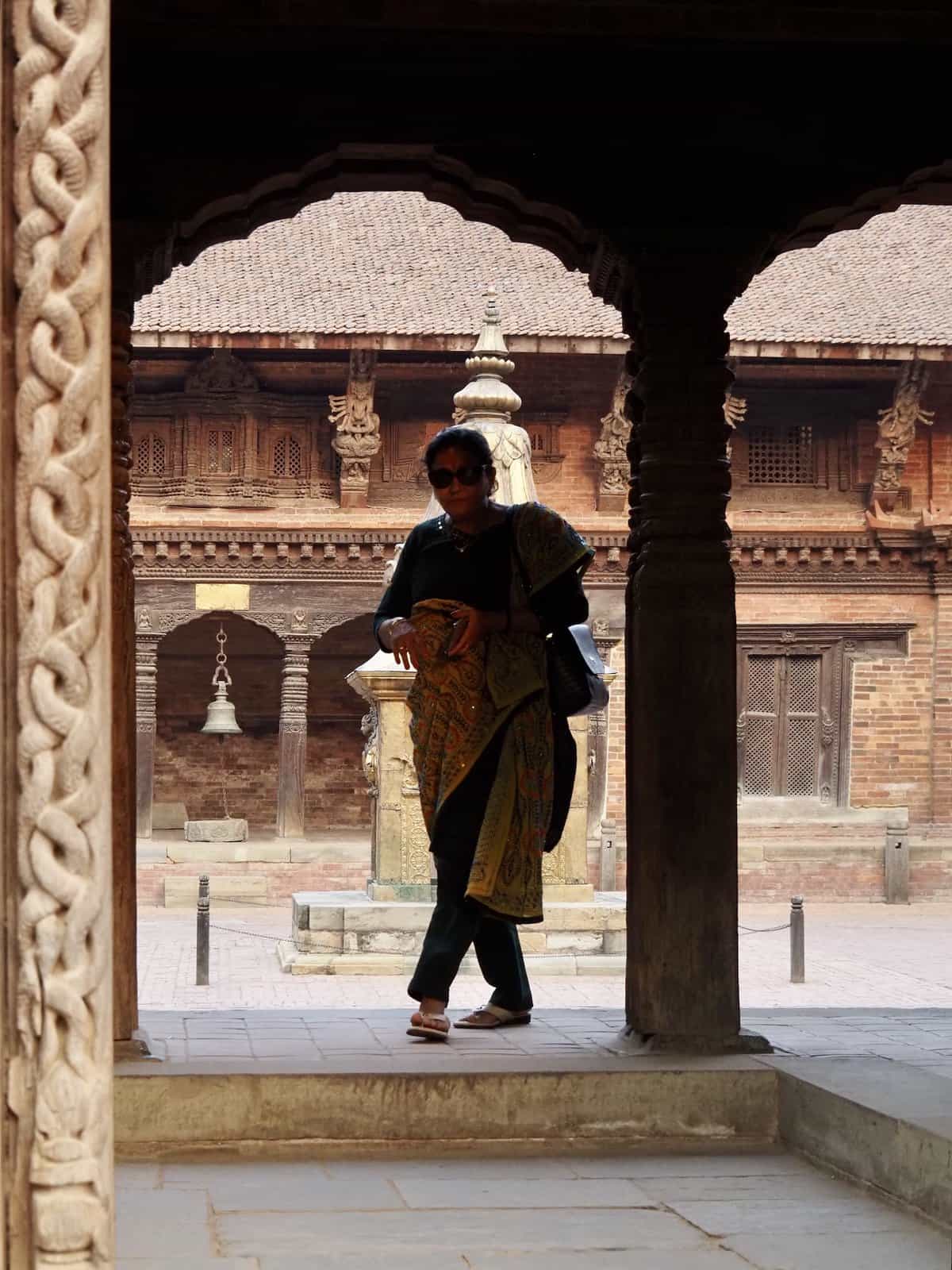
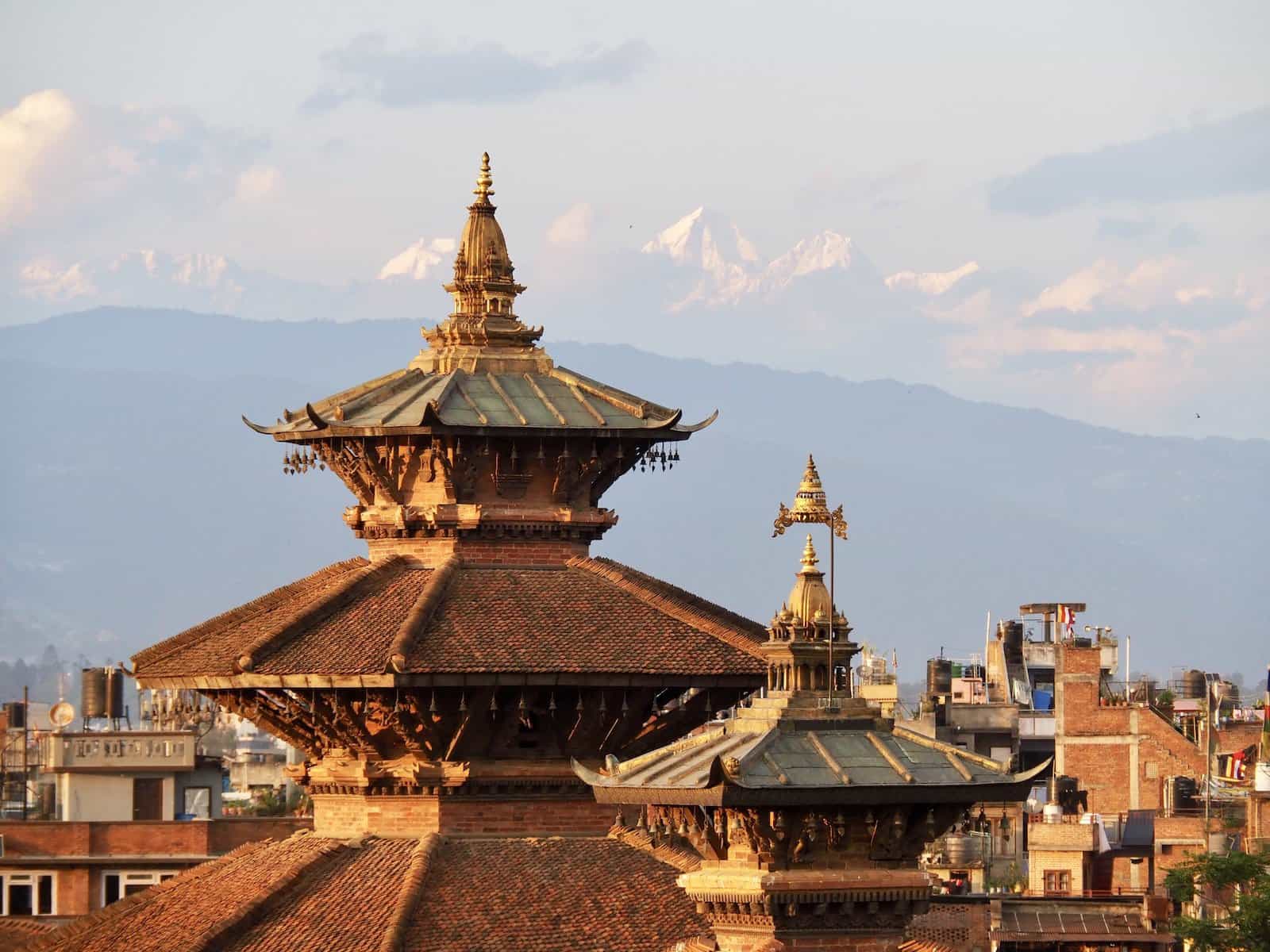
However, from the moment I arrive, standing between two temples in Swotha Square at 3am, I know I’m on the right path. With a three-tiered pagoda bejewelled in wind chimes on one side and a Mughal-looking shrine in carved stone on the other, it is as if I’ve passed through a portal and into another world.
As the sun rises, I am sandwiched between thousands circling the chariot — hand pulled eight kilometres to Bungamati over two weeks — reaching high to make offerings at the mobile shrine. Men sing from prayer books, women burn butter candles, and the gods seem close and content. Days of rain follow after five months of almost zero precipitation. If the Celts were right about “thin places” — where the gap between heaven and earth narrows so the divine animates the mundane — the Kathmandu Valley must be gossamer.
Ancient Malla capitals
Patan, also known as Lalitpur or ‘city of beauty’, is the oldest of the valley’s three ancient capitals, the others being Kathmandu and Bhaktapur. This trio of city states was ruled for more than half a millennium by the Malla dynasty, cousin kings and cultural rivals whose ancestors fled the Muslim Conquest of India and came to power around 1200. Armed with taste and money — the valley lay at the crossroads of lucrative trade routes — the Malla kings ushered in a golden age not dissimilar to the Italian Renaissance. Urban sprawl has since closed the gaps between the cities, with Patan now reading like a suburb of Kathmandu, separated only by the Bagmati River. More arty, Buddhist and traditional, Patan has a gentler pace than Nepal’s frenetic capital.
Cosy Nepal
I hadn’t even heard of Patan until my friend Kim Stewart launched Cashmere Luxe, making shawls and blankets with the weavers of Nepal. Around the same time, I abandoned my career in interior design to pursue a more itinerant life as a travel writer. Kim then urged me to come to Nepal and stay in Patan, introducing me to Camille Hanesse, who owns the accommodation agency Cosy Nepal.
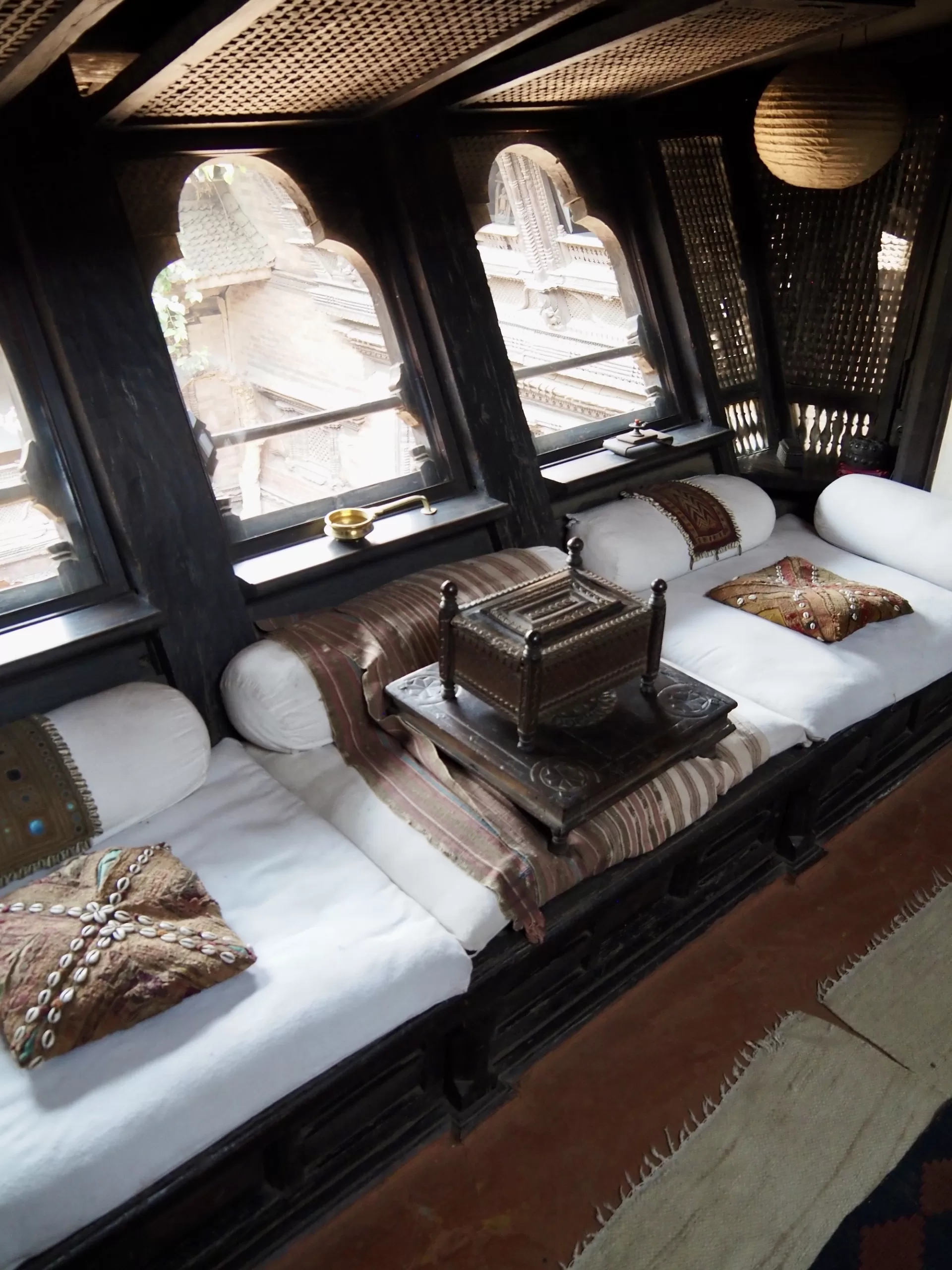
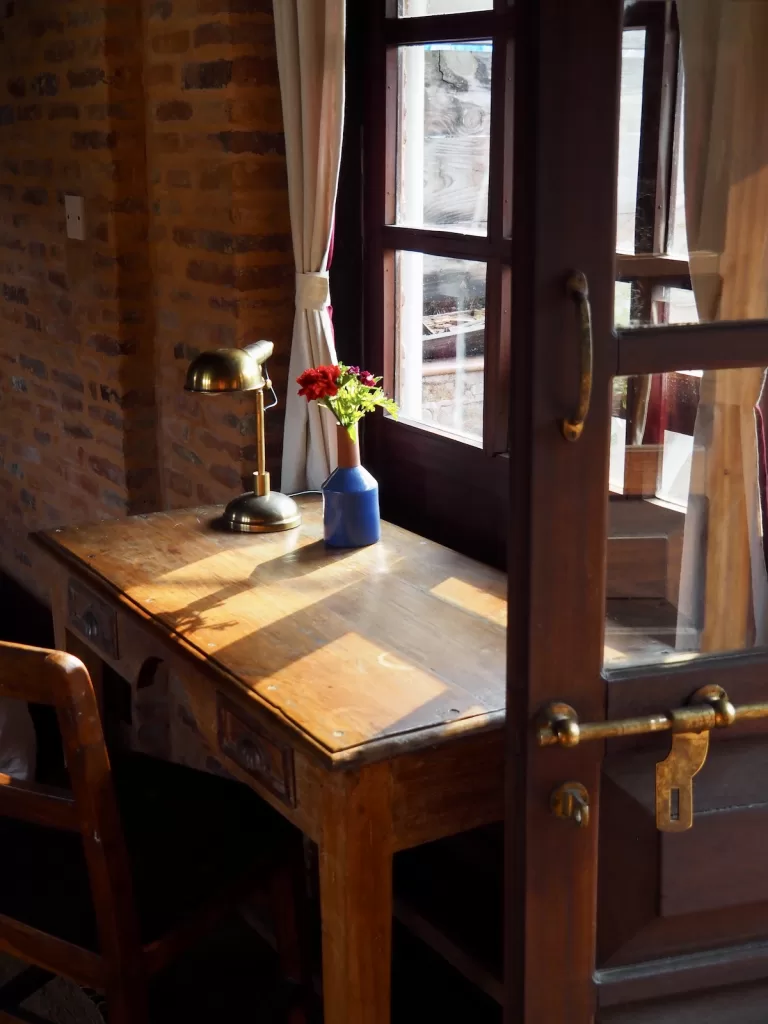
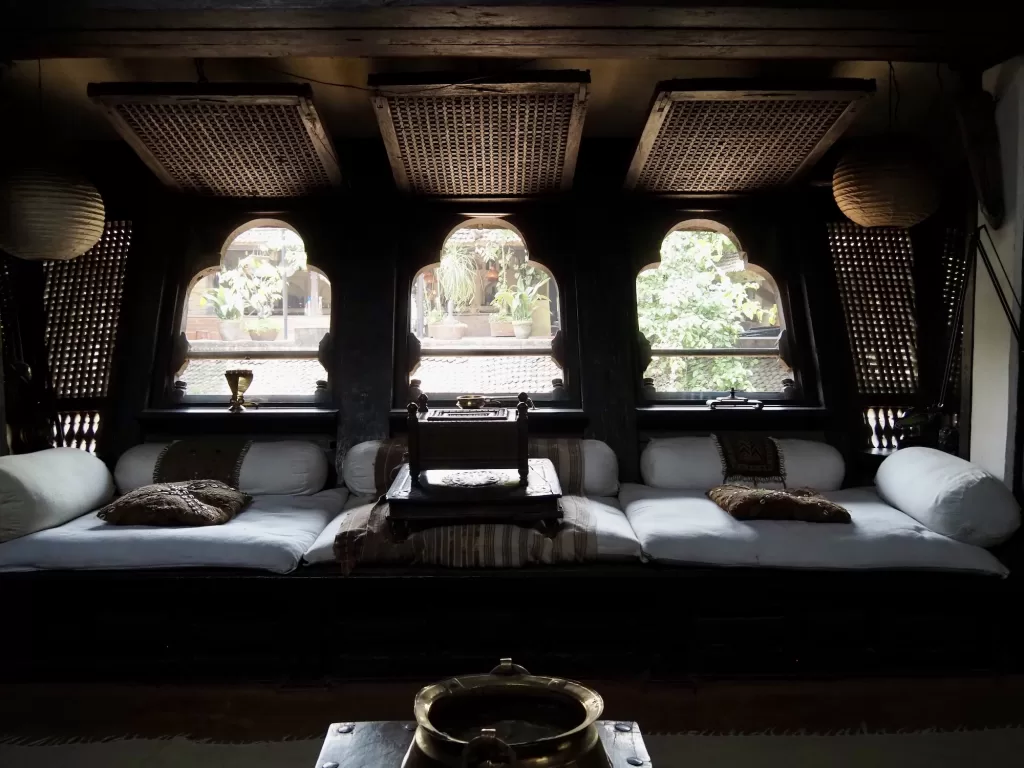
If there’s a fulcrum to my gallivanting across the Kathmandu Valley, it’s Cosy Nepal. I stay in several historic properties from their portfolio, beginning with the super-charming Attic Studio at Yatachhen House, an 18th-century beauty with a single bed, a private terrace and Rear Window-like views over Patan’s crumbling courtyards. Another is the sumptuous Karma Duplex, with a trio of carved-timber window seats typical of Newar architecture, overlooking the temples of Swotha Square. Some stays last weeks, affording me the time to feel the rhythm of daily life.
A microcosm of local activity, Swotha Square might look much as it did 200 years ago if it wasn’t for the scooters, iPhones and the odd modern-nomad-filled cafe. Cross the square from Yatachen House to the local grocery store where Lalita greets you with a namaste and the most beautiful smile. Head down a tiny laneway to Cafe Swotha for steaming momos — Tibetan/Nepalese dumplings fat with vegetables, chicken or buffalo — or to Samui Hasegawa for delicious Japanese. At Coffee, Tea and Me the handsome Ruby, who worked for years as a chef in Sydney, dishes up schnitzel and hearty staples with Nepalese twists in a Berlin-underground setting, with one of the coolest playlists in Nepal. For coffee there’s Swotha Kiosk and Nutopia, both on the square.
Still a little confused over religion — I’m sure I see Buddhists at the Hindu chariot — I get chatting with Bikash, a vendor of tea, coffee and real-deal singing bowls at Swotha Kiosk and ask if he is Hindu or Buddhist. “I am Hindu,” he says with a smile. “But God is God; it is all the same.”
According to a popular joke, Newars are 60 per cent Hindu and 60 per cent Buddhist, and it is this harmonious intermingling of faith that is, for me, the most magical aspect of Nepal. I learn from Austin, a Canadian living on Swotha Square and doing his PhD in Newar Buddhism, that Hindus will use Buddhist priests and vice versa if their own is not available. Another example is the Kumari, a girl selected from the Shakya clan of the Newari Buddhist community to serve as the Living Goddess to the Hindu kings of Nepal. There hasn’t been a king since 2008, when Nepal dropped the monarchy, although Kathmandu, Bhaktapur and Patan still have their own Kumaris — Buddhist girls worshipped by Hindus as manifestations of divine female energy.

The harmony stretches to sexuality, too. I spend three days doing yoga and meditation with a Hindu guru in Nagarkot and when, on the last day, he asked me about my family, I tell him I am gay. Not something I usually feel the need to announce but I am curious to see his response, sure that such a connected soul could not have a problem with sexuality. I am right: with great warmth he tells me that Shiva, their most beloved Hindu deity, is bisexual. Nepal might be a traditional society but somewhere in its DNA lies the world’s greatest lesson in tolerance.
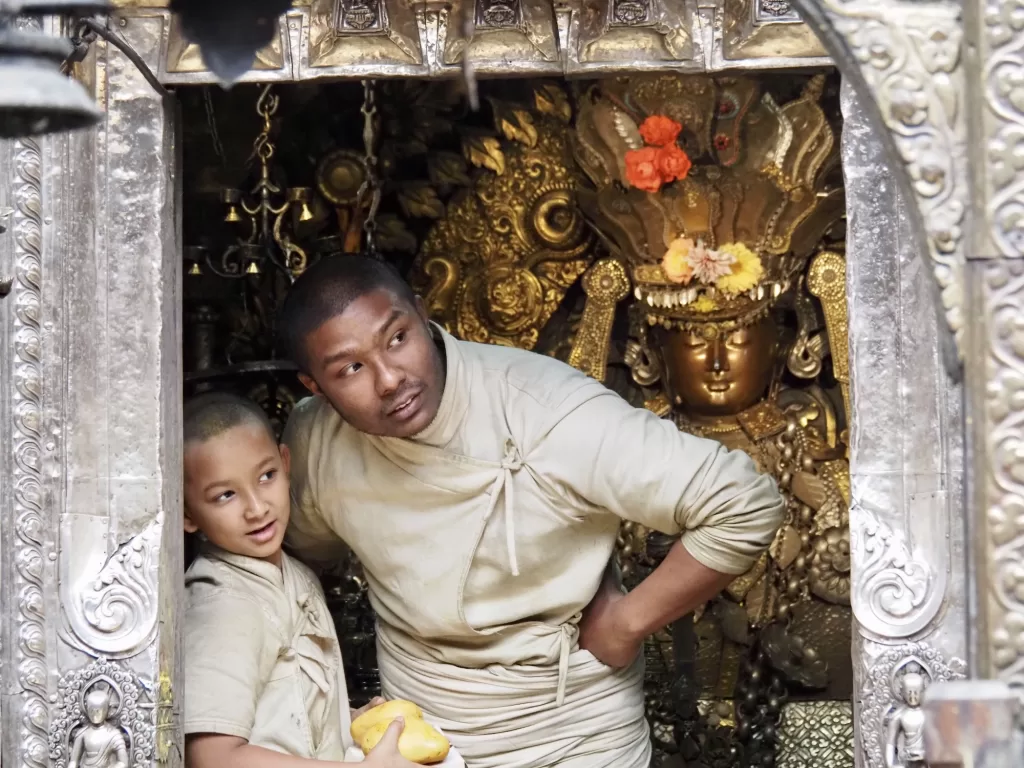
Kwa Bahal, a Buddhist monastery founded in the 12th century colloquially known as Golden Temple, is another early-morning jewel, when devotees make offerings to a child priest. The boy, always younger than 12, serves as head priest for 30 days before handing the role to another. In that time he circles the neighbourhood ringing a bell twice a day and is otherwise completely silent — although the first morning I am there he clearly has a song in his head, tapping his feet at the gateway to the shrine and singing to himself.
It is through Camille and her partner Nico, both French, that I get my first taste of Nepalese hospitality: dal bhat with the Cosy crew one Friday — the national dish of rice and lentils reputed to cure altitude sickness — and an afternoon of mahjong and ice-cold Barahsinghe beer with their local and expat friends.
Nico arrived in Patan in 2011 to set up a visual communications office after a UN internship in Thailand. “I didn’t know what Patan was and remember driving from the airport that first night and being pissed off that I wasn’t staying in Kathmandu,” he says. “But once I discovered the magic of Swotha Square, I was very happy to be here.”
Camille was completing her degree in international affairs in Russia when she came to Nepal to see Nico. “Swotha Square has always been the reason we stayed,” she says.
“When we arrived, it was still extremely authentic, with no tourists, nowhere to get a coffee and only local shops like a butcher and shoemaker. It was like stepping back in time. Here was this place that seemed totally undervalued, its beauty and harmony unnoticed by everyone.”
The couple met Jitan, owner of Yatachhen House, and after working on a handful of restoration projects together, created accommodation agency Cosy Nepal. “Jitan was the first guy in old Patan to have renovated in this way,” says Nico. “He took an old and very dark Newari house, opening walls and moving the kitchen from the roof to the ground floor.”
“Newars always put their kitchens on the top floor,” says Camille. “They don’t welcome foreigners, strangers or lower castes into that space, which is private and very sacred. But Jitan is an atheist, which is quite rare and special here and this impacts his way of thinking across the board.”
Patan Durbar Square and a magical museum
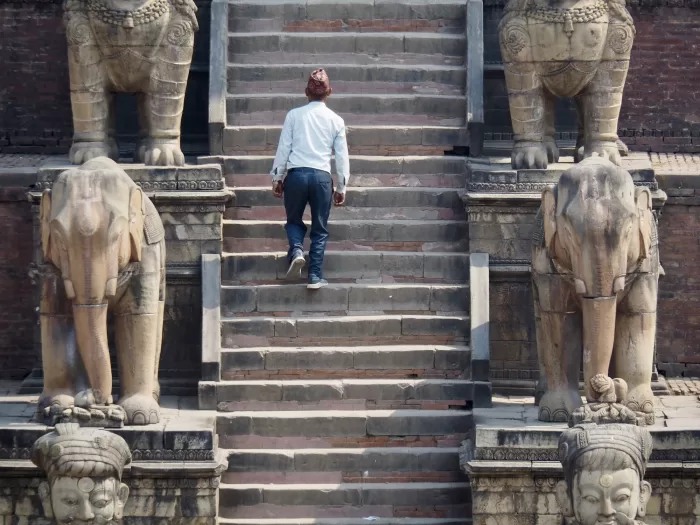
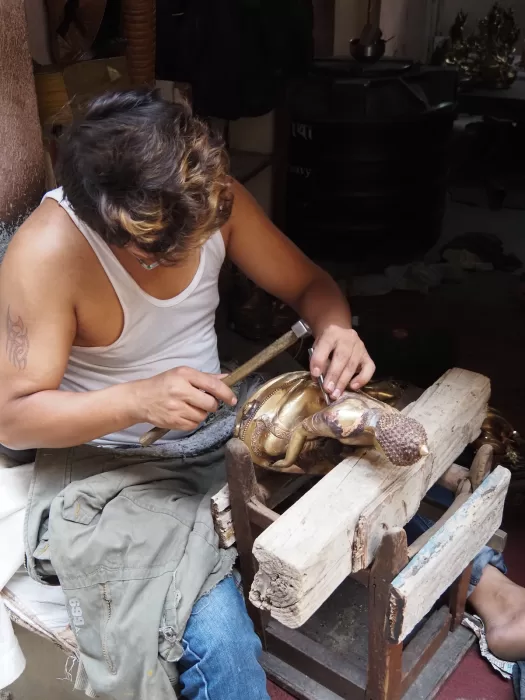
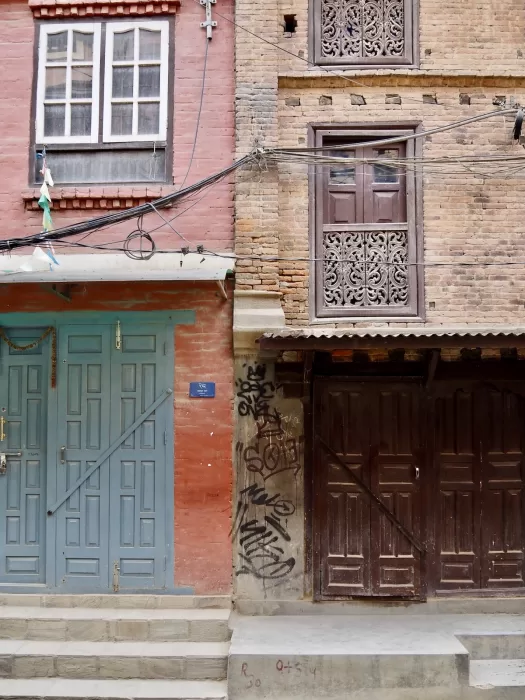
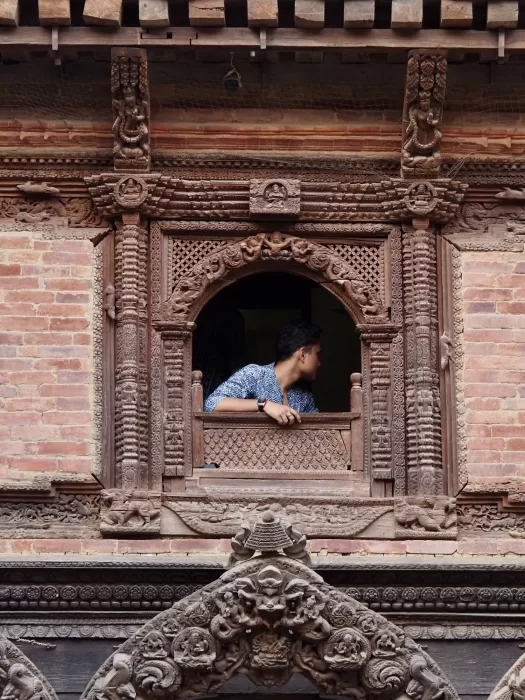
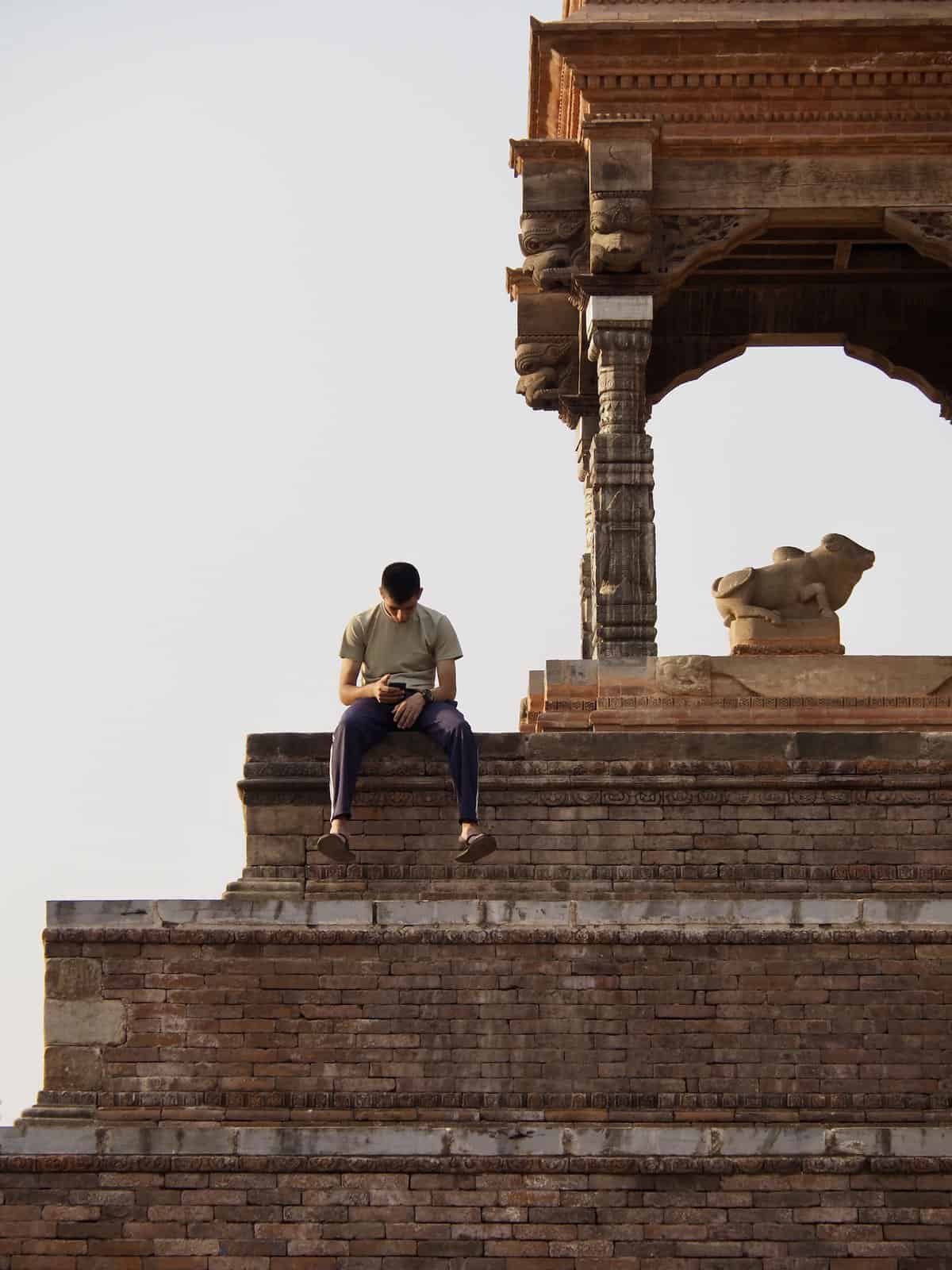
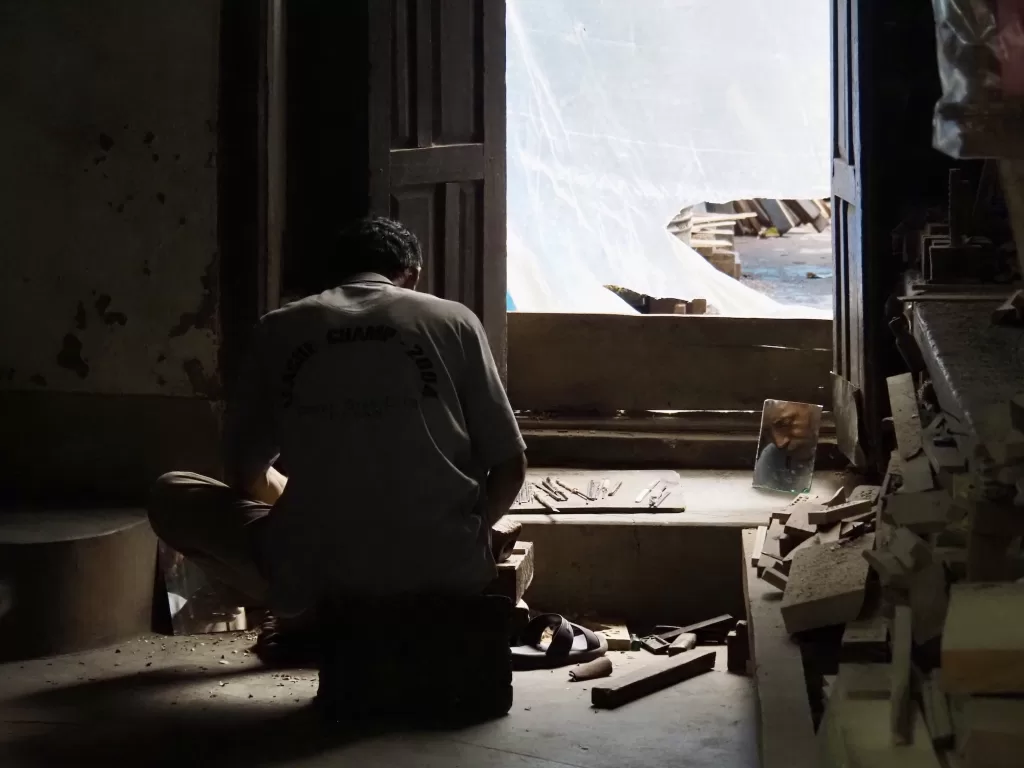
Celebrated artisans and town planners, the Newars built handsome brick buildings with intricately carved timber arcades and windows. Their studios and sculpture workshops continue to line Patan’s laneways today. The apex is Patan Durbar Square, where temples rise like pieces on an architectural chess board, and where the palace of the Malla kings and is now the Patan Museum.
My interactions with Patan Durbar range from watching thousands of women in red saris fill the square one afternoon during the chariot festival, to accompanying Camille as she dishes out home-cooked food to stray dogs late one night, afterwards watching boys breakdance until a security guard chases us away. It isn’t until my second week that I visit the museum, ducking in from one of Rato Machindranath’s downpours.
I am spellbound by the silence, the architecture and the collection, softly lit as if by candle, beautifully displayed against peach-coloured walls. There are fine architectural drawings, one depicting the Vambaha Chaitya, a stupa-topped shrine from the 7th century. Signage is minimal and even the museum labels are chic. Armed with an entry pass that lasts the duration of my visa, I decide to explore slowly, communing with just one statue or to photograph just one courtyard in a particular light or, on rainy days, sitting in a carved window seat overlooking Patan Durbar.
The collection comprises architectural relics and religious works: a 9th-century image of Indra, the Hindu Zeus; an 11th-century bronze Shiva Linga, the linga representing the phallus of pleasure-loving Shiva; and a sublime 12th-century Shakyamuni Buddha seated in meditation. All have one thing in common. They were stolen.
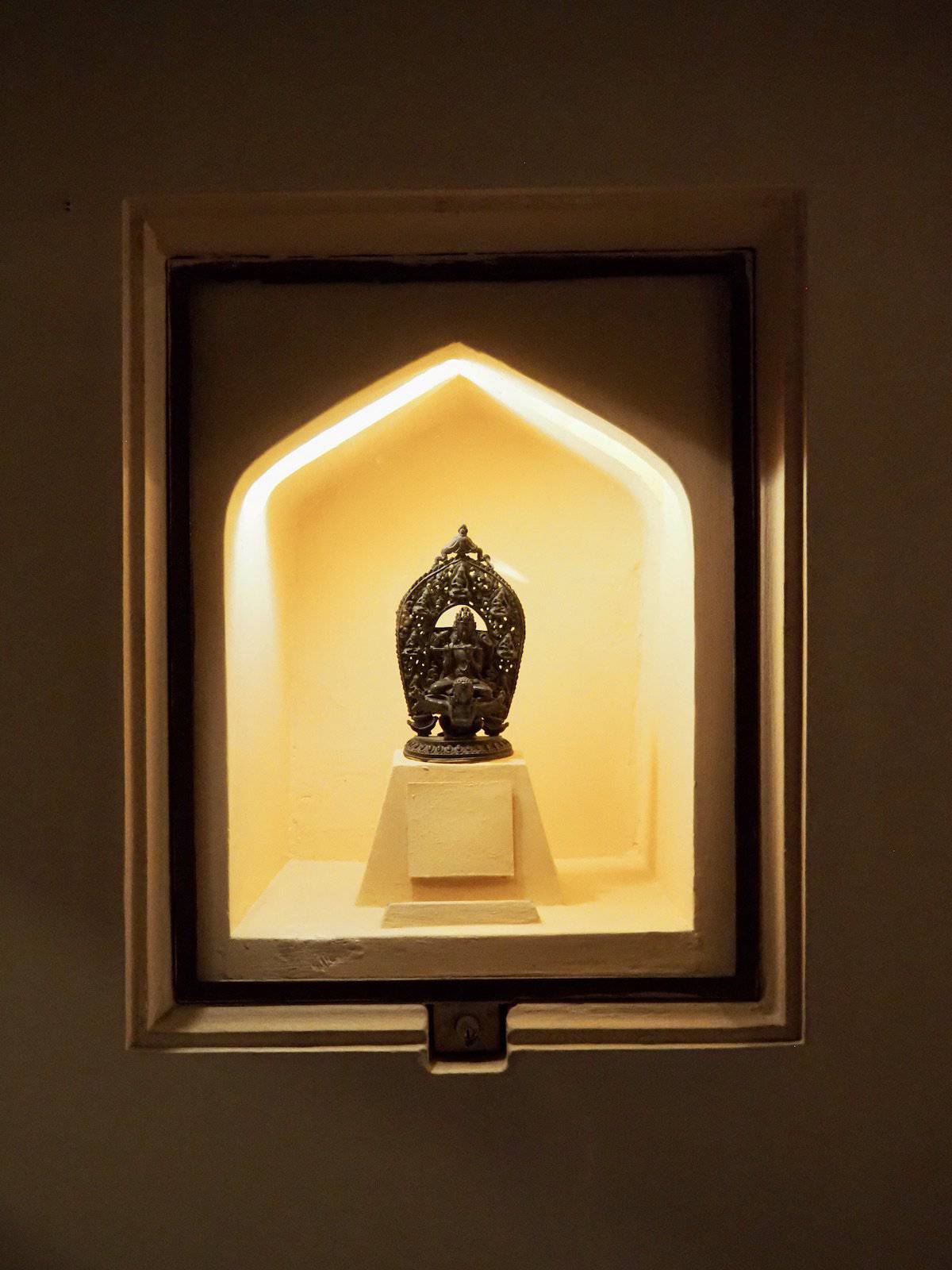


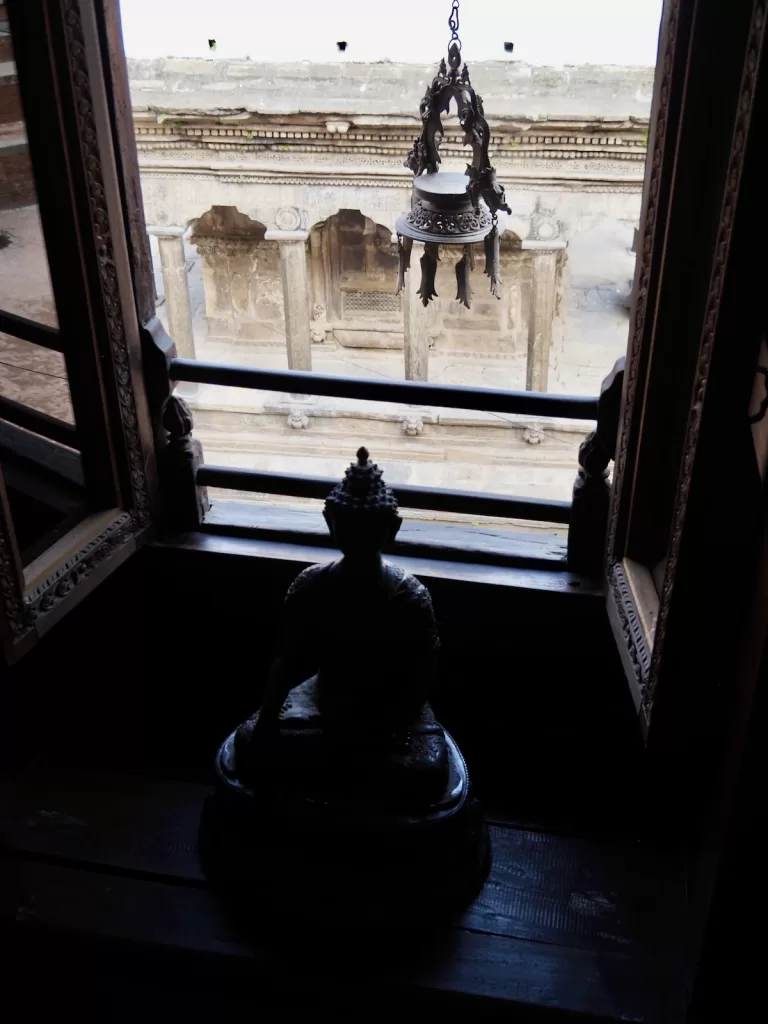
When Nepal opened up to the world in the 1950s, the Kathmandu Valley was an open, living museum. An illicit trade in religious art followed, stripping gods from their shrines. The treasures in Patan Museum are items abandoned by thieves or intercepted before leaving the country, making the criminal world the museum’s largest benefactor. There are also happy moments of repatriation: while I am in Nepal, the Art Gallery of NSW returns an 800-year-old strut stolen from a Patan temple in 1975.
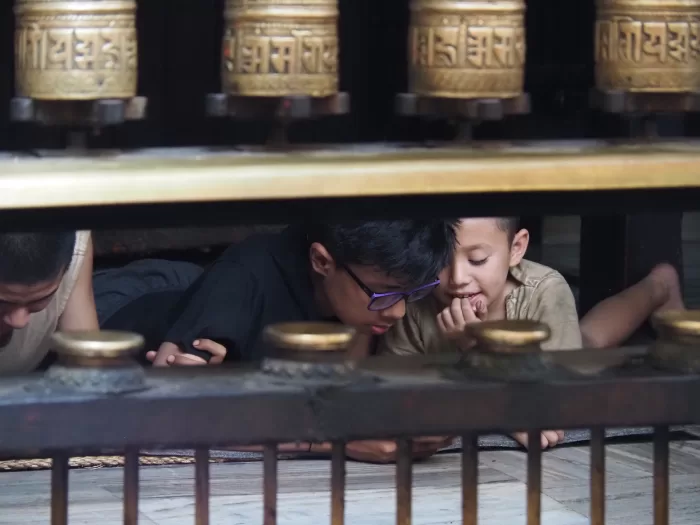
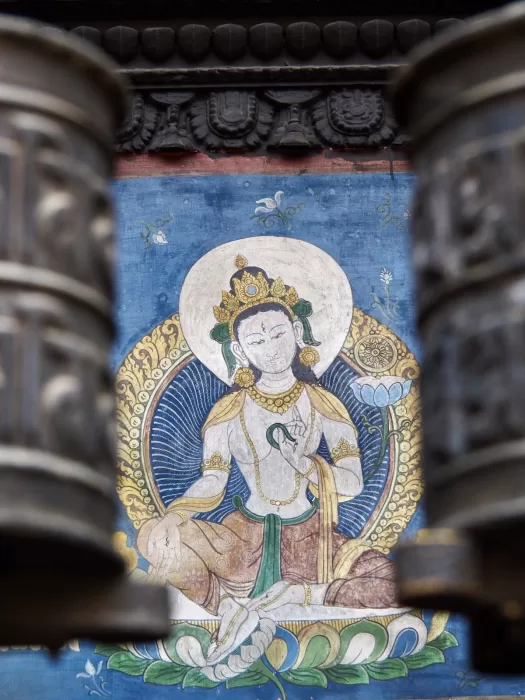
There are forays into Kathmandu to visit Hanuman Dhoka and the Buddhist stupas of Swayambhu and Bouddha, spinning bronze prayer wheels with the crowds. I brunch at Le Sherpa — a mean Bloody Mary after a cocktail-fuelled night at Barc with Camille, Nico and Austin, and the capital’s coolest farmer’s market on Saturdays. Another day is spent at Taragaon Museum, an artists’ hostel designed in 1974 by Austrian architect Carl Pruscha, now Kathmandu’s coolest art gallery.
And then, after days of rain, Rato Machindranath reveals yet another miracle from the balcony of a rooftop cafe. Having washed away the thick, pre-monsoon air, the rain god shows me the Himalayas for the first time, rising behind the pagodas of Patan Durbar Square. I can’t believe how close they’ve been all along.
Meeting a design legend in Bhaktapur
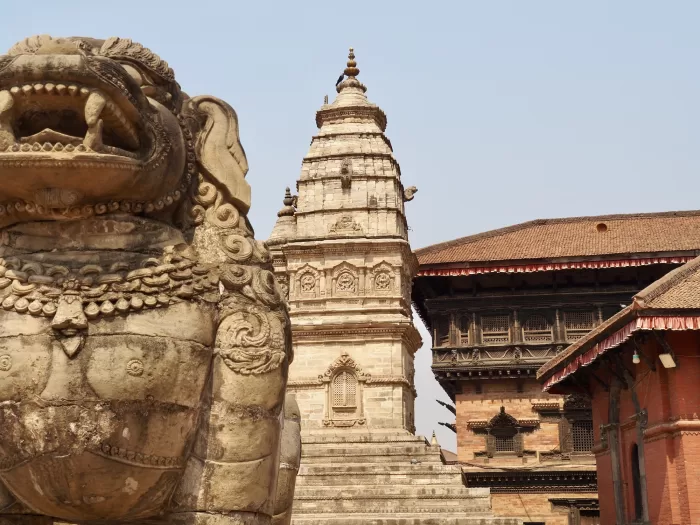
Most people do Bhaktapur as a day trip from Kathmandu, but drawn to its grand architecture and sleepy reputation, I stay for a week. Of the three ancient Malla capitals, all World Heritage sites, Bhaktapur has received the most complete restoration after the devastating 2015 earthquake, followed by Patan and then Kathmandu. Bhaktapur Durbar Square is magnificent, but there are two other beauties: Taumadhi Square, home to the tallest pagoda temple in Nepal, and more intimate Dattatreya Square, the oldest of the three.
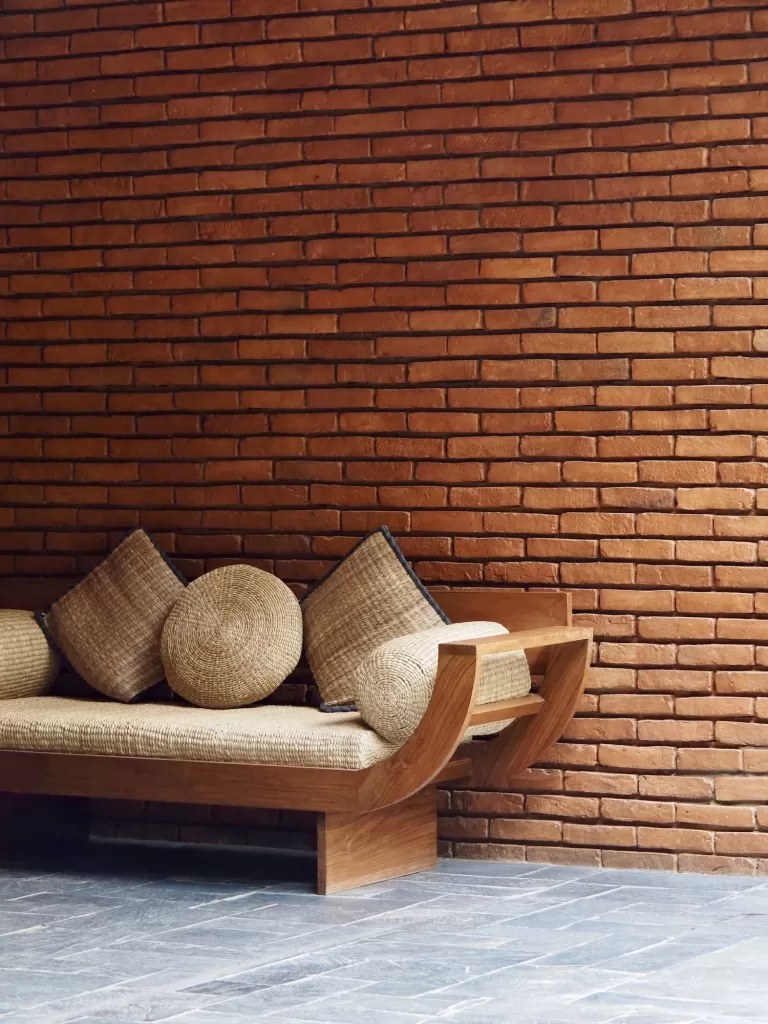
It is close to Dattatreya that I stay at Milla Guesthouse, renovated by Austrian architect Götz Hagmüller and named for his wife, Ludmilla, an actor and stage designer. Simple but chic — terracotta tiles, half-painted walls in burnt orange, brass pendant lights designed by Hagmüller — and to my delight, the same posters from Patan Museum framed on the walls.
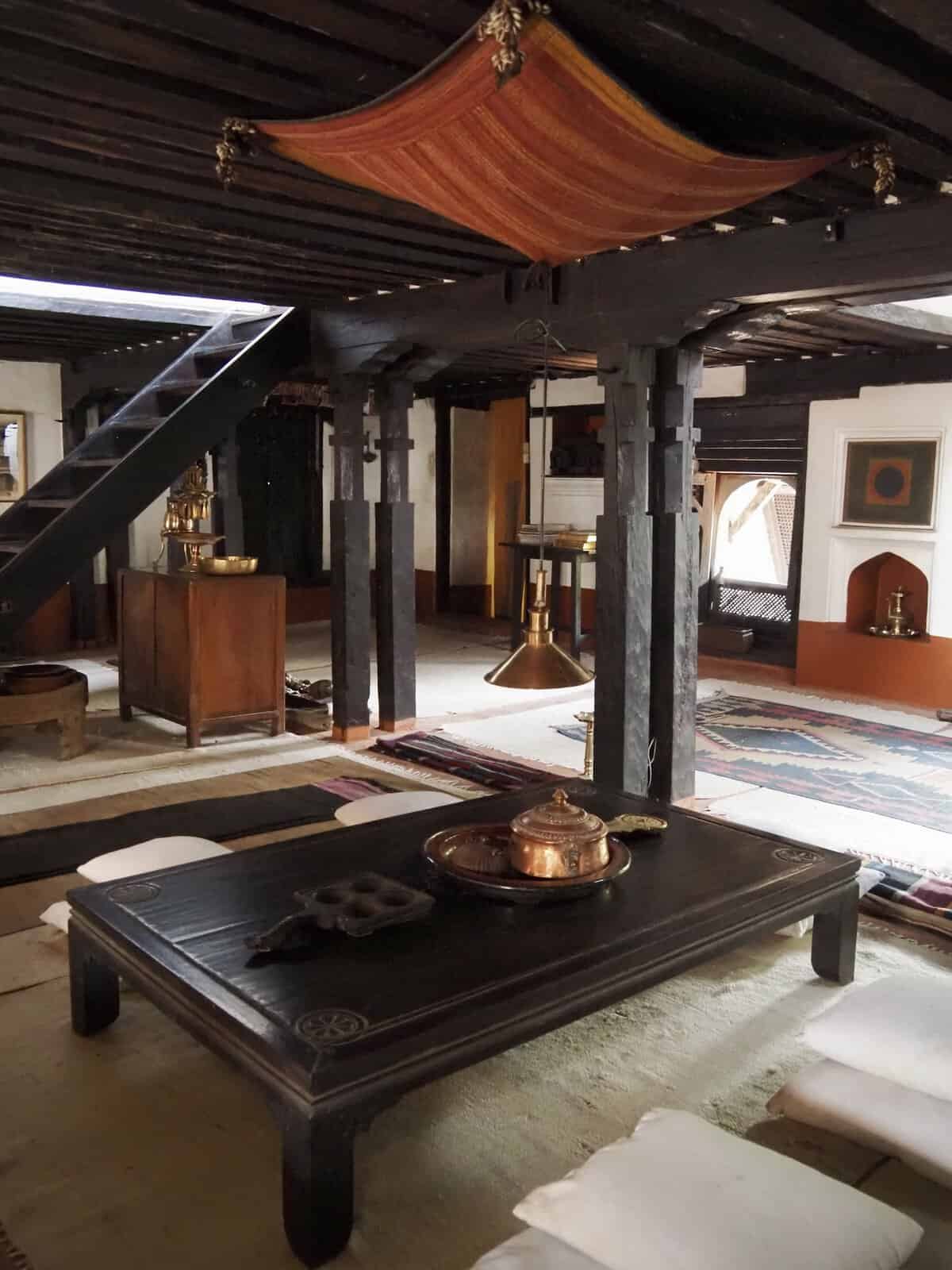
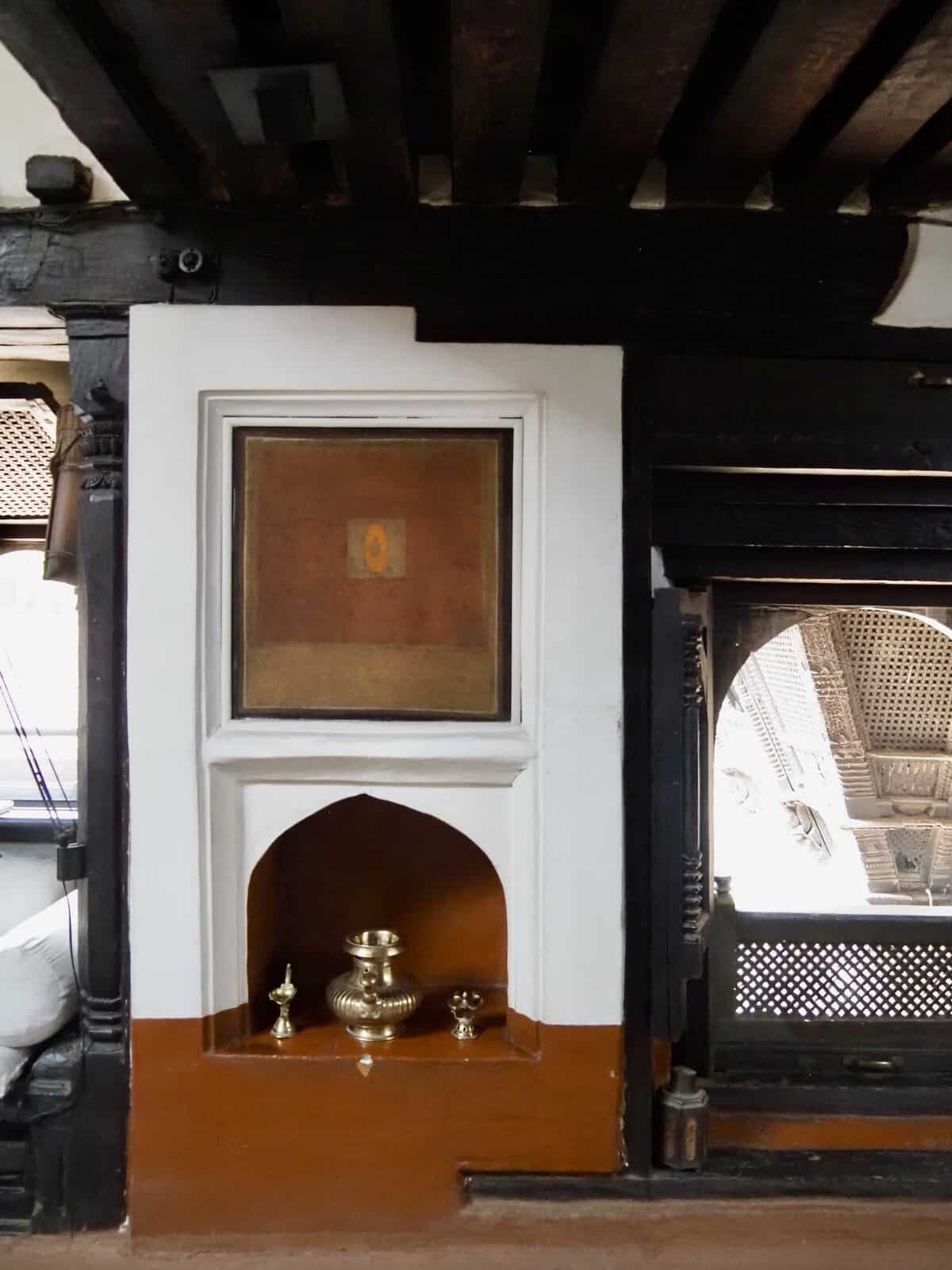
The penny drops on my second day. Sitting with Ravi, a Bhaktapur native, and his Polish wife Emilia, who run Milla together, I mention buying the same posters and that Patan Museum was one of the loveliest I’d ever seen. “My foster father Götz was the architect,” Ravi tells me. “He was commissioned by the Austrian government to oversee the renovation of the palace and its conversion to the museum.” He invites me to supper at Kutu Math, the historic home they share with Götz and Ludmilla — built in the 18th century as a hostel for Hindu pilgrims and found by the architect after moving to Bhaktapur in 1979. Like Patan Museum, the line between old and new is beautifully blurred.
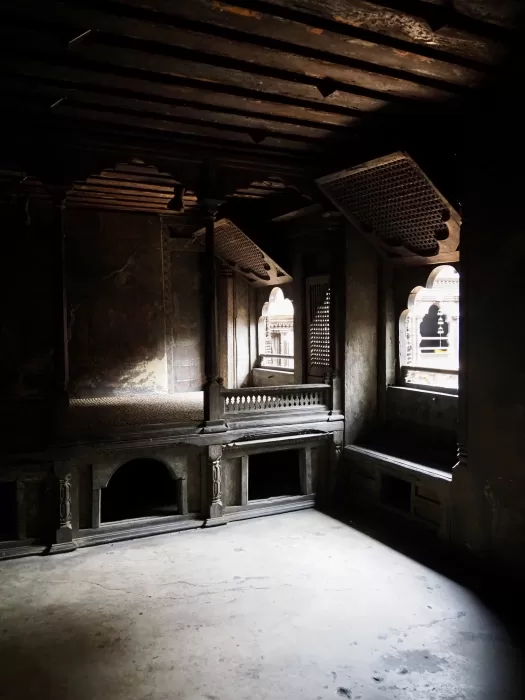
I return to photograph Kutu Math another day, including the striking baithak with its bay window overlooking the courtyard, and Hagmüller’s studio. On the way out, Ludmilla shows me a small room lined with murals telling the story of Krishna’s youth, where the holy man who ran the hostel once received pilgrims. His hereditary successor and family still live in the house, sharing Kutu Math with the Hagmüllers.
Rustic inns, luxury resorts and mountain lodges
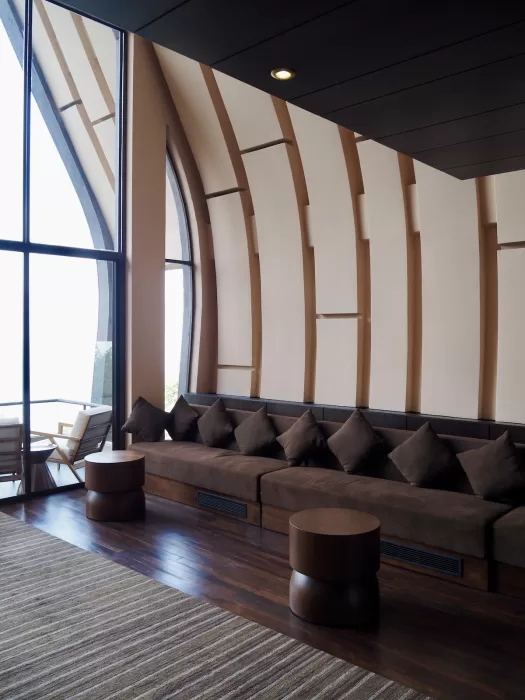
The gears shift after Bhaktapur, with four days in Nagarkot at Kavya Resort & Spa. At 2,200 metres, its tree-clad landscape is surprisingly gentle, with luxurious villas (rooms start at 167sqm) perched like sculpture with views all the way to Everest. In-house swami, Sri Guruji, teaches meditation and Nepalese yoga incorporating micro movements, perfect for bodies less flexible than they once were. There are hikes through forests and a visit to the hermit priest of a rustic mountain temple dedicated to Shiva. Kavya is about as luxurious as Nepal gets, with a vast spa, excellent service and a kitchen specialising in Pan-Asian cuisine that will have you wanting to stay for a month.
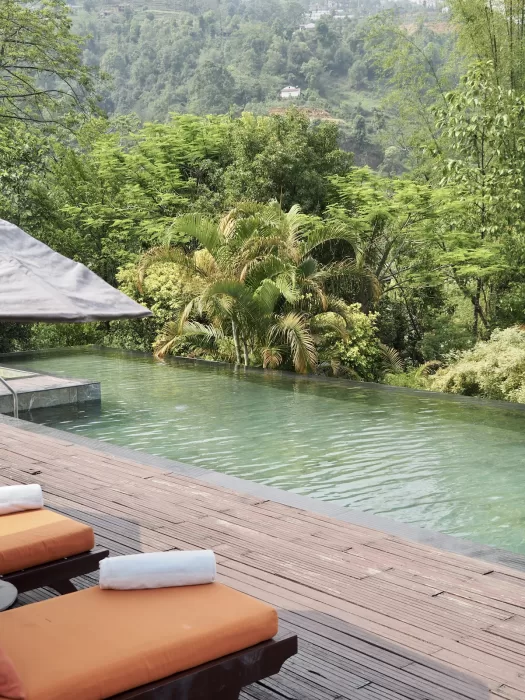
The hiking gets more serious in Pokhara. From The Pavilions Himalayas, a luxe farm stay with a natural-water swimming pool and farm-to-table menu, I meet my guide Big D for an eight-hour hike. The first ascent is terrifying — a narrow path with a vertiginous drop to one side, made treacherous by a downpour. But the exhausting joy is unforgettable, crossing stupas and temples shrouded in clouds that open to reveal the Annapurna range, before descending to Phewa Lake and much needed momos at sister property, The Pavilions Lake View.

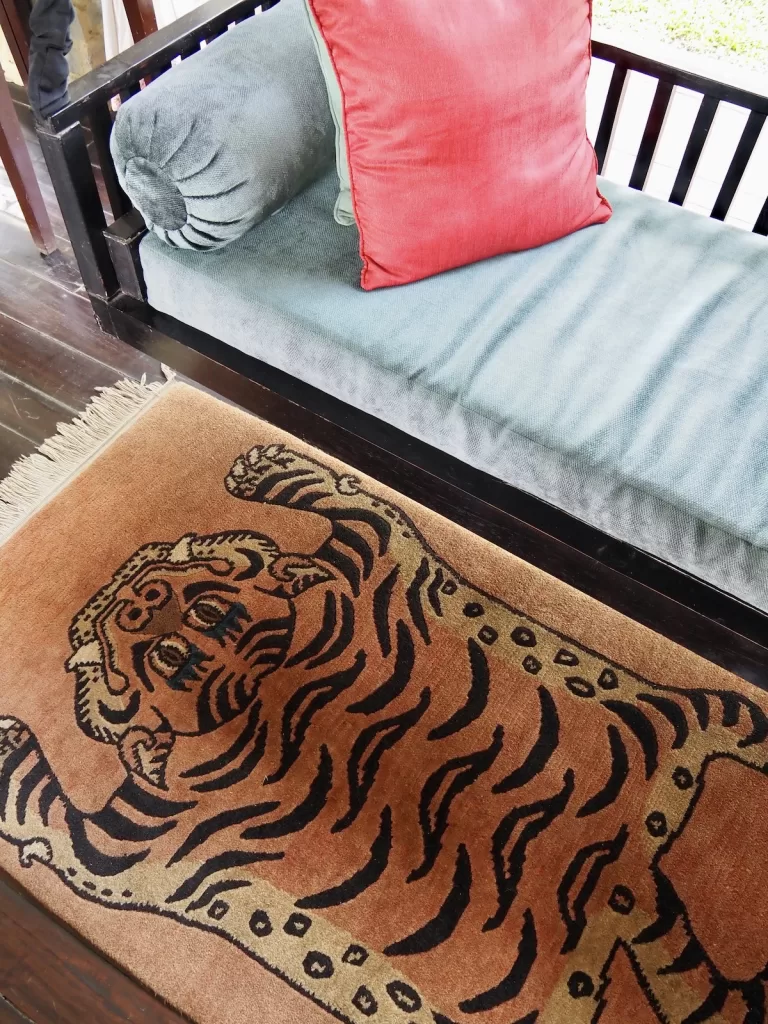
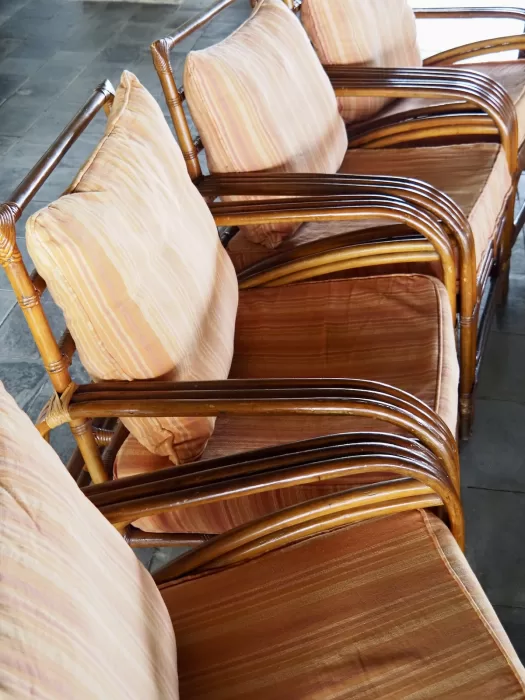
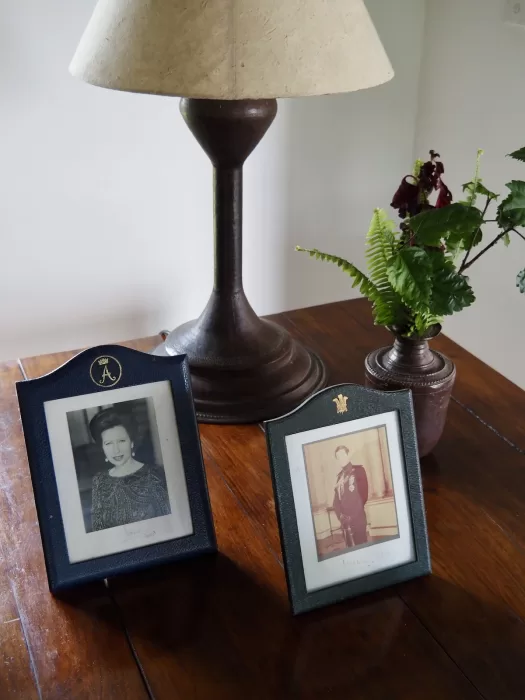
I discover entirely new leg muscles while hiking from Tiger Mountain Pokhara Lodge. With epic mountain views and an old-world safari feel, it’s romantic as all get-out. The main lodge has a central fireplace surrounded by cane armchairs and a large table decorated with antique boxes and signed photos of Edmund Hillary (who inaugurated the lodge in 1998), alongside Prince Charles and Princess Anne.
In my room, the top floor of a rammed-earth cottage at the property’s edge, a desk piled with vintage art books sits in front of a four-poster bed and works on paper reminiscent of Donald Friend. No coffee machine, but with a butler who wakes you up at whenever the clouds open to reveal Machhapuchhare — a sacred 7000-metre peak that has never been climbed — who needs one.
I break the drive back to Patan with a few days in Bandipur, a hilltop town on the old trade route to Tibet that fell into decline when it was bypassed by the Prithvi Highway in the 1970’s. The result is a sleepy Shangri La: a cobbled main street lined with 18th- and 19th-century merchant houses, a row of which are now The Old Inn. There are no frills to this eagle’s nest hotel, but it oozes atmosphere — the otherworldly inn would make a brilliant film set — with great service, organic garden vegetables and majestic views of the Annapurna range.
My last night in Nepal is the opening of Kafka’s Red Peter, staged by Ludmilla in the theatre of a Kathmandu hotel. I go with Camille; Emilia is there too while Ravi stays in Bhaktapur to look after Götz. Despite the heat, I enjoy my first taste of Kafka more than expected, with stellar performances and the hotel staff waiting for us after the play with trays of ice-cold beer. I linger in the lobby with the actors, their friends and families and these three remarkable women who, at different times and for different reasons, have made Nepal their home.
From a story originally published in Australian Financial Review Magazine.
This exploration of the magic of Nepal is dedicated to Götz Hagmuller, who died peacefully in his sleep at Kutu Math, his home in Bhaktapur, in February 2024. He was 85.