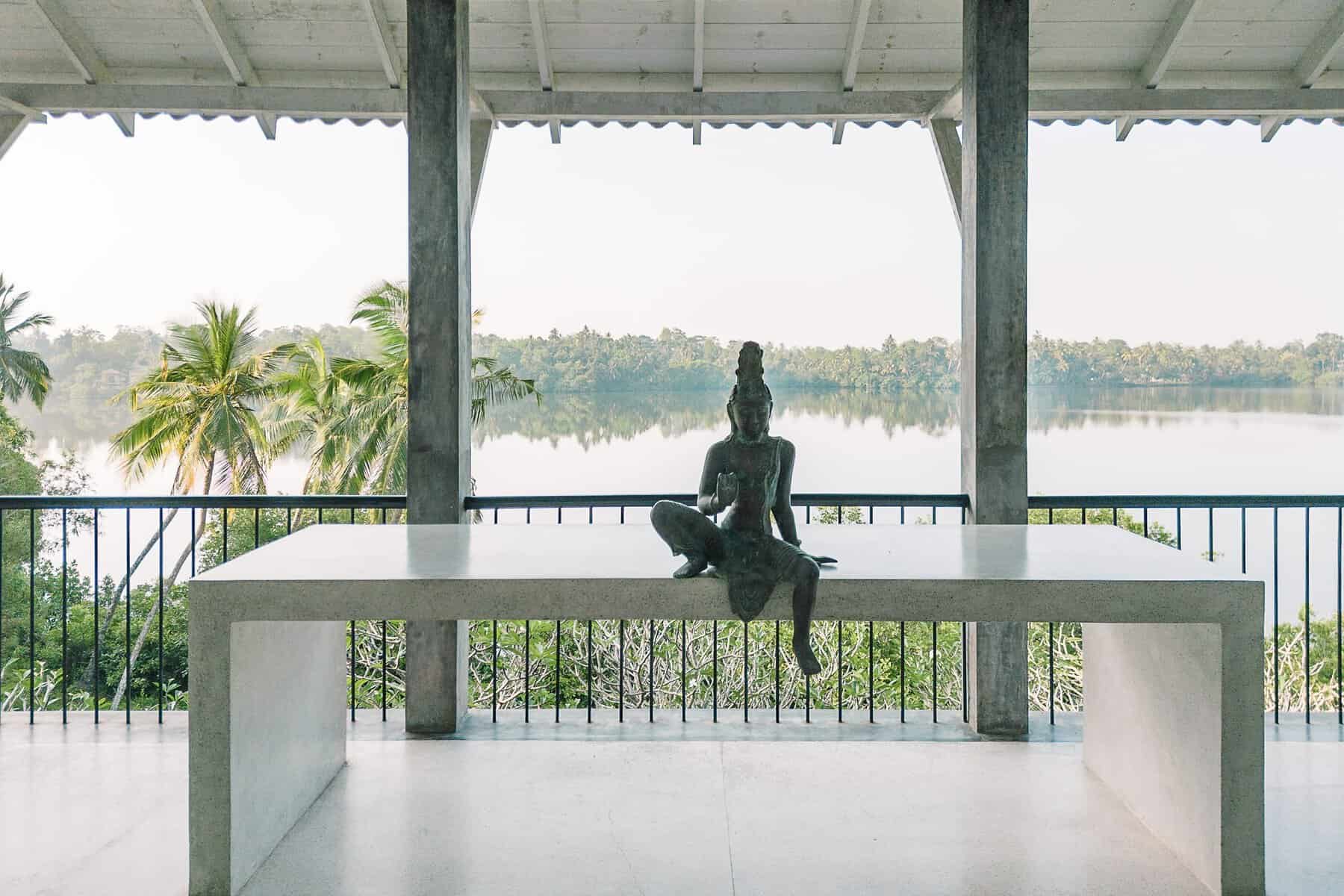
Kurulu Bay.
This lakeside retreat in the south of Sri Lanka is the kind of place that makes you wonder why you ever stayed anywhere else.
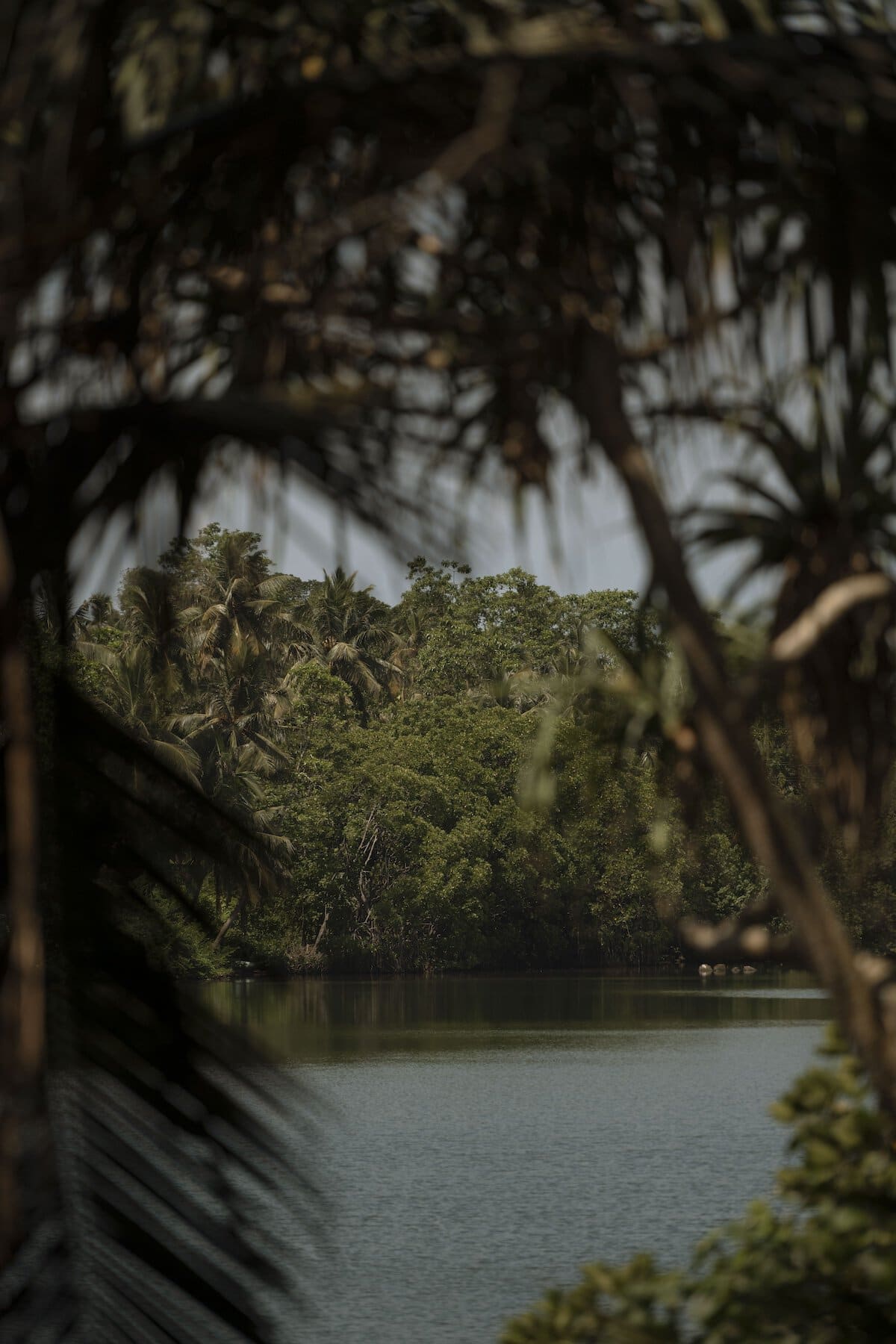
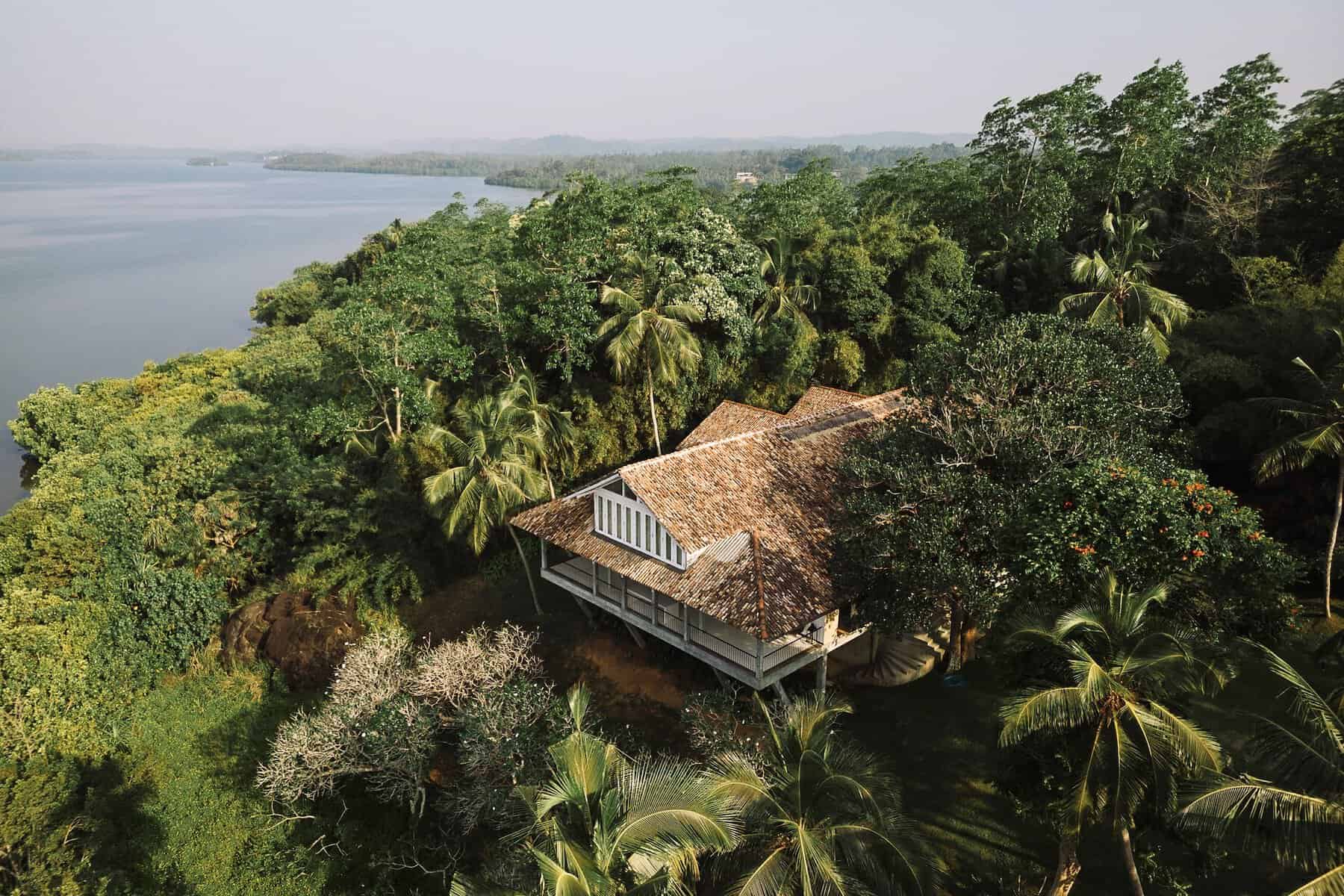
Perched on the jungled shore of Koggala Lake, Kurulu Bay makes everything else feel less urgent. Sea eagles soar and swoop. Chanting drifts from temples across the water. Hornbills bask in tall and slender palm trees, each one reaching for the sky like the upward arms of sun salutations. The rest of the world recedes.
When it comes to hotels in dazzling settings, the bar sits high in Sri Lanka — and standing out from the pack is no mean feat. Kurulu Bay answers with architecture: modern, with brutalist accents, at one with the terrain.
Kurulu means bird island in Sinhala and the hotel earns its name, but the sun salutations don’t stop there. A striking yoga shala opens toward the water and Kurulu House, the pavilion-like main house designed by Geoffrey Bawa protégé Channa Daswatte, serves as the setting for sound baths and other classes in mindfulness and movement. A small but stellar spa leans into holistic healing and ancient Ayurvedic treatments.
Not that Kurulu Bay is without its vices. Set within an open-air pavilion overlooking one of two swimming pools, the bar and restaurant is one of the best of any hotel on the island. Think fiery fusion food and killer cocktails before the perfect night’s sleep in one of 15 guest rooms — spread between cottages, treehouses and garden suites. Wake up like new and hit the beach, with some of Sri Lanka’s loveliest coves just a 10-minute tuk-tuk ride away.
Paradise found
Kurulu Bay sits on three and a half acres overlooking Koggala Lake, a vast coastal lagoon connected to the Indian Ocean, scattered with islands, Buddhist temples and cinnamon plantations. For all its remoteness the location is ideal, half an hour from Galle Fort and just two and a half hours from Colombo Bandaranaike International Airport — a big plus on an island that’s notoriously slow to get around. Direct trains travel from Colombo Fort to Koggala Station, 10 minutes from the hotel. The railway line is magic, trailing the coast in old-school carriages, right on the sand in places like Bentota Beach.
Other guests during my stay were cool and arty, there for wellness and white sand: a young German couple, both graphic designers; three friends from the UK; and a painter from Colombo, whose father once accidentally landed a plane on the roof of Geoffrey Bawa’s country estate. (As legend has it, the architect simply stepped outside and asked him what he’d like to drink.)
Kabalana Beach, with its west facing shoreline and sunsets the colour of strawberry gelato, is two kilometres from the hotel. Boho surf town Ahangama is next door. Closer still is the charming 19th-century temple Kathaluwa Poorwarama Viharaya. The murals are the highlight, weaving the Jataka tales (the previous lives of Gautama Buddha) with scenes of European domestic life. Even Queen Victoria makes an appearance.
Architectural pedigree
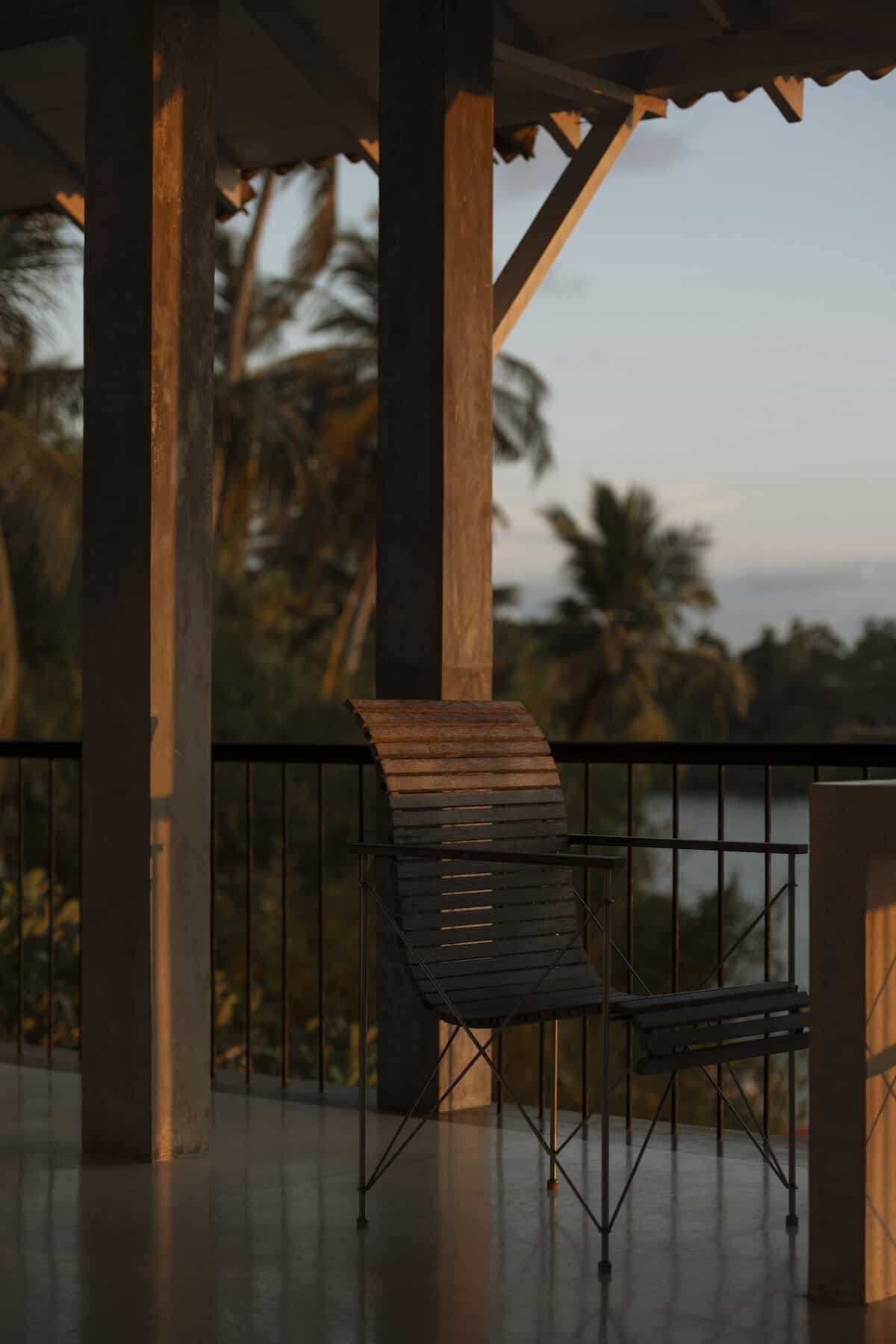
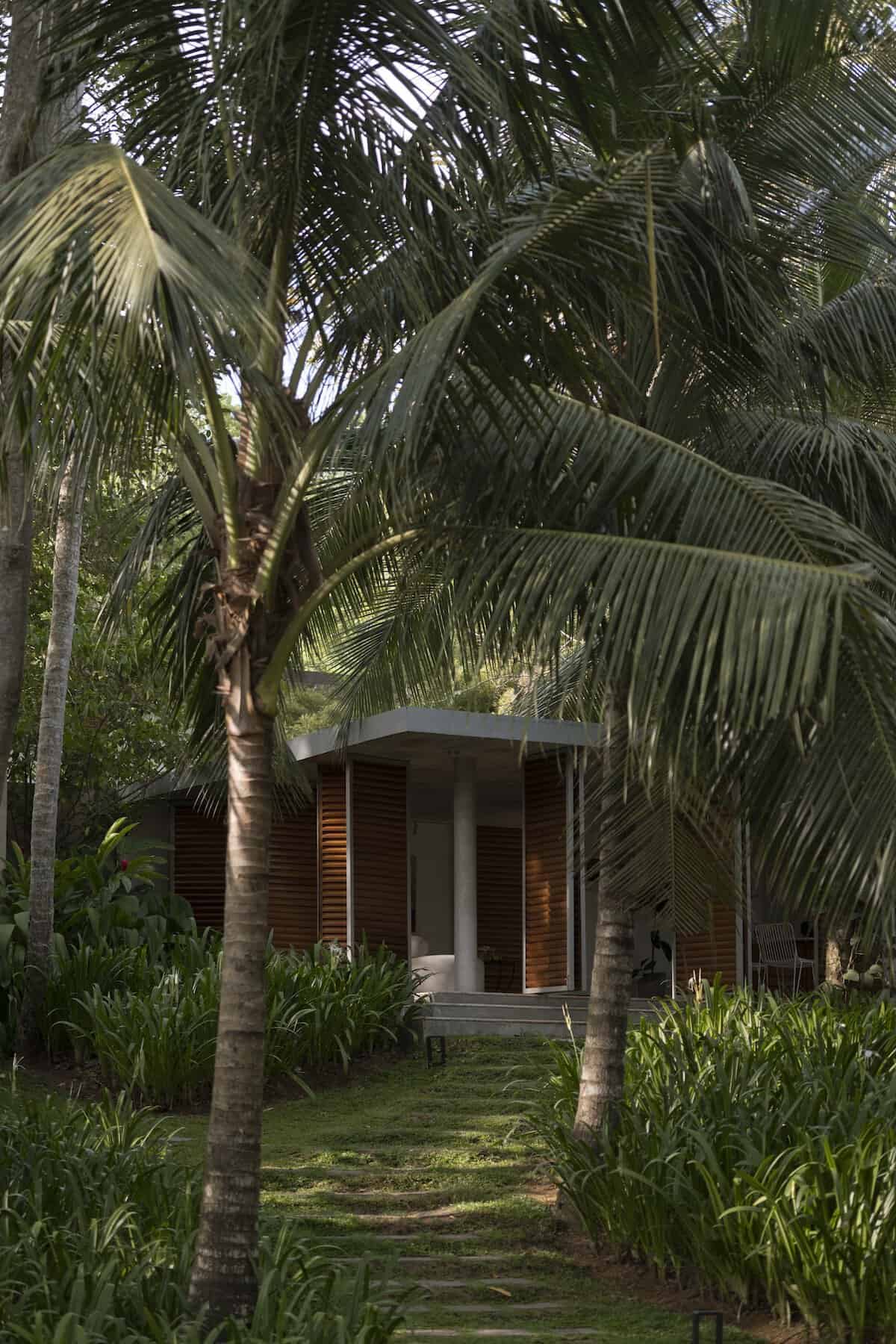
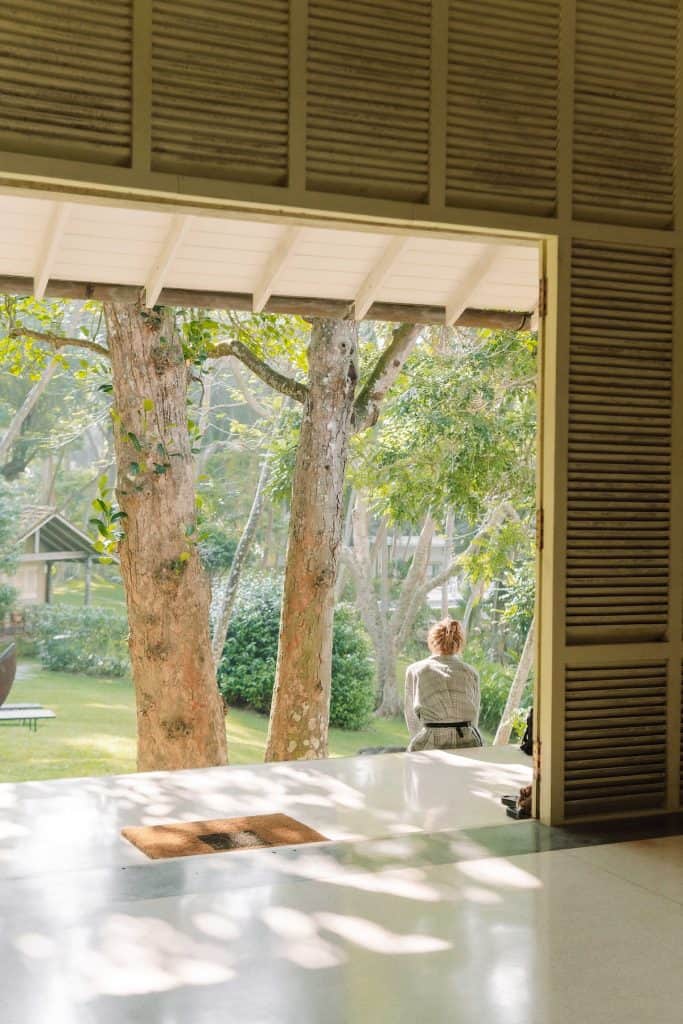
An entrance pavilion sets the tone for things to come: travertine on the floor, columns and ceilings in raw concrete and louvred-timber panels pushed open on dense foliage. A building created for the landscape, not the other way around.
Originally conceived as a private lakeside retreat, the main house blends Florida modernism and Bawa’s tropical aesthetic. It was designed by Channa Daswatte, who worked with Bawa 1991-2002. Resting on raked concrete supports, the structure floats from the hill toward the water. High ceilings and a vast central living space open to a terrace, giant frangipani trees framing views of the lake. Vintage exhibition posters and midcentury furniture imbue New York loft into the breezy island aesthetic. Two guest rooms upstairs on the mezzanine are pared back and still.
The entrance, dining pavilion and much of the accommodation came later, courtesy of A00 Architecture, a new layer of tropical brutalism — exposed concrete and timber left to weather — that slips into the setting without effort. The dining pavilion is the site’s most assertive structure, with double-height concrete walls, mega terrazzo floors, full-length openings and exposed columns. Garden suites step down the hillside in a folded-plate structure that follows the terrain, the line between inside and out never quite drawn.
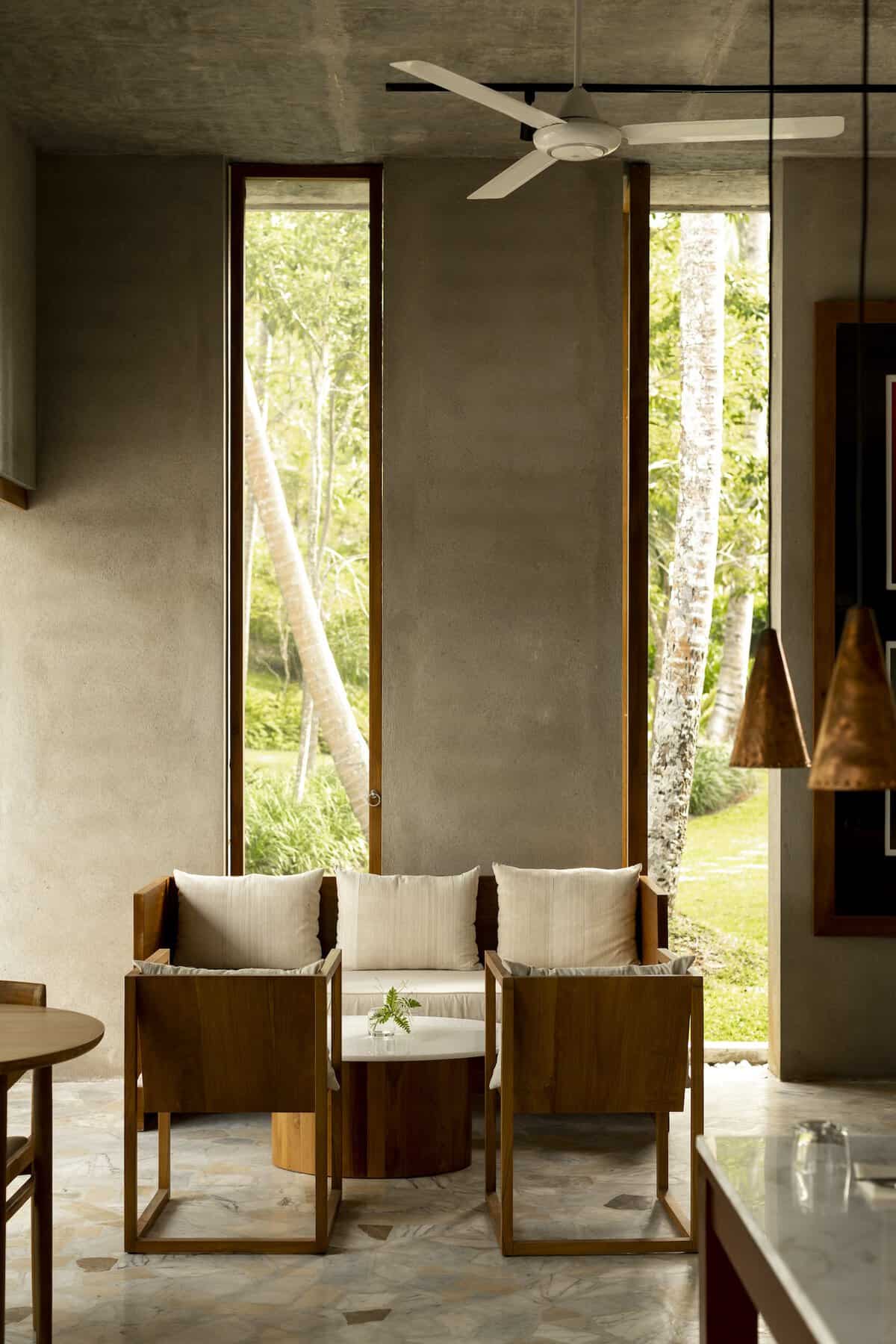
The harmony between Daswatte’s main house, A00’s brutalism and the site’s undulating terrain is an elemental masterpiece. Interiors rely on custom furniture and joinery in regional hardwoods: cool, calm and uncluttered, where good bones and beautiful materials do the talking.
Wall Street to Sri Lanka
Born to Pakistani parents, having worked in the United States and Singapore, Shahzan Malik is one of many to trade a career in finance for something more meaningful, after travelling to Sri Lanka and falling into the role of hotelier. Few pulled it off so elegantly.
Malik says the island revealed itself not as a destination but as a feeling. In 2000, he came across a remarkable building inside Galle Fort: an 18th-century Dutch merchant’s mansion that later served as a Buddhist school, the Bank of Ceylon and a printing house renowned for its Buddhist manuscripts. A six-year restoration followed, preserving a wealth of original detail, and the building was reborn as a 10-room boutique hotel, Fort Printers, in 2006.
A decade later he acquired Kurulu House, then a private residence, drawn to its wildlife and sweeping views of Koggala Lake. Tharindu de Silva of sustainable design firm A00 conceived additional structures, including the entry, dining pavilion and treehouse bedrooms, and Malik’s second hotel, Kurulu Bay, opened its doors in 2022.
The harmony between the architecture and the site suggests Kurulu Bay was conceived as the perfect whole — the contrasting voices of Daswatte and de Silva notwithstanding. Malik describes it, though, as a collective of smaller ideas and experiences rather than a single overriding concept.
There were hiccups. On the back of the pandemic, Sri Lanka was hit by a crippling economic crisis. For much of the island it was difficult to find food and fuel, let alone finish a hotel. Malik, though, rose to the challenge with flair. When he was unable to receive the Portuguese stone for the floor of the dining pavilion, marble debris was sourced locally, creating a mega terrazzo floor the structure would be sorely lacking without. His efforts did not go unnoticed. Kurulu Bay has been awarded a Michelin Key — the innkeeping equivalent to the Star — two years running.
Treehouses and gardener’s cottages
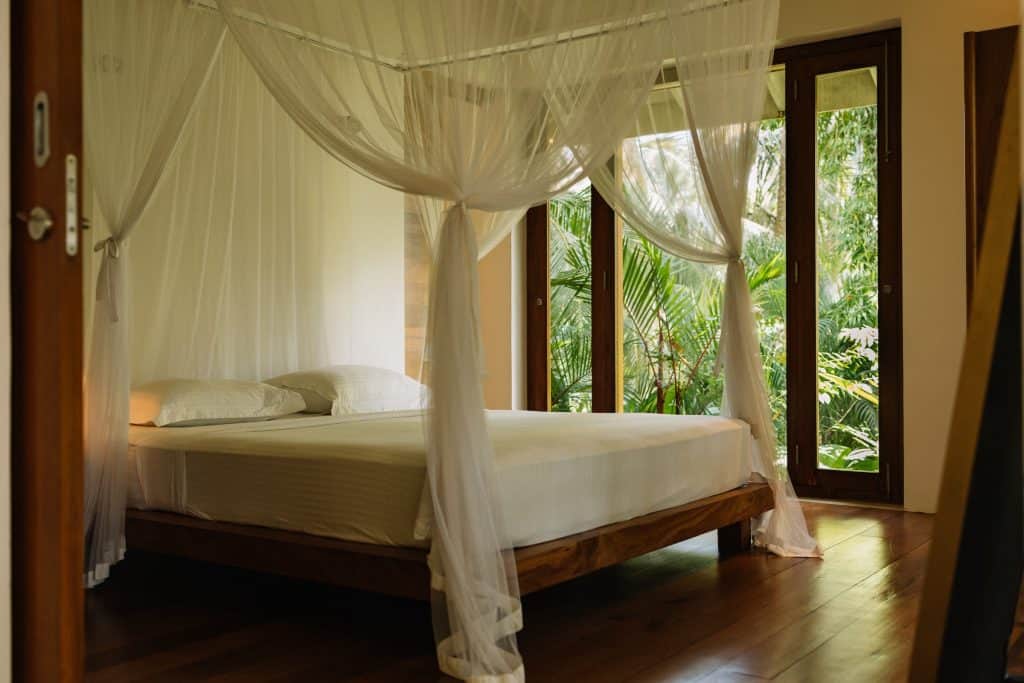
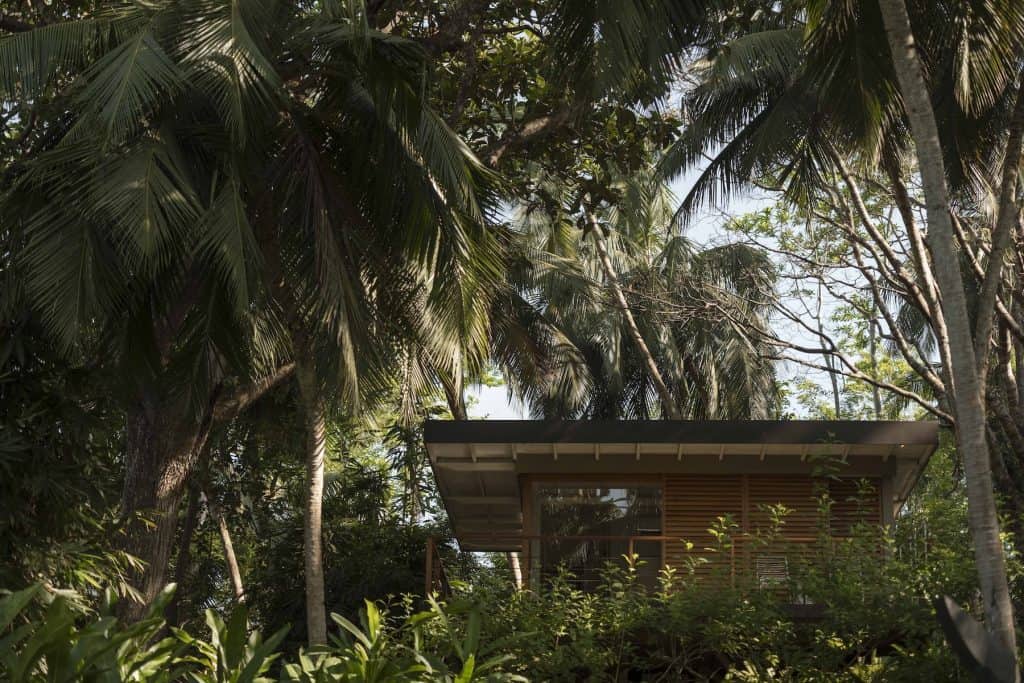
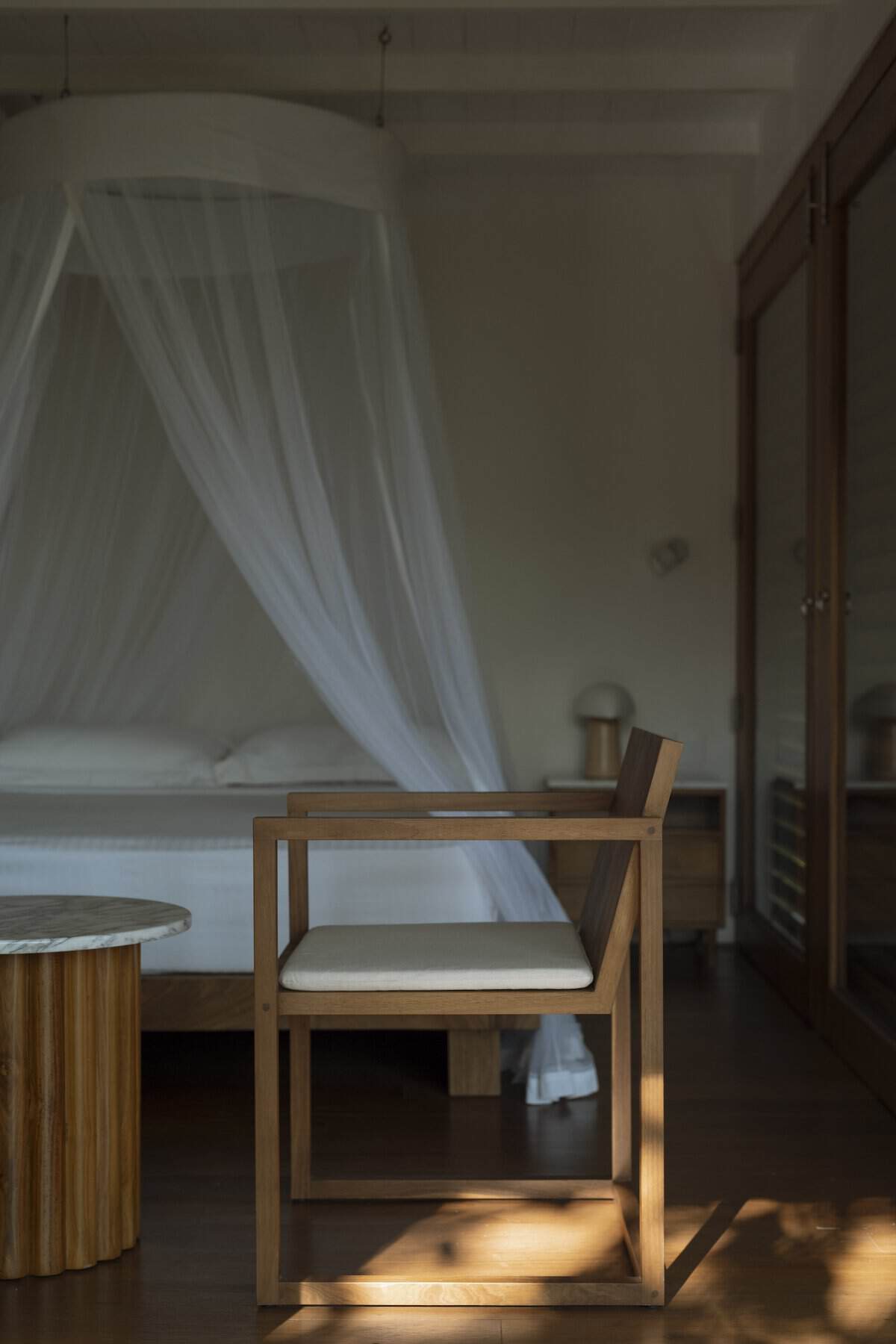
Fifteen rooms take different forms across the property. None of them feel out of place. Treehouses are the most exotic, floating above their surroundings on raked supports similar to the main house, with views across Koggala Lake and the pool below. Glass doors and timber louvred shutters between the bedroom and veranda slide back and the jungle comes in.
Cottages are scattered across the property — two are former gardener’s cottages, reimagined in vernacular simplicity, with old-fashioned painted shutters and tiled roofs. A third follows A00’s Brutalist lines, softened with timber columns, doors and windows. The two-bedroom suite, Banyan, sits on its own hillside, with a kitchen, living room and private courtyard swimming pool. Four garden suites terrace down the hill toward the dining pavilion. These are the most contemporary spaces, A00 at their most assured.
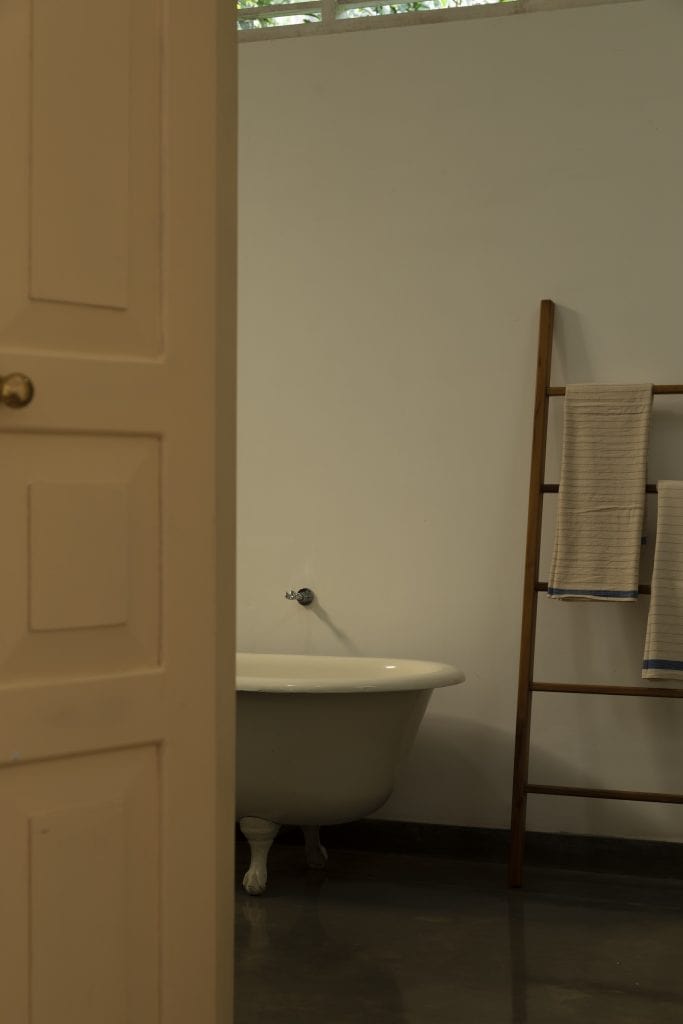
All rooms come with air conditioning, ceiling fans, turn-down service and local natural bathroom products. There are no televisions — a choice more hotels should make. Custom furniture is rich in material, minimal in form, crafted in regional hardwoods. Beds are draped in mosquito nets; some rooms feature freestanding timber soaking tubs.
Pavilion, pools and Kurulu House
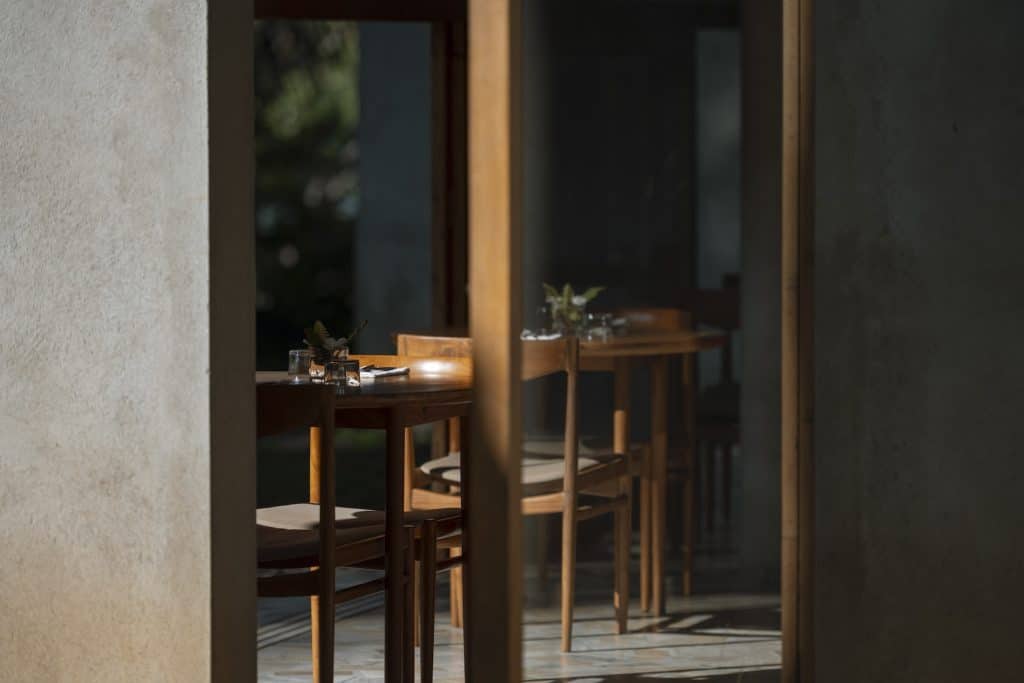
The dining pavilion is a modern, sophisticated space: soaring concrete walls and ceiling, timber doors and windows sliding or folding to create seamless, indoor-outdoor living. Punchy photography hangs above sofas in cognac-coloured wood, boxy and Donald Judd-ish, perfect for a pre-dinner drink. Dining tables and chairs lean Scandinavian; seat cushions are done in rustic stripes — possibly Turkish, as Malik lives half the year in Istanbul.
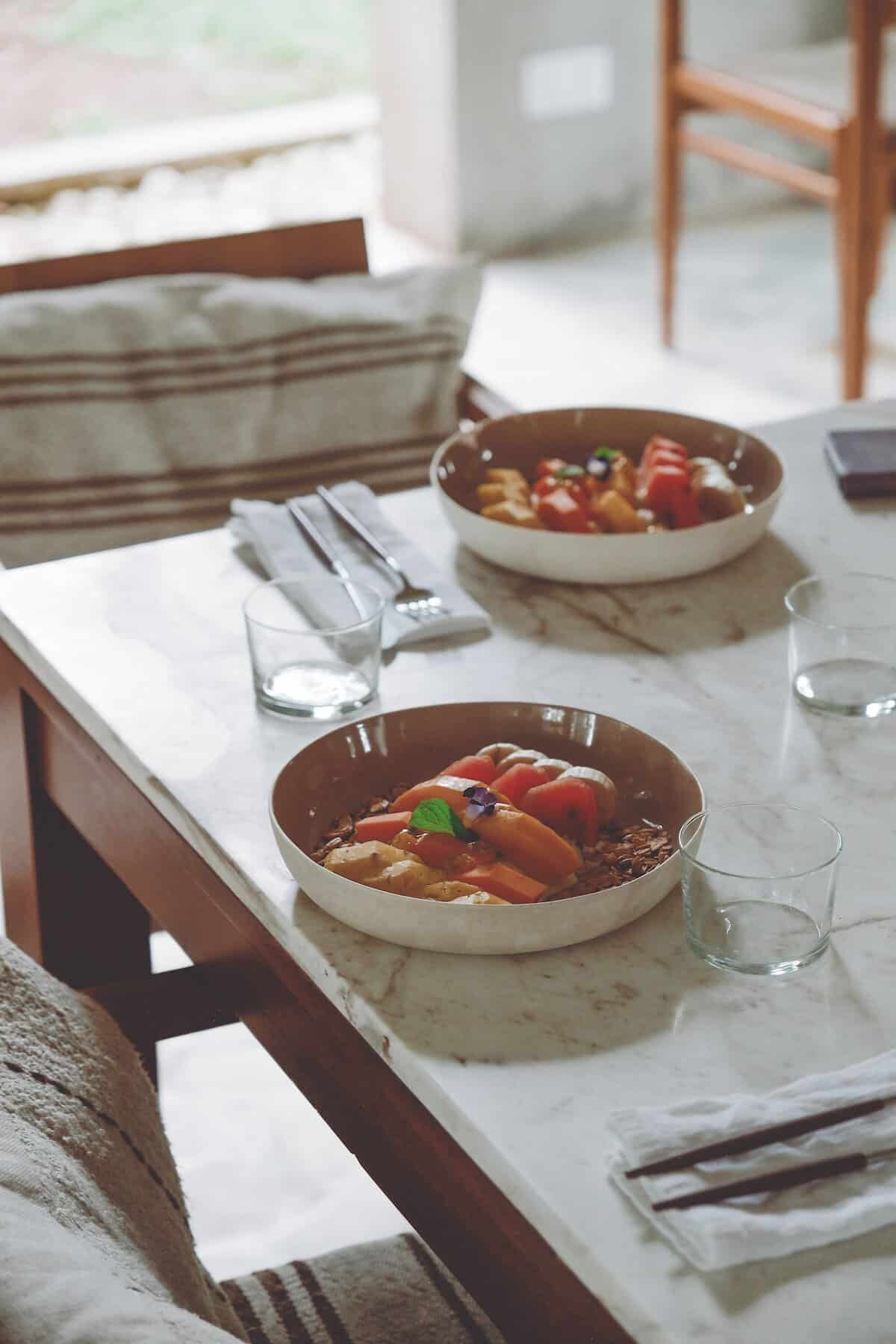
Called The Kitchen, it takes its name literally. From eight in the morning to ten at night, the cooking happens in full view, centre stage. Other nods to Malik’s part-time home appear in the all-day breakfast menu (again, why don’t more hotels do this), including Turkish çilbir (eggs in garlicky yoghurt sauce) alongside house made porridge with coconut milk and caramelised banana, mushroom toast and prawn brioche. Midday brings cosmopolitan comfort food — beetroot gazpacho, lamb kefta tacos and local fish curry with coconut sambal — shifting gears again from 5pm, with red snapper crudo, seared yellow fin tuna and slow-cooked pork shoulder in lemon, sage and almonds. The pavlova with mango and passionfruit cream is a standout.
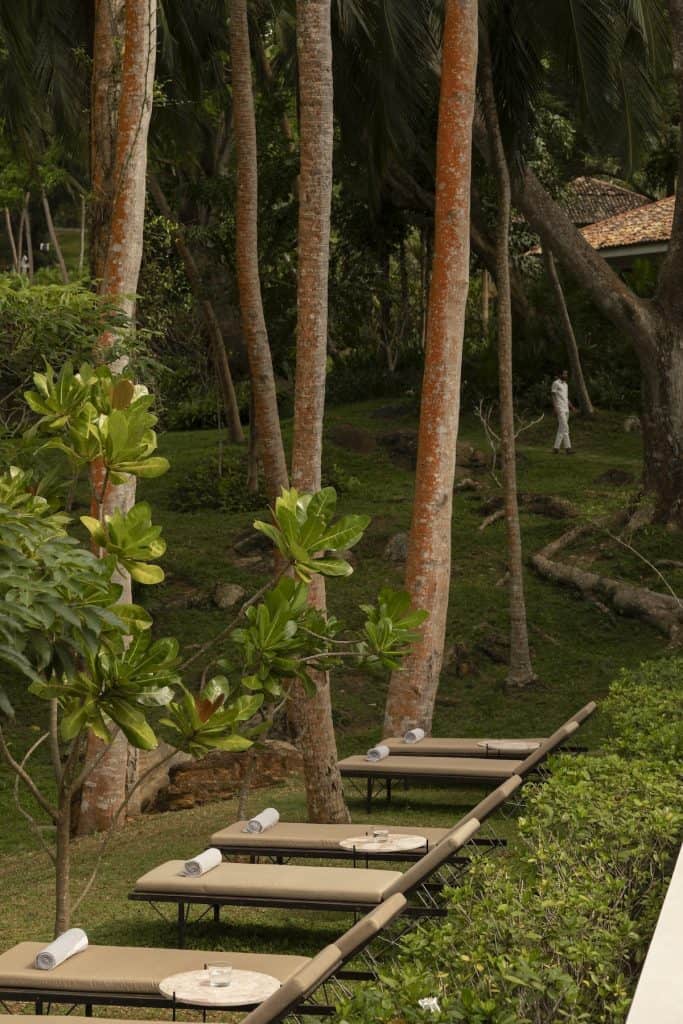
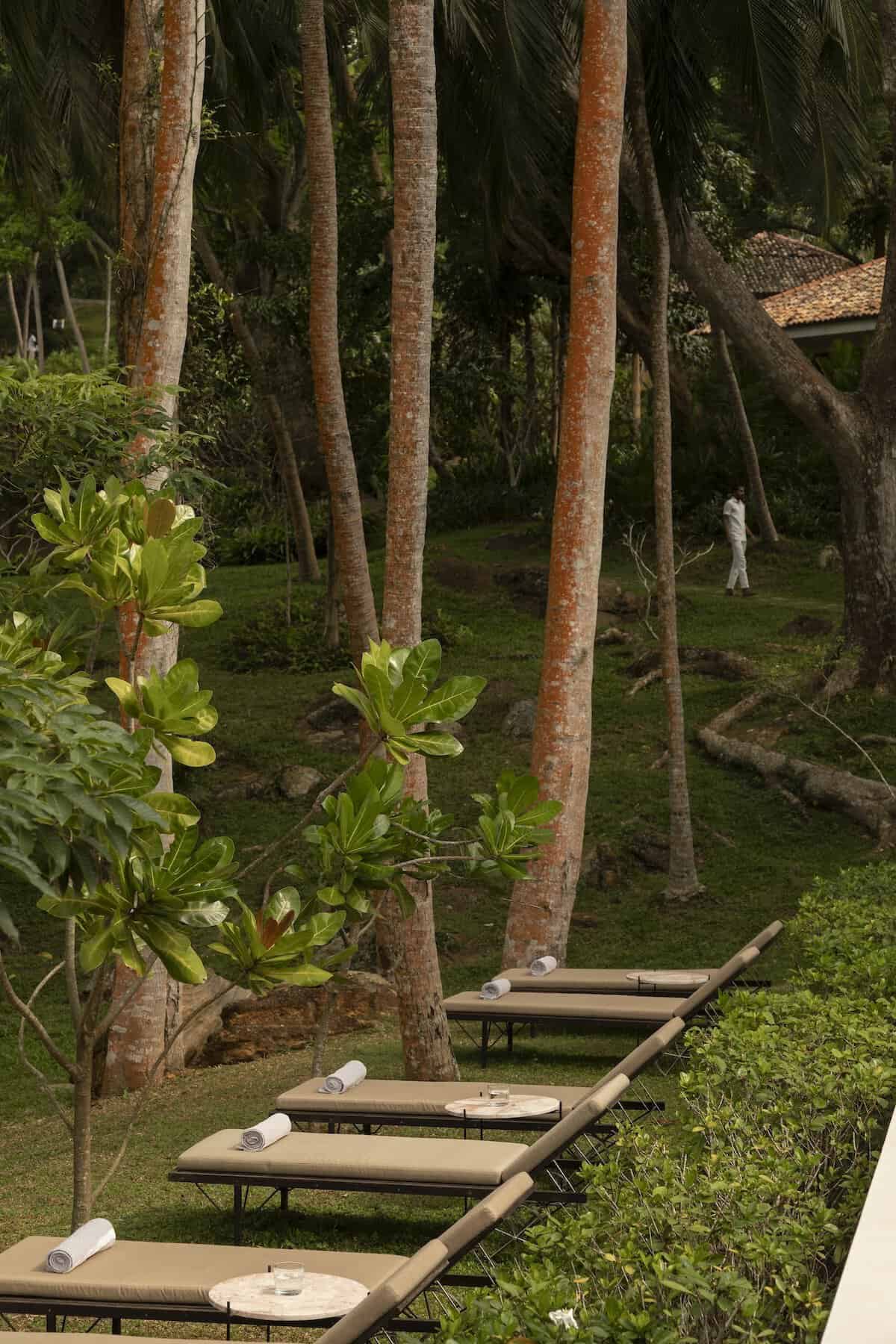
The Kitchen spills out onto a terrace overlooking one of Kurulu Bay’s two swimming pools, with an infinity edge onto the property’s park-like jungle setting. The second pool sits up the hill, just below the treehouses. One for cocktails and catching rays; the other for falling asleep with a book. Lower down, the striking new yoga shala is the most assertive of the site’s architecture. In front, a timber jetty floats on Koggala Lake, a magical spot to watch the sunrise, monks chanting across the water, or in the evening as the sky explodes pink.
The spa has one treatment room, but massages can be taken in your room. Across the garden at Kurulu House, Daswatte’s central living room and its lake-facing terrace remain the most otherworldly spaces on the property. To sit or stand or lie down — and just be.
Sustainable
There is no plastic. Food waste is composted. In-room toiletries are refillable. Cleaning products are cinnamon based. Bamboo and natural materials run through the construction, and the broader estate — 3.5 acres of established tropical vegetation — is maintained as habitat for birds, monkeys, and lake wildlife.
From fish to fruit and vegetables, food is organic and wherever possible, locally sourced, supporting the surrounding community. The hotel’s connection to Koggala Lake and the village, Gurunkanda, tie Kurulu Bay to its surroundings.
And happy
Service at Kurulu Bay is a trickle-down success: Malik’s generous and gentle nature runs through the entire team. From as far afield as Serbia and Ukraine, as well as Sri Lanka, they are not only efficient but seem genuinely happy — and as a guest you feel it. Complimentary yoga classes are top-notch, as are visiting instructors, such as the Italian during my stay who led the sound bath in Kurulu House.
Double rooms from US$250/night including breakfast.
To book your room, go to: Kurulu Bay.
Photography: courtesy of Kurulu Bay.