The Sun House Galle.
This 19th-century merchant house turned hotel on Sri Lanka’s south coast has lived many lives, shaped by a rich cast of characters.
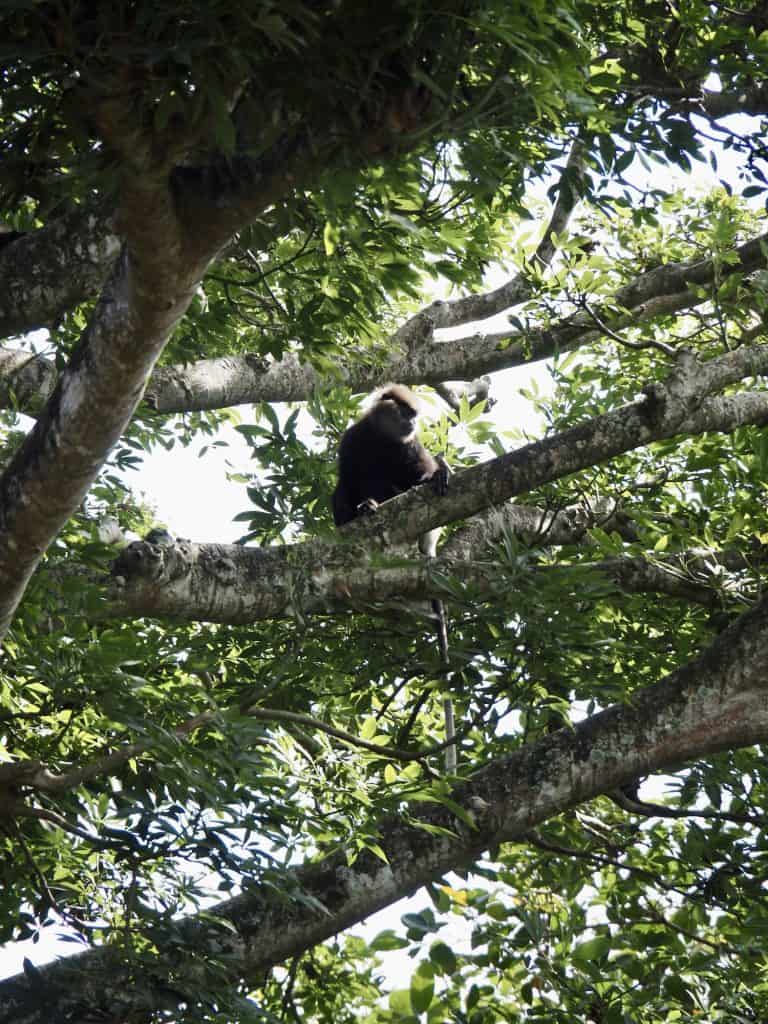
If Galle were the capital of Sri Lanka, the city’s embassies might line Upper Dickson Road. Winding up the port town’s highest hill, it has that sought-after feel: cool and quiet but just a five-minute walk to the action below. Amidst giant frangipani and mango trees, troops of monkeys peek through foliage, glimpses of Galle Fort and the Indian Ocean beyond. Bungalows give way to colonial manor houses, including one fusing Scottish baronial and local vernacular architecture — now an elegant eight-room hotel — daring in character and rich in history.
As legend has it, The Sun House was constructed in the 1860’s by a well-travelled Scottish spice merchant who fell for Galle, and a local seamstress, and decided to make the port town home. While we know little about the couple we can imagine, standing in the courtyard where storerooms once brimmed with cinnamon sticks awaiting shipment across the globe (now the Gallean Restaurant), the Scotsman and his wife enjoying their lovely new abode.
An American decorator in Sri Lanka
The house owes much of its current charm to the next documented owner, American designer and antique dealer Dick Dumas. Born in South Carolina, Dumas spent time in Pennsylvania, Detroit and Hollywood before settling in the South of France with partner Yves sometime in the 1970’s or 80’s, where he became known for chic, Provençal interiors.
One project, a 14th century chateau near Uzès that belonged to the British art historian, Douglas Cooper, was published in Architectural Digest and featured five Picasso murals alongside Dumas’s rustic decoration. His own light-filled home in the Luberon, meanwhile, featured in various decorating tomes, including The House & Garden Book of Living Rooms in 1991.
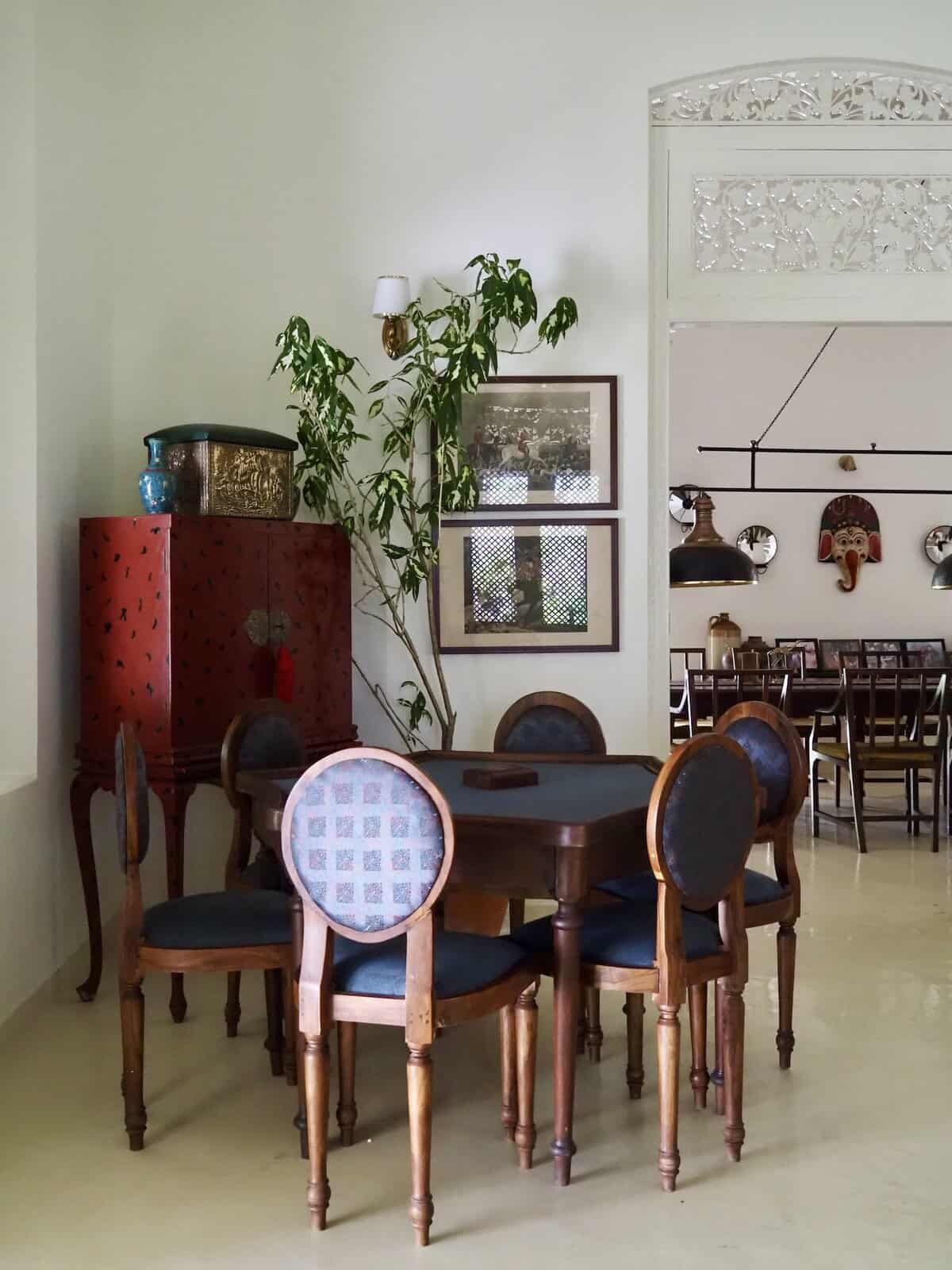
At around the same time, Dumas turned his attention to Sri Lanka and the merchant’s former home. He transformed it into a graceful residence of simple lines and airy, sun-drenched rooms, including a new wing of bedrooms to accommodate a busy roster of house guests. Dumas became a pillar of Sri Lankan creative circles, shaping not only spaces but relationships that have left a lasting impression on both Colombo and Galle.
Dumas became a pillar of Sri Lankan creative circles, shaping not only spaces but relationships that have left a lasting impression on both Colombo and Galle.
Literary festival and a link to Bawa
The property changed hands again in the late 1990’s when British investment banker Geoffrey Dobbs took possession of several colonial-era mansions, including The Sun House, pioneering the intimate, heritage-hotel concept in the south of Sri Lanka. Dobbs also founded the Galle Literary Festival and hosted many of its earliest gatherings at The Sun House, further cementing his influence in the region’s cultural life.
(Both Dumas and Dobbs had links to Sri Lankan architect Geoffrey Bawa, though in different ways. Dumas moved in Bawa’s circle: author David Robson recalls being in Galle with Bawa and stopping off for drinks with Dumas and Charles Hulse. Dobbs was connected in legacy. He was instrumental in opening up Bawa’s country house, Lunuganga, as a boutique hotel after the architect’s death in 2003, working closely with the Geoffrey Bawa Trust to preserve its character.)
Dobbs travelled to Chitwan in Nepal to play Elephant Polo in 2000. He was introduced to Jim Edwards, British owner of the legendary wildlife lodge, Tiger Tops, and the two became friends. As a Saab salesman and promoter in the early 1960s, Edwards famously drove a Saab overland to Nepal.
Falling in love with the jungles of Chitwan much as the Scottish merchant had fallen for Galle, he took over Tiger Tops, converting what had been a small hunting lodge into a pioneering wildlife conservation project. In time Edwards founded other properties including the jaw-dropping Tiger Mountain Lodge in Pokhara, creating a portfolio that remains a pillar of conservation tourism to this day.
Conservation efforts
When his son, Tim Edwards, moved to Sri Lanka in 2011 after completing his degree in Zoology at the University of Bristol, Dobbs was a great mentor, advising Tim when he was building his wildlife sanctuary, Gal Oya Lodge in 2014. They worked well together, collaborating on projects such as tuk-tuk polo, so when Dobbs wanted to step back from hotels in 2022 he approached Tim and his wife, Milli — who also grew up in Nepal and worked in hospitality — about taking over The Sun House.
The couple may not have considered the project had they not met Niyo and Samir, on “a slightly questionable pub crawl through the backstreets of Colombo Fort” a few years earlier. After a long stint in IT, Niyo and Samir moved from the UK to Sri Lanka in 2015 with dreams of building a future in hospitality. They took a private family estate overlooking Diyawanna Lake in Colombo (the home of Niyo’s mother, an artist) and created the highly personal 10-room hotel, Aathma Colombo House.
With their shared experience in hospitality, the two couples joined forces to write the next chapter of The Sun House. It was no small feat. The Covid years had taken their toll on the property, with a tree growing through the walls of the old wing and the plumbing and electrics requiring a complete overhaul.
Adding to the load, Sri Lanka was struggling through one of the worst economic crises in its history, with massive shortages of essentials like fuel and medicine, not to mention building materials and the accoutrements required to relaunch a crumbling boutique hotel.
Immediate connection
Sri Lanka, though, has a history of working around shortages. In the chaotic post-independence years and decades of civil war, when Geoffrey Bawa was unable to import pieces for his projects he would simply repurpose existing items or have local artisans recreate the ones he couldn’t get, as well as using the textiles, local pottery and carved timber the island was renowned for.
At The Sun House, the two couples not only lived onsite and managed the project without a contractor, but got their hands dirty, working alongside the bricklayers, plumbers and electricians of Galle. There’s a brilliant photo album of the project in the hotel’s library, documenting the months of restoration — and the sundowners at the end of each day.
The story of The Sun House reflects the island’s rich myriad of influences, a cosmopolitan spirit that drives Sri Lankan creativity to this day. The seamstress, for example, was known for her fine beralu lace, a form of bobbin lacemaking introduced by the Portuguese in the 16th century. Together with her Scottish spice merchant husband, I like to think that she also explored the world, the books and objects layering their home a reflection of a well-travelled life.
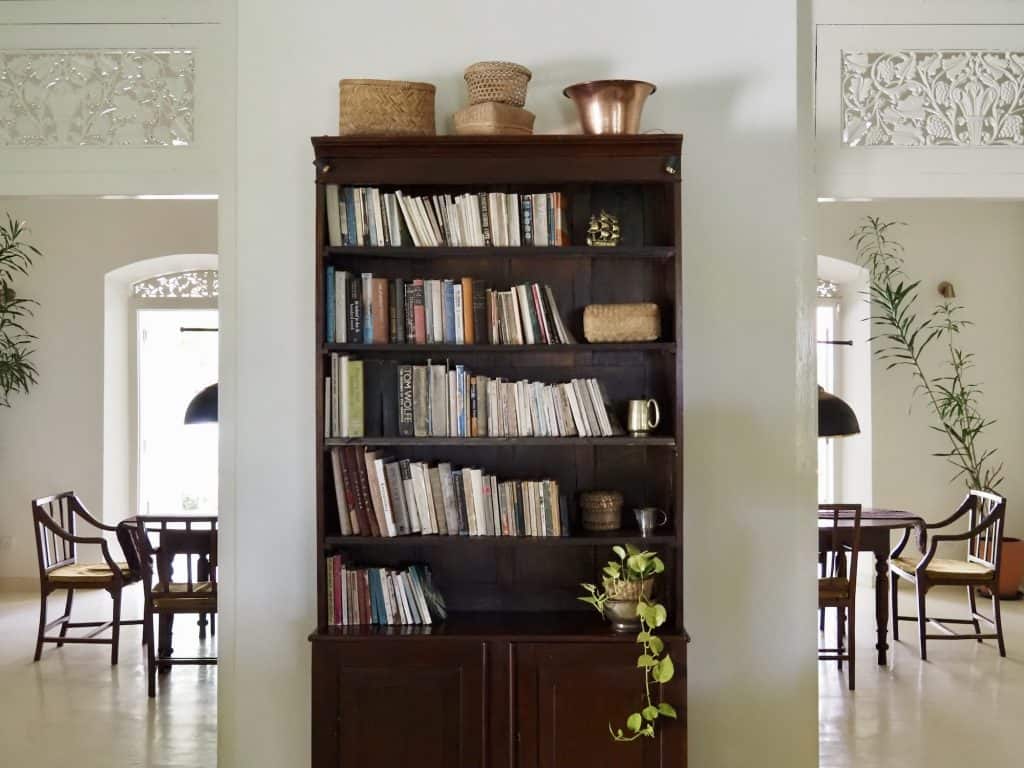
Dumas, similarly, imbued the property with his globetrotting flair, as did Dobbs, a good chunk of his library still lining the shelves. Fast forwarding to the current crew, Niyo is of mixed Sri Lankan heritage and has a Scottish great-grandfather. While he was not the merchant — her great-grandfather had a tea plantation in the highlands of central Sri Lanka — she felt an immediate connection to The Sun House.
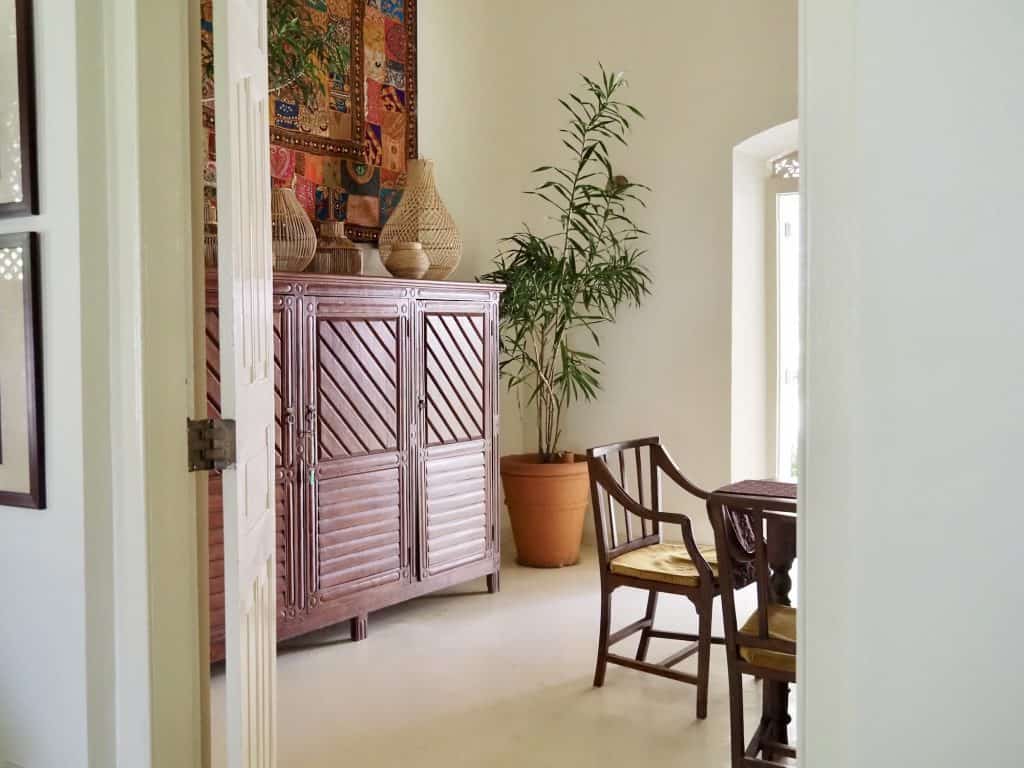
Dobbs founded the Galle Literary Festival and hosted many of its earliest gatherings at The Sun House, further cementing his influence in the region’s cultural life.
Dumas, Dobbs and high-gloss floors
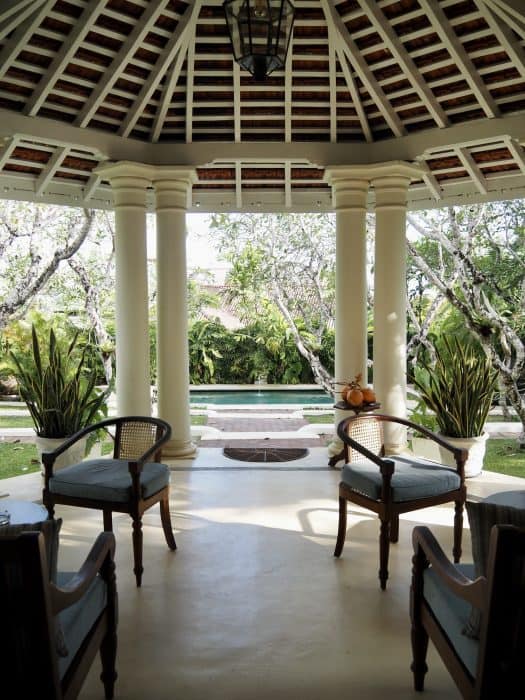
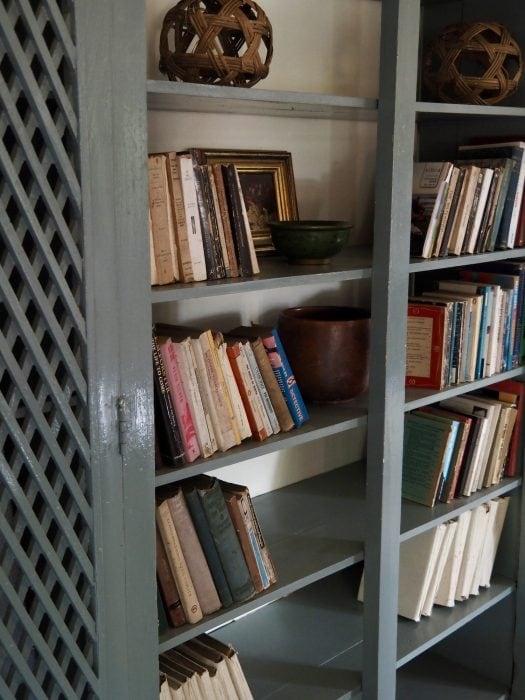
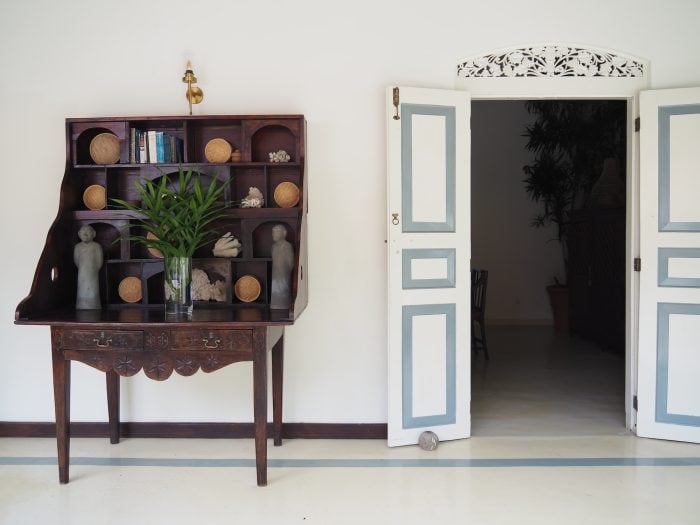
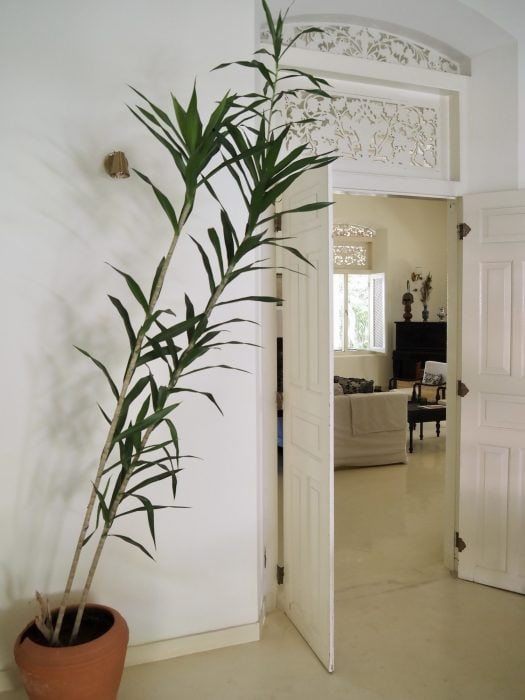
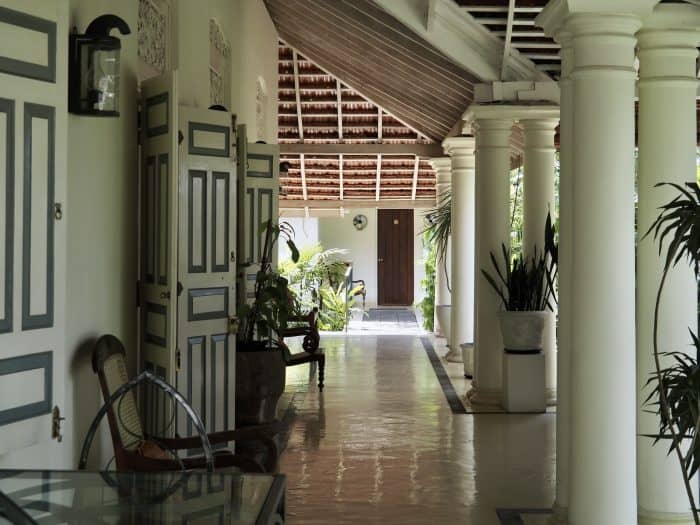
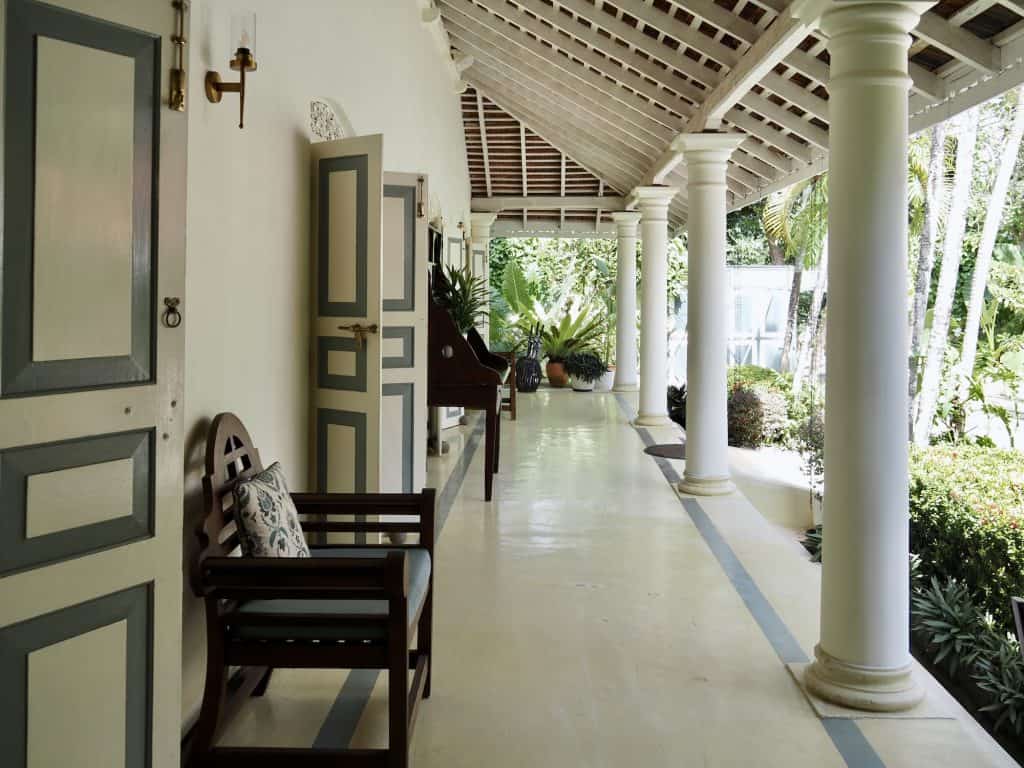
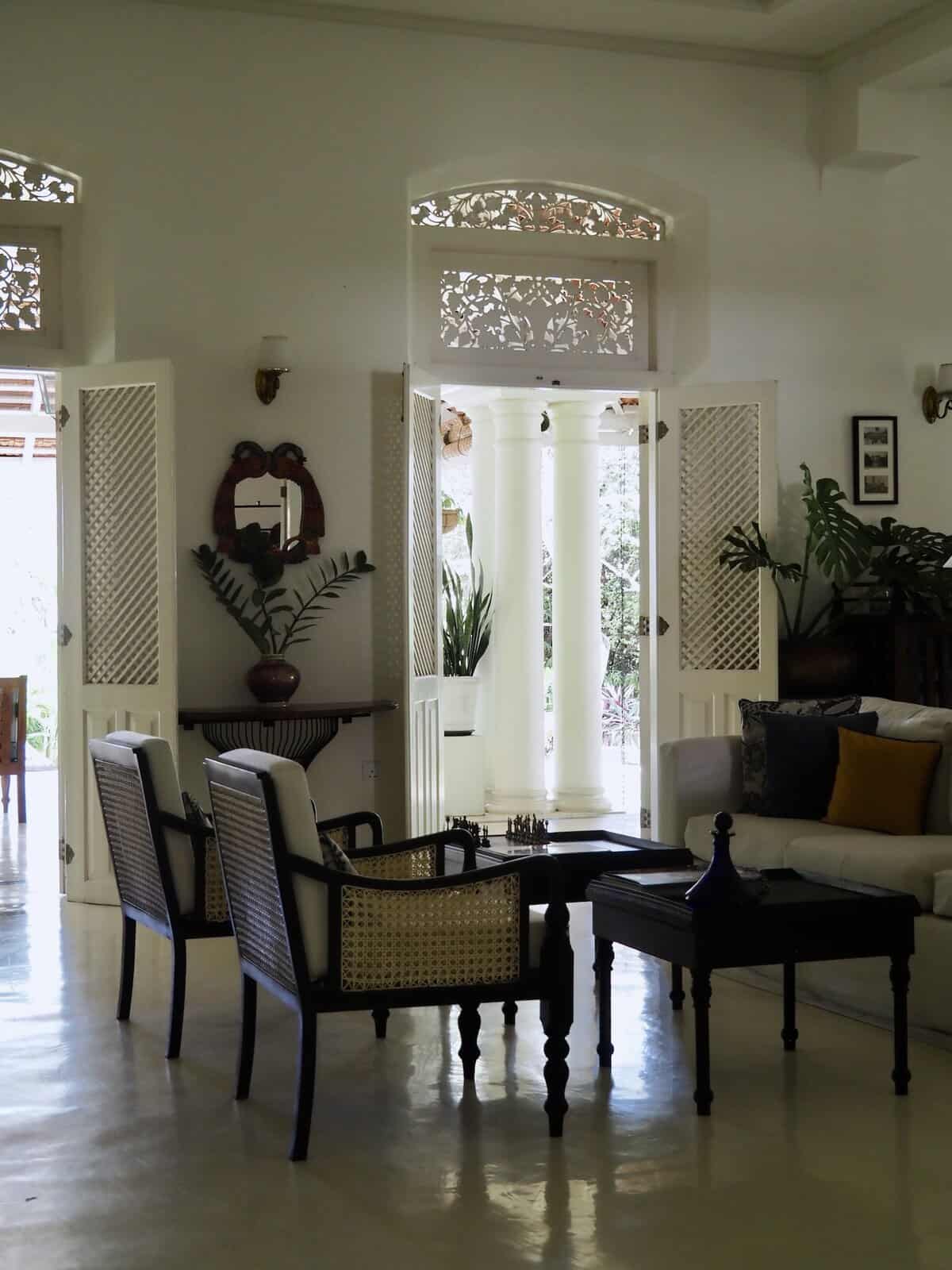
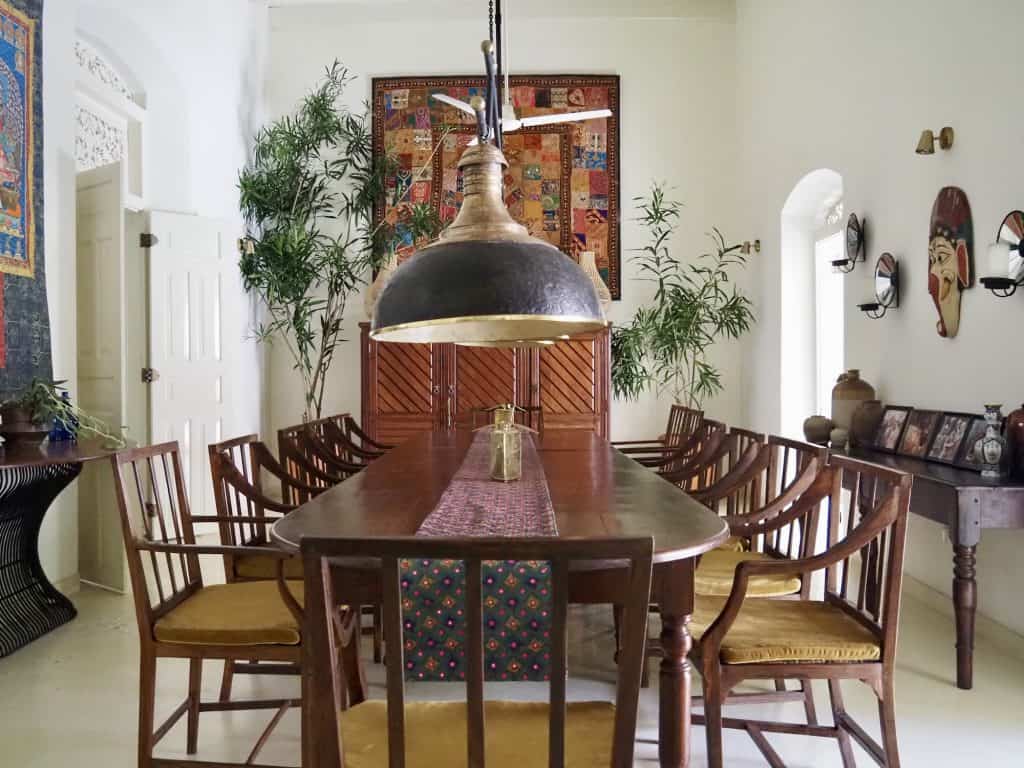
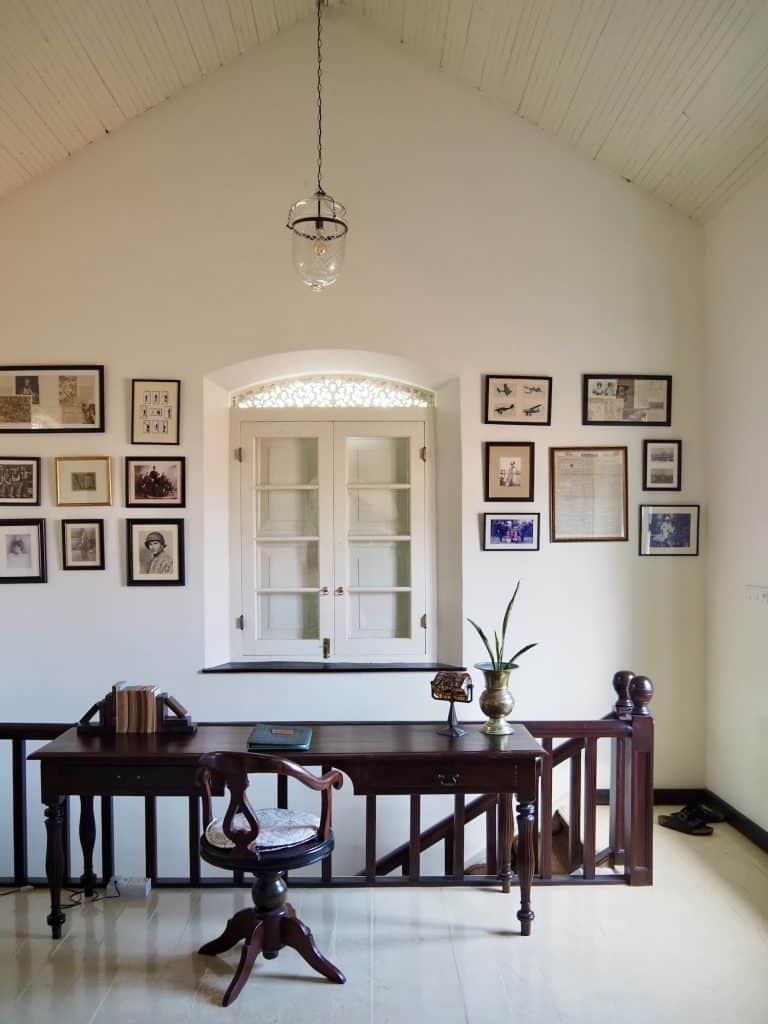
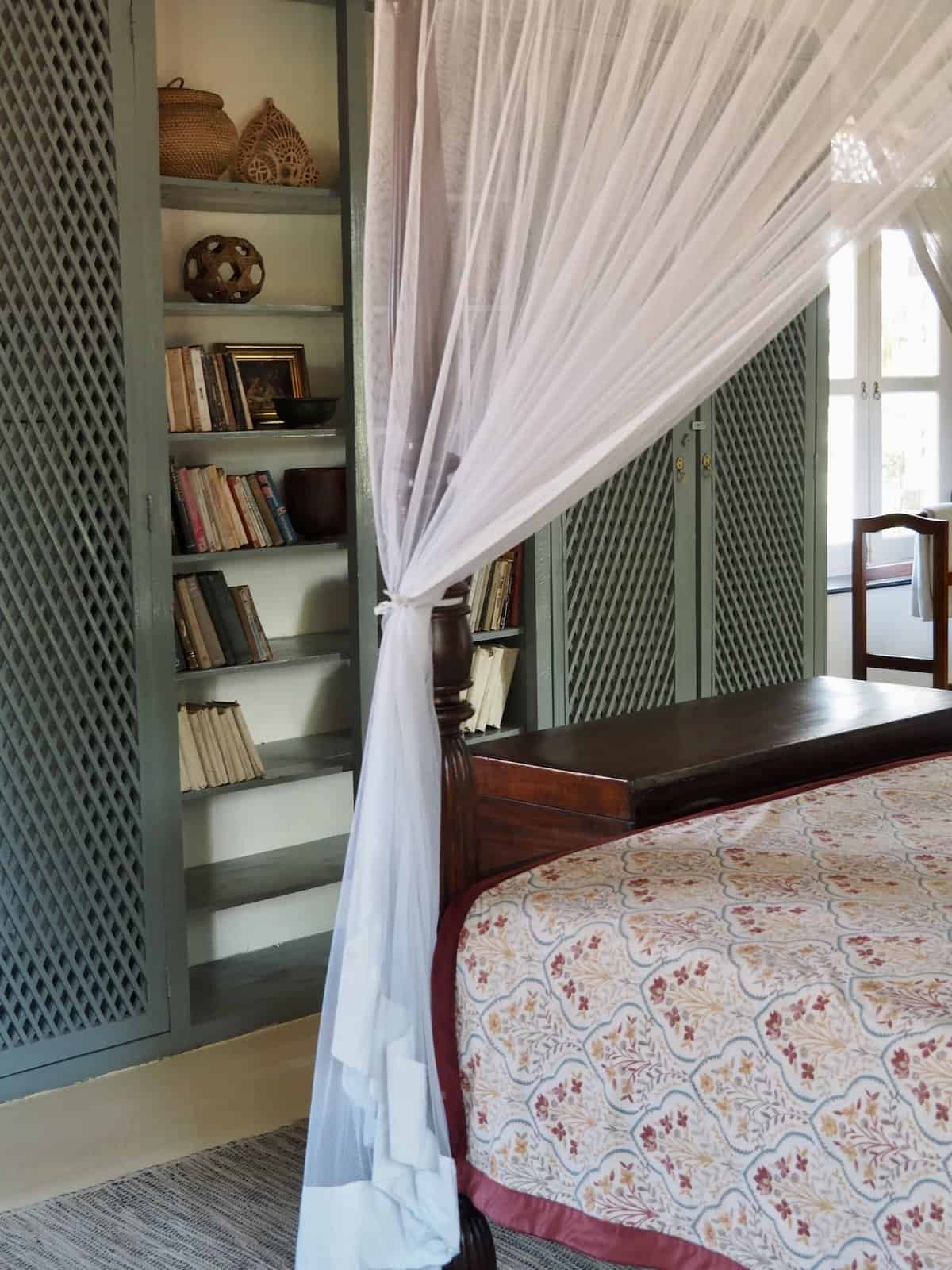
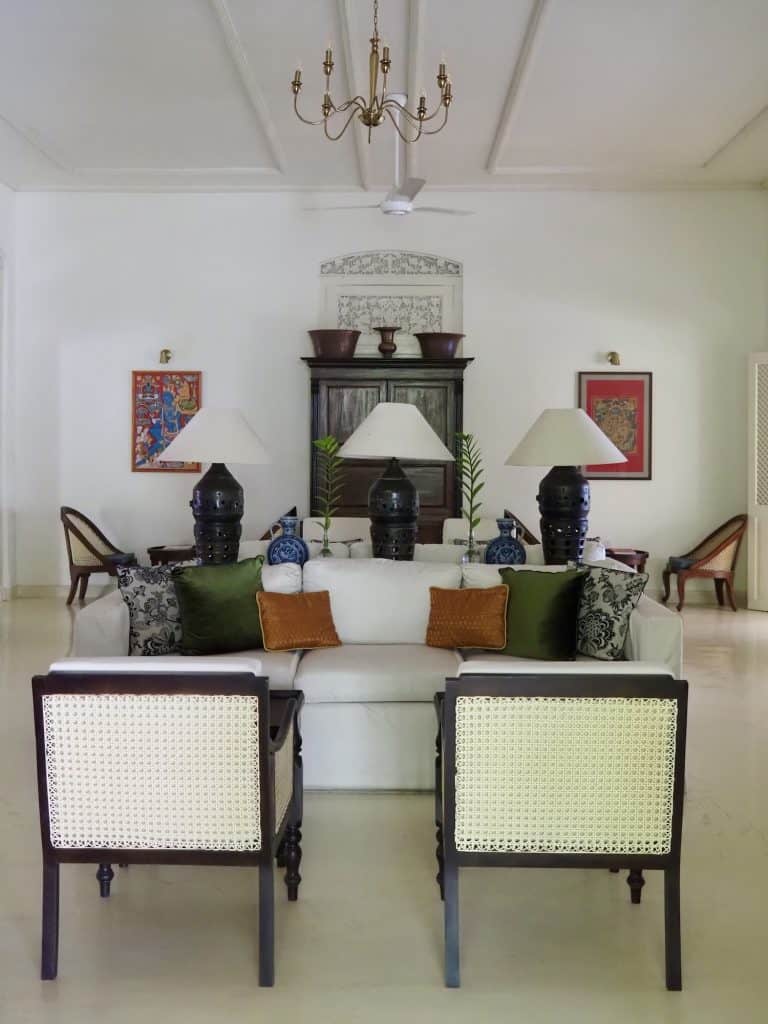
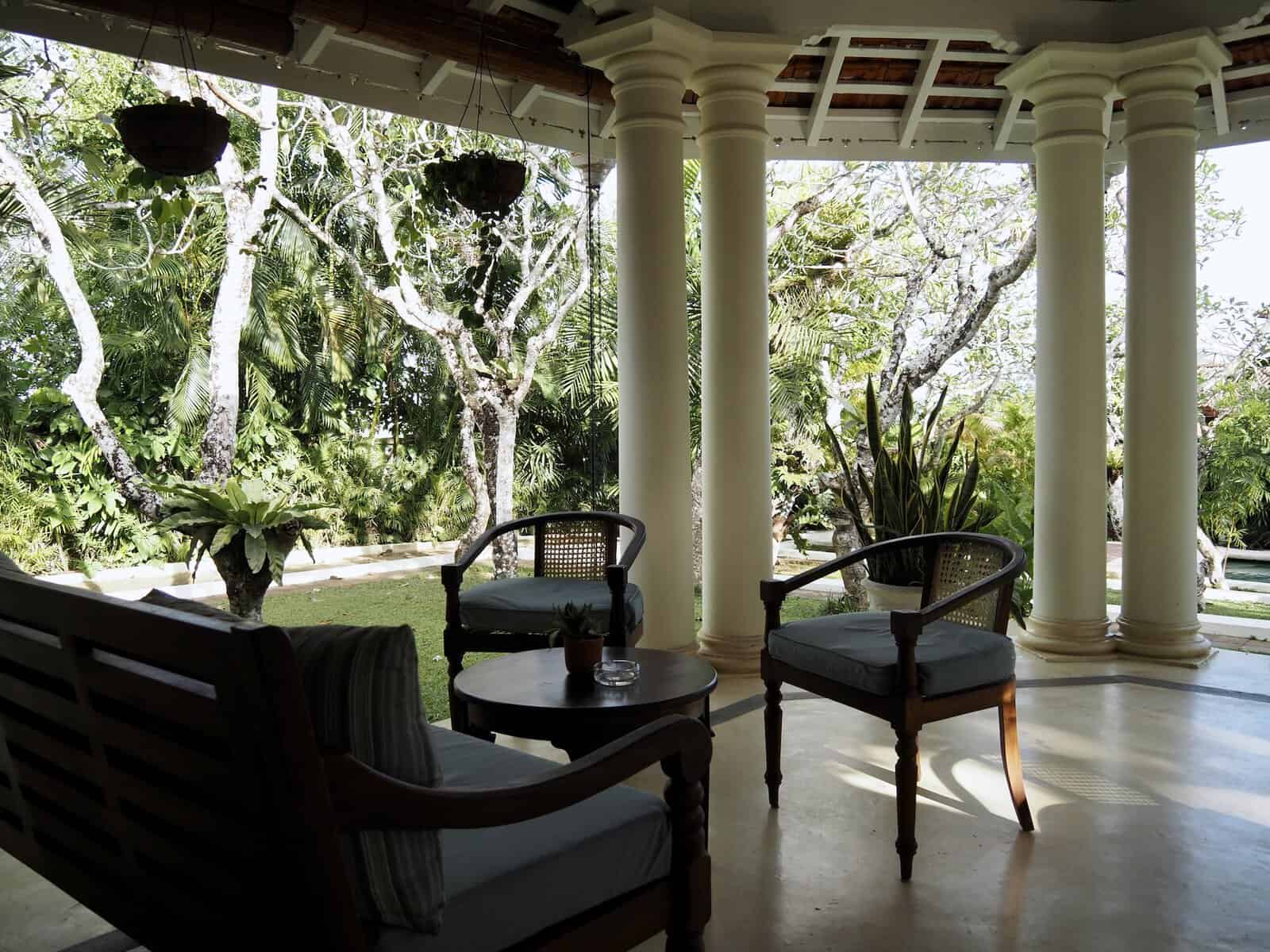
Crossing the threshold is like entering a one-acre Shangri-La. Well-travelled interiors mix colonial and modern. Shady verandas and dazzlingly verdant tropical gardens are perfect spots to enjoy the slower pace of the south. Traces of Dobbs and Dumas abound. Bookshelves are lined in tomes from the days of Dobbs, while cast-iron chairs and tables in the courtyard were designed by Dumas, as was much of the lighting, including the papier-mâché pendant light in the dining room and metal wall sconces on the veranda.
The dining room is especially striking, with its long table, antique Wolvendaal chairs and exuberant local textiles. High-gloss floors throughout the property reflect light.
Eight rooms, each with a past
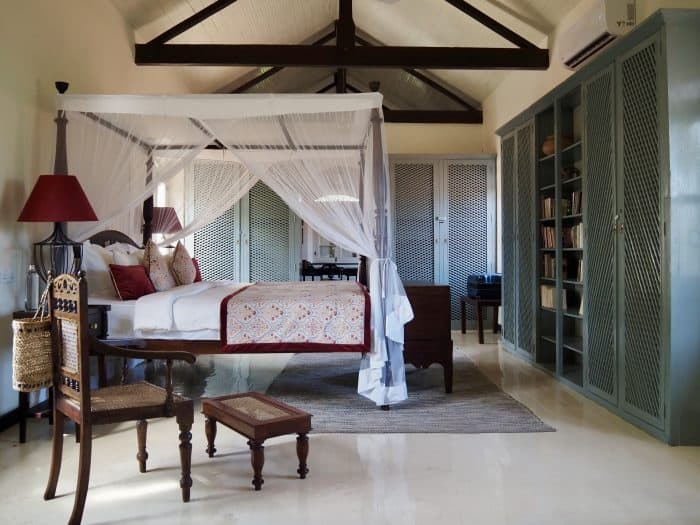
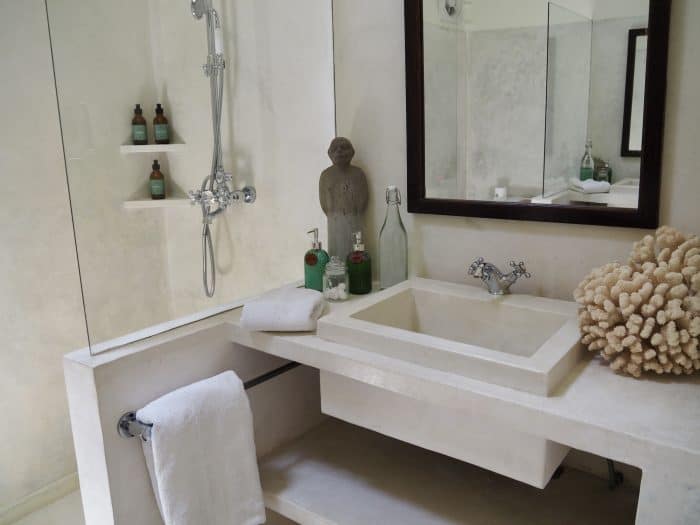
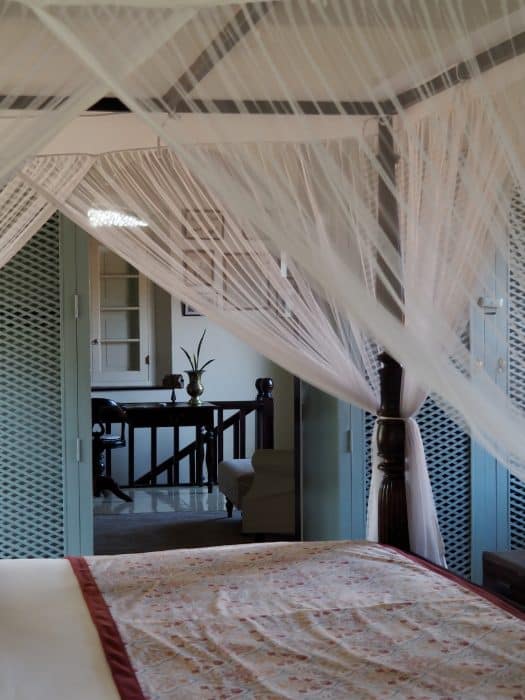
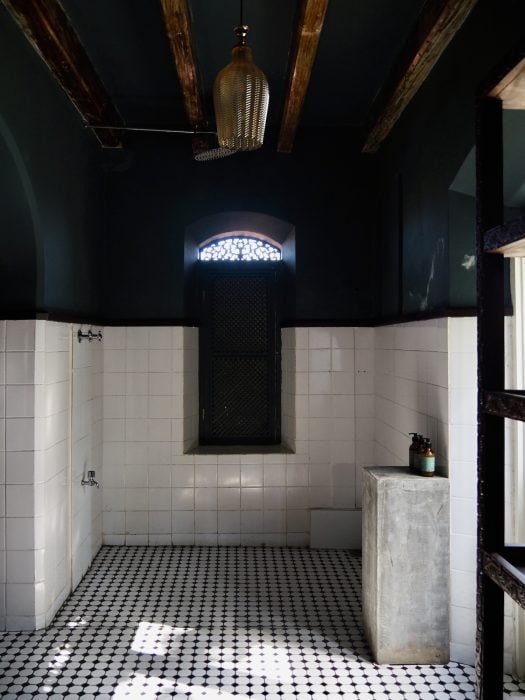
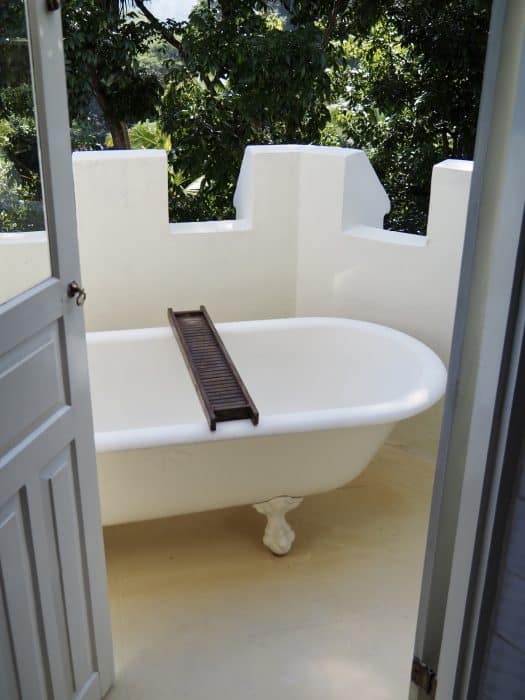
Eight guest rooms come with king (or super king) four-poster beds. The Merchant Room (25 square metres) occupies the Scotsman’s former office on the ground floor of the old wing, a refined space with an antique Dutch colonial armoire, double-height ceiling and sun-drenched bathroom. Upstairs in the Gallean Suite (60 square metres), you have a separate sitting room with comfy sofas and thousands of books, a sprawling bedroom and heritage bathroom with lattice screens, antique tiles and a claw-foot bathtub on the balcony.
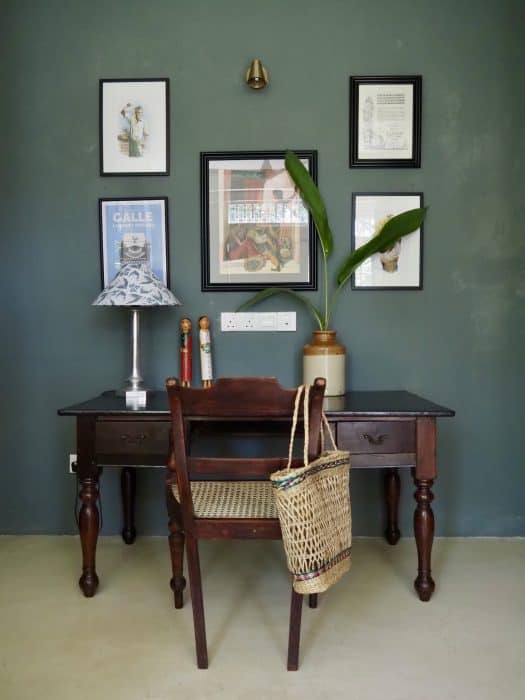
The guest wing created by Dumas is home to the bulk of the accommodation, opening onto the mango garden with views across Galle. Each space has its own distinct personality and palette. The Dalloway Room has a campaign-style desk and turmeric-coloured walls, inspired by the writers who have made The Sun House their home. The Tapestry Room pays homage to the seamstress who married the Scottish merchant, known for her fine embroidery and lacework.
The Taprobane Suite (42 square metres) was added in 2023 as an homage to the erudite Dobbs, referencing the ancient Greek name for Sri Lanka. It comes with a separate sitting area, a daybed set within a bay window overlooking the garden and a luxurious bathroom with outdoor tub. All rooms have A/C, robes, slippers and the like, alongside homegrown toiletries, dripping in cloves, cinnamon, coconut and frangipani.
Dick’s Bar and a mango garden
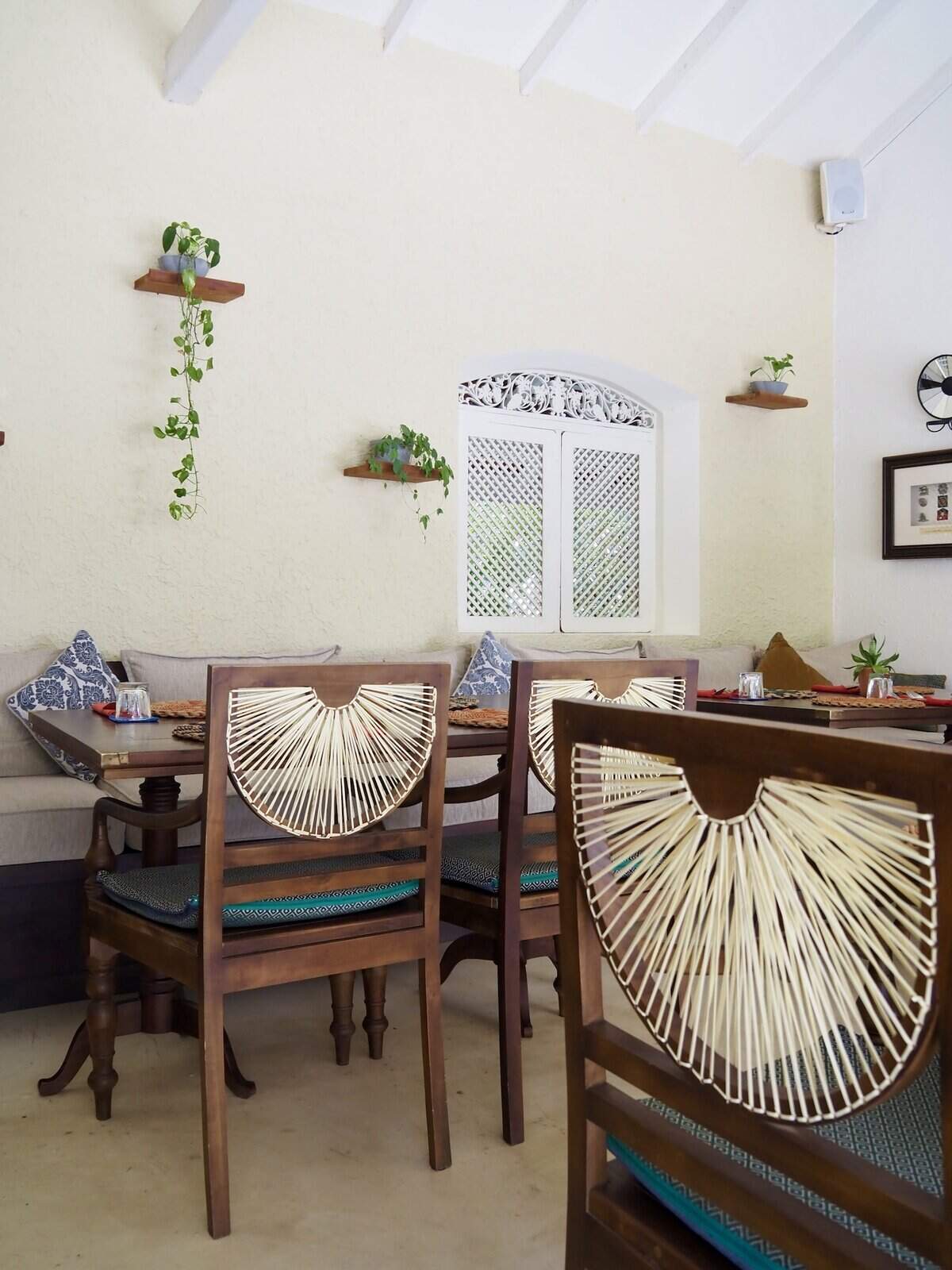
The spice storeroom is now home to The Gallean Restaurant, where rattan sunrays adorn the backs of dining chairs, a nod to Dumas’ love of light. It spills out into the courtyard, a lovely spot for supper under the stars. Think Gambas al Pil Pil and Hot Butter Cuttlefish (the unofficial national dish), followed by Prawn & Pomelo Salad, Spinach & Lentil Curry and Jaffna odiyal kool, a seafood stew infused with local spices. With platters of beautifully cut fresh fruit, perfect eggs and traditional Sri Lankan fare, breakfast in the same spot is as good as it gets on the island.
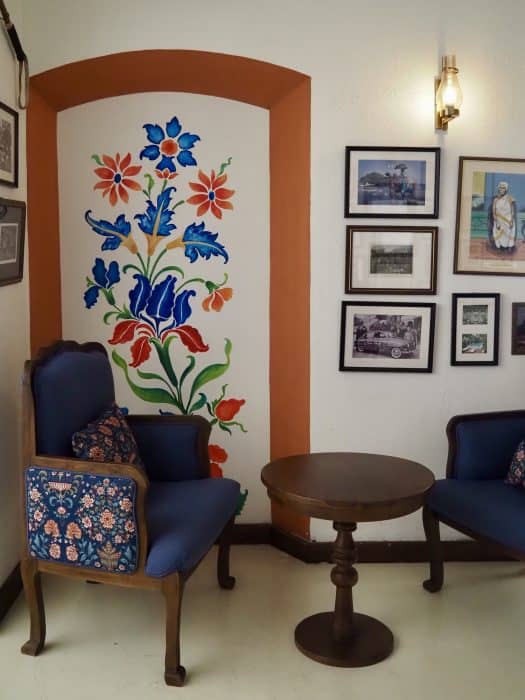
Dick’s Bar draws on the ancestry of the current crew, its walls hung with a portrait of Niyo’s great-grandmother at her ancestral estate, a WWII torch that belonged to Samir’s great-grandfather, paintings from the collection of Milli’s father and a photo of Tim’s father crossing the globe by Saab.
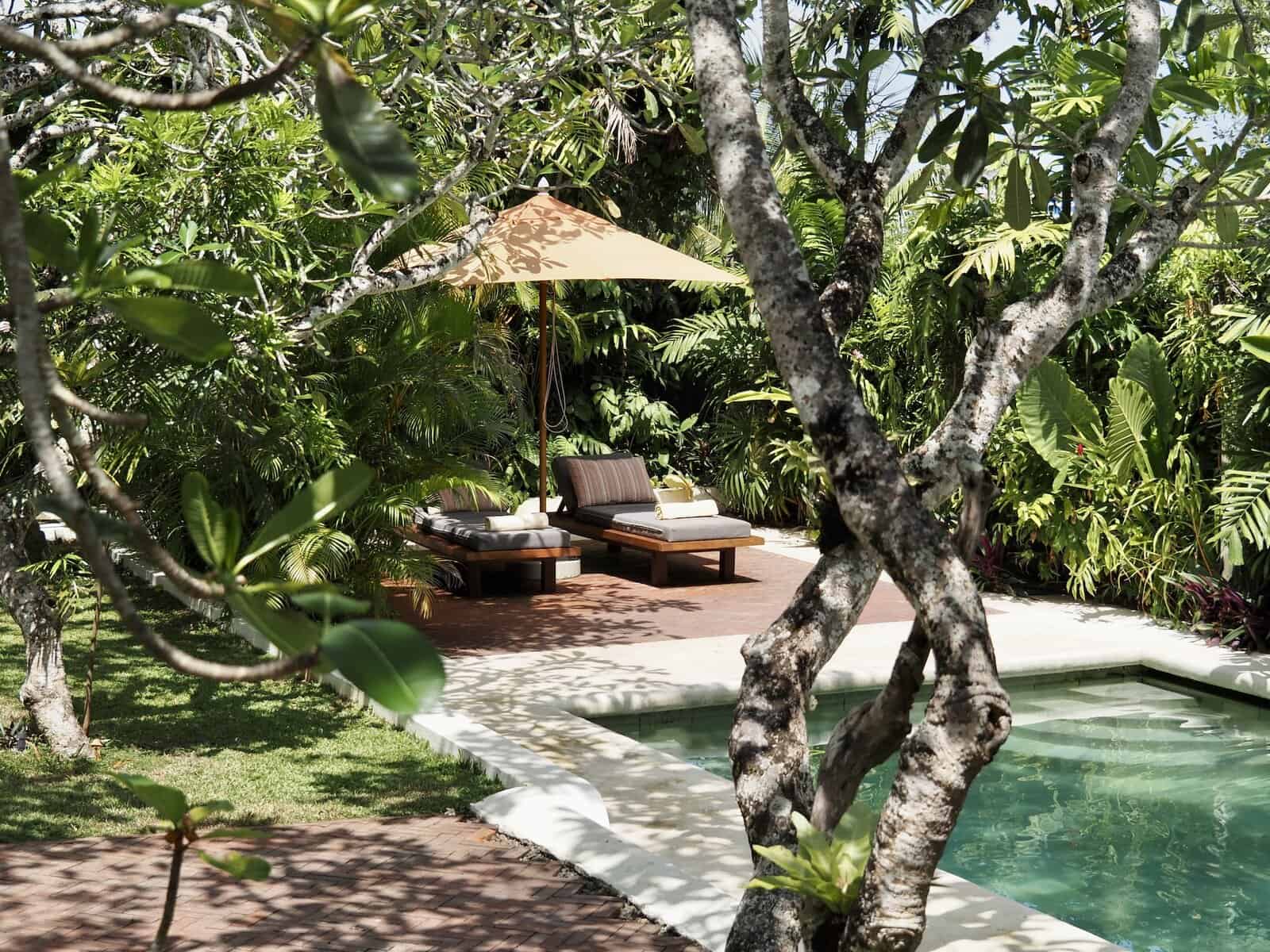
The old wing is home to a large and breezy drawing room with big sofas, curiosity-packed cabinets and a games table. Shady verandas overlook a garden of lipstick palms and frangipani trees, terraced down to the swimming pool. A breezeway leads to the mango garden, a perfect spot to curl up with a book. As the sun goes down, hit the bar for a cocktail like The Gallean, blending arrack (the national spirit made from fermented coconut flower sap, also known as toddy) with campari, vermouth, vanilla and cinnamon. Or walk down to Galle Fort to promenade along the ancient ramparts, some dating back to the 15th century.
Sumith, Gayan and no Nespresso
Jack-of-all-trades Sumith has been taking care of The Sun House since the Dick Dumas days. Front office legend Gayan is one of the loveliest and most helpful people you’ll ever meet. Service across the board is excellent — relaxed, friendly and efficient.
You won’t find any plastic at The Sun House. You will find complimentary filtered drinking water in refillable glass bottles, toiletries in ceramic dispensers and a French press with local coffee rather than Nespresso.
Double rooms from USD175/night including taxes and breakfast.
To book a room at The Sun House, go to thesunhouse.com
Photography: Jason Mowen.