Unfound Door.
Sixteen rooms, a frescoed staircase and a century of Tbilisi’s cosmopolitan glamour, worn like it never left.
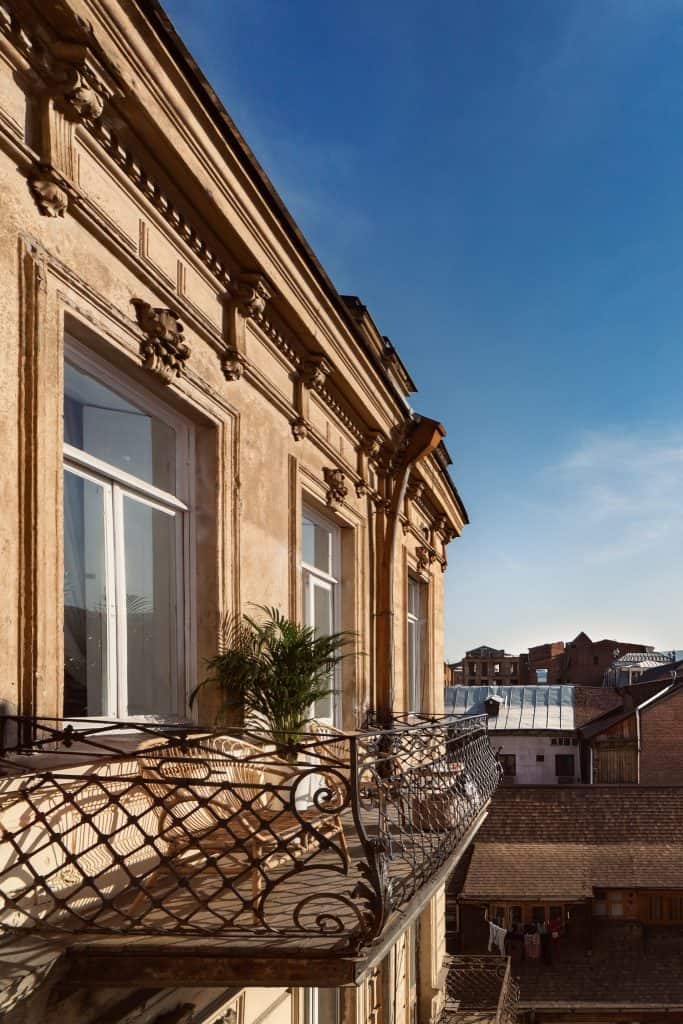
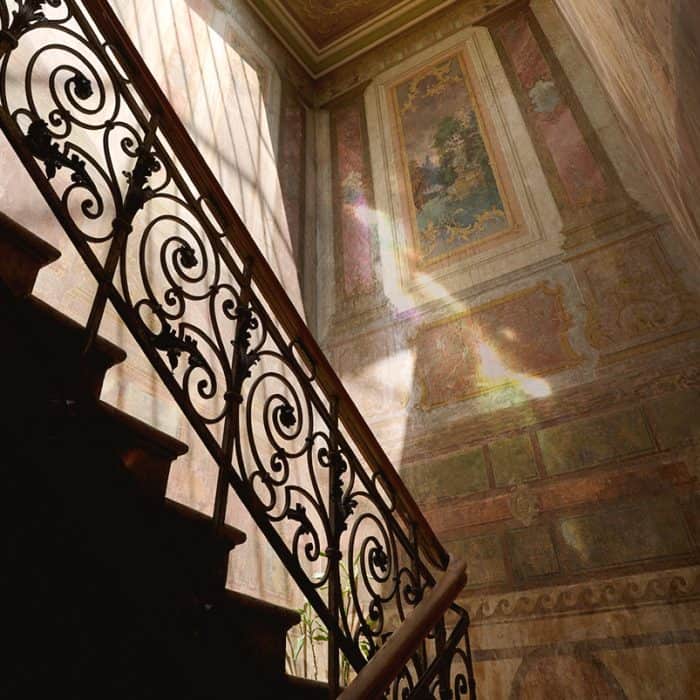
While much of Tbilisi holds fast to its graceful decay—post Silk Road, post Imperial Russia, post Soviet—the grand façades along Agmashenebeli Avenue have been restored to their former glory. One such beauty is Unfound Door, a haute-bourgeois mansion from the late 19th century, reimagined as a 16-room hotel. Hidden a few metres down a cobbled laneway and true to its name, it trades on seclusion, surrounded by leafy courtyards and rooftop views that echo the city’s unhurried rhythm. You’d stay here for the staircase alone, a sweeping piece of tromp l’œil theatre.
The address tells its own story. On the left bank of the Mtkvari River, Chugureti began life as a German settlement after Catherine the Great opened the Russian Empire, including Georgia, to migrants from central Europe. Today it’s one of Tbilisi’s most compelling quarters: a handsome patchwork of historic houses, bookshops, cafes, low-lit wine bars and theatres. A late supper at Unfound Door’s restaurant may well unfold alongside tables of thespians fresh from a nearby playhouse.
Style.
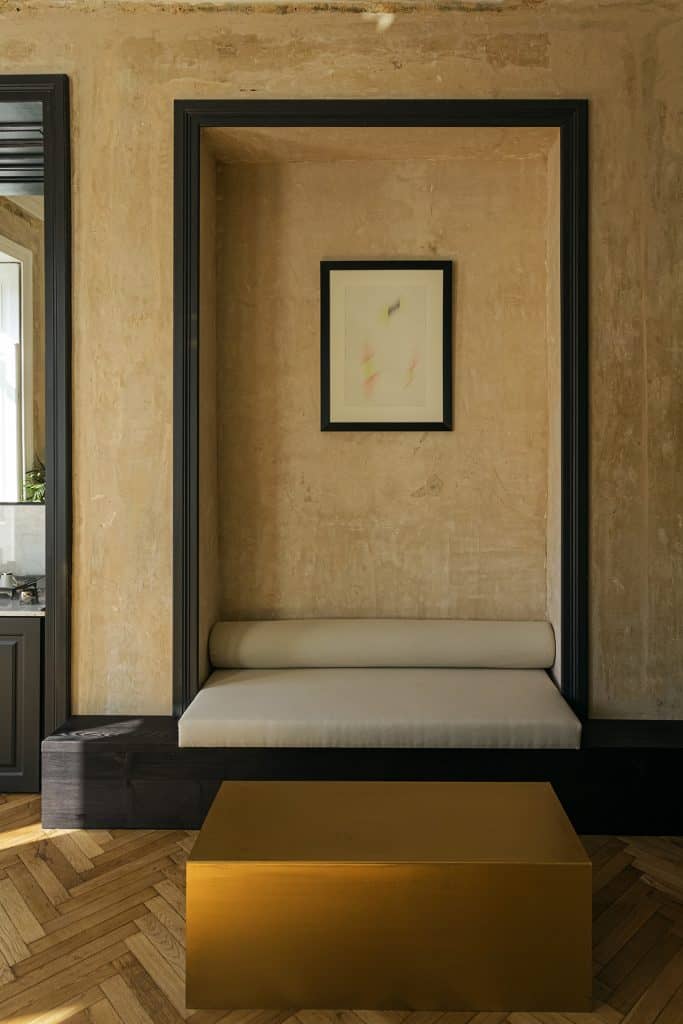
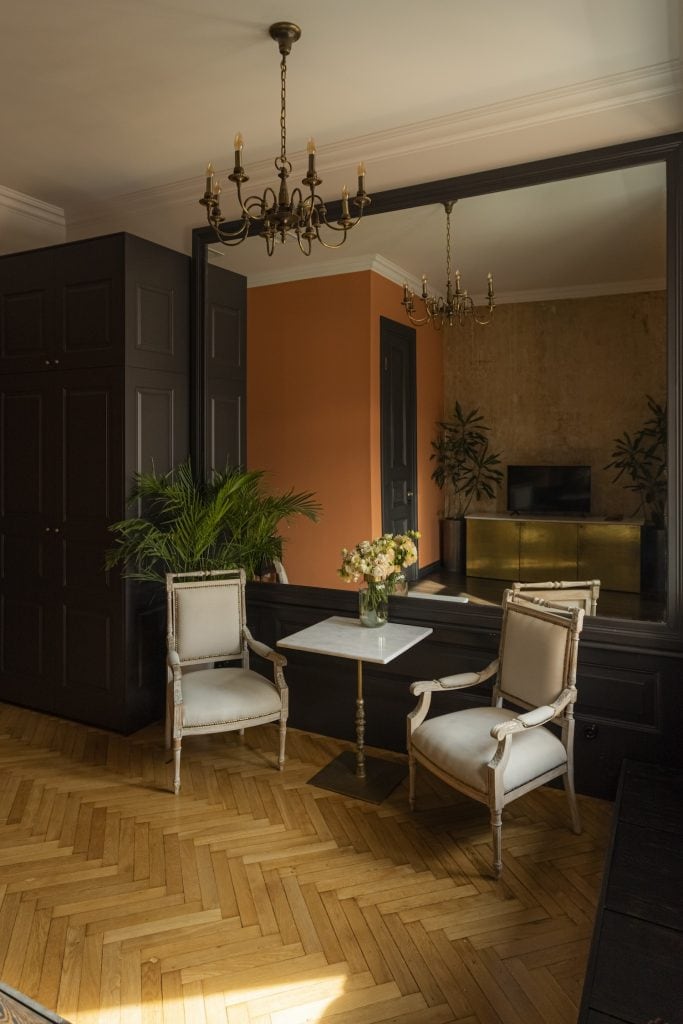
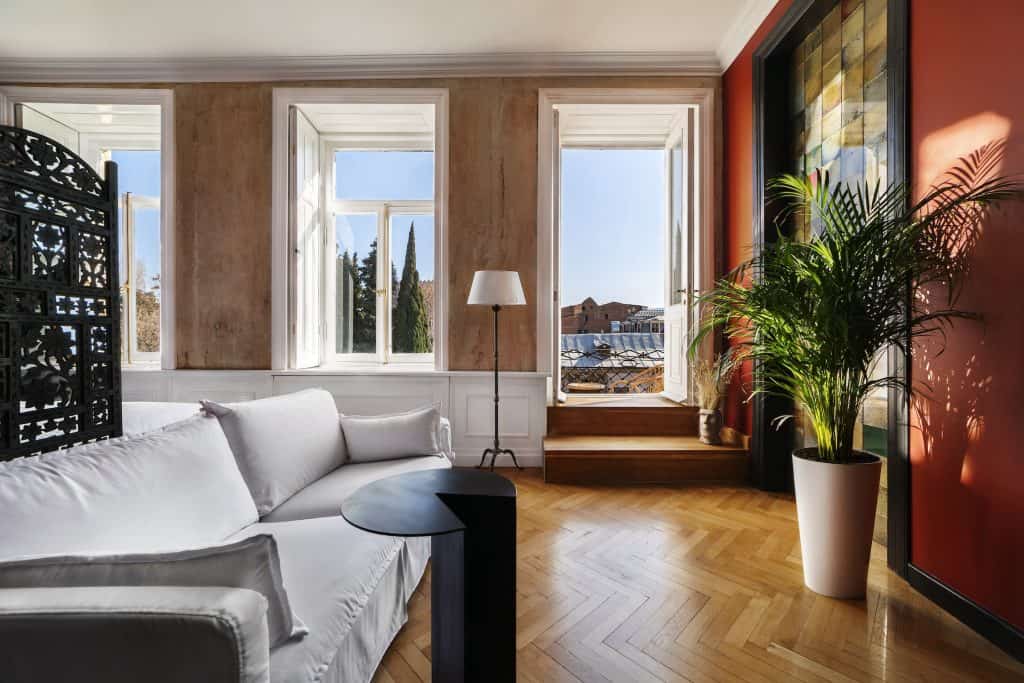
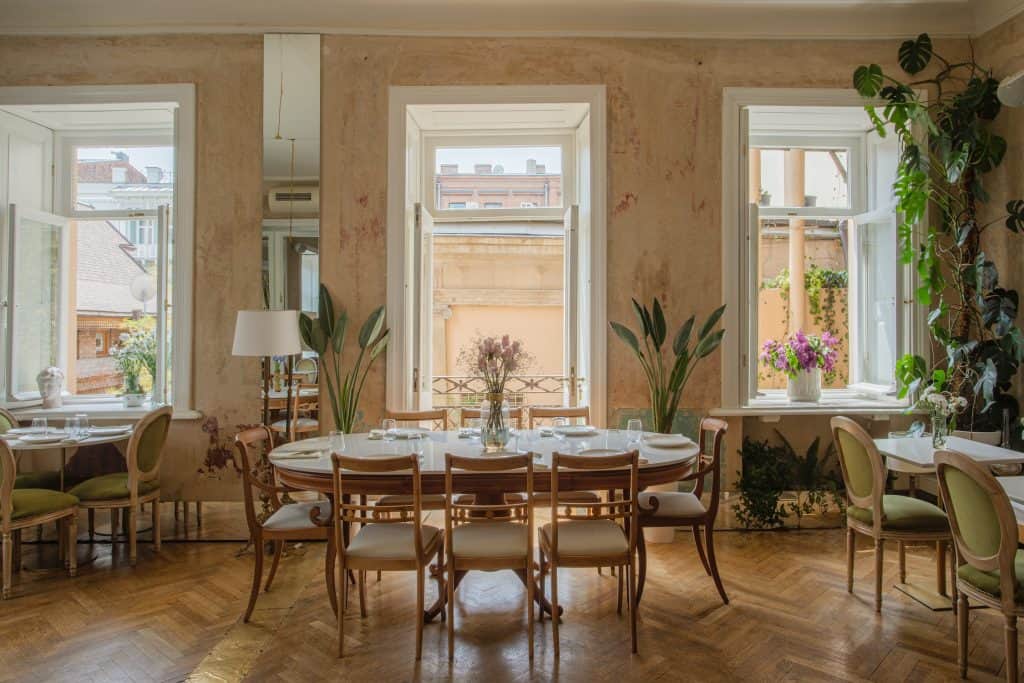
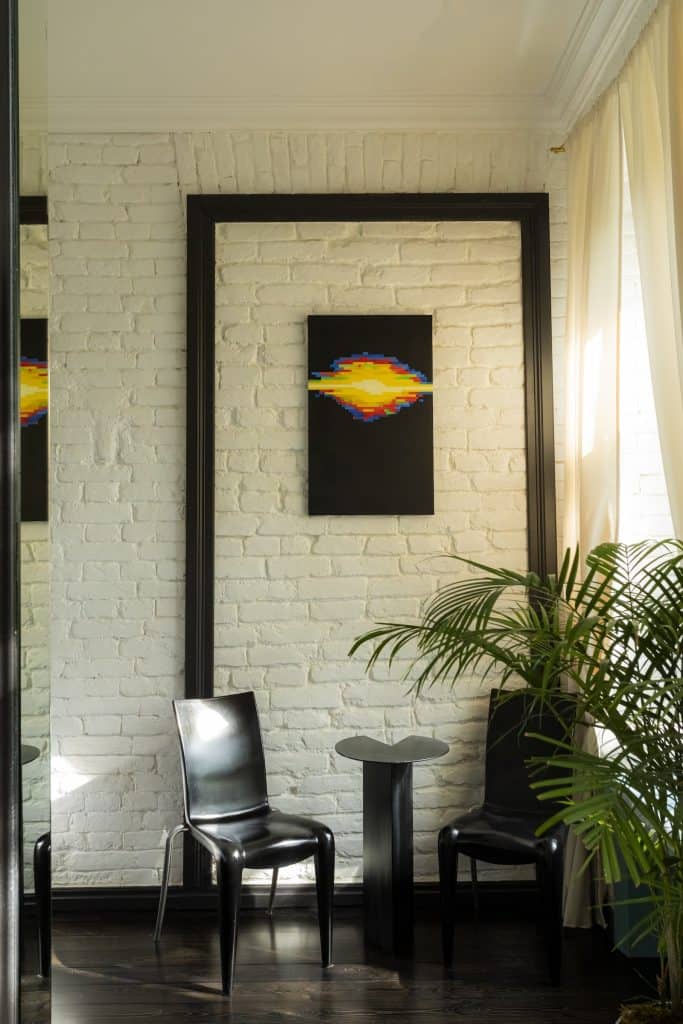
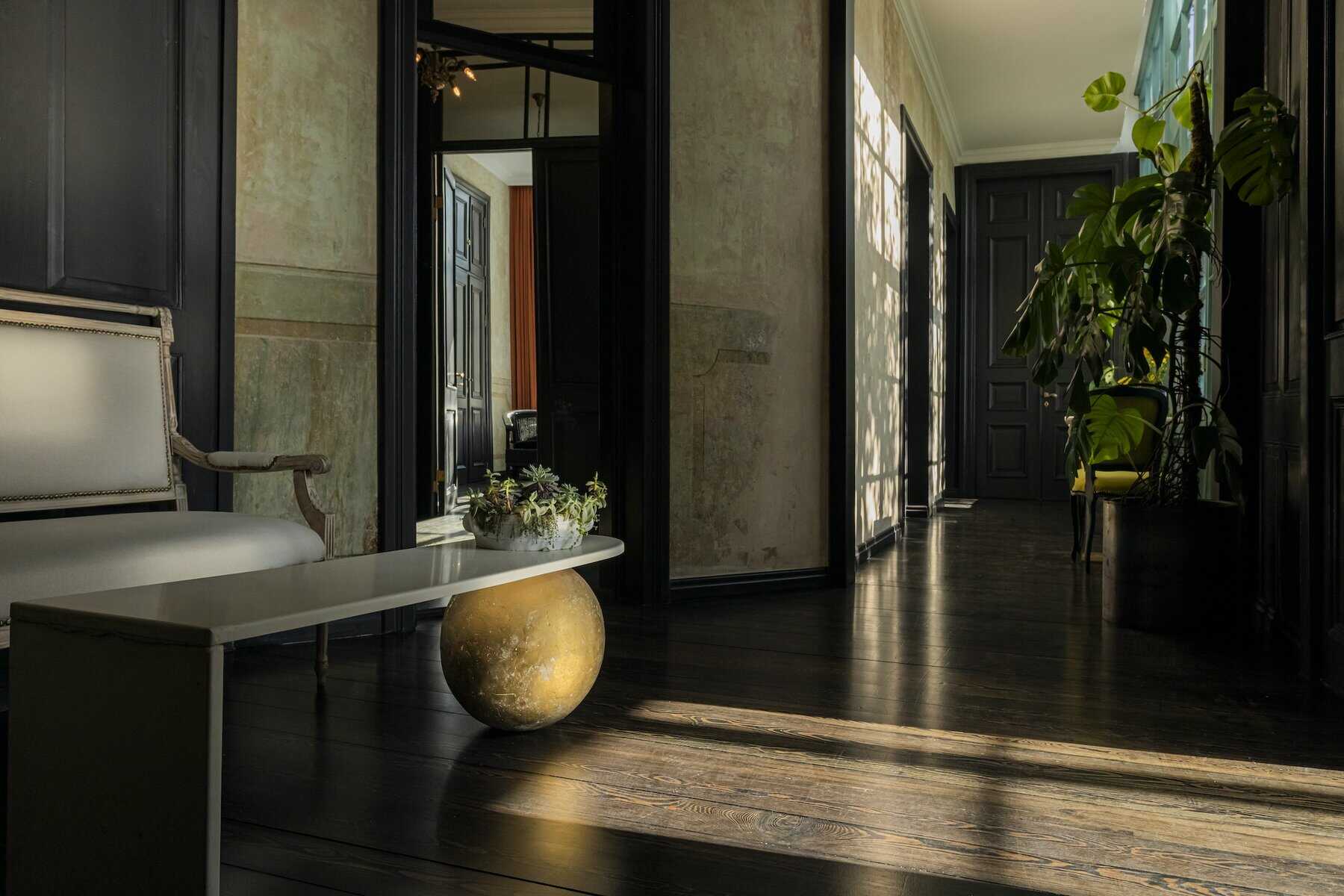
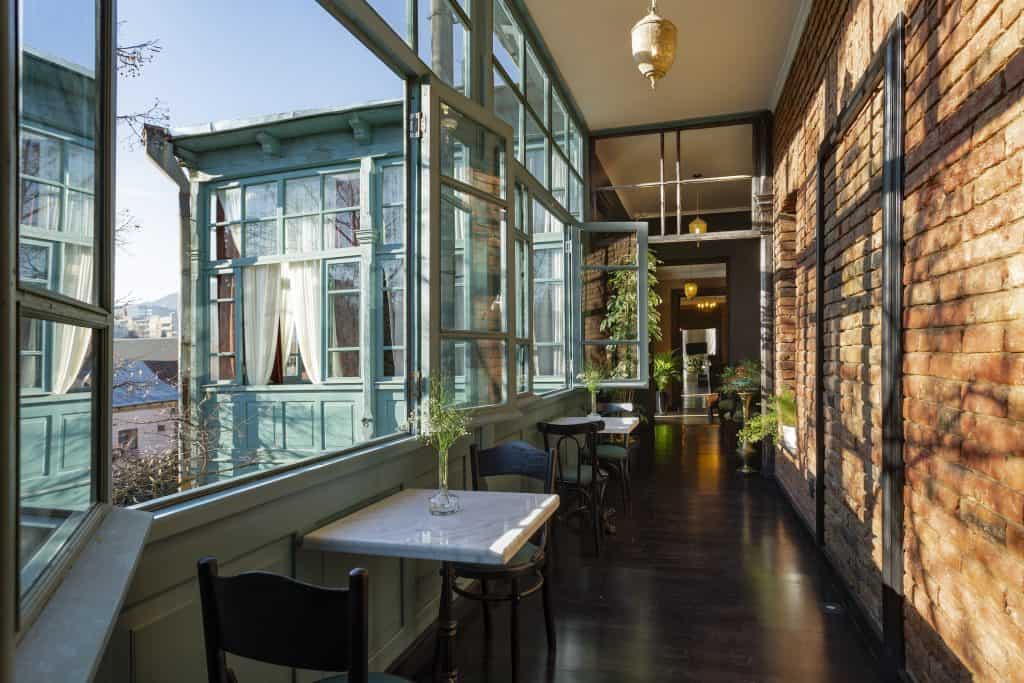
The first thing you notice on entering, pupils adjusting to the low light, are neoclassical murals running rising up around the staircase. Checking out Tbilisi’s timeworn entrances is rich enough to be a full-time pursuit, and Unfound Door’s entrance is among the finest in the city. Inside, high ceilings, original parquet, exposed brick and swathes of stripped-back plaster create a warm, layered backdrop for rooms furnished in an elegant mix of antique and contemporary pieces. It’s a deft synthesis of past and present, with traditional timber joinery, thoughtful lighting and the occasional flash of punchy modern art. The restaurant on the first floor is especially lovely, with vintage French chairs, mirrored skirting boards and big shuttered windows looking out onto a parade of handsome facades.
Story.
Constructed in the late 1800s for a wealthy merchant from Baku, the mansion lived many lives over the course of the 20th century, including long years of Soviet-era neglect. Fast forward to 2017, when four Tbilisi friends—Nikoloz Mamardashvili, Niloloz Pirtskhalashvili, Lasha Lemonjava and Merab Mirziashvili—began searching for a restoration project that would become not just a boutique hotel but a showcase for the city’s cosmopolitan past. Happening upon the dilapidated mansion, they discovered early-20th-century murals beneath layers of institutional green paint.
A two-year restoration followed, supported by City Hall, the local council and the Tbilisi Development Fund, the mansion’s status as a cultural monument prompting collaboration. Today the property channels a palpable sense of Mitteleuropa—not staged but gently revealed. The hope is that Unfound Door will be the first of many such revivals, encouraging others to breathe new life into the city’s remarkable stock of historic buildings.
The real draw at Unfound Door is the restaurant—so much so that for three days I ate nowhere else.
Suites.
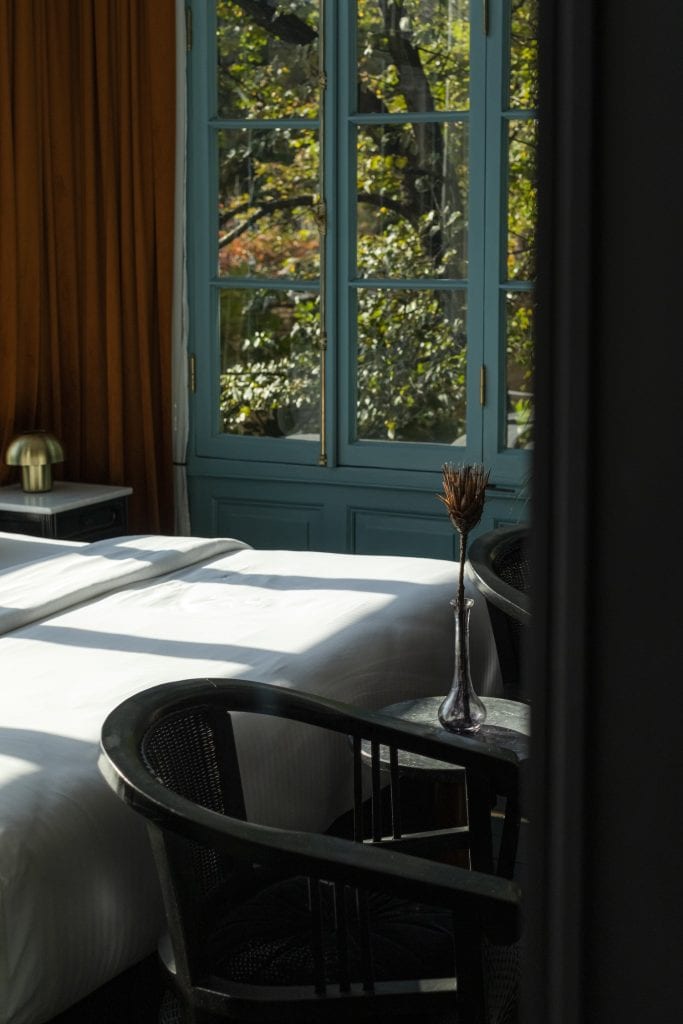
Unfound Door’s 16 guest rooms are different in layout and decoration, ranging from compact Doubles (20-25 sqm) and Junior Suites (35 sqm) to a King Suite with Balcony (49 sqm) and Two Bedroom Suite (77 sqm). Colours—pistachio, Pompeii red, Prussian Blue—give each its own identity, offset by stretches of salmon-hued stripped plaster, weighty matt-black joinery and curtains in off-white or burnt orange.
Minibars and coffee machines come as standard, but it’s the lighting, the cloud-like beds and a mix of offbeat details that leave the strongest impression. My Junior Suite came with a separate sitting-cum-dressing room, an aristocratic touch: a pair of Directoire armchairs, a window seat and the kind of outlook made for long spells of neighbourhood gazing.
Spaces.
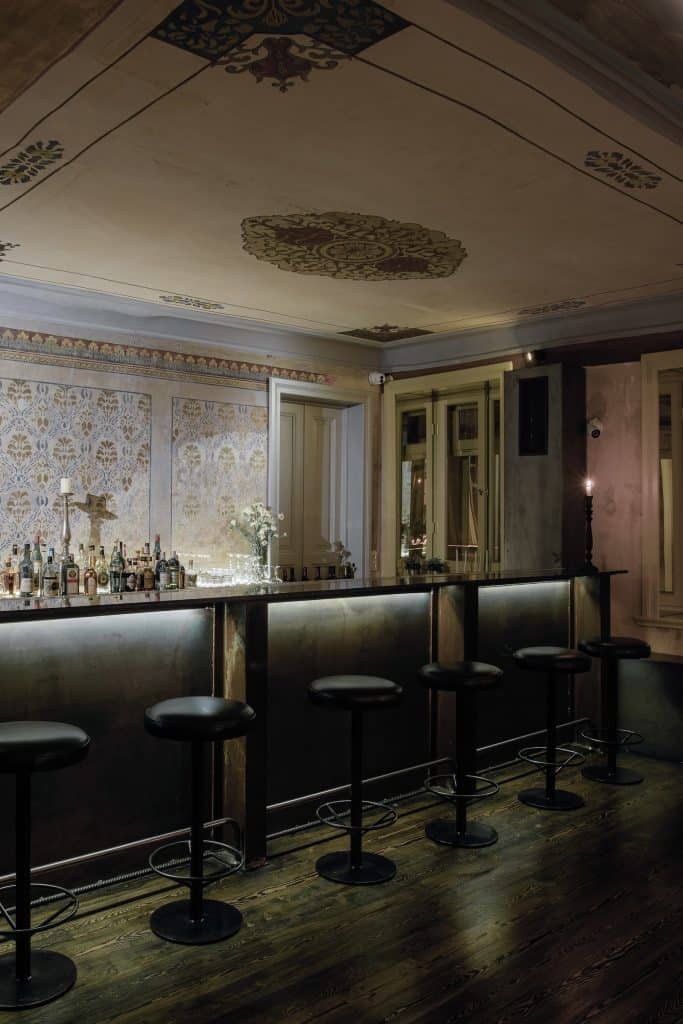
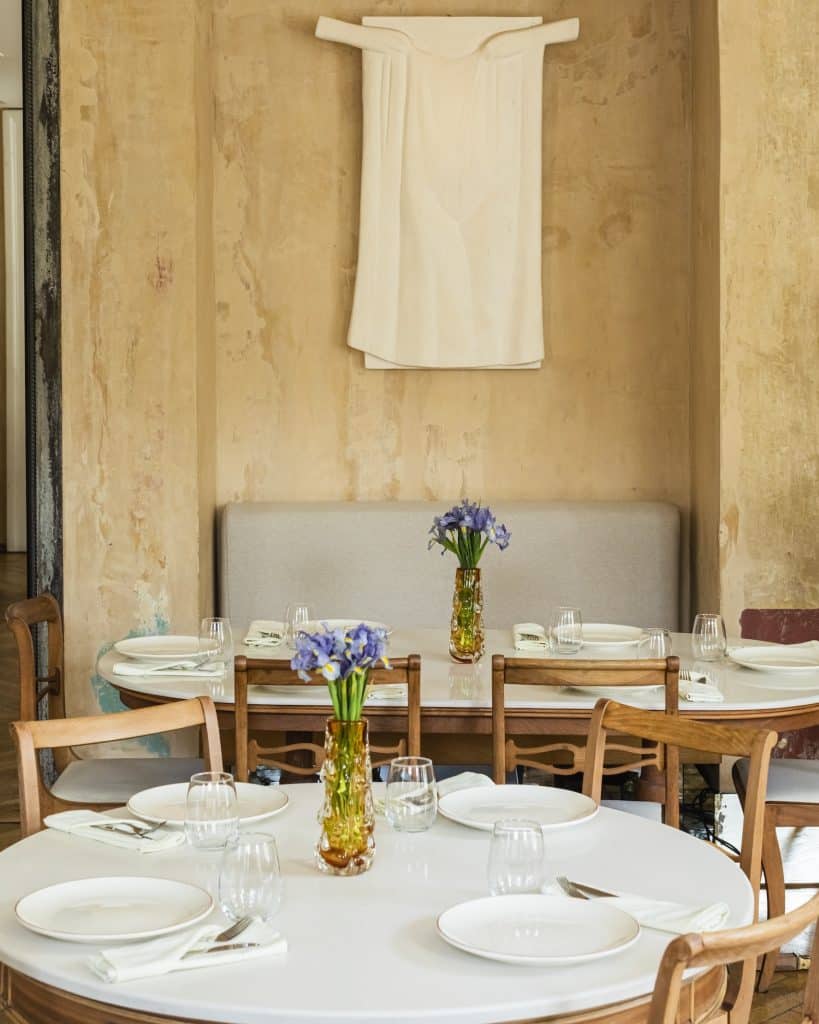
As beautiful as the rooms are, the real draw at Unfound Door is the restaurant—so much so that for three days I ate nowhere else. Flooded with light thanks to its corner position and tall windows, the space unfolds across two rooms: a salon with a cocktail bar and the main dining room beyond. It’s deeply tactile, with original parquet floors and salmon stripped-plaster walls, made romantic by Belle Époque furniture and sharpened with slick lighting, the occasional piece of contemporary art and those mirrored skirting boards.
The menu threads together European and Georgian traditions. Start with chvishtari — a cheese-filled cornbread from Svaneti — served with whipped cream and pear, or the super comforting chikhirtma, Georgia’s rich, lemony chicken soup. Mains include cauliflower steak drizzled with shiitake béchamel and buckwheat popcorn, or the signature apkhazura—next-level meatballs bright with pomegranate—all backed by a stellar list of Georgian natural wines that draws as many locals as hotel guests.
Service.
A small reception desk on the first floor is always attended. There’s no lift, but staff are quick to help with luggage on the stairs. Service in the restaurant is superb: a warm, switched-on team who guide you through the menu, the delights of Georgian natural wine and, when asked, the wider pleasures of Tbilisi.
Spend.
Double Rooms from 239 GEL, Junior Suites from 326 GEL, including taxes and breakfast.
Book your stay at Unfound Door.
Photography ℅ Unfound Door.