Fort Bazaar.
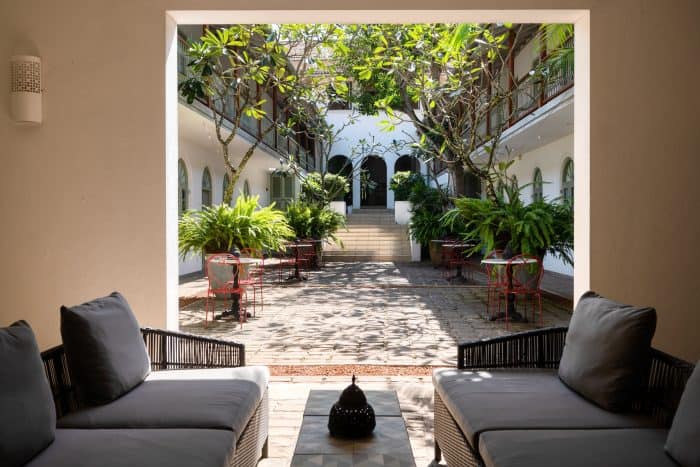
Arches from the Dutch, a courtyard from the Moors, tiles from the British: Fort Bazaar carries the soul of Galle Fort into the 21st century.
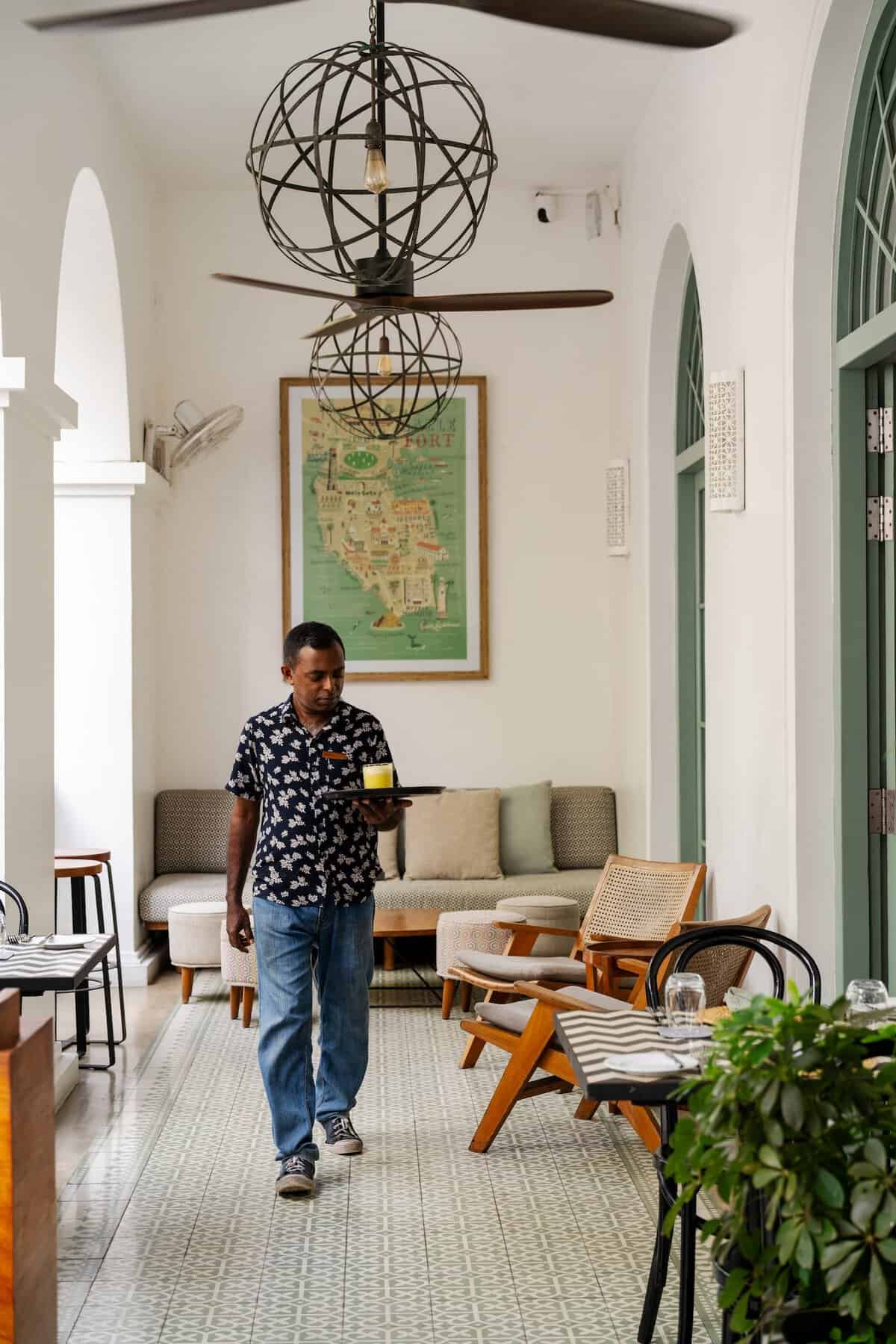
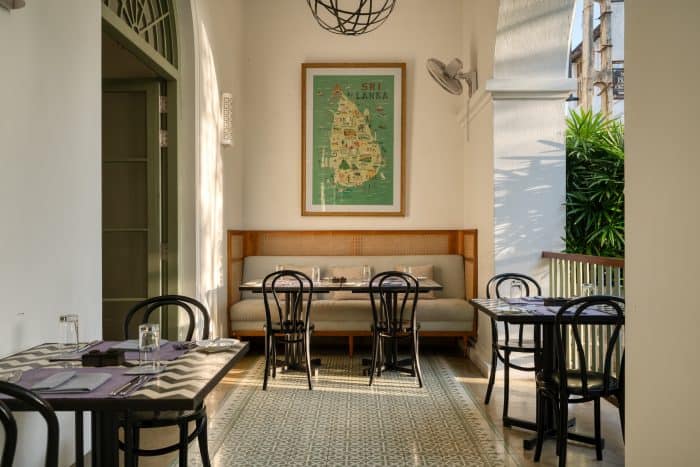
Sitting streetside on the terrace of this 18-room beauty, people watching doesn’t get any better: a gin and tonic in hand as the residents of Galle Fort take their passeggiata. It’s a fitting perch on Church Street, named for its cluster of sanctuaries, with the Dutch Reformed Church (1755) the jewel in the ecclesiastical crown. Between the mercantile energy of Pedlar Street and the charming Galle Library — Sri Lanka’s oldest, built by the British in 1832 — runs a row of 18th-century Dutch merchant houses. One, meticulously restored, is now the boutique hotel Fort Bazaar.
Stone, sage and lipstick red
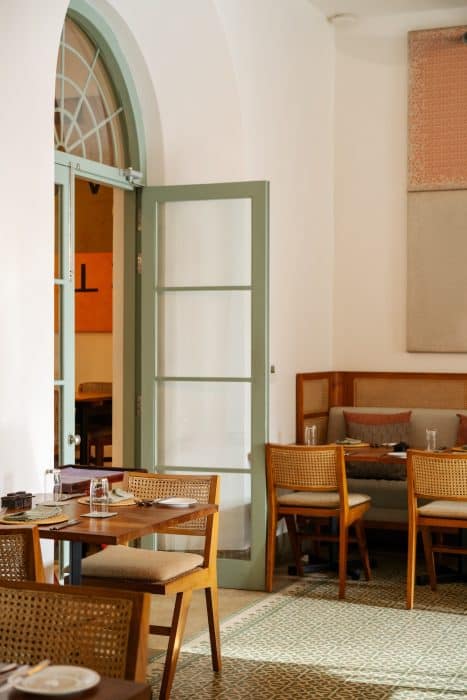
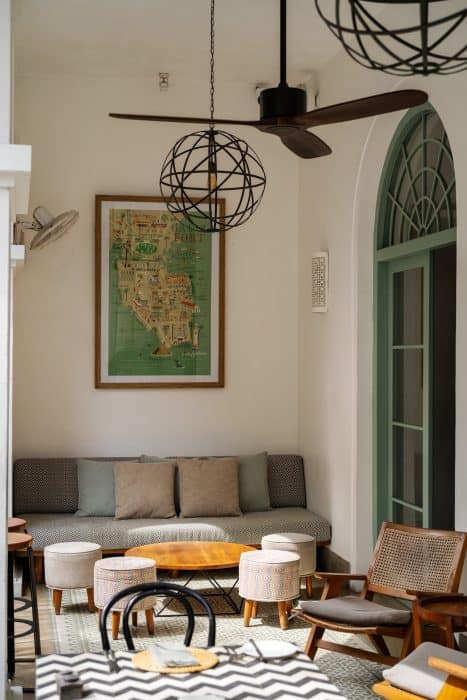
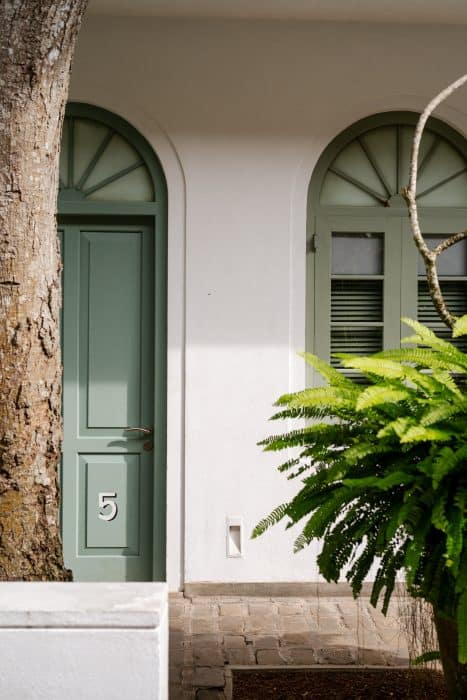
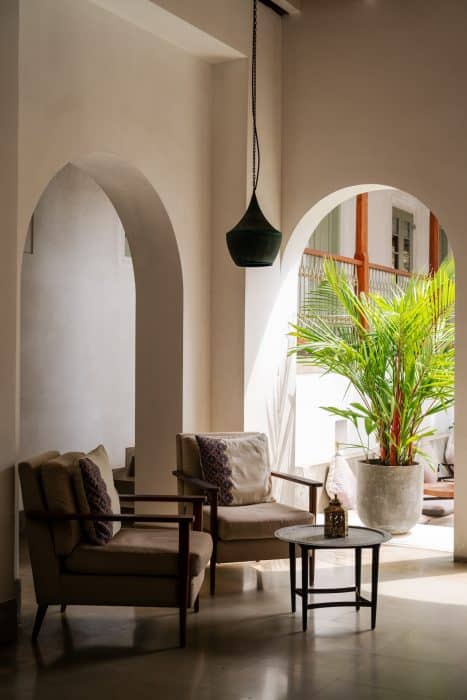
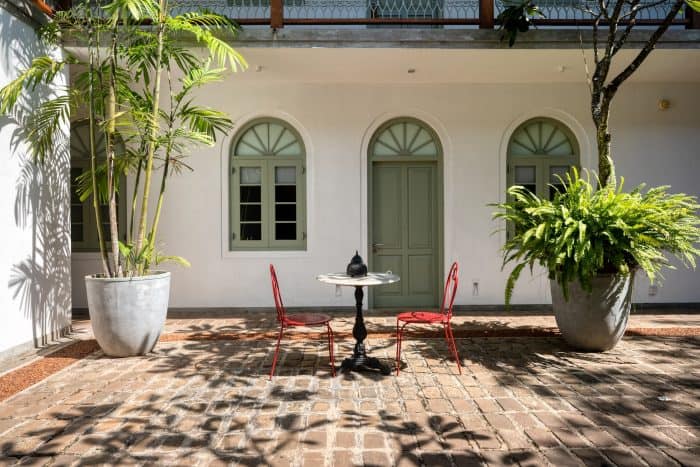
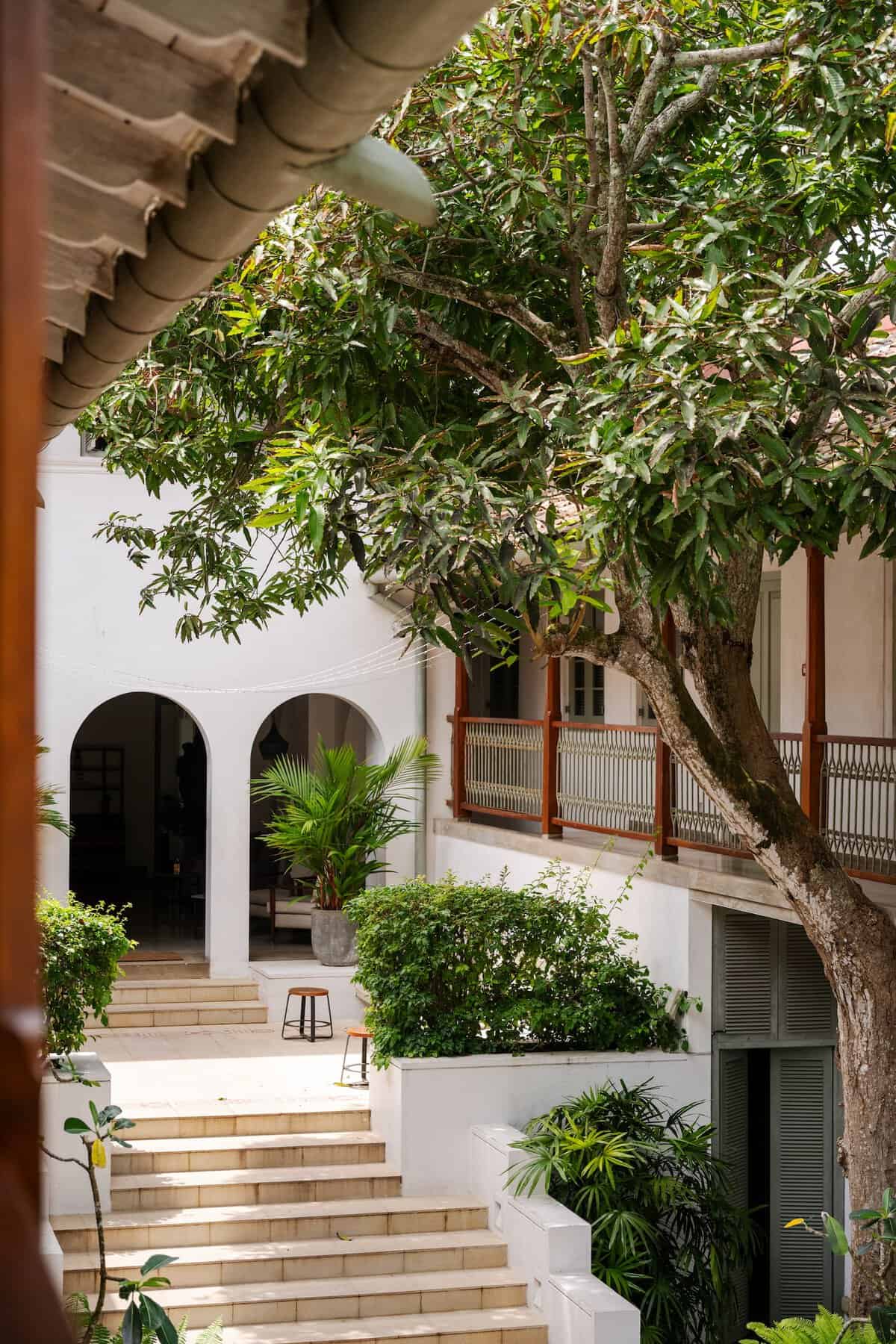
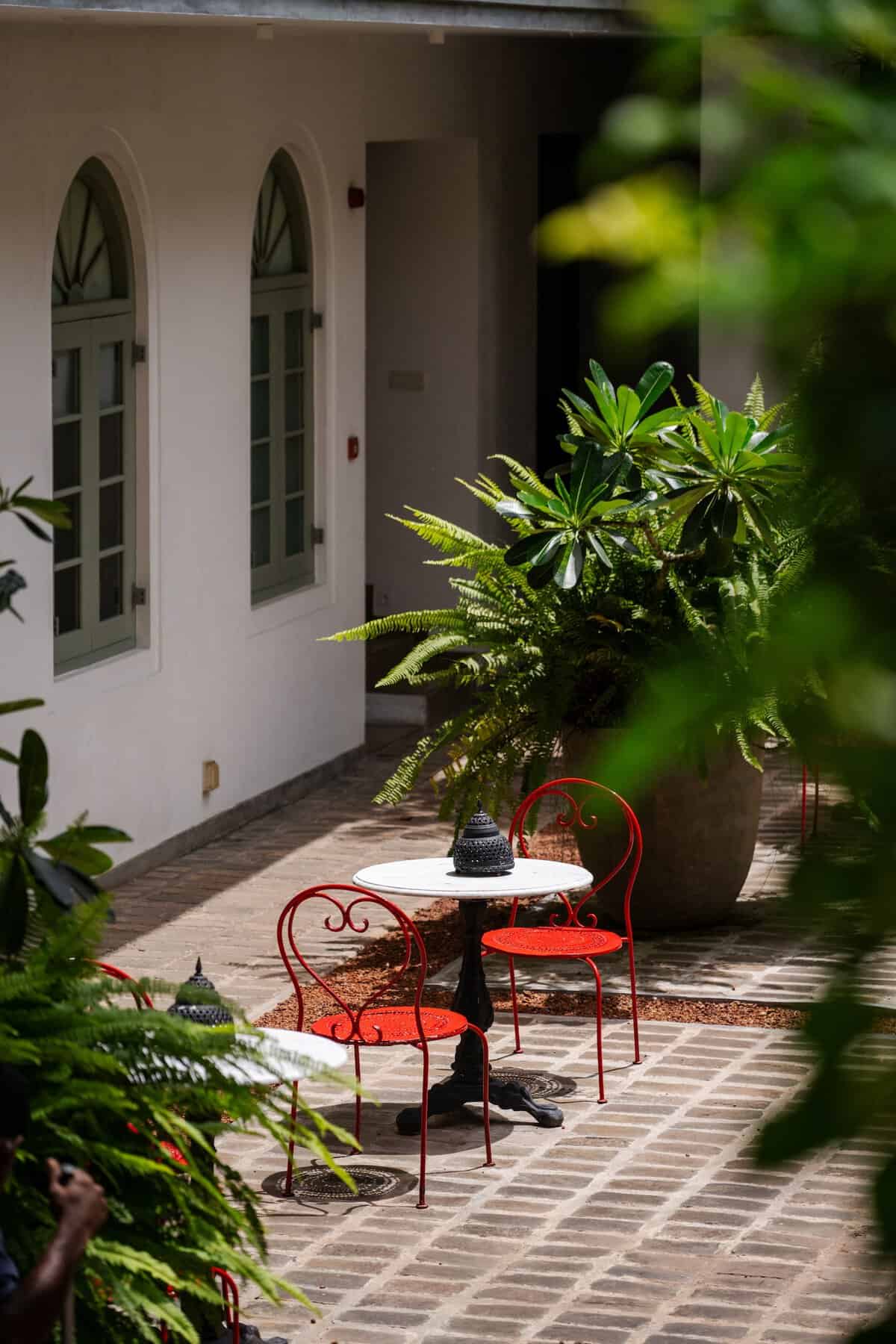
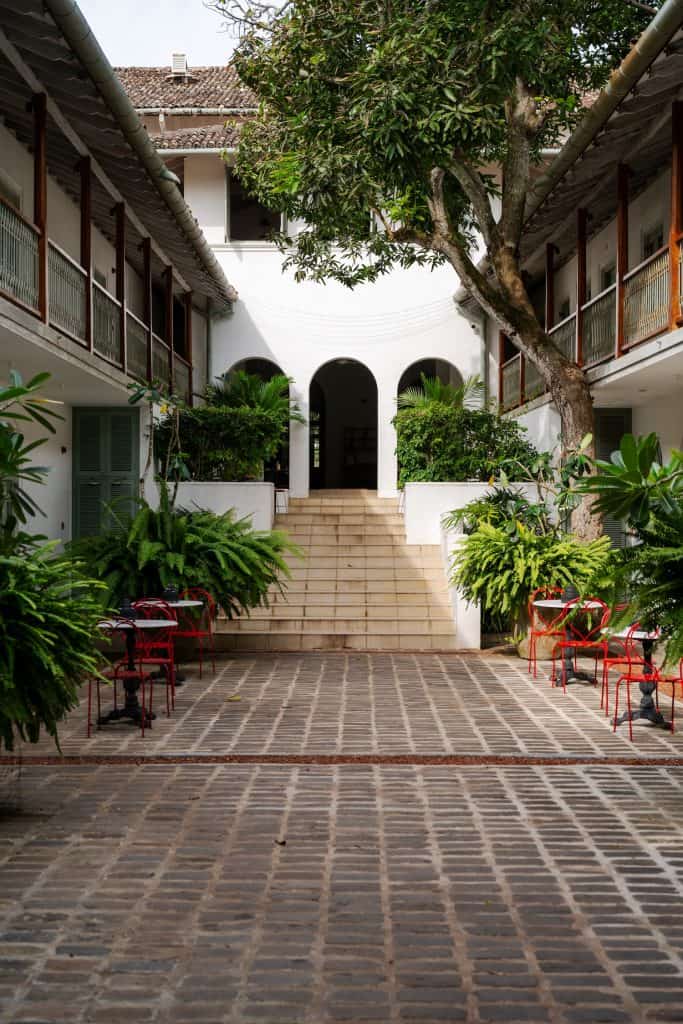
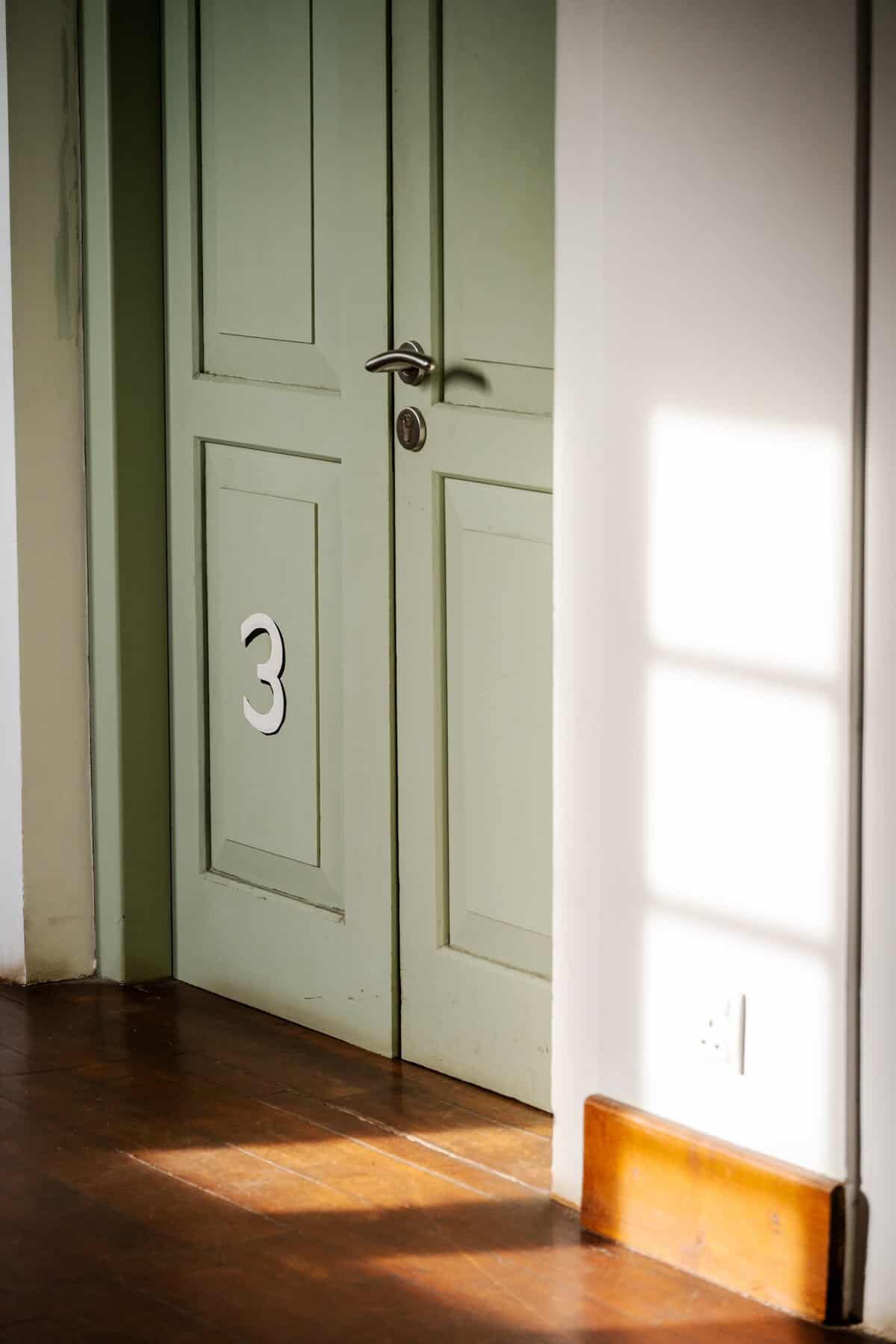
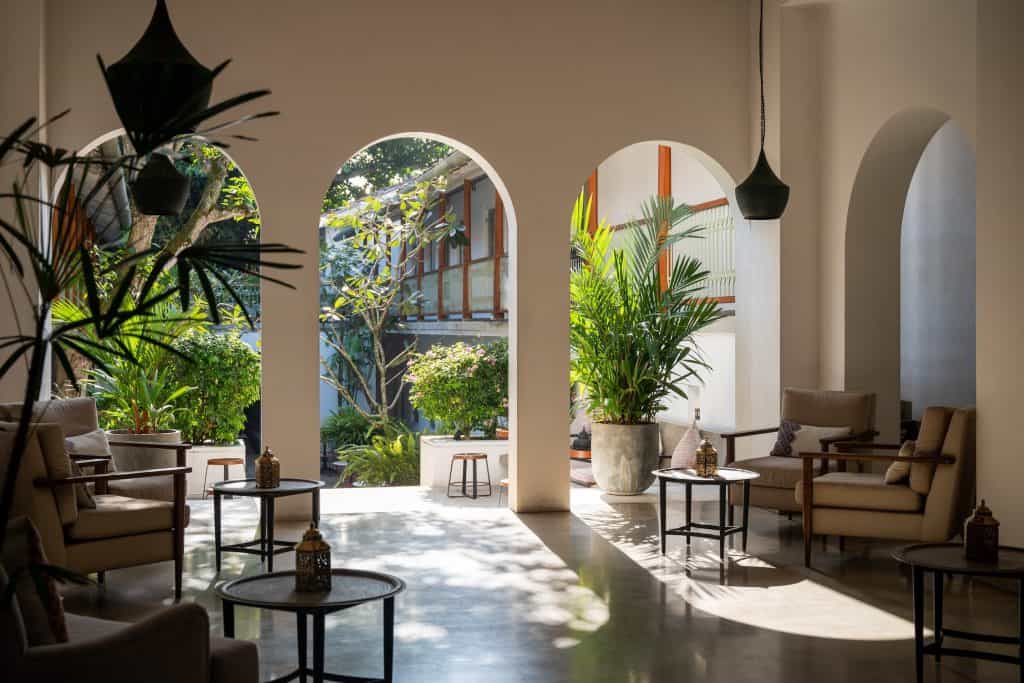
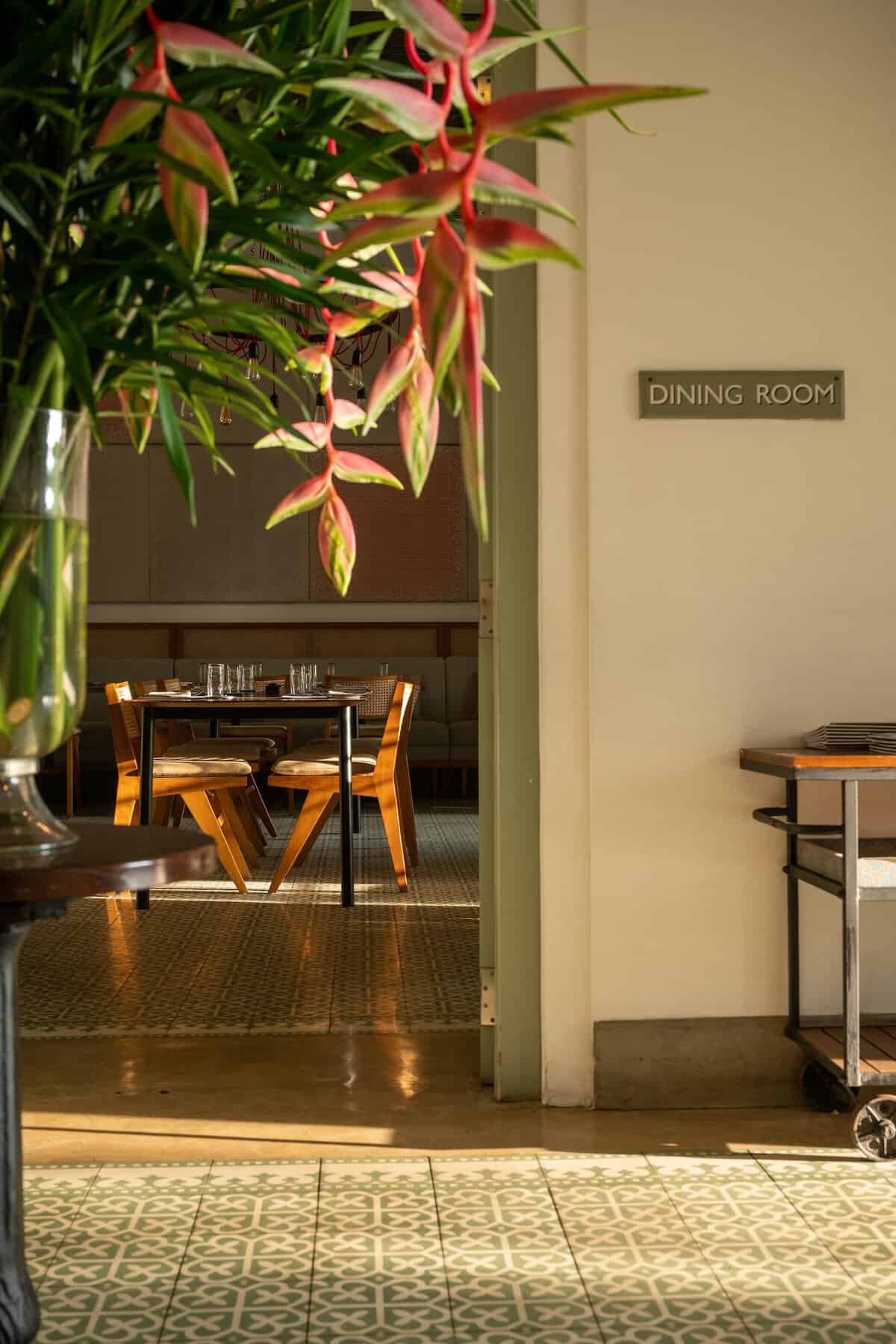
Arches from the Dutch, encaustic tiles from the British and an inward-looking courtyard courtesy of the Moors — a caravanserai of sorts, but threaded with palms and frangipani — this colonial complex reflects the layered history of the fort. Not that Fort Bazaar is preserved in architectural moth balls. A palette of stone, off-white, grey and sage green anchors the place in the present, punctuated by curvy metal chairs in lipstick red and terracotta pots bursting with tropical foliage.
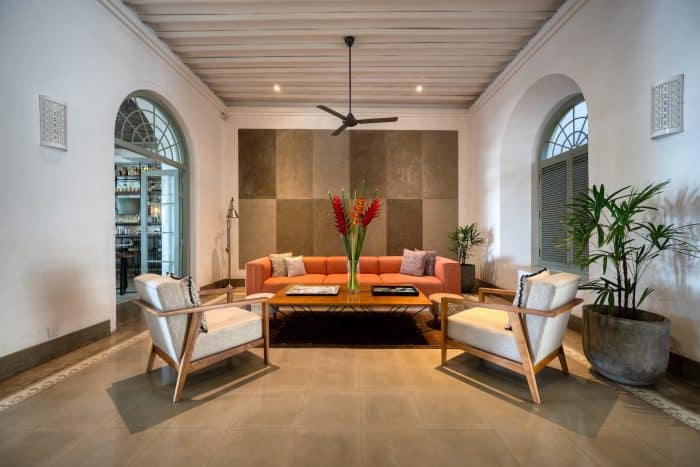
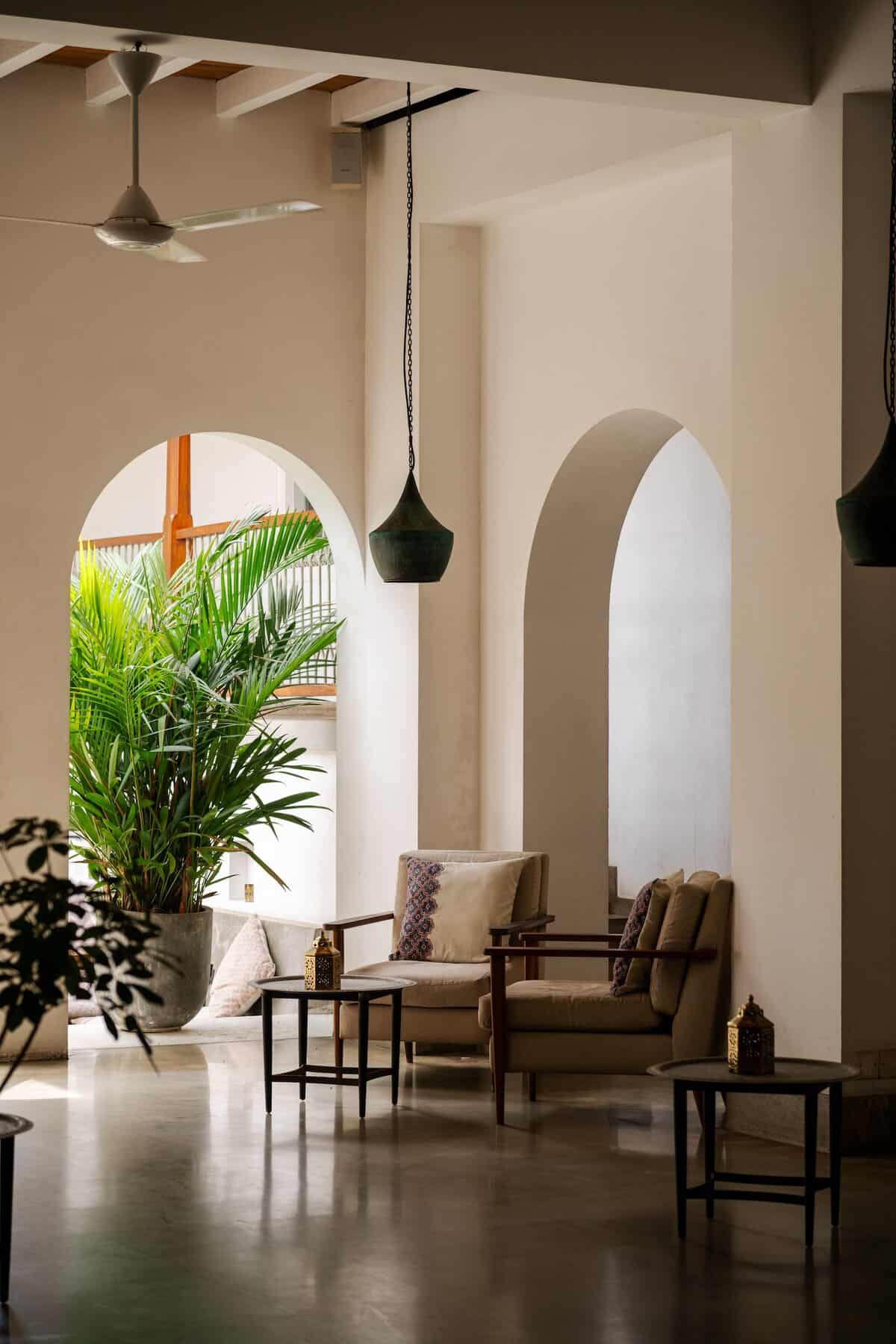
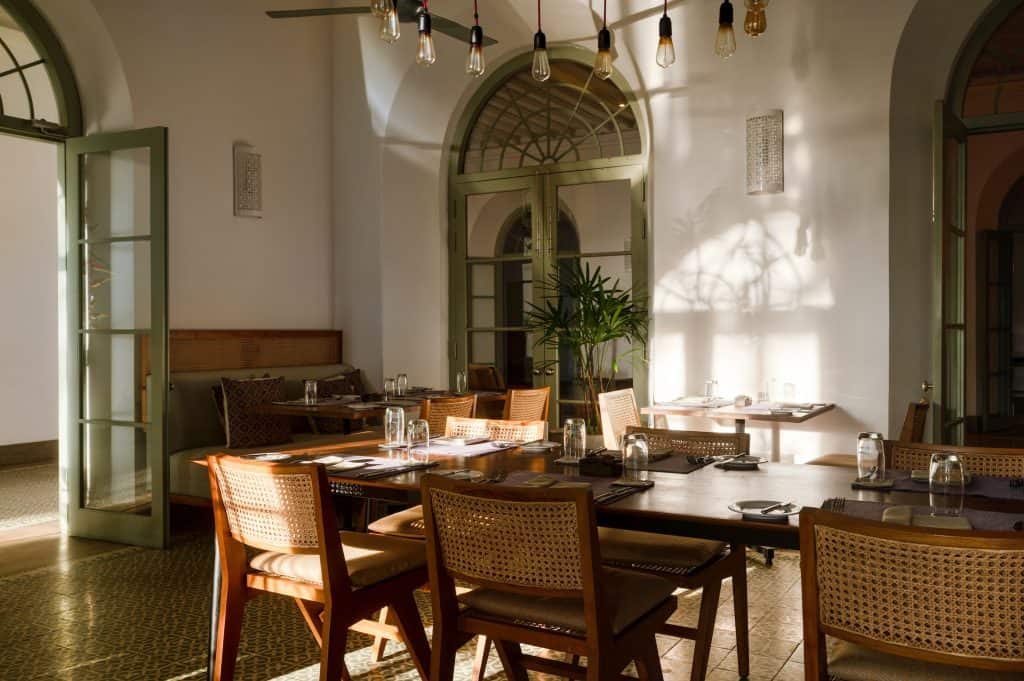
Shutters, raked-timber ceilings and a pared-back mix of mid-century and contemporary furniture exude island style. Other touches echo North Africa: cushions recall Fez embroidery, brass lanterns Marrakech. You’d stay here just to watch light moving through the space, golden shadows stretching through arches as the afternoon wears on.
Close to collapse, now a classic
The building dates back to the Dutch period, later evolving under British colonial rule. Over time it passed through many hands, including a period when it was used by Sri Lanka’s first Survey Department, before eventually falling into disrepair from the 1950s onwards.
Henry Fitch, who was working for Leading Hotels of the World when he travelled to Sri Lanka in 2001, very quickly fell under its spell. He knew Mike Davies and Charlie Austin from school — Mike in real estate, Charlie in athlete management — who had joined forces with Colombo lawyer Viraj Premasinghe to set up Red Dot Tours. United in their love of cricket, a near-sacred pastime in Sri Lanka, they also believed the teardrop-shaped island had potential for intimate, design and heritage-led hospitality.
Exploring old buildings and abandoned estates, they imagined what was possible and Teardrop Hotels was born. Their first property, Wallawwa, near Negombo, opened in 2008 and set the tone for all that followed. A decade of planning permissions and restoration later (the building was close to collapse), Fort Bazaar joined the ranks in 2016, safeguarding a slice of Galle’s heritage.
More recently, Teardrop partnered with the Geoffrey Bawa Trust to revitalise and relaunch the architect’s legendary country estate, Lunuganga, one of the world’s great house hotels.
Eighteen rooms, all the character
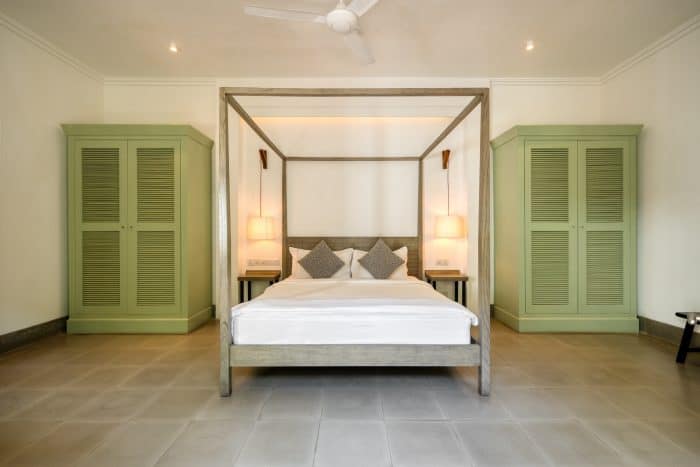
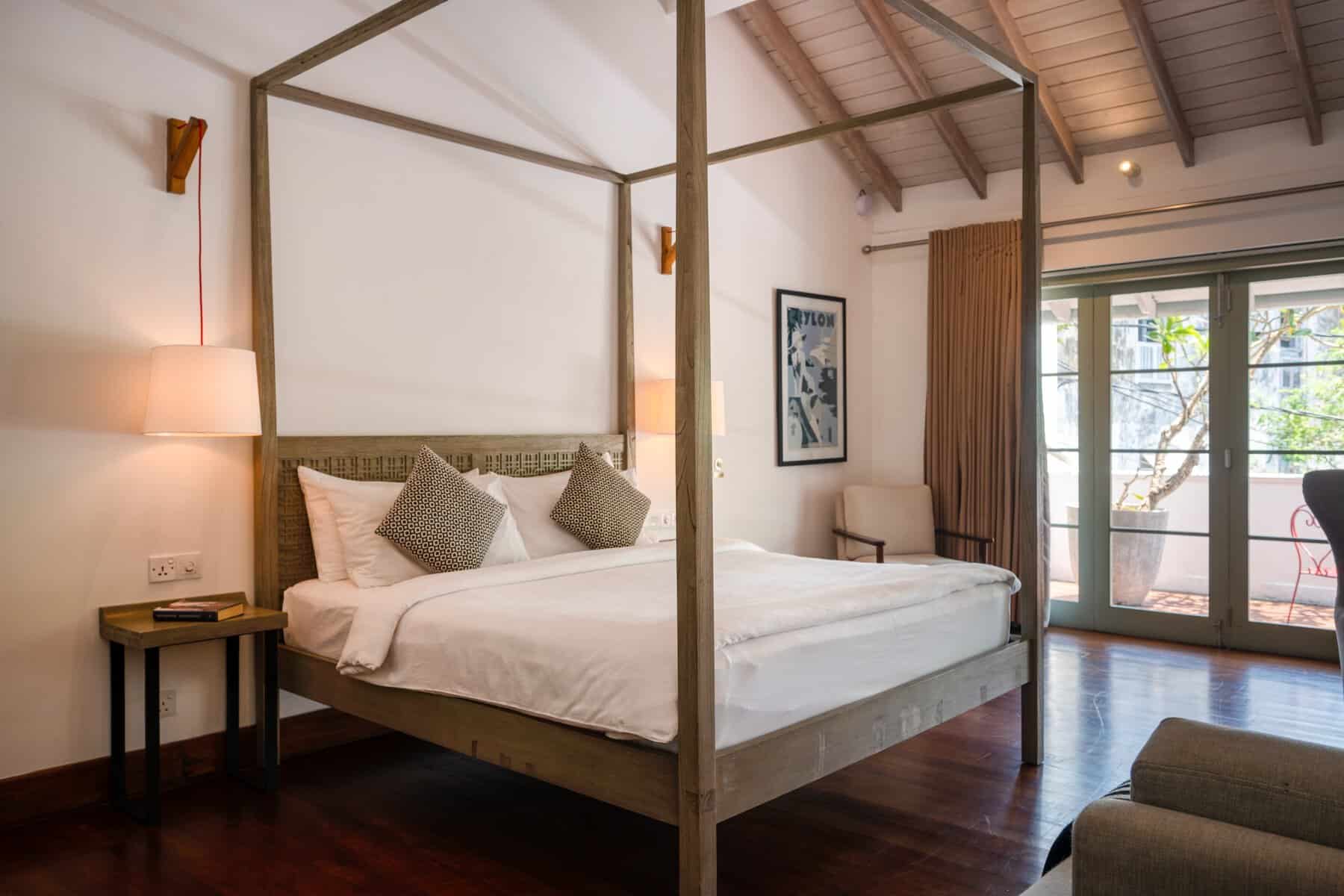
Bazaar Bedrooms (35 square metres) are accessed via galleries flanking the sun-drenched courtyard, perfectly formed with king four-poster beds in limed timber, sage-green louvered wardrobes, layered lighting, and concrete tiles cool underfoot. Bathrooms come with skylights, rain showers, robes and chemical-free toiletries.
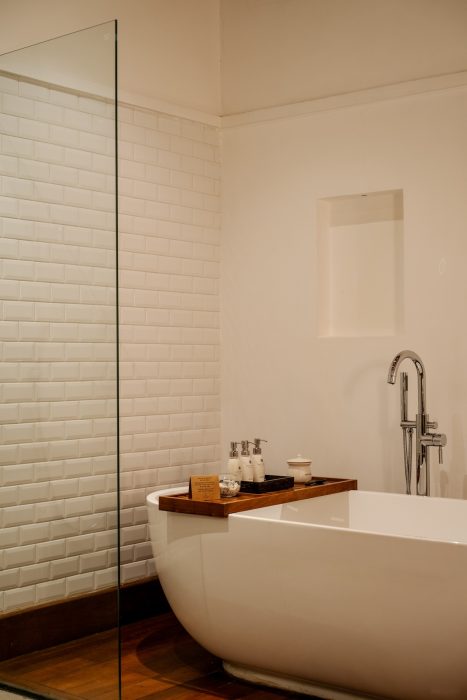
Banyan Bedrooms (32 square metres) have private balconies, taking their name from the monumental tree at the back of the courtyard. Upstairs, a cluster of suites (75-100 square metres) feature sitting areas, freestanding bathtubs and private terraces overlooking Church Street. Perks include afternoon tea, sundowners on the terrace from 5-6pm and a guided Galle Fort walk.
People watching
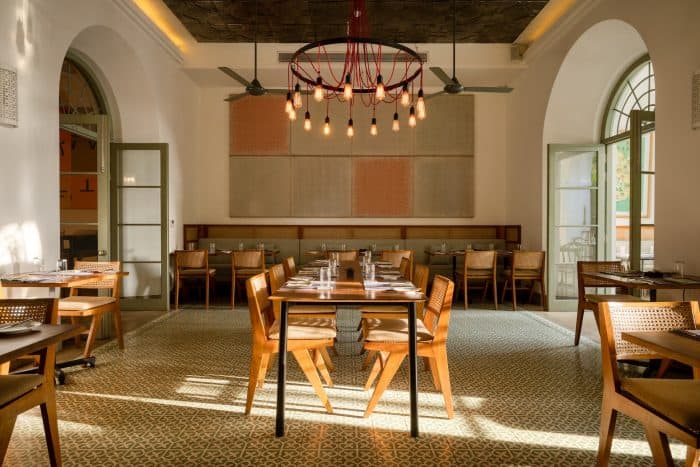
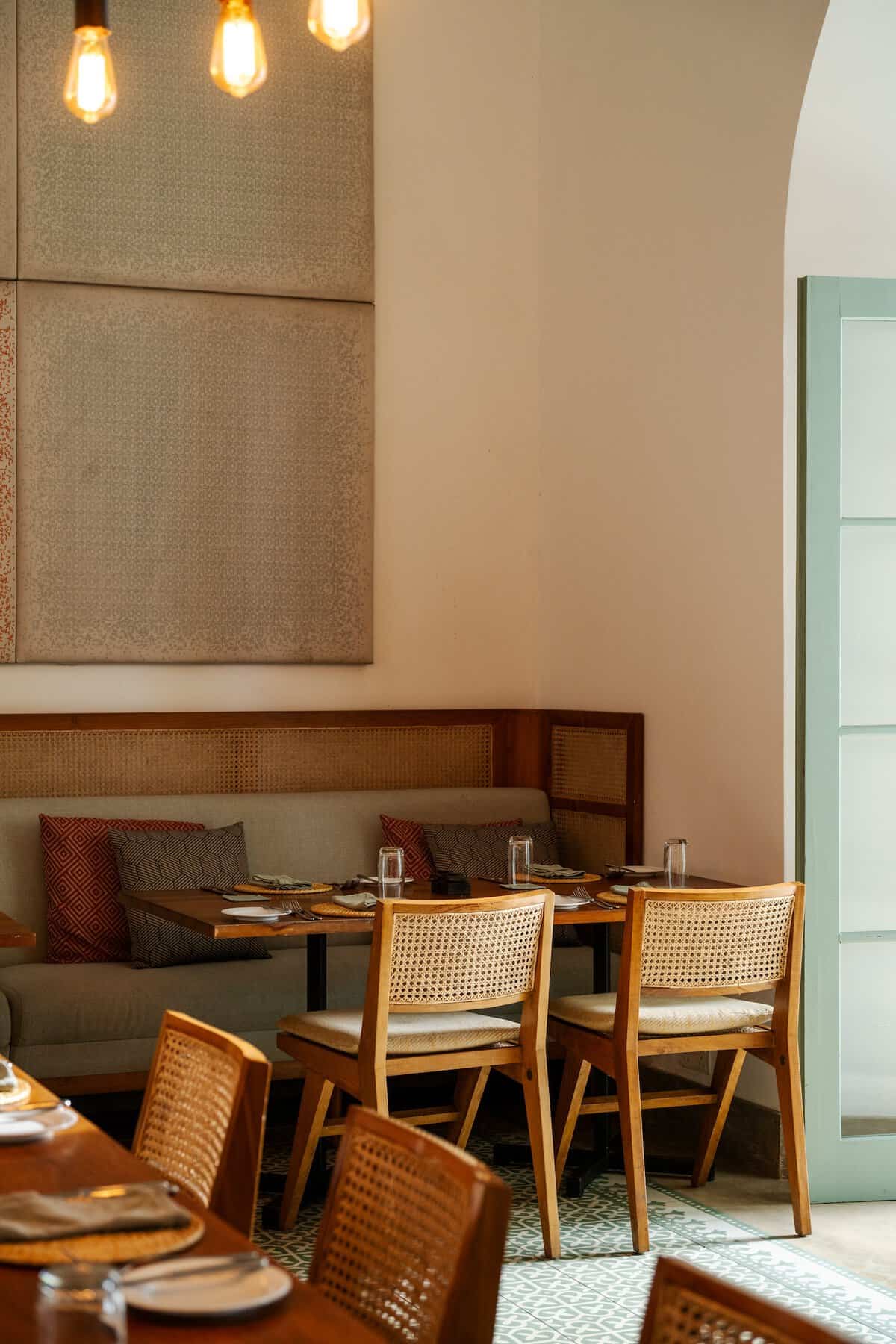
Church Street Social lives up to its name: a convivial cocktail bar, restaurant and streetside terrace where you’re sure to meet fellow travellers from across the globe. For me it was a couple from Scotland, who shared stories of Glasgow’s art scene and the lesser-known temples in Luxor.
Fort Bazaar’s breakfast is a la carte, the Egg Hoppers Florentine a standout fusion. Think sophisticated comfort food for dinner: Koggala Mud Crab Cakes, Bazaar Bisque, Sumac & Coconut Ash-Roasted Chicken and the South Coast Seafood platter, alongside solid vegetarian options. The wine and cocktail list is one of the fort’s more extensive. From crisp new world whites and an excellent Frescobaldi CastelGiocondo Brunello di Montalcino, to the superb Arrack Sour and a spicy vodka concoction channelling Thai tom yum, the bar more than holds its own.
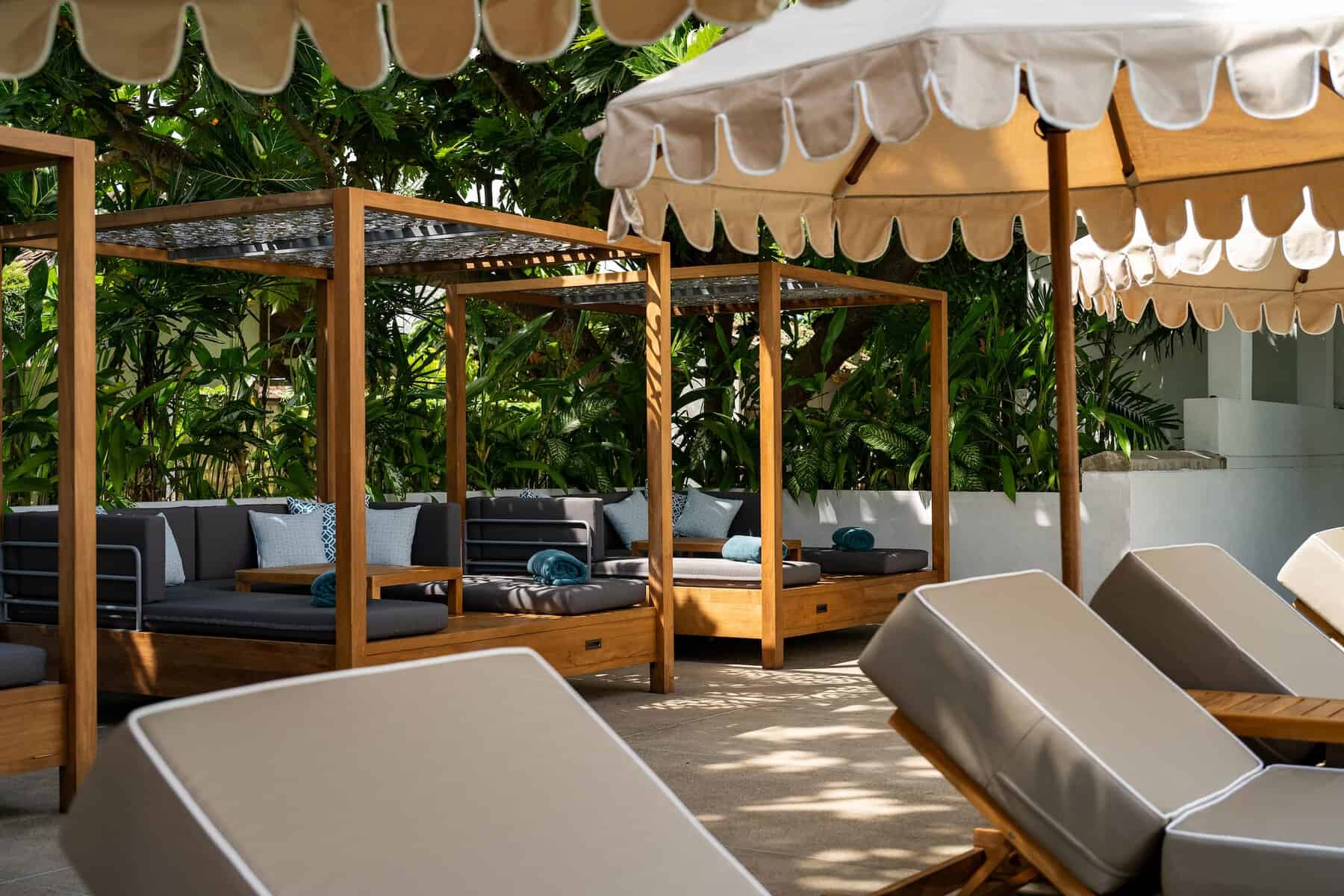
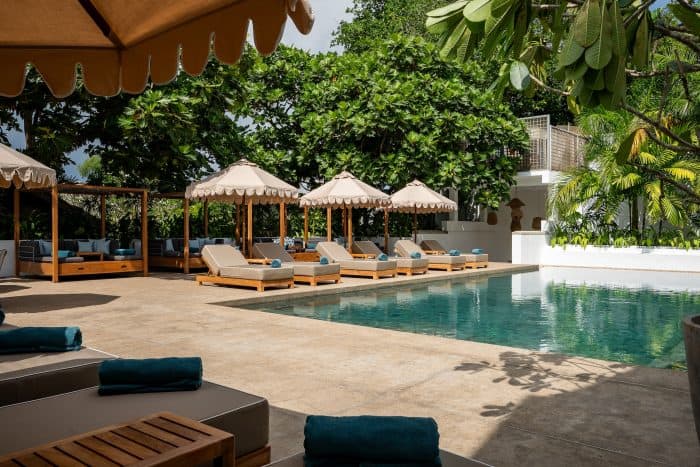
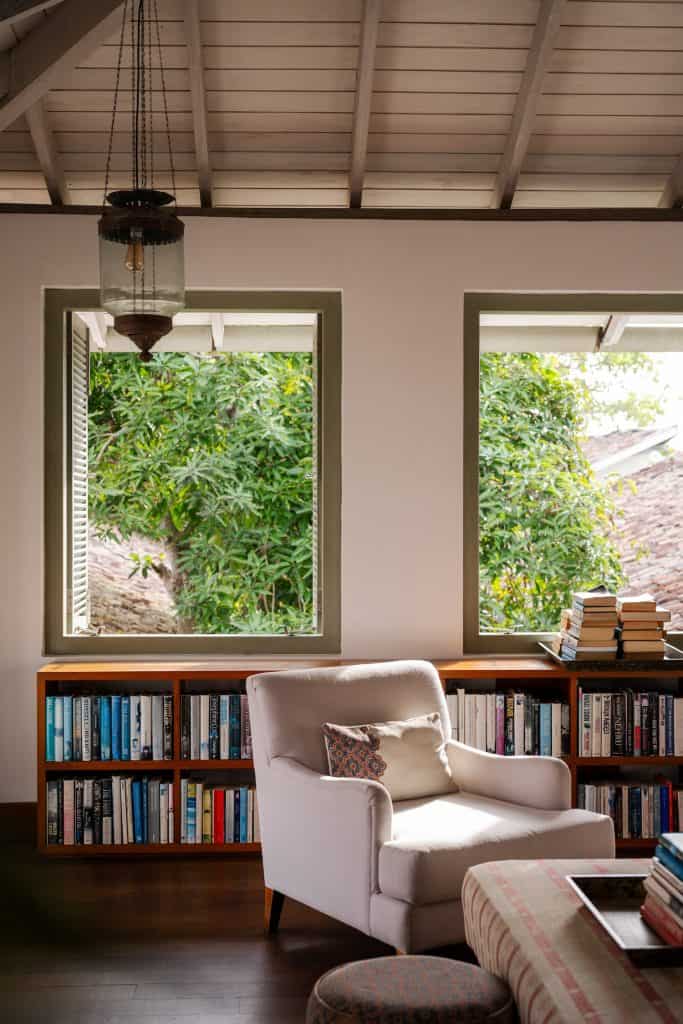
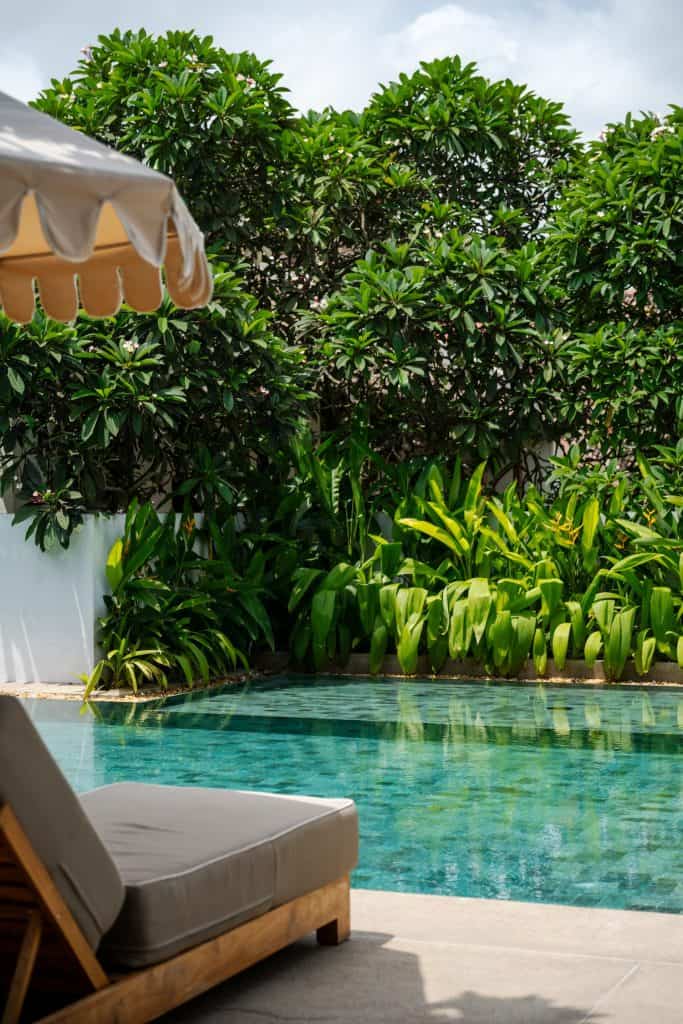
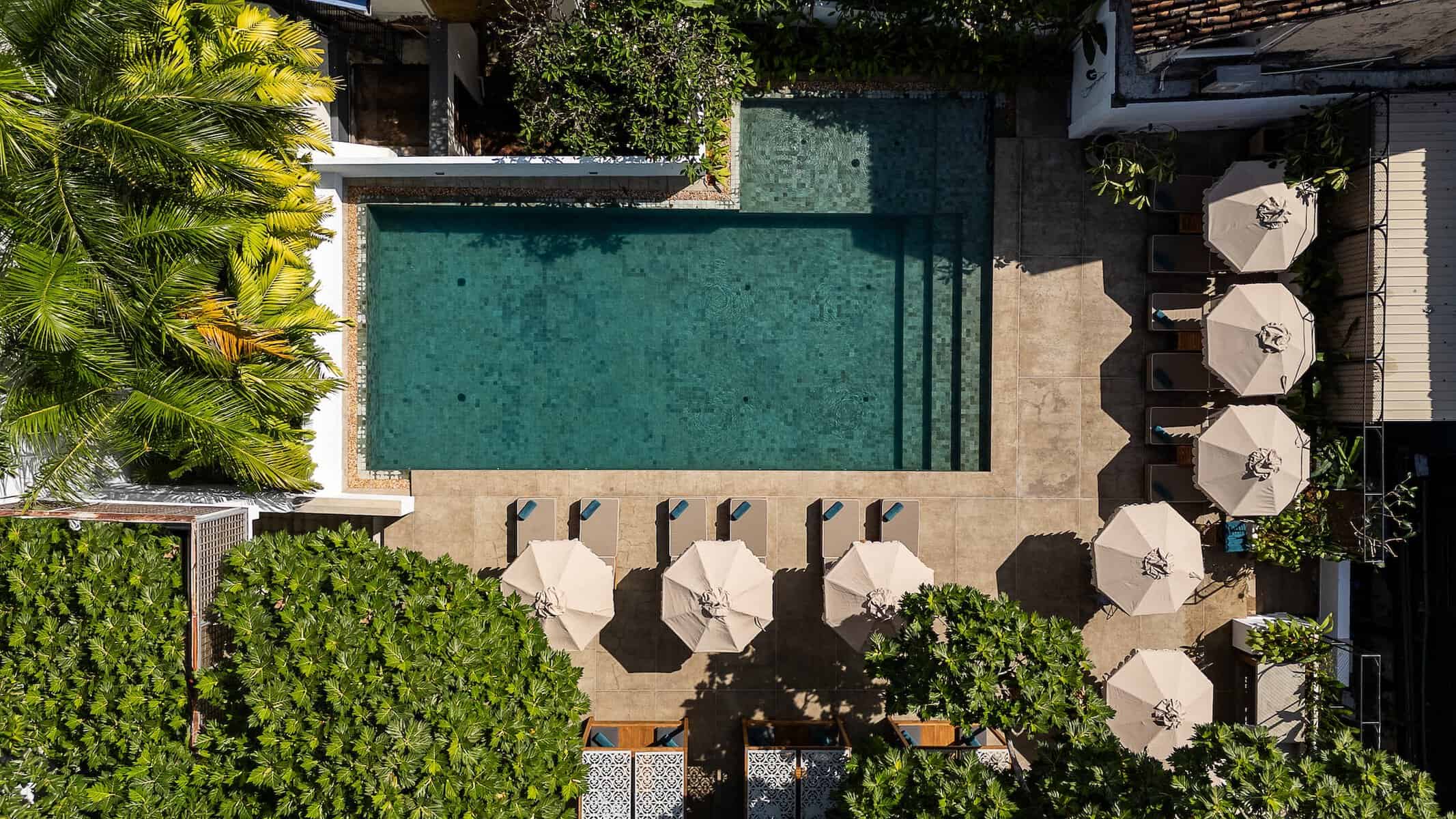
Upstairs, a library sports shuttered windows, rooftop views and deep English armchairs, perfect for curling up with a book. A play of indoor–outdoor spaces leads to the cobbled courtyard, a light-filled space carrying in its bones the charm of old Ceylon. The spa features three treatment rooms (two with steam showers), but the star of the show is the green-tiled swimming pool, at 14 x 6 metres the second-largest in Galle Fort. Pull up a timber sun lounger — there’s full sun and plenty of shade from a giant breadfruit tree — and while away the afternoon before heading out to explore the fort.
Green season calm
December to March is Galle’s ‘dry’ season. Expect bright, sunny skies, comfortable temperatures around 27°C and calmer seas, perfect for swimming and whale watching, though prices surge and it’s more crowded. I was in Galle in August and September — the rainy ‘green’ season — and loved it, as it wasn’t busy and there was very little rain, with the odd brief shower every few days.
Local timber, local markets
Rooms come with refillable glass water bottles and coffee plungers rather than Nespresso machines. Bathrooms feature biodegradable amenities and chemical-free toiletries. Furnishings were largely locally sourced, made by Only & Co and Villa Saffron in a variety of native timbers.
Social initiatives are rooted in long-term partnerships, from training and career development to services and food sourcing, supporting the local fishing community and markets for fresh produce. The economic benefits of tourism are shared locally and continue beyond a guest’s stay. Much of this falls within the framework of the Teardrop CARE Foundation, a key initiative focussed on empowering women from low-income communities.
The staff to guest ratio is impressive, with Fort Bazaar employing 55 people for 18 rooms. I checked in hours early — not a word was said, the receptionist simply noted the details in my passport and had me whisked to my room.
Whether diving into the lavish breakfast spread at Church Street Social, light bites by the pool or a Colombo G&T on the terrace, staff are warm and efficient. Nothing feels like too much trouble.
Double rooms from USD $237/night, including breakfast.
To book a room, go to: Fort Bazaar.
Photography: courtesy of Fort Bazaar.