Jacques Grange.
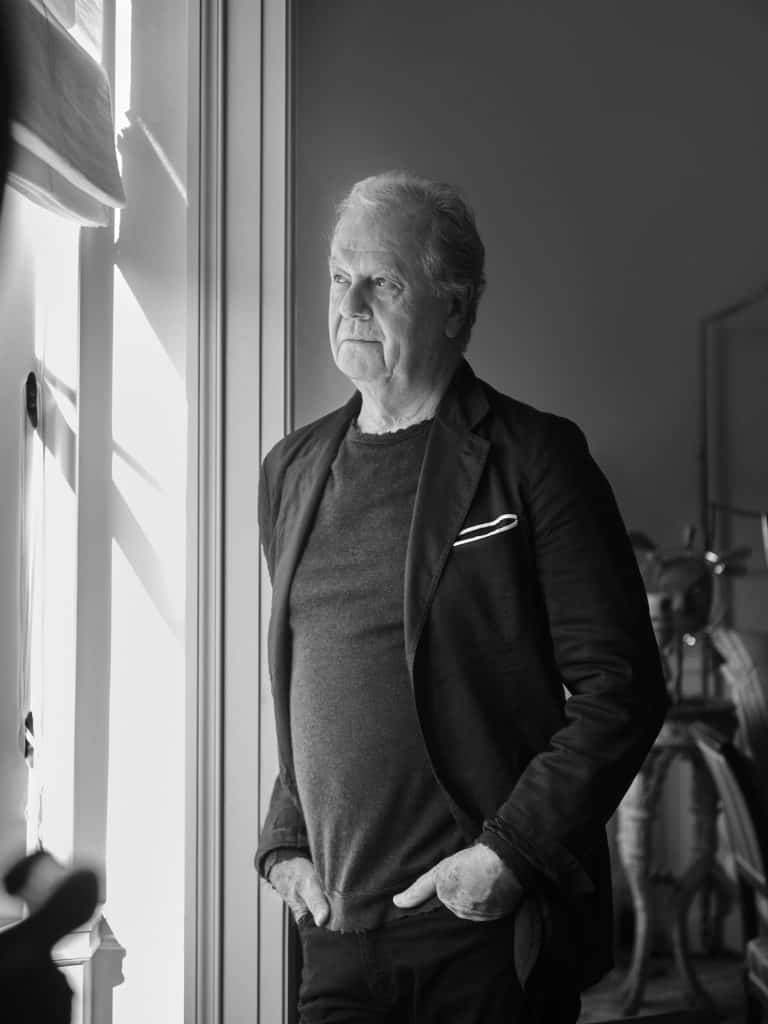
From Yves Saint Laurent’s Paris apartment to Francis Ford Coppola’s palazzo and The Row, Jacques Grange has shaped the most celebrated interiors of the past half-century.
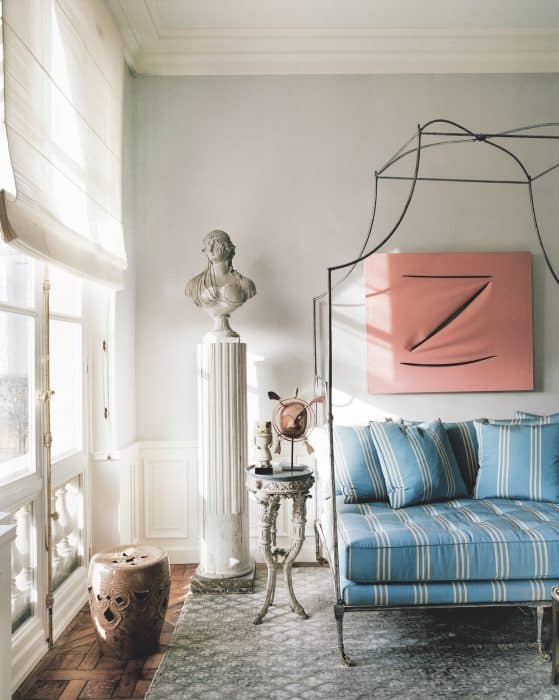
Jacques Grange is more portraitist than interior designer: a seer of souls, conjuring rooms from the unexpressed yearnings of his clients. To look for a ‘style’ is to misunderstand him entirely. One of his interiors might be patterned and romantic, another is playful, another is streamlined and sleek. None allow for quick categorisation, united only in their spirit of elegant nonchalance, a predilection for all things Jean-Michel Frank and what seems to be a clientele in universal possession of paintings by the likes of Goya, Bacon and Picasso.
Grange’s 2009 monograph, Jacques Grange Interiors, is one of the finest books ever published on interior design — sharing top place, perhaps, with The Private World of Yves Saint Laurent & Pierre Bergé. Some rooms appear in both. From 1974, Grange designed every home belonging to the couturier and his art-loving partner. Saint Laurent would suggest the atmosphere — the films of Antonioni for his ‘bachelor’ studio in Paris, Proust’s In Search of Lost Time for Château Gabriel in Deauville — and Grange would bring his esoteric visions to life. Bergé, initially wary of interior designers, came to regard him as “a friend able to grasp and to share a sense of taste and understanding.”
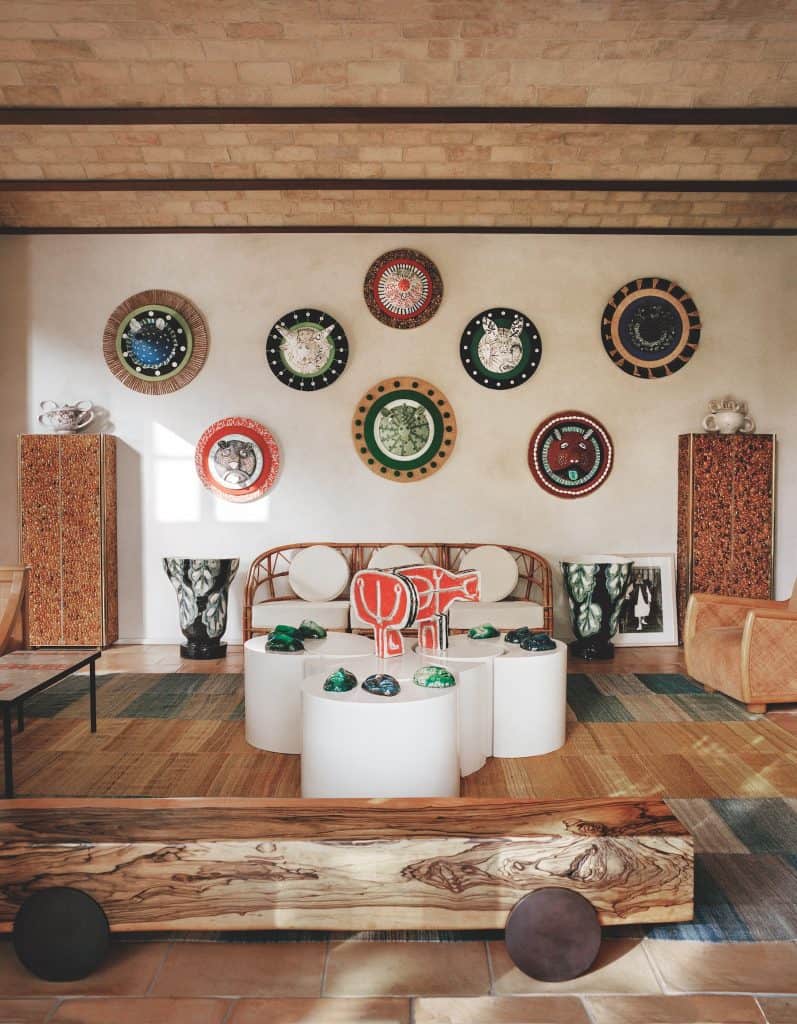
A second monograph, Jacques Grange Recent Work, published by Flammarion in 2022 and photographed by François Halard, shows no diminishment. “The style of projects in my second book is less cluttered and more contemporary,” says Grange. “Art is also more present.”
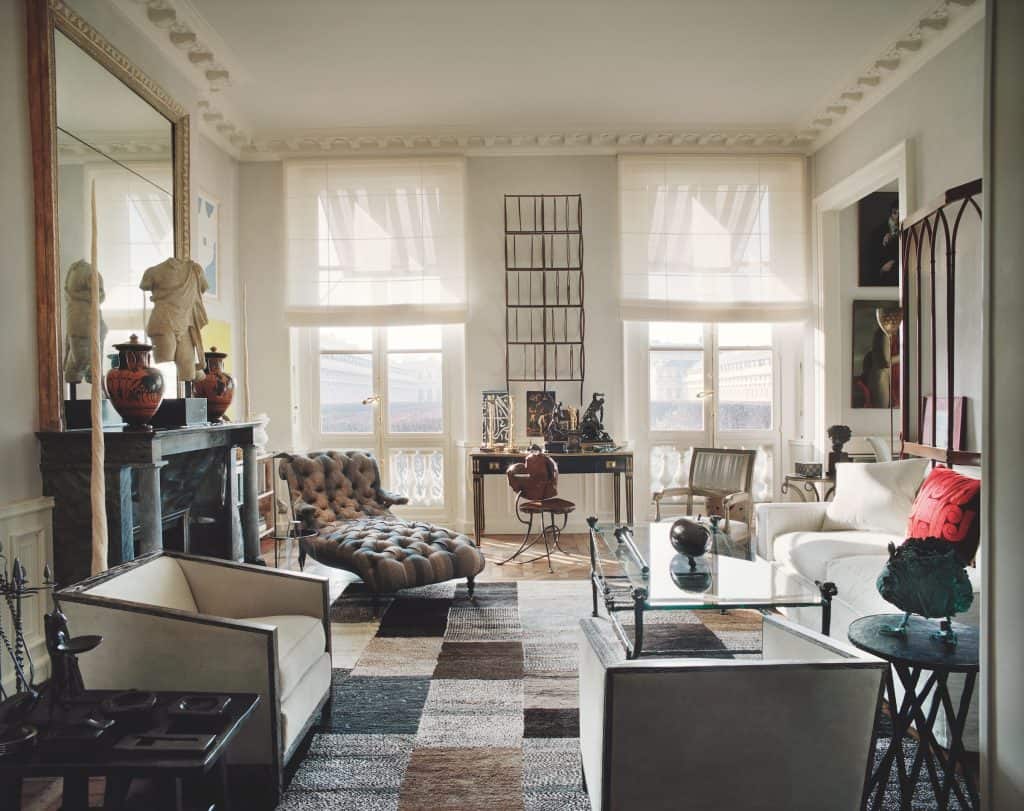
Born in 1944, Grange attended the École Boulle — Paris’s college of fine arts, crafts and applied arts — before moving to the École Camondo to focus on interior design. An internship with decorator Henri Samuel sharpened the foundation and brought him into the orbit of art patrons Marie-Laure and Charles de Noailles, and their legendary 1920s interior by Jean-Michel Frank.
Assisting Samuel, his first project was the Petite Trianon. “Working there for three years gave me a true understanding of the great French tradition and quality,” Grange told Sotheby’s. The Noailles’ avant garde, freethinking lifestyle taught him to break boundaries and draw harmony from wildly different periods. From friend and mentor Madeleine Castaing, he learnt how to mix colour, pattern and texture without fear. It was Castaing who gave him the guiding principle of his career: “In decoration you should always evoke, never reconstruct.”
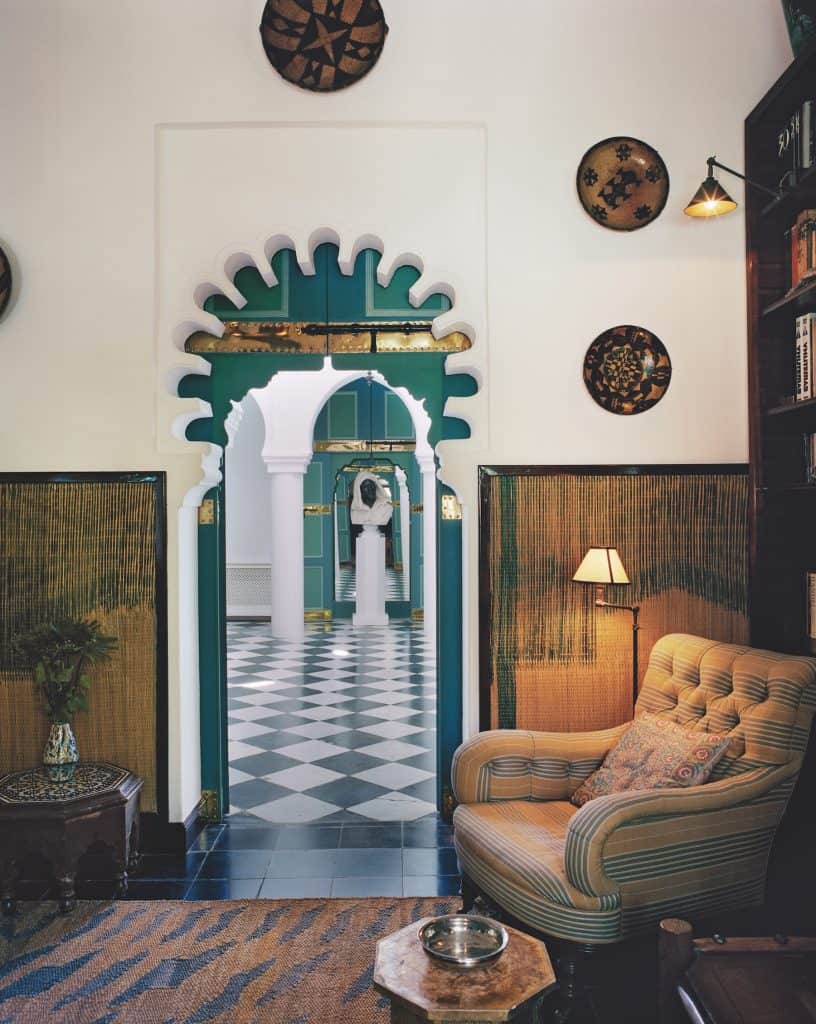
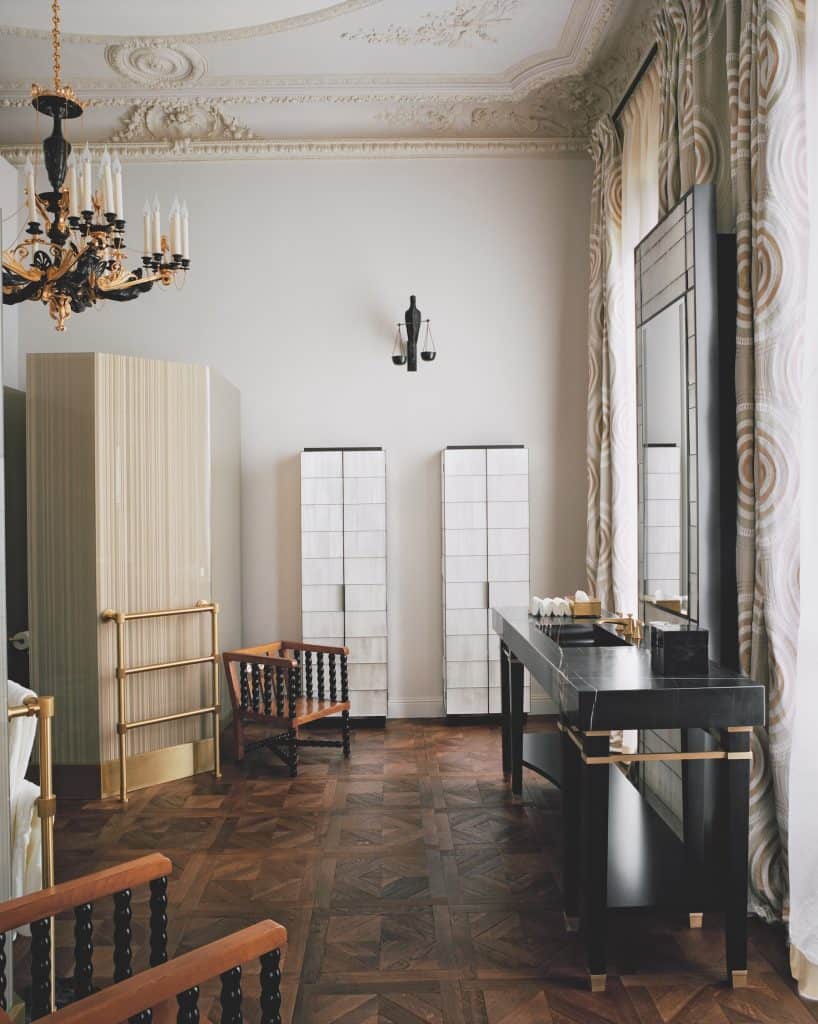
When he founded his own studio in the early ’70s, his first major client was Princess Ashraf Pahlavi, twin sister of the Shah of Iran. Valentino, Francis Ford Coppola and Caroline of Monaco followed. In April 2026, the contents of Jean and Terry de Gunzburg’s Grange-designed New York apartment sold at Sotheby’s for USD 96 million. The Saint Laurent and Bergé collection sold at Christie’s Paris in 2009 set a world record — 374 million euros — for the most valuable private collection ever to come to auction.
The photographs of these rooms, captured by Ivan Terestchenko, are among the most iconic interior images of all time. Grange worked on seven of Saint Laurent and Bergé’s homes, including Château Gabriel in Normandy, Villa Oasis in Marrakech and the Rue de Babylone apartment in Paris.
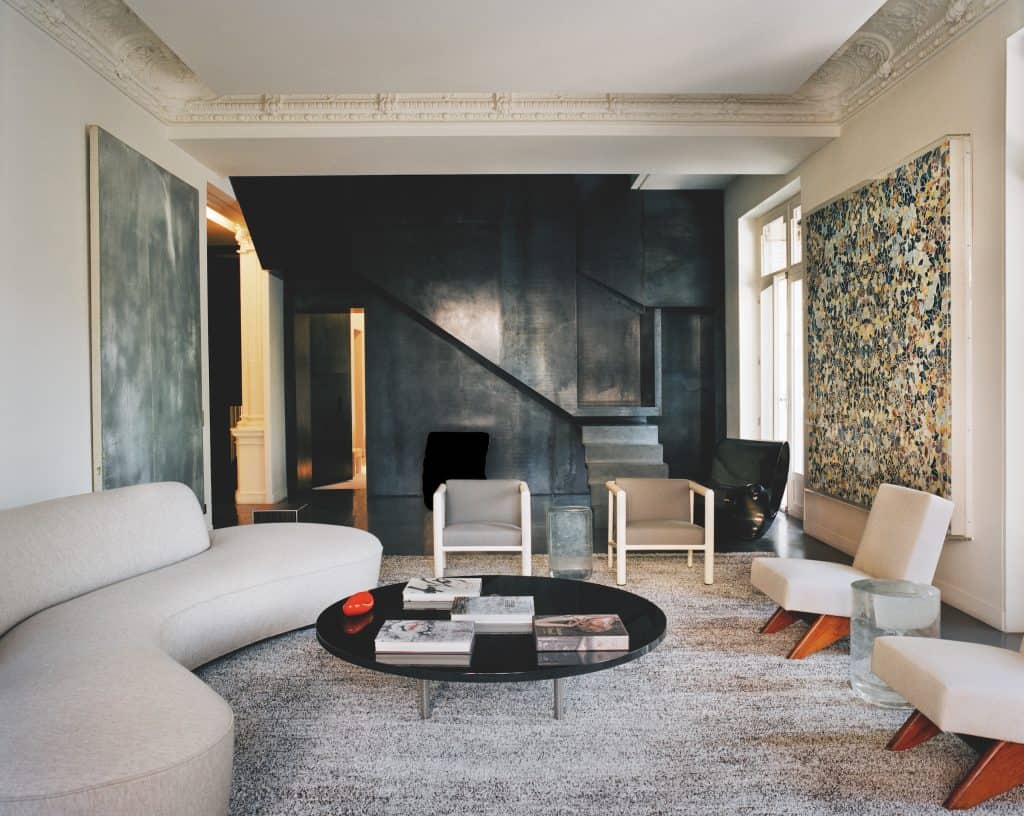
Unlike art or architecture, interiors disappear as owners redecorate, relocate or pass on. Even so, his work for the couple endures at Maison de Couture in Paris, where Saint Laurent’s former atelier has been transformed into a museum, and at Villa Mabrouka in Tangier, now a boutique hotel belonging to Jasper Conran.
It was after Francis Ford Coppola saw Villa Mabrouka — acquired by Saint Laurent and Bergé in 1999 and decorated by Grange — that he commissioned Grange to design his Basilicata hotel, Palazzo Margherita: “I soon learned that he is far more than a designer, but rather an artist in the fuller sense, as well as an architect and a supervisor of every detail.” The same hand is evident at New York’s The Mark and Hotel Mama in Palma de Mallorca.
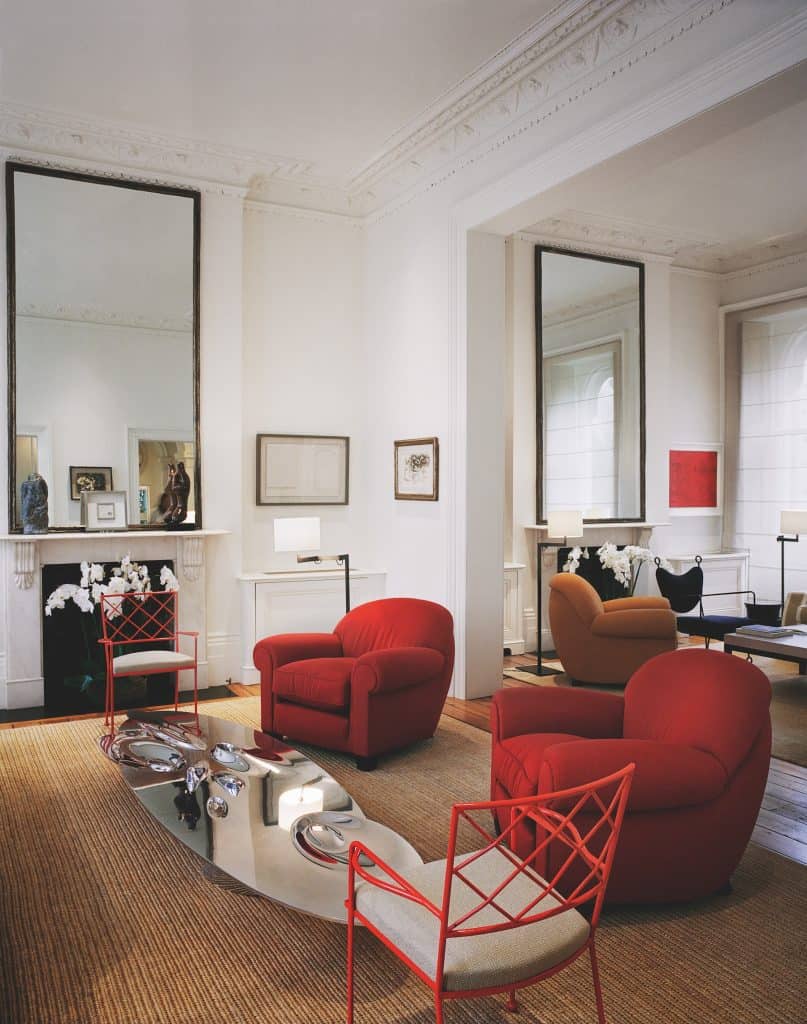
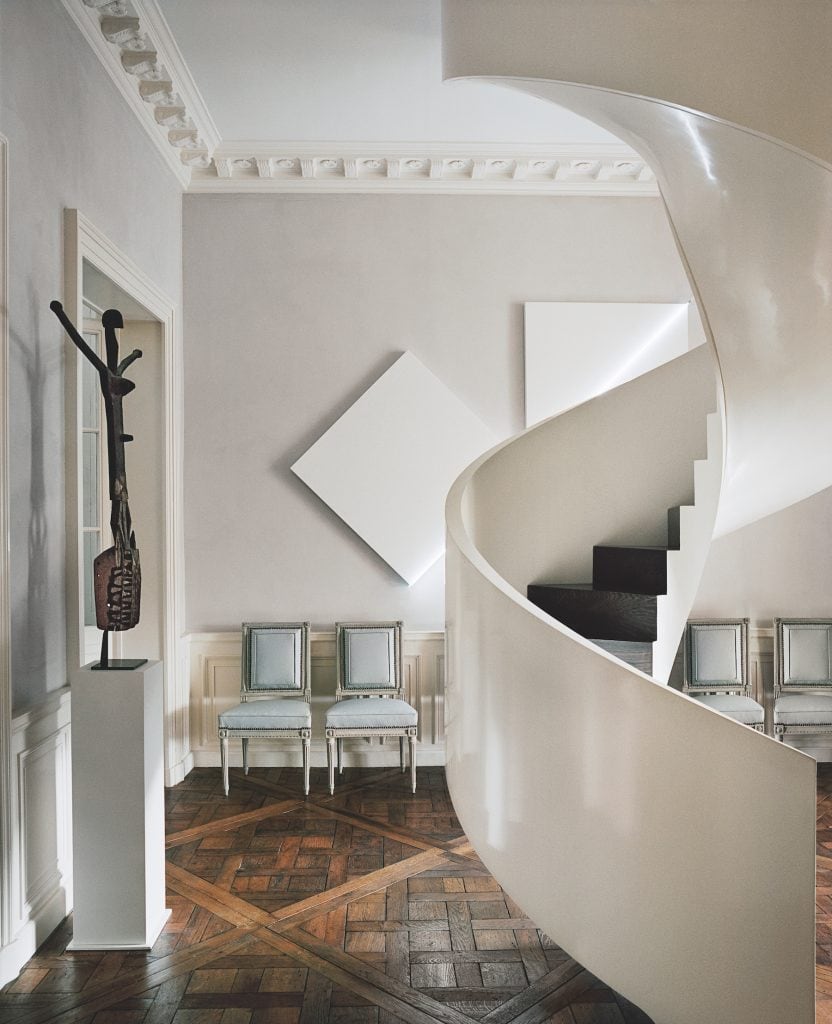
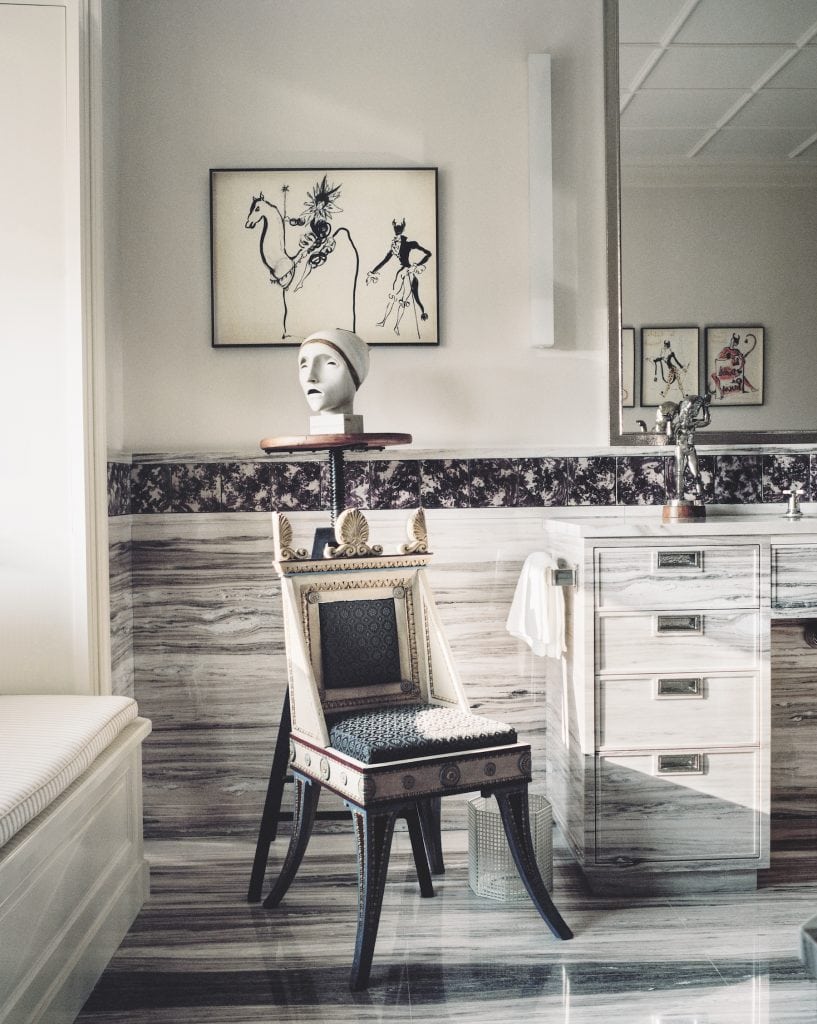
Recent projects include Paris apartments, London townhouses and New York penthouses. There’s also a Venetian palazzo, a medieval castle in the South of France, and a 1954 Richard Neutra house in Los Angeles — a marriage of French chic and California modern. In Paris, the home of Eileen Gray has been re-imagined for a collector of art and design, while a new black-and-white mosaic floor anchors the grand salon of a 19th-century hôtel particulier, its basement given over to a swimming pool lit by James Turrell.
“Jacques makes houses like others make poetry, music or paintings.”
“Grange designed the elaborate mosaic-tiled pool in a basement space where the lines between art, architecture and interior design are abolished,” writes Pierre Passebon, Grange’s life partner of 40-plus years, owner of Galerie du Passage and author of both monographs. Passebon’s own apartment is another favourite, with its striking 16th-century marble fireplace in the form of a grotesque mask and nods to the Vienna Secession. “Jacques makes houses like others make poetry, music or paintings,” he says.
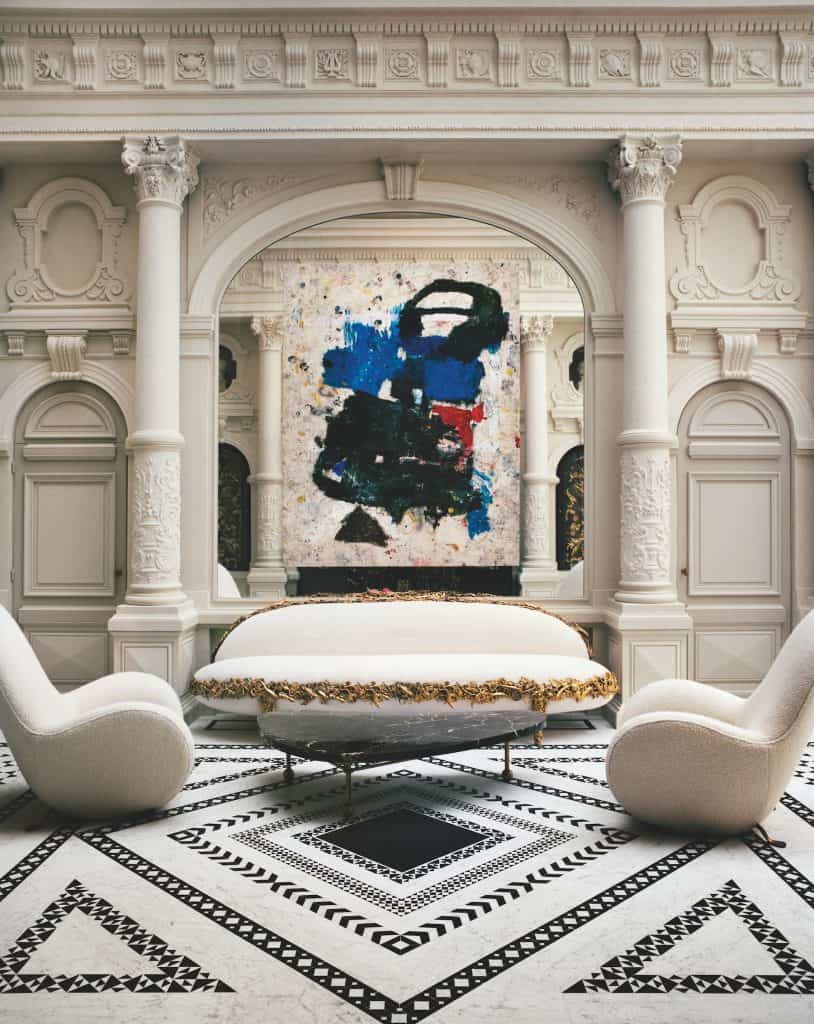
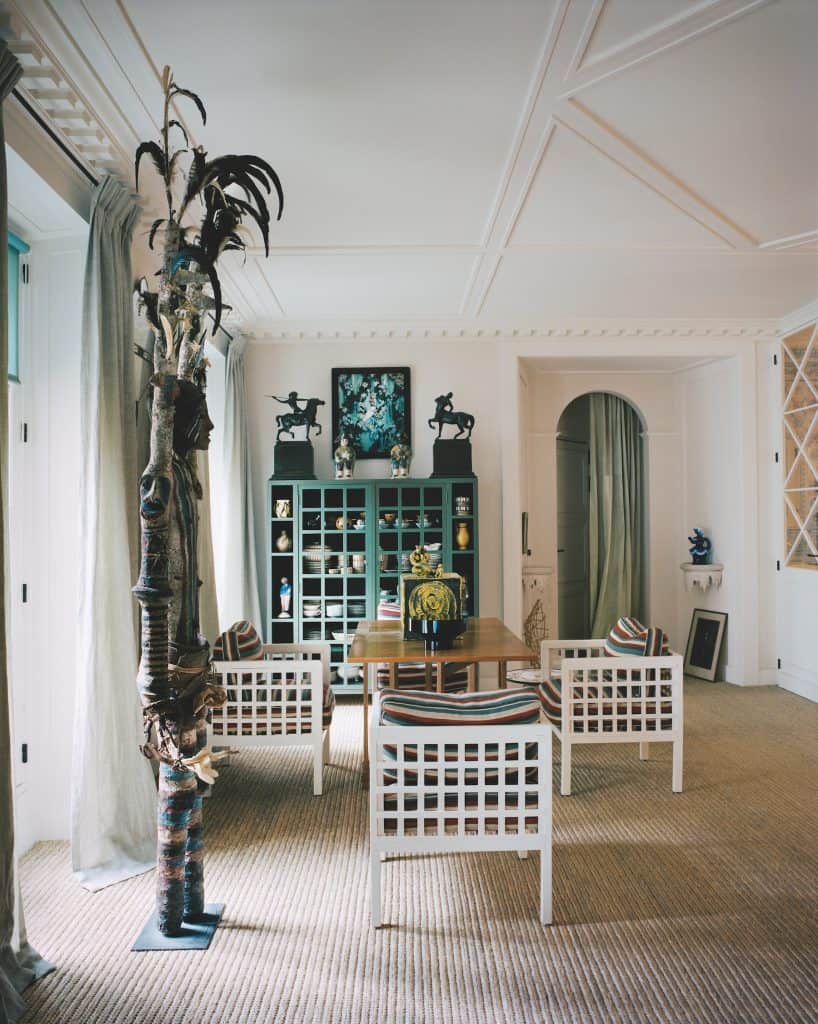
Fashion is omnipresent. There is his collaboration with Mary-Kate and Ashley Olsen on the interior of The Row’s first store in New York, a boutique with the intimate feel of a home. In Paris, white slipcovered armchairs and a magnificent Coromandel screen punctuate the silvery elegance of the Chanel haute couture salons at 31 rue Cambon — Grange’s first time working for the maison, due to a long-held falling out between the Saint Laurent and Lagerfeld camps.
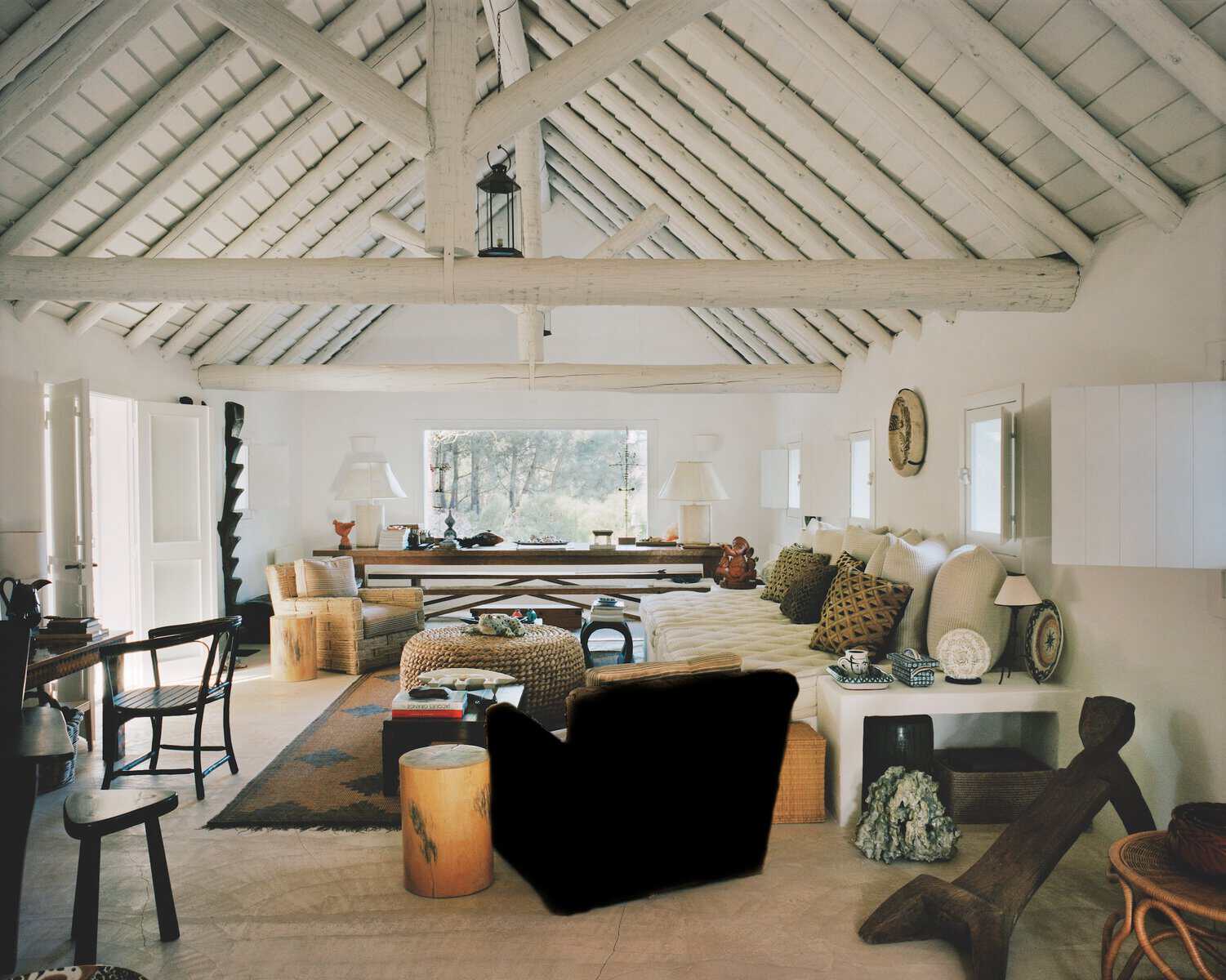
The inner life of Grange’s own spaces is equally revealing. His apartment, once belonging to the writer Colette, has recently expanded to an upper floor via a ribbon-like spiral staircase inspired by Le Corbusier. At his beach house in Comporta, Portugal — where he spends two idyllic months each year — a different sensibility emerges. The enclave of Atlantic-facing huts has quietly precipitated its own aesthetic movement: the Comporta Style, with outposts including The Stork Club, Grange and Passebon’s boutique in Carvalhal village. “For me, luxury is a space in the wilderness,” Grange has said. “You walk to the beach over the dunes and often it is empty. You wake up and you see a stork fly above you. That is luxury.”
From a story originally published in Vogue Living.
Photography: © François Halard
Jacques Grange Recent Works available for purchase from Flammarion.
Follow Jacques Grange on Instagram.